

Marc Aurel Book 8-9

In book 7 paragraph 38 the stoic wisdom is exemplified in the the the short phrase „If you have sharp sight, use it: but, as the poet says, add wise judgment“. Being sharp in your reasoning or data collection is only part of the human endeavor. A wise judgement is, however, an ambitious aim as judgments have different short term and long term consequences. Intergenerational considerations as for climate change ask for respect of other species, biodiversity and to take into account very long time horizons.  The quote from book 8 paragraph 5 appears very modern or post-modern in this context. „There can often be wrongs of omission as well as commission.“ (both citations from Penguin Classics edition) Not acting on behalf of future generations and disappearing species is the most crying omission of our time.
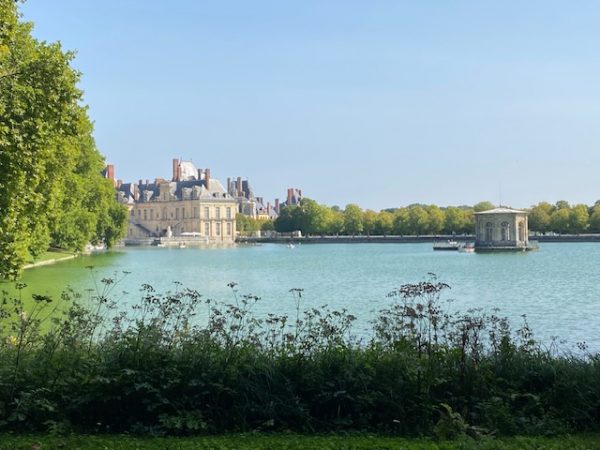
Fontainebleau garden

The garden of Fontainebleau is huge. The design by “Le Notre” is splendid in its combination of trees, greens and water reserves. Beyond walking in the park you may enjoy a horse ride ora  tour in a carriage, some even today. Boating is an additional amenity rarely available at other castles. In the Belvedere in the middle of the water basin romantic or secretive diplomatic conversations might take place. Politics and diplomacy have always needed special locations to prepare decisions. This is a historical constant. 

Timeless Nature

The beauty of butterflies has fascinated thousands of generations. It is the boomers’ generation that has increased the risks that future generations will have difficulties to enjoy the simple beauty of nature in their gardens or parks. Preservation of biodiversity is a value that should be ranked much higher than previously. Monitoring of biodiversity needs a generation of people well aware what a rich ecosystem and biodiversity looks like and how to preserve or restore it. Much to do for teaching and learning professionals as well. Curriculum development for biodiversity and sustainability is in urgent need for updates. This has to include the socioeconomic dimension as well.

Air pollution dementia

A comprehensive review and update of evidence that indicates a link between air pollution and dementia has been published in “The Lancet” open access on 2025-7-25. Besides a genetic predisposition the environmental impact of our worsening air quality caused by fine dust particles and PM 2,5 and nitrogen dioxide NO2 has been found in several studies. This updated meta study should be an additional warning to take efforts to clean up our air more seriously. The diesel engines amongst other sources of air pollution have contributed a great deal to this evolution. Inner city inhabitants are at greater risks to suffer the consequences as they are more exposed to these pollutants and for longer durations. Clean air is a matter of brain health in advanced age and biodiversity as well.  

Just walk

The benefits of walking for several health outcomes is well known. The evidence is in favor of 7000 steps per day as a reasonable baseline. Some outcomes improve further if we walk even more steps, but not all. Probably, the effects of being accompanied while walking will enhance outcomes as well. Every summer the step threshold may be pushed a little bit further. Goal setting can help along to overcome eventual barriers to leave the home later in the evening. Nature rewards us with changing daylight and seasonal changes. We just have to get started to reap those health benefits.

Climate Awareness

The Musée d’Orsay has prepared a wonderful walk through its permanent exhibition of late 19th and early 20th century installations to reflect upon climate and climate change. Raising awareness about the treasures lost and those we are about to lose in the next few years. Impressionist painters have depicted landscapes, cities and monuments covered in snow, which the next generations will no longer be able to enjoy the same way. The roofs of Paris covered with snow has become a feature of a distant past. Additionally, the impression of the massive steam trains crossing metal bridges appear as the daunting future of technical progress. Mixed feelings of fascination and risk associated with those machines were captured by those painters’ eyes. Nowadays we are aware of the consequences of this technical progress for our planet. The walk through museum with a focus on climate related paintings is eye opening indeed. (Image: Extract of Éduard Veuillard, Le jardin des Tuileries, Musée d’Orsay, Paris) 

Less but better

There are many examples where a new mantra for the 21st century emerges from recent scientific evidence: “Less, but better” (Lbb). In studies of nutrition and human dietary requirements, the importance to eat less has been demonstrated on a regular basis. And this is even more important than to do more exercise if weight loss is the target or the attempt to explain obesity across the globe (McGrosky et al. 2025). The case for eating less is strong. Eating better refers to the need to avoid unhealthy, toxic or cancerous food or the way to prepare food. “Less but better” could become the new mantra or “categorical imperative” if you like it more philosophical in tone. We, the people gain, and the planet will gain as well. It is an easy win-win case, albeit with some behavioral implications.

All electric now

The shift over to the “All electric society” is easiest in sunny states like California in the USA, Africa or Southern Europe. For other regions of the globe not only the production of energy through the sun is a bit less abundant, but the storage of the sun’s energy production for deferred use is the next challenge. Countries of the globe near the equator have to balance 12 hours daylight with 12 hours night, countries far from the equator have to balance additionally more long-term between short winter days and long summer light.
Different energy storage solutions have to be envisaged.
On a daily basis or even weekly basis, battery energy storage systems (BESS) can do the trick. These systems become more costly for high capacity, longer duration storage. Battery size and price quickly become an issue. The number of electric vehicles (EVs) that have this more intelligent BESS is rising. This makes it possible to eventually use this storage capacity, if your car is sitting around your home or office for most of the time anyway. To make the “all electric society” function 24 hours, energy storage has to be planned at the same time as production and consumption patterns. The all electric prosumer will be the de-central “pro-store-sumer” in the 21st century.

Green trade flows

The statistics on trade flows reported by the UN Department of Economic and Social Affairs have a comprehensive data base in the background. The descriptive inspection of the raw data on trade flows comprising solar panels, batteries and electric vehicles shows a stark imbalance of how future-proof the trade between countries is. The New York Times (David Gelles et al. 2025-6-30) has put this information into an impressive graphical design to show the magnitude of the imbalance of how China trades in green products with the world and how the USA is losing out on future-proof low carbon emission trade. Despite the fact that China is still heavily emitting CO2 today due to burning coal for electrical power, the investments at home and trade with the world is moving into the opposite direction. We have seen many of these industries at risk in Europe, like solar panel production, batteries and increasingly electric vehicles, without the western countries getting organized to address crucial business and economic challenges. Falling behind in these industries and trade will shift global balances in the near future. Renovation through innovation is more promising than holding on for another decade to inefficient and more polluting energy sources. Repairs of homes and buildings have long lasting effects, which we can, nevertheless, change today.

Pervasive waste

From time to time waste from so-called highly developed countries is making headlines and then it is forgotten again. Huge amounts of plastic waste gets shipped for example from the USA to Malaysia in containers regularly (NYT 2025-7-1). The dumping of waste in other countries where it is cheaper to waste the waste is a cynical practice. Not only is the potential for reuse and a circular economy disregard, the little control that is exercised how the waste is treated afterwards is neglected. Some might just end up in our oceans later on or find its way in our food chains. The recent discovery of lots of nuclear waste at 5000 m depth in the sea in another extreme example of this practice to dump waste affecting all of is when profits have been accumulated inn the hands of a few enterprises and states. Such external effects as they are called in economic theory are part of the standard economic thinking. The challenge is to detect such behavior, persecute or better prevent it. This calls on countries who produce the waste to check for the contamination potential and treat their own waste. Fukushima has lots of barrels of nuclear waste waiting. The pervasive nature of this waste will make it last for thousands of years. “Beggar thy neighbor” with your waste is a major default of our current economic and social model. It remains an unresolved puzzle why mankind continues to work towards its own extinction. (Image: Le grisou, Constantin Meunier, MRBAB, Brussels).