
Contrary to a lot of received previous recommendations, the shorter duration of antibiotics prescription and use (3-5) days is overall better than the prolonged use of durations between 7-14 days (JAMA Link). A so-called narrative review of medical studies (Lee et al.2023) reports more precise results separate for medical indications (pneumonia, sinusitis etc.), which tend to go in the same direction for the majority of indications. In view of the serious issue of antimicrobial resistance, a consequence of overconsumption and too widespread use of antibiotics (also in animal health and food production), the slogan of shorter is better should receive serious attention.
It is not only a medical, pharmaceutical or public health issue. The topic has become an issue of nutrition as well. The food chain contains largely unknown amounts of antibiotics as well, especially if larger amounts of animal or fish products are part of it.
The knowledge from these sciences has still to filter through to the broader public. This means it has become a social science topic as well. The transmission of knowledge and patient expectations on prescriptions, which is also linked to regulations concerning sick leave, make it more difficult to shorten prescriptions of antibiotics. There is a steep challenge to change behaviour according to the new mantra “shorter is better” with respect to antibiotics, even if we know that it is better for all of us in the medium or long term.
(Image: Jan Harmensz. Muller, De keuze van de rechte levensweg 1571-1628, MRBAB, Brussels) 
On Resilience
There are at least 2 definitions of resilience: (1) a material definition points at the “ability to return to an original form or position after being compressed, extended or curved, and (2) a immaterial or psychological definition. The latter one describes the ability to recover, be happy or successful anew having overcome a bad or challenging experience. The American psychological literature defines resilience in the shortest form as “positive adaptation despite adversity”. The psychological construct is linked to a positive life span perspective of personal development. Other areas of application range from “resilient investments”, “resilient industries” to single resilient societies or intergovernmental organizations like the European Union or NATO.
The challenges to resilience increase with complexity of societies and social as well as technical systems. As supply chains have become longer in time and travelling longer distances as well, the improvement of resilience has become a steep challenge for globalization. Reorganizing supply chains with “own sourcing” as in countries which are cut-off from international trade will have huge consequences on sending and receiving countries.
Last, but not least, countries like Ukraine demonstrate the fact and virtue of resilience after more than 1000 days of the massive Russian invasion of its country, which threatened its survival. Resilience works best in networks of organizations and countries. Solidarity is a fundamental building block of resilience as well. Donations and funds support activities that foster resilience. 
On Uncertainty
Uncertainty is a catchword for all sorts of undetermined occurrences, which we might have to confront. We associate economic uncertainty with the difficulty to forecast or predict the economic evolution of key indicators like inflation, GDP, CO2-emissions, energy and raw materials’ prices and availability. Even factors like increases in greed of CEOs, psychological factors like insecurity about external or internal conflicts drive these macroeconomic indicators. Micro-level features of your own stage or evolution of the life course have an impact on and will be affected by uncertainty. Employment, housing, family, or household composition are subject to high levels of uncertainty. These micro- and macro- level factors are, of course, not limited to the domain of economic phenomena. Most recently, political uncertainty has reentered the international and national sphere with the re-election of Donald Trump as president of the United States. This election outcome of the U.S. is perceived by many as increasing the overall uncertainty due to the unpredictability of political decisions and even previous treaties with the U.S. or where the U.S. is a major partner in the agreement. These economic and political uncertainties are accompanied with a perception of growing legal uncertainty even in very personal spheres of life. Last, but not least uncertainty about climate changes like heating up of the planet and more devastating flooding and droughts contribute to increased uncertainty about future developments and the need to initiate adjustment processes and the financing of those.
The individual and societal ways to cope with increased uncertainty are one of the major economic, political, legal and social issues for the coming years. The answers are likely to be found in mutual, cooperative and risk sharing arrangements. The social in society will be a major part of dealing with increased uncertainty.  (Image: Extrait of Paul Klee, Seiltänzer 1923)
Commemoration
In The month of November we commemorate those who died and particularly all those who died in the combat for freedom and democracy. The Russian aggression does not show many signs of ending the killing of soldiers and civilians on both sides. Ukrainian forces struggle to resist the Russian occupation of its territory as Russia is sacrificing thousands of lives for small gains of territory it is unlikely to defend in the coming months if Ukraine possesses longer reach weapons. A new spiral of an apocalypse is most probably the result of the Russian insistence on external aggression to cover up more internal problems. A lost generation of young soldiers who died in combat or suffered mutilation will be the outcome of these atrocities. The inflationary effects of wheat and energy prices globally have caused additional casualties in countries that had absolutely no stakes in this war. Russia is to blame for those additional casualties as well as the adverse effects on the world‘s climate due to the fighting and destroyed materials that need replacing later on. The young Russian generation will have to stand up against Putin‘s call to war and put down their weapons. This is one way to end the spiral toward yet another apocalyptic experience in Europe and the silent killing through hunger beyond Europe. (Image: BNF Paris, Apocalypses 2024)

Comprehensive Conflict
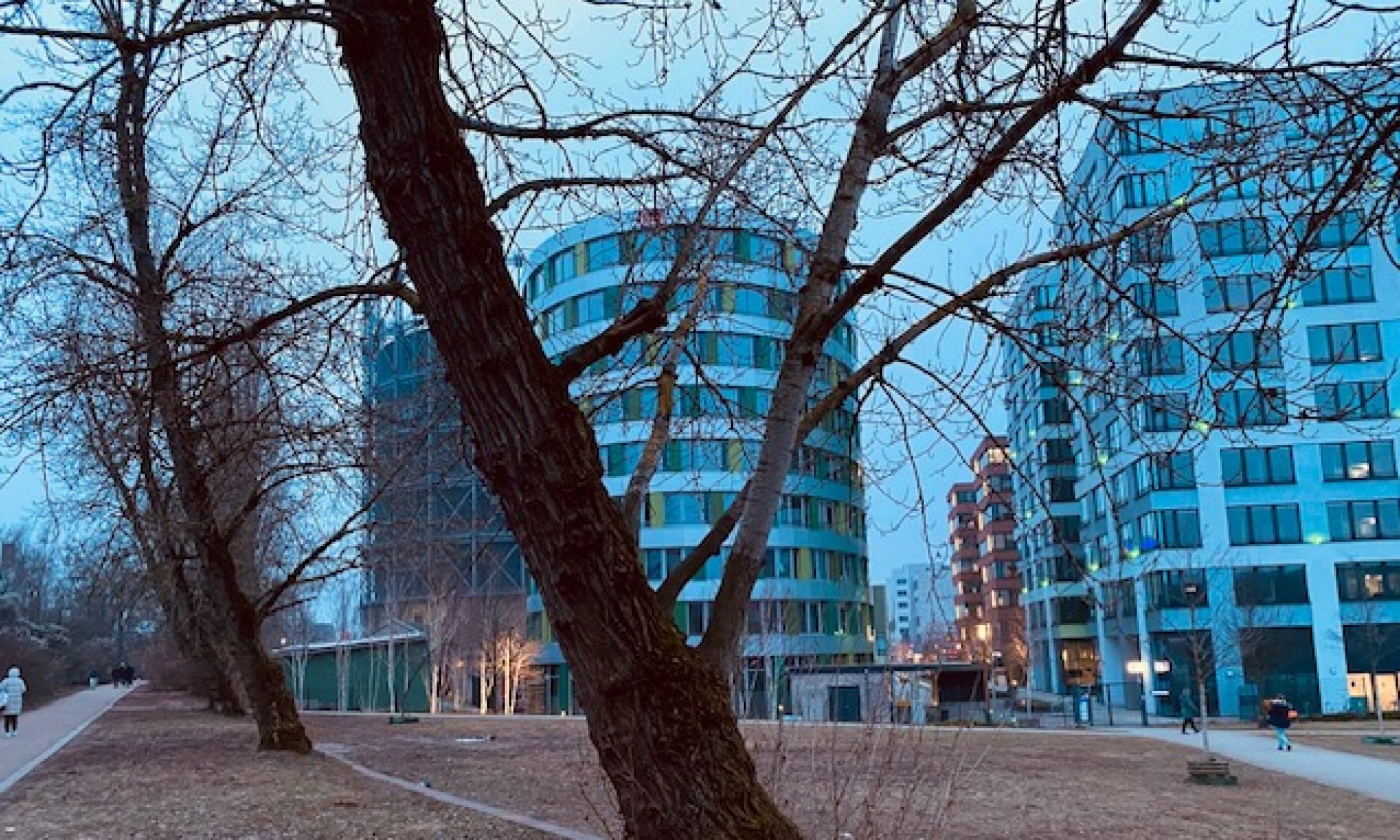
In a recent paper Mara Karlin (2024 Foreign Affairs LINK) has stated the need for the Western World to understand and even prepare for comprehensive conflict. Particularly in response to Putin‘s war on Ukraine’s territory and the threats and potential use of the full range of weapons including cyber warfare, destruction of energy resources and military production sites the current war comes close to total war. Several European countries have made significant steps to increase budgets for the new forms of comprehensive conflict management. This starts with adequate discussion in public on the dramatically changed security situation after the „Zeitenwende“ caused by Putin. The forceful Ukrainian response with much financial assistance from the West has pioneered drone counter strikes and by this put an end to the Russian progression into its territory. In order to match the total war ideology Putin is implementing in Russian society the Western world will have to rethink production models and strategic defense capabilities in all areas to match the rather real threats by Russia. The prevention of the spreading of comprehensive conflict is of utmost importance since the risk of an expansion of Russian influence and suppression of any internal resistance in Russia has devastating consequences. The 2024 book by Tatjana Tönsmeyer „Under German Occupation, Europe 1939-1945“ (own translation of German title) demonstrates what it meant to live under the domination of an inhuman dictatorship which is ready to use all out war and violence at any occasion. We have to confront this, even if we don’t want to face it. Nevertheless, the Russian aggression is also strongly targeted on its own people not to take risks of separation from Russia as this would mean devastating destruction to those regions and people who dare to do so. External explosions are therefore for Putin a prevention of implosion of the Russian Federation similar to the Soviet Union previously. Comprehensive Conflict extinguishes any remaining internal opposition as intended collateral damage. In Western countries, however, we shall have to argue with opponents and build majorities through understanding the issues at stake not through silencing opponents and opposition. The debate about comprehensive conflict is only about to start, but it is likely to last for several election cycles. (own image, Contemplation on infinite landscapes, Berlin 2024)

History’s Weight
The artist Damien Deroubaix is currently exposed at the BNF.fr in its historic site Richelieu. Together with and next to some of the historic treasures of the BNF collections the unique exhibition allows to experience history’s weight on our current existence. The work of Deroubaix is following and pursuing historic art trajectories with a special historical and ethical consciousness. Techniques of art are insensitive to the moral compass of the painter in history. The collections of the BNF like all major European collections have to handle their colonial past and immoral depictions throughout history. Deroubaix accomplished to liberate techniques of art of their colonial linkages and imagination of emperors focusing on humanitarian values. War is horror, in the past and in the present. Genocide in Rwanda is war crime and dealing with the memories of people an honorable way to look forward conscious of the past. Hybrid forms of art allow multiple contextualizations of his work. In the Galerie Mansart and Pigott of the BNF the historical embedding enriches the art and vice versa. Art allows us to rise beyond the ashes mankind has and continues to inflict on us. (Images: extracts of Damien Deroubaix at BNF, Paris 2024)


Masculinity Photos
After the turn of the millennium we keep questioning us about basic principles of humanity, previously called mankind as well. The Zeitenwende has occurred through Putin and other male warriors and warmongers 2 years ago. This is reason enough to keep asking us what is behind the male visions of life and living together. Any hints from social sciences, biology and media studies are helpful to broaden and deepen our understanding of what constitutes masculinity and how it evolves over the life course and within or between societies. The collection of photographs from Jérôme Prochiantz currently exposed at the BNF enlightened the issue. Ever since Max Frisch wrote „Homo faber“ we are aware of the technological transmission process a man might be subjected to. Capturing single moments or arrangements with a lot of care for details shows maybe otherwise hidden male predilections and leaning towards abstraction. An idea or undefined vision, maybe an illusion are depicted in this revelation of masculinity at the turn of the century. Creative and destructive forces are jointly presented in this continuous questioning of masculinity. (Image: BNF, exhibition 2024-11 Jérôme Prochiantz)

Language Tech
Inclusive societies can build on many tools including AI to lower language barriers. It is not only a question of translation, but many other forms of language come to mind. Sign language or easy language are necessary to facilitate broader access to public services. Reading out texts on webpages or Braille translation for the blind to interact through keyboards are additional forms that are available in digital communication as well. The audio description of videos and images is well advanced (reverse engineered through AI) and allows people with limited vision to fully participate in society. Audio messaging and transcription are used by almost everyone by now. Public services will open up to these channels of communication as well. The technology around languages is much more than just translation and AI-assisted learning of languages (talkpal for example). The new lingua franca is language technology, because it enables us to speak many languages at the same time even dialects or lost languages and in many voices. (Image: Extract of Josef Scharl, the newspaper reader, 1935, Neue Nationalgalerie Berlin)

Ed Tech
Education Technology is much more than the use of tablets and Internet access in schools or in each classroom. Some schools revert to ban mobile phones access during classes or introduce specialized social media breaks during the school day. At the other end of the intelligent use of digital technology is the digital classroom with digital whiteboards in each classroom or the first fun hands-on experience with coding for primary school pupils through, for example, the “Scratch” platform. Once you are used to the power of the whiteboard to use web-based information in teaching systematically, most teachers and pupils will no longer want to miss these tools. Public libraries become important access points for those who have no speedy access at home to assist in learning. Digital tools and e-learning are an empowerment of learners to benefit from the millions of useful learning tools and platforms on the web. A first understanding of easy coding allows children to figure themselves as producer of games rather than only a consumer of fantasy games. Create your own story instead of following the stories of others is empowerment. Scratch it, if you like. The role of the teacher in classrooms is evolving fast as well beyond the 40-60 minutes slots in class. Play the games of your pupils, is a bit like a flipped classroom.
(Image: SCCON Berlin 2024 connected classroom simulation) 
Digital Zebra
It is a difficult task in all countries to bridge the digital divide in a society. On the one hand, there are so-called digital natives, those who have grown up with smartphones and notebooks all around them all the time. On the other hand, there are many persons who have not kept track of the digital turn and feel rather lost or are afraid of making mistakes using digital tools. As public services are also moving online, the need for a society-wide comprehensive mastering of digital information and tools have become a sheer necessity. It is much more than just nice to have.
As public services move online like registrations, payments or tax declarations, the need for training and/or assistance of millions of people in a country become a real challenge. This is where the innovative project “digital zebra” in Berlin comes into play. Through the network of public libraries you can get support in person to master your digital challenges.
The name of the project refers to the “zebra crossing” of a road, which assists persons to move from one side to the other side, just like crossing the digital divide. We shall need a lot of those guides and other multiplyers who can assist people to move safely online. Only through this form of taking people with you on the move towards online public services we shall close the gap of the digital divide. It is probably going to widen before we can narrow it again, unless we breeding digital zebras in a rapid way.
(Image: SCCON 2024-10, Berlin) 