Fontainebleau walks

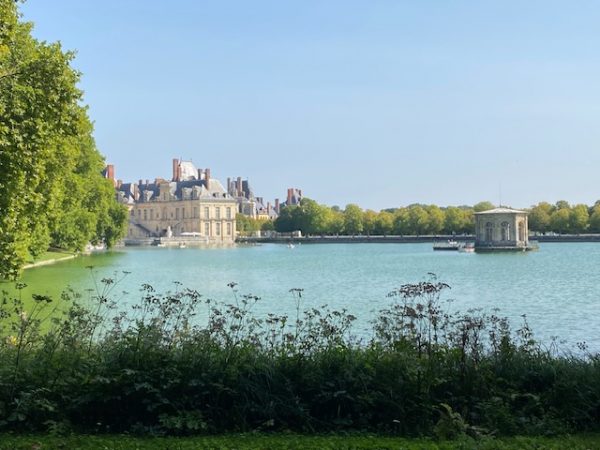
In the Fontainebleau gardens it is easy to reach your daily walking goals of 7000 a 10000 steps/day. Upon entry into the park you walk around the small lake. Towards the far end of the lake you’ll discover a long waterway which takes you beyond your usual walking distance due to the calm and great surroundings. The forests around the Fontainebleau gardens are another great walking or hiking exercise. You might find companions all along the trails. Just take enough water and food with you as there are no shops around, just you and nature. A bit of advance planning is necessary to make it a great experience. 

Fontainebleau garden

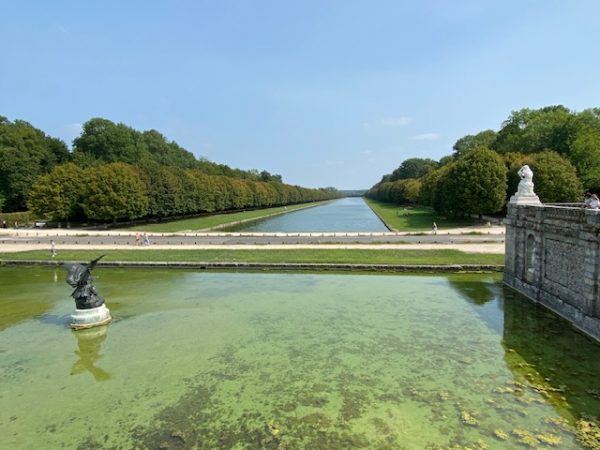
The garden of Fontainebleau is huge. The design by “Le Notre” is splendid in its combination of trees, greens and water reserves. Beyond walking in the park you may enjoy a horse ride ora  tour in a carriage, some even today. Boating is an additional amenity rarely available at other castles. In the Belvedere in the middle of the water basin romantic or secretive diplomatic conversations might take place. Politics and diplomacy have always needed special locations to prepare decisions. This is a historical constant. 

Fontainebleau library

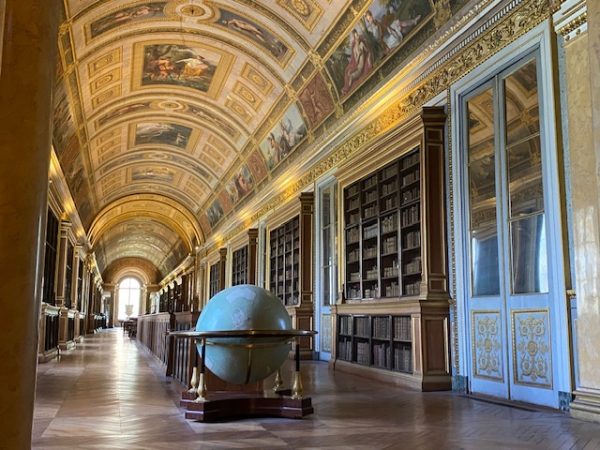
The “Galerie de Diane” in Fontainebleau has been built during Napoleon’s reign. It hosts the library with a large collection of books. The function of the books seems to be more to intimidate the persons passing by rather than ready for inspection. The globe at the entrance reflects the ambition of the ruler. The fact that you have to walk some stairs upwards increases the impression to be little compared to this universe of knowledge. It is great that libraries have flipped this perspective and today we study the period of Napoleon’s reign with our democratic values in mind. The top-down approach was the incarnation of Napoleon’s style of government. Despite the revival of such governance styles in the 21st century across the globe, they are unlikely to last for more years than Napoleon’s fate. A simple reason for this may be the only representative or intimidating role of knowledge in such forms of governance rather than an open mind approach. 

Fontainebleau Throne

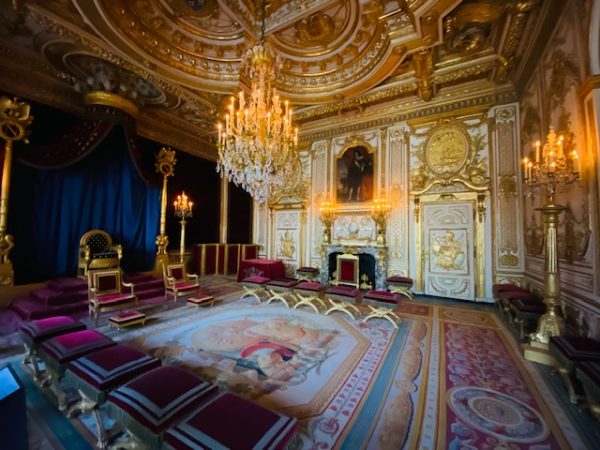
The French history is full of kings and emperors who have ruled the country. The Chateau Fontainebleau has the longest history of kings who lived there and held office, a pre-modern version of “home office”. The most remarkable and distinguished furniture of a king is the throne reserved for office hours. Napoleon created a special throne room at Fontainebleau which is also the only one preserved in its original form until today. It is just one of the home office rooms of the emperor. The antechambers, council room and study had to be passed before to reach the ear and audience of the emperor. The history of the home office and thrones have been intertwined ever since. 

Paris Sorbonne

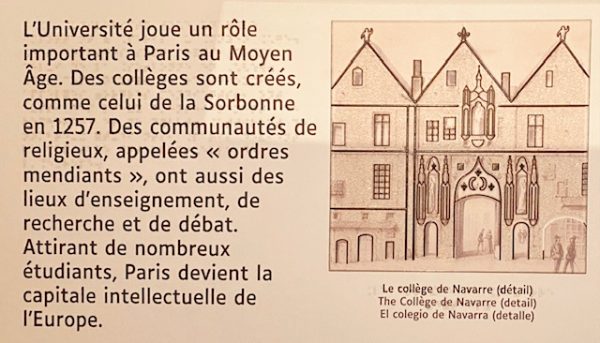
The history of the university on the left bank of “La Seine” dates back to 1257 when Robert de Sorbon an advisor to Louis IX was asked to create a unifying structure of several colleges which provided room and board already. The location on the left bank in Paris allowed these colleges to escape the religious doctrines and archbishop who dominated the right bank. The choice of the name of the advisor rather than the King was already showing early signs of independence which was cherished by generations of students and professors. The Colleges had individual names like “Collège des Bernardins” or “Collège de Navarre” and operated under the title of “La Sobonne”. The “Musée Histoire de Paris Carnavalet” shows an early design of the Collège de Navarre. Independent thinkers and writers were formed there who became very influential later on in their careers. Thomas d’Aquin was one of them.

Paris Olympics history

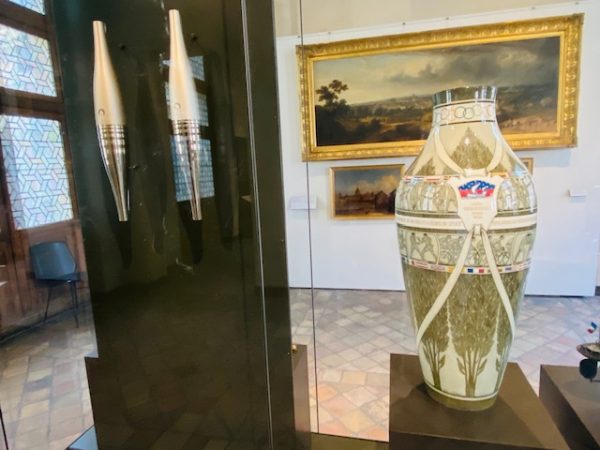
The 2024 Paris Olympic Games will go down in history as the event that has achieved to put Olympic Games and Paralympic Games on an equal footing. At least this is the message the  museum of the history of Paris tries to transmit. In the “Musée Histoire de Paris Carnavalet” we find a vase from the Games from 1924 in Paris next to the 2 Olympic torches, one for the Paralympics and one for the Olympics 2024. Both torches are the same only a different logo on them, same message, same spirit. The impact of these games is likely to set an example for many years to come and other hosts of the Games will be measured against this benchmark. Making history is one thing, taking care of the posterior image another one. Paris has taken of this as well.

liberté urbanité

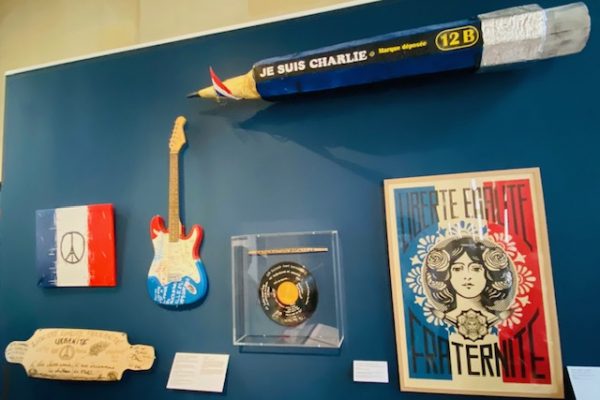
In the museum of the history of Paris “Musée Histoire de Paris Carnavalet” we find a special place devoted to the commemoration of the terror attacks in Paris in the Bataclan event location and the office of the journal “Charlie Hebdo” (see image below”. The skateboard on the bottom left of the wall raises the value of “urbanité” next to liberté, égalité, fraternité. The attack of an urban living style with youth going out as they like and journalists and caricaturists speaking their minds freely had been attacked, but continues nevertheless. This statement is part of the Paris state of mind. 

Le Brun Selfie

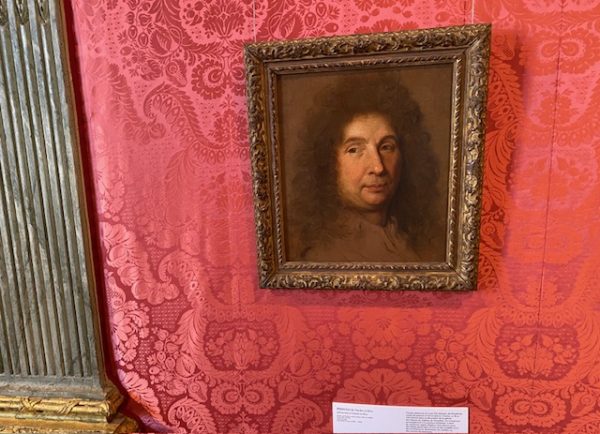
The great painter and decorateur of the French monarch Louis XIV was Charles Le Brun. He was careful about the way he wanted to be remembered in history. His late 17th century self portrait is exposed in the Musée Histoire de Paris Carnavalet. Rightfully put in front of elegant red “tapisserie”, the selfie is remarkable for its attention to details. The hair is drawn with high precision and not a single one seems out of place. The painter does not focus on the person in front of him, but rather on some detail next to or behind the depicted Le Brun. The dress chosen is rather an ordinary person’s one or a person devoted to his work and artistic craftsmanship. No hands, no arms, no shoulders. The sole focus is on the head or should we say the brain and facial expression. Realistic painting is probably the closest you can get to today’s selfie-mania. Le Brun’s decoration and paintings in Versailles and churches ate probably some of the most popular backgrounds of selfiies even in the 21st century.

Paris History

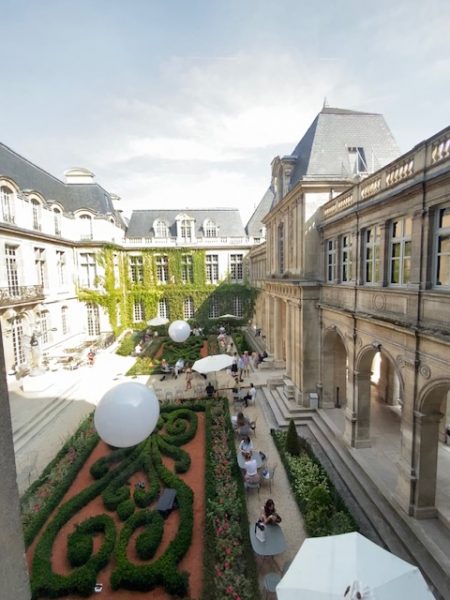
The “Musée Histoire de Paris Carnavalet” is the starting point for visitors of Paris and social scientists to better understand the making of this metropolitan city throughout centuries. The only common factor over the years is the astonishing determination to reinvent the city every 100 years whilst the best features of the previous periods are preserved. It is the concern for the very long-term time horizon that makes the city quite unique. Even a social revolution (1789) unlike most other countries managed to preserve most buildings, churches and royal palaces. Restorations are undertaken with a careful approach to shield its architectural and social heritage. Even the radical transformation by Haussmann over almost 20 years until 1870 to build large corridors in the city is subject to revision in modern visions of the future of Paris. The app of the museum is very helpful to learn more details about each chosen object of the permanent exhibition. The social fabric of the city can be studied further through app’s feature when representatives of local social organizations speak about their personal piece within the huge collection on display. The larger the “fundus”, the more the rationale for selecting pieces becomes an issue. (Image: Musée Histoire de Paris Carnavalet inner court 2025).

Photographe engagée

Marie-Laure de Decker is featured in the “Musée européenne de la photographie” (MEP) as a photographer committed to capture truth in situations of conflict. She started her career with documentary photos from the Vietnam war. Rather than searching for spectacular scenes, she succeeded in her attempt to capture the more emotional and, therefore, relatable moments for her various audiences. With a firm commitment to the human in her work, the photos by Marie-Laure de Decker reach a level of extraordinary sensitivity to what it means to stay human in violent situations and even military conflict. The portraits of politicians, workers, professions and famous actors applied the same approach. Rather than days or weeks Marie-Laure de Decker spent months or years in the regions of her documentary photo series ranging from Vietnam, South Africa throughout the apartheid regime, Pinochet years of dictatorship in Chile, the 2 parts of Yemen to a prolonged stay in Chad.

The exhibition in the MEP in Paris curated by Victoria Aresheva  raises awareness to the additional fact that photo journalism became an affordable profession only after specialized agencies were created that granted authorship rights to photographers, which ensured later use of their work in edited volumes as well as working for several newspapers or magazines. (Image: Marie-Laure de Decker, self-portraits, MEP Paris exhibits 2025-8).