New technology pushes transparency of publishing, journalism and science to new levels. Through the hyperlink structure of texts it is easy to link back to the sources of a text. What used to be long lists of references at the end of a text or in footnotes has become directly accessible through weblinks. Only paywalls may or may not restrict the fast and easy access to original sources. In writing online, this is a major additional feature of publishing in the last few years. Some online journals allow this for quite some time now, but there are lots of printed versions that stick to the read and be stuck approach of publishing.
In teaching I have been an advocate of “read the original sources” as the basic source of inspiration for authors. The transparency of the thought process and the evidence provided in whatever form should be traceable. In publishing this transparency allows to exclude the copying of thoughts or unreflected referencing.
However, the task to check for the validity of weblinks and the updating is an additional task. 500+ blog entries with an average number of 2 weblinks per blog entry makes this a job of its own. Testing of 1000 weblinks is something you need a software or plugin which alerts you to “broken links”. The maintenance of a webpage, therefore, increases substantially as the content increases. Reorganisations of webpages make the follow-up of links sometimes quite hard. Projects like the general archives of the web and webpages are very important to ensure the transparency of publishing in the short, medium and long run. The archives of today look more like machine rooms than the splendid archives or libraries of the past and present. 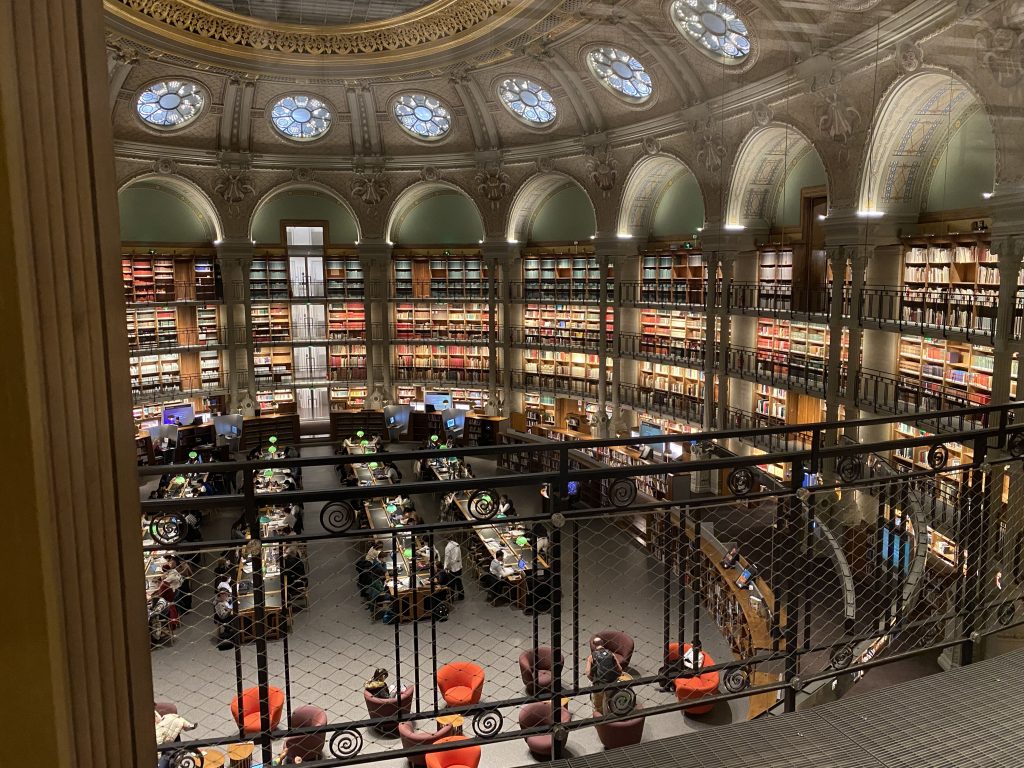
Heroines
In youth we are open for a wide range of influences. Heroines in children’s literature, picture book or cartoons look back on a long history as successful influencers. Creation, transmission and criticism of stereotypes are all part of the scientific reflection on heroines and heros. Nowadays, influencers have taken over picture books through the use of more compelling videos.
In the 1950s,1960s and 1970s picture books or cartoons dominated the influences before mass media like television became more absorbing, addictive and powerful influencers. Children’s books are passed on from one generation to next generation. The French-speaking world (and beyond BBC reference) has witnessed the success of the illustrated booklets of the young “Caroline” (Hachette) and “Martine” (Casterman) exploring the world. Parents passed on their collection to children and had their own parents read the stories to their grand children.
Well, that’s how intergenerational transmission of cultural heritage has worked for a long time. It describes the basic social mechanism. Nevertheless, new forms of influencing emerged with new technologies. Successful illustrated narratives like “Caroline” and “Martine“ were adapted as television series as well. In France you could chose your side of either explorations with Caroline and her group of animals or the adventures of Martine.
Ideally it would be an occasion for the families and friends to discuss pros and cons of each character and, thereby, become aware of what is a stereotype, at least at a later stage of the life course. Gender stereotypes have evolved and to observe 2 boys colouring Martine images in public (Brussels book fair 2024, image below) was a positive surprise. It almost felt like a real world experience of the AI-enabled Barbie explorations. 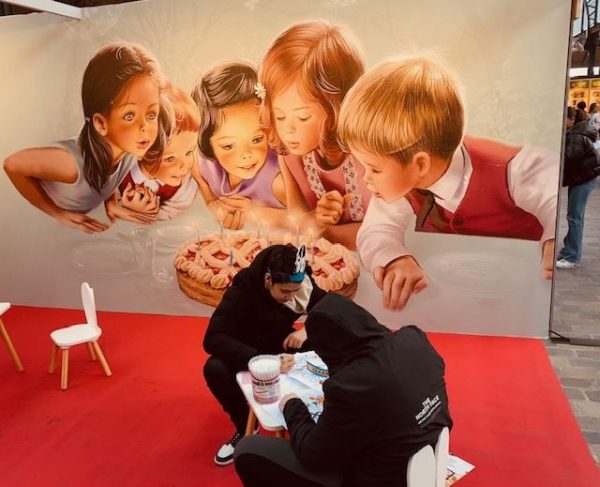
L’Albatros
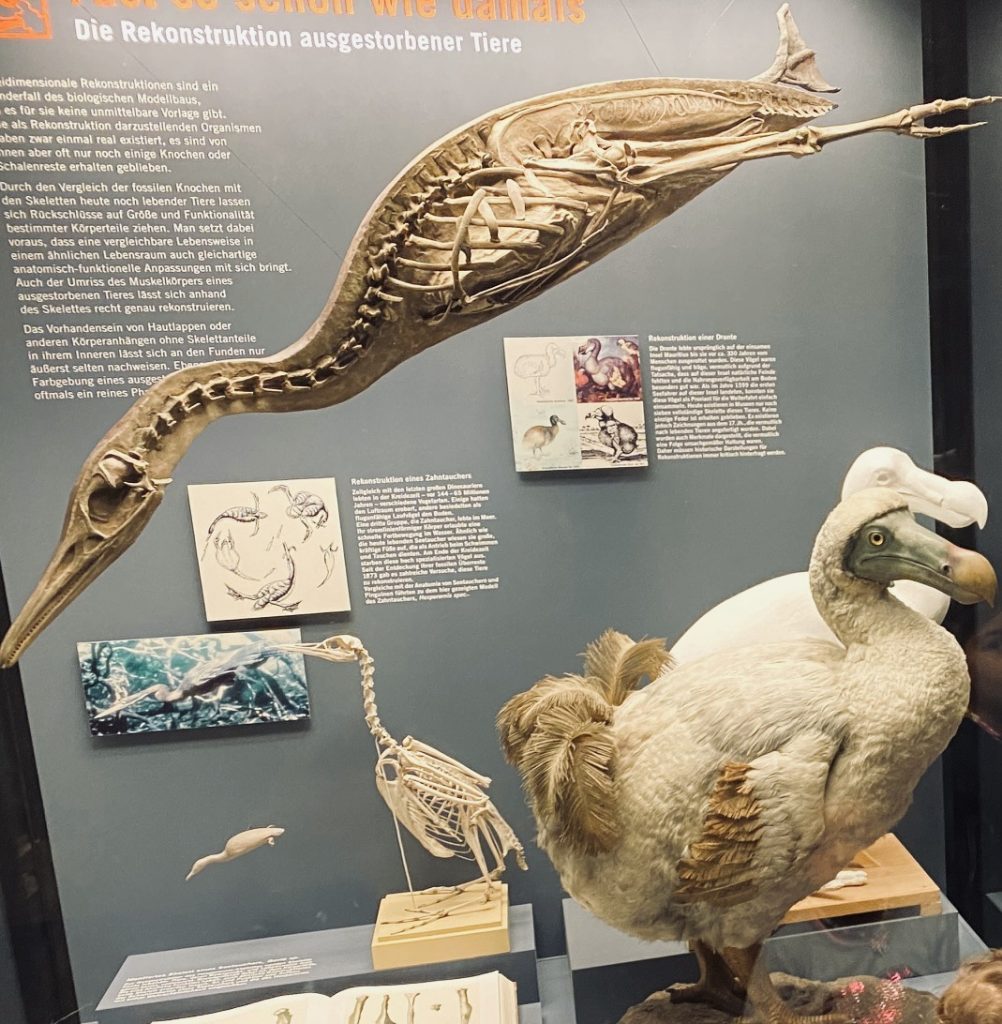
Charles Baudelaire has immortalized the albatross in his poem entitled “L’Albatros”. For me it appears like a poem about the beauty of the sea and sea life. The marvelous creatures that populate the sea and its surroundings sometimes seem strange to us. The albatross with its large wings unable to move properly on earth is one of these special animals. They are threatened by human beings in their very survival up to extinction even. A dedicated website to “Les fleurs du mal” with multiple English translations of the same poem may give us the impression that all those who translated the poem wanted to feel this little moment of sublimation like a poet just forgetting for a little while the weight of our earthly existence. The gospel tells us a similar story of life up in the air. It must be so much better to be free and not to be bound to restrictions of gravity. As gods would prefer to stay away from earth just somewhere up in space. The albatross and the sea keep teaching us lessons beyond their physical appearance. (Image bird “dodo” now extinct, model in Berlin Natural History Museum 2024)
Mehr vom Meer
Wir sollten uns mehr um das Meer kümmern. Länder ohne Küsten finden meistens wenig Gründe, warum sie sich um das Meer bemühen sollten. Es ist doch so weit weg. Weit gefehlt. Erderwärmung erhöht die Meerestemperaturen und das wiederum beeinflusst massgeblich die Regenfälle im Inneren der Kontinente. Wir sitzen buchstäblich alle zusammen in einem Boot. Historisch betrachtet war das Meer mindestens seit der Antike Teil des machtpolitischen Kalküls der Beherrschung der Welt und der sie Bewohnenden. Wirtschaftliche Interessen waren ebenfalls Bestandteil der Erkundung und Eroberung des Meeresraums. Die Hansestädte in Europa bieten dazu noch heute gute Beispiele. Nach dem Sklavenhandel sind heute die Überseekabel und Rohstoffe des Meeres die begehrten Schätze des Meeres. Der Artenreichtum der Tiefsee wird erst seit kurzer Zeit intensiver erforscht. Externalisieren von Kosten des Umweltschutzes zu Lasten unserer Meere hat noch wenig Berücksichtigung in Wirtschaft und Gesellschaft gefunden. Tourismus- und Migrationsströme zum Meer, auf dem Meer und über das Meer stellen uns vor große Herausforderungen. Wir werden sicherlich mehr über das Meer reden müssen, und das ist keine Mär. Image aus „Europa und das Meer“ (DHM).
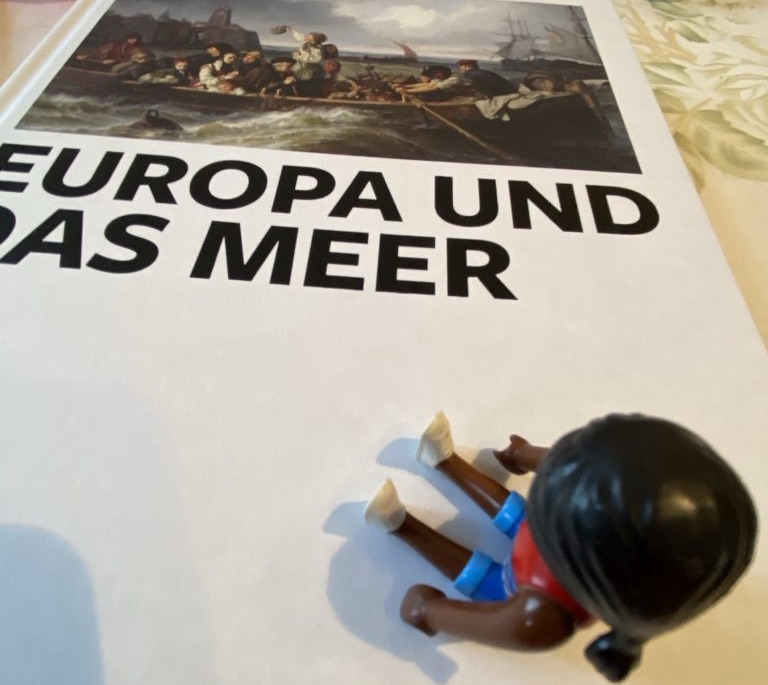
Das Meer
Wir haben vielfältige Beziehungen zum Meer. Diese reichen von romantisch geprägten Gefühlen zum Meer, den Wellen und den Fischen bis zur wissenschaftlichen Befassung mit den Meeren, Mangroven und dem Klimawandel. 71% der Erdoberfläche besteht aus Meeren. Das sollte den Festlandbewohnenden eigentlich klar machen, wie wichtig Meere für unseren Planeten sind. „Ocean Literacy“ nennt die UNESCO das. Neben Lesen, Schreiben und Rechnen sollte die Literalität auf unsere Ozeane ausgedehnt werden bevor es zu spät ist. Verschmutzung der Meere passiert hauptsächlich im Verborgenen. Lediglich Beobachtung aus dem Weltraum kann die weitläufigen Routen der Verschmutzenden zumindest teilweise nachverfolgen. Vielleicht hilft die Rückkehr zu der romantischen Sicht auf die Meere eines „William Turner“ zu einer höheren Wertschätzung der Meere, dem Licht und den Wellen.
Die kleine Sammlung von Gedichten „Das Meer“, erschienen im Reclam Verlag, ist eine gute Reisebegleitung für Begeisterte des Meeres. Darin findet sich eine Vielzahl von renommierten Schreibenden, die ihre Faszination des Meeres zum Ausdruck bringen. Mein momentaner Favorit ist Wolfgang Borchert darin (S.41-42) „Muscheln, Muscheln“.
Muscheln, Muscheln, blank und bunt,
findet man als Kind.
…
Muscheln, Muscheln, bunt und blank,
fand man einst als Kind! 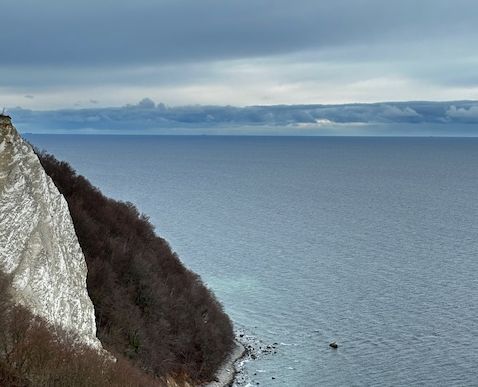
Disappeared
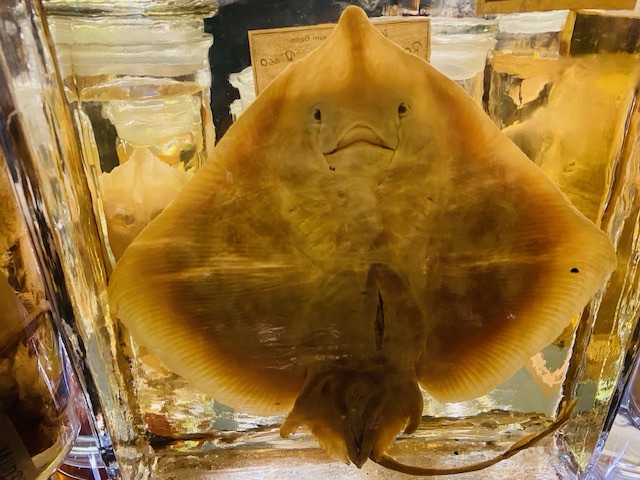
We talk a lot in abstract terms of the loss of biodiversity. In the Museums of Natural History, like the one in Berlin, we can follow the trajectory of extinction of species. The dinosaurs are for most children the greatest attraction. No surprise, they are the biggest ones we have had on our planet. But there is a huge collection of disappeared species represented in the museums which we admire as a lost treasure or species threatened with extinction. Evolution had also created this rather big bird-like creature of the “dodo”. It couldn’t fly anymore and was inhabiting the splendid island of Mauritius. Hungry colonists passing have most likely literally eaten up this rather defenseless animal. Many other extinct species can be admired now only in museums and children feel naturally attached to some species that seem to have human expressions. Panda bears and gorillas rank high on such a list, but also some fish, especially if they smile or look at you straight into your eyes. This should help us take biodiversity and biodegradation more seriously. Children feel intuitively attracted to animals as natural companions. Something we have lost as adults and most of do not even realize this as a deficiency. The Nobel price winning author frm Mauritius has published a collection of short stories „Avers“ which captures the spirit of the island and the loss of species. J.M.G.Le Clézio seems to look at us through the eyes of children or a disappeared species. Magic moments are an escape as well as reason for hope.
Need of War
It seems like a horrific idea to talk about the need of war. We might have deemed it outdated to read about the terrible love of war or about the strategy of war. However, the time of war is back in Europe and Eastern Europe feels the real threat and Ukraine the bombs hailing from Russia. Why does Putin love war? The love of war is largely driven by domestic issues. Staying in power for unliked authoritarian leaders is easiest if they indulge in external conflicts. Dictators love war because it makes it easier for them to sustain leadership through brutal force within the country due to a proclaimed external threat or even outright engagement in war. Democratically elected leaders know that they will leave office eventually in a peaceful way (exceptions like Trump are rare). Dictators use any force or terror necessary to stay in power. The love of war is part of this.
Hence, the need of war goes without questioning, if a country in decline or at risk of decline tries to uphold an inefficient, belligerent regime. Beyond rational reasons, such regimes will abuse ideation about national pride, the national interest and anything pertaining to some supposed myths of nationhood to justify its need of war. The dictators have all failed eventually as resistance against this need of useless war is found out by enemies either within or externally. But thousands or millions of victims will suffer. The pressure against the need of war has to rise internally from opposition as well as from alliances of democracies that do not need war to motivate their people to achieve the best they are able to deliver.
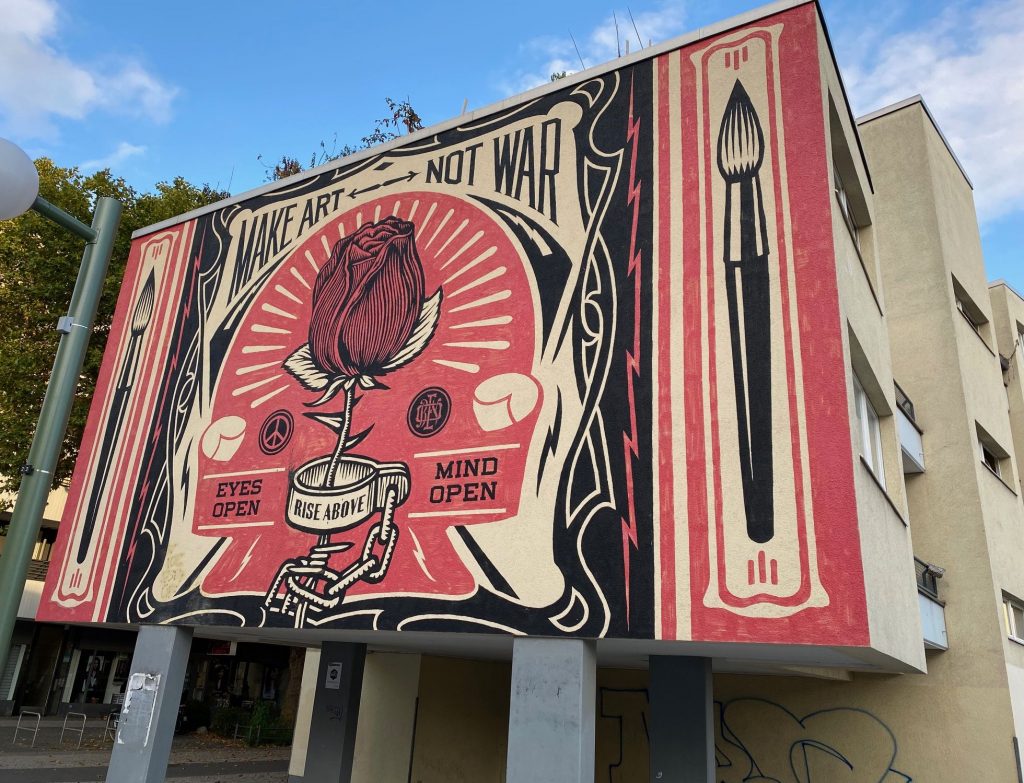
Therefore, the defence of democratic rule is, at the same time, a fight against the need of war by some doomed regimes. After winning the war comes the difficult task of winning peace. This means to create a state of affairs and a state of mind that can do without the need of war. If the external threat diminishes the internal threats might rise and have to be contained as well. Lots of challenges, even for mature democracies. (Image: Berlin 2022-10)
Symbol
What is it that makes an object a symbol? Probably, it is the widely shared perception of the meaning of a symbol that turns an object into a symbol. The etymology of the word symbol refers back to the Greek word σύμβολον. The earliest philosophical refer back to the Greek philosopher Aristoteles who deals with symbols when he writes about interpretations. Written words have become powerful symbols in the ancient world. We still have them all around us today. The interpretations of the words as symbols, however, may change considerably over time. Some symbols keep their designation and significance over centuries. Maps are well known to contain lots of symbols for roads, railways, tunnels or height. We learn about these symbols and interpret them in a specific societal context. Science is making ample use of symbols, e.g. chemistry. Different cultures define and apply their own symbols. Colonialism has been a form to impose symbols upon other societies. Throughout history symbols of power have changed as well. Each of those topics is an interesting field of application in itself. Young generations create their own symbols to establish a specific cultural identity or subculture. Urban spaces have been invaded by graffiti that tend to spread symbols as messages or symbols for their own sake.
Sociology has taken up the challenge to identify “status symbols” of groups of society. Possession of gold and silver have long ago been symbols of being rich. Maybe, even today such easily visible symbols play a role in how a person’s role is perceived in societies. Not only for priests etc. dresses have been applied as a symbol. Modern fashion is full of symbols as well. Interpretation of the meaning or even no meaning is an act of becoming conscious of the world around you. From the seriousness of symbols, we have come to the playing around with symbols as expressions of ourselves.
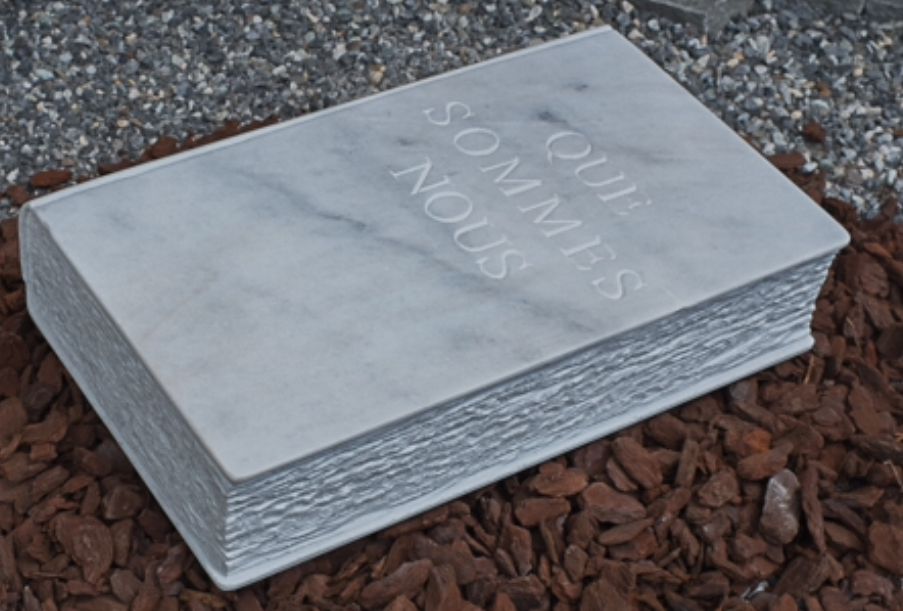
No matter whether we use the word, like water, we all know the chemical symbol H20. An image or art work using the symbol in whatever form will be decoded by us accordingly. However, the meaning we attach to water depends on the environment as well as specific context we (or the artists) are using it in. Cross-cultural competences consist in the awareness that symbols grow out of contexts and need to be interpreted accordingly. It needs a lot of openness, willingness to learn about differences and careful consideration in our everyday world to handle symbols. Doing culture is doing symbols.(Image of art work by Anderegg, Andi taken in 2016)
NS München
The documentation centre in Munich of the National Socialist time and crimes has an encompassing collection of documents on display. As the prime centre of the Fascist movement in Germany in the 1920s and early 1930s Munich was the home to party elites from the first months of the movement that became the epicentre of the dehumanizing policies we can follow throughout Europe (Topography of Terror, Berlin). The historical research in both documentation centres complement each other in many respects. Understanding the beginnings of the Fascist movement remains important to today. Fascist movements need to be stopped before terror even against neighbours takes hold. Records of the evolution of membership, men’s and women’s movements later on, attacks of the parliamentary system all have to be taken into account to be able to stem the Fascist tide at that time and today again.
“Materializing” is the current exhibition, which can be visited in part online. How can we deal with the “Shoah“? Polish artist have a long experience to cope and deal with the unimaginable horrors, the Nazis and the “Wehrmacht” committed in Poland.
Memories have to find a place, a piece, a word, a sound or an emotion to materialize. In that sense yesterday joins today and is preserved as learning and warning for tomorrow.
In addition to the much discussed “Wehrmachtsausstellung“, the work by Jochen Böhler provides ample evidence to debunk the myths of war without crime. This holds for the past and for the present. (Source: Böhler, 2019, S. 59-68, Die Wehrmacht und die Verbrechen an der Zivilbevölkerung während des deutschen Überfalls auf Polen 1939, Image below). 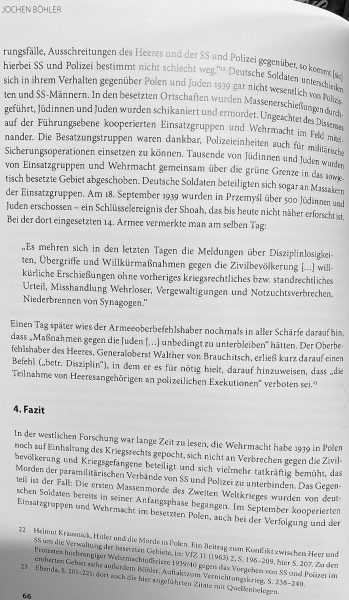
Topography of Terror
The documentation centre “Topography of Terror” in the middle of Berlin is easy to reach. The “Potsdamer Platz” is nearby and so is the “Kulturforum” with its galeries, museums and the “Berliner Philharmonie”. The documentation centre gives easy access to the historical evolution of Nazi-dictatorship from the earl beginnings, the horrific terror spread across Europe and first insights into the prosecution of criminal acts in the immediate post-war period. The Beyond the exhibition with audio-guide there is an easily accessible specialized library for personal or scientific research. The accompanying program of book presentations and discussions (image below) complements the busy show rooms. The external “walk through history” allows to grasp the main proceedings of the terror regime.
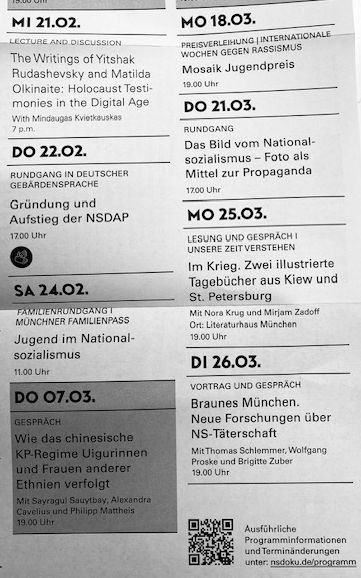
For special interest or research questions it is a very useful starting point. Hours in the library have to complement the research. Good to see that so many students walk through the documentation centre not only in groups from the neighbouring schools. The interest to understand when and how the terror started will allow us to better guard against those right-wing extremists who use a lot of techniques of propaganda well known and exposed in this documentation centre of the terror of the Nazi-regime.