Just in the vicinity of the Potsdamer Platz in Berlin you’ll find the Deutsche Kinemathek, the museum movies, actors, actresses, directors and the history of cinema in Germany. There is a small specialized library in the Kinemathek that allows to dive not only into journals and books, but also video material, scenarios and accessories. Of course, you will find a lot of material on all sorts of movie stars (heroines) over more than a hundred years. The “Divas” of the industry take up a large part of the exhibition. “Marlene Dietrich” much more than “Hildegard Knef“, the former born and the latter lived for a long time in Berlin-Schöneberg (Berlin-Pretty-Hill as some locals call it nowadays). The 2 Divas probably caused the funny translation. Anyway, the hall in the Kinemathek which is exclusively devoted to Marlene Dietrich impresses with a lot of glamour and mirrors around.
For those with not only a biographical, but also life course interest in cinema cherish the public access to the library. The most impressive table there is the desk with access to the Ukrainian movies and about cinema in Ukraine. A list with QR-codes allows you to readily approach the recent developments before and during the Russian aggression on Ukraine (See image below). After all Potsdamer Platz in Berlin was a hot-spot of the cold war period in the divided Berlin. A little bit of a “Metropolis-atmosphere” can still be felt. The Kinemathek explains well what this is all about. 
Deutsch Deutscher
In English grammer we use comparative adjectives to express that something or someone has changed or undergoing change. Germany might have become more German. The second usage is to make comparisons not only between two points in time, but between two statuses or of two artefacts more generally. The statement “Deutschland wird deutscher”, therefore, intends to describe an ongoing process or the transition process from one state to the other. This statement as such does not offer any explanation or definition of the original state, nor of the second point of reference. It might just describe the dynamics or the direction of the dynamics. In this example it deals with social dynamics. Germany in the 21st century is posing more questions about its identity and future directions than some time ago. The artist Katharina Sieverding has put up this reflection as a poster on walls to provoke discussions about the way to identify and deal with German identities in the early 1990s, shortly after re-unification of the 2 parts of Germany (Image below from “Nationalgalerie für Gegenwartskunst, Hamburger Bahnhof, Berlin” 2024-5).
30 years later we are scared by a ruthless right-wing extremist and brutal movement that takes to the streets and commits crimes.
It is no surprise that the Higher Administrative Court in Cologne has confirmed that the “BfV’s classification of the party AfD and of its youth organisation as a “Verdachtsfall” (subject of extended investigation to verify a suspicion) as well as the publicising of this classification to be lawful“.
It is a step ahead to become “deutscher” if we battle out such decisions in courts rather than by force on the streets, although this has failed once in German history already. The poster action by Katharina Sieverding is a reminder to monitor and deal with these topics continuously, albeit the knifes may be coming in closer than before. Being frightened is no option in order to defend democratic values. 
Puccini Media
In honor of Giacomo Puccini the Media enterprise Bertelsmann features one of its treasures. In cooperation with the “Archivio Storico Ricordi” of Milano, Italy, 100 years of Puccini’s oeuvre is celebrated with this exhibition. Fans of Puccini’s operas will have to visit the archives but the interest of this small exhibition lies in the impressive success story of Puccini and his publisher (part of Bertelsmann). Continuous innovation and adaptation to new media, like disks, accompanied an extraordinary marketing campaign throughout the 100 years. Even today there are cycling tours around Puccini’s hometown for the modern eco friendly tourists. We learn a lot about how the media industry functioned in the 20th century. It was absolutely vital to fighting for the rights of authors, composers and rights to receive royalties for performances as well as for the publishing on media. The exhibition in “Unter den Linden 1” is just next door to the Staatsoper which also gave honor to Puccini’s “Madame Butterfly” in 2024. His uncompleted Opera Turandot closes the exhibition with his rough sketches of the final scene. Merchandising is not an invention of the 21st century, but almost a century old tradition. This exhibition is a great testimony for this. It remains an important effort to allow authors and composers to gain a comfortable living during their lifetime. The gains for humanity as a whole are enormous.

Infinite Landscapes
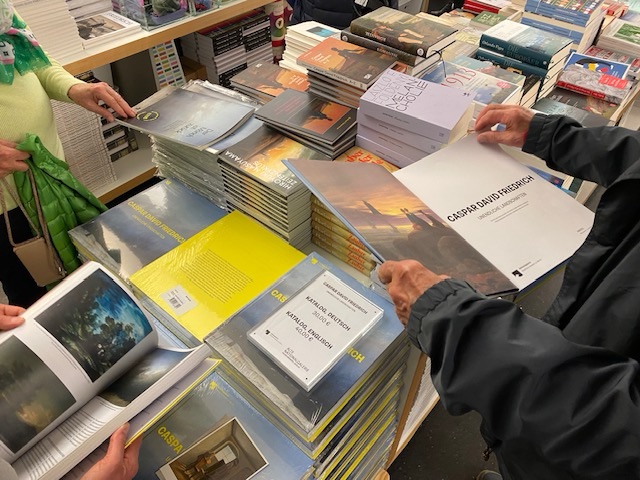
The “Alte Nationalgalerie” celebrates the 250th birthday of Caspar David Friedrich in Berlin. With a considerable effort to unite in one exhibition many paintings and drawings that stem from other collections of public and private origins. This particularly remarkable as a section of the exhibition is devoted to paintings that were intended originally to be seen next to each other (compare catalogue p. 233). Comparing 2 images from the same painter evolve into a narrative. This raises curiosity as in some instances the 2 paintings do not treat the same subject. Your very own interpretations and associations will make for an individual journey through the sheer endless spaces. The exhibition allows to grasp some of the many questions posed by the period of enlightenment not only in Germany. After “God is dead” what will happen? How is mankind defined? What is its relationship to nature? Are we just left alone or what comes after individualism? Even for painters, much like scientists, it is just as important to pose the right questions. Leaving the exhibition with more questions than answers will put you in the “Berlin state of mind” of 200 years ago. Greiswald, Dresden, Rügen and Copenhagen as well as nearby mountains were influential locations and landscapes for Caspar David Friedrich. Berlin 1906 „Jahrhundert Ausstellung“ made him famous again, despite decades of being forgotten. Yet another question to ponder and wonder about. An additional merit of the exhibition is the section on painting techniques and the use of his sketches and drawings for the preparation of the oil paintings. The final riddle to be solved is the price differential between the German and English version of the catalog in the bookshop next to the usual merchandising props.
May 1st
More people take to the streets on the 1st of May in Germany. The costs-of-living crisis with high inflation has increased the claims for pay rises for workers and adjusted wages for employees. We all have observed “greedflation”, i.e. excessive company profits in several sectors. Additionally, “shrinkflation” has affected consumers in their daily shopping experience. Political efforts to curb inflation have taken a long time to come about and most initiatives have ended already (Energy sector). This spurred a new drive for trade unions to come out in huge numbers to protest and claim adequate wage increases to cover the increased costs of living. In Germany the DGB informed on the annual 1st of May demonstrations across the country about a strong new entry movement of members of 400.000 persons. It is higher than the loss of members of the large baby boomer cohorts who retire.
Through a broad and engaged membership the pressure on higher wage settlements will persist. Companies have used the crises to generate extra profits. It is only fair that those employees who largely contribute to the success of a company will claim their share as well.
For society as a whole it is important to consider that the discrepancy between managerial pay and shop floor wages do not increase further. The social fabric of societies is in danger if perceived injustices grow. More radical forces can all to easily exploit this causing a severe danger for democracies. Meeting people on the 1st of May and joining forces across sectors and trades ensures that a society continues to build and rely on solidarity. High inflation times are a great reminder of the economic basics of societies in history as well as today. 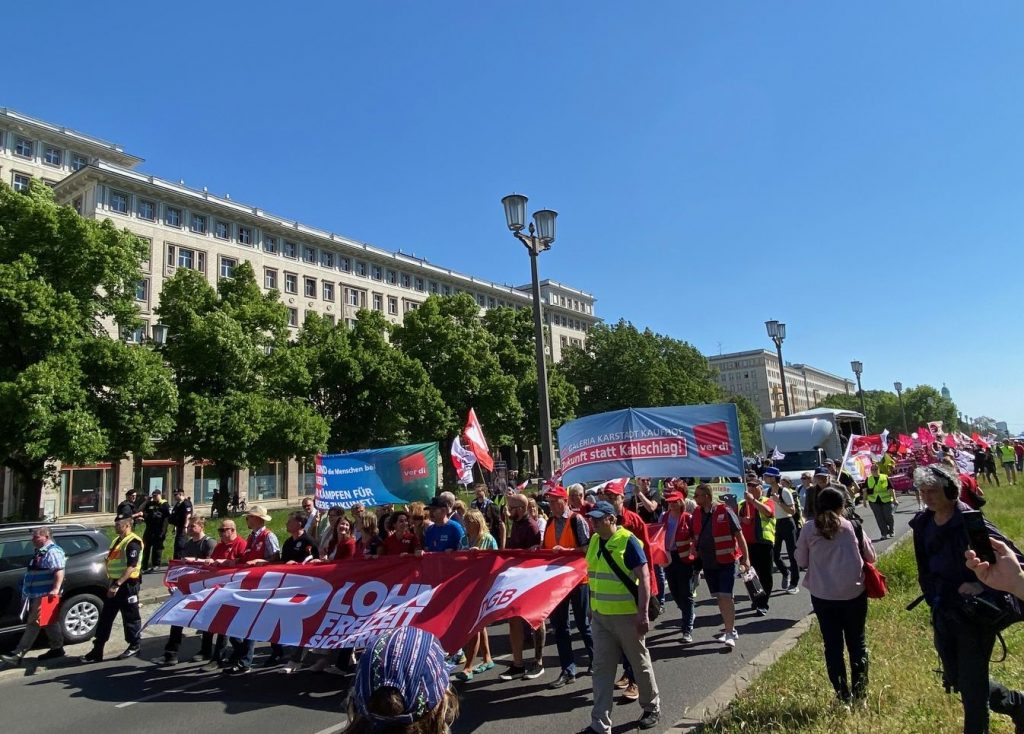
Comparative Advantage
In economics all students go through the calculus of comparative advantage. People, regions or whole countries tend to apply comparative advantage to their production systems and ensuing internal or external trade. The basic rationale developed by David Ricardo has not changed that much over 200 years. The fields of application, however, are continuously expanded. Lindsay and Gartzke (2020) have applied the comparative advantage rationale to military strategy. The paper quotes 26 times Clausewitz and demonstrates the links of strategy to the basic economic and social rationale of comparative advantage. It is the politics of production that even the presence of trade may override the rationale of comparative advantage to favour local production of “operational domains” or military equipment.
In Russia’s aggression and war against Ukraine own production and trading of weapons has returned to the forefront of the concerns. In addition to the production of ammunition, the provision of drones has dominated the international arms trade related to the Russian aggression. Resources and time for production are additional factors that have an impact on availability of weapons at the right time at the right place and with the sufficiently trained persons to operate them.
The strategies that cross domains or combine domains seem the most promising. The careful analysis of your own comparative advantages or disadvantages needs to be the basis of any strategic decisions. This has been known for 2 centuries at least and is still valid in many fields of application. Additional considerations for “home production” might add to the complexity of the issue. Sustainability has also found its way into the field of comparative advantage at last. This may alter the analysis of comparative advantage of operational domains as well. Lots of unresolved puzzles still around. It will need years to sort this out despite the urgency of the Russian aggression on Ukraine.(Image: AI Copilot.2024-4-30 2 political leaders deal weapons. One has a comparative advantage in ships. The other one has a comparative advantage in aircrafts. they deal together)

Family Kafka
100 years after Franz Kafka’s death nearly all facets of his life and writings have been analyzed. The archives of the editor Wagenbach and the publishing house have now opened an exhibition at the “Stabi Ost” in Berlin adding a family picture book description of Kafka’s life (Curator Hans-Gerd Koch). This is of interest because Kafka himself had written an extensive letter to his father (Brief an den Vater) in which he tries to understand his intricate relationship with his father and other family members.
Nowadays, some people would try to analyze Kafka’s life through the parapsychological technique of family constellations. The far-reaching and pan-European family networks of the Kafka (father) and Löwy (mother) families were more than just an excellent source of inspiration. 2 younger brothers died in their first year. 3 younger sisters followed more traditional evolutionary patterns within families. The television series on Kafka’s life add to the understanding of his sources of inspiration and “parallel worlds” he created and lived in. The exceptional “fictionalization” of his own life and existence in the spirit of André Breton’s surrealism remains a milestone in the history of literature.
Kafka himself thought he was not really “instagrammable”at the time, but his image has reached and still reaches millions of people (Link to Picture archive). He himself would probably have defended the thesis that the most powerful images are within us. … and they are hard to escape from.
(Image from Exposition in Staatsbibliothek Berlin 2024-4, QR-code links to reading in originals!) 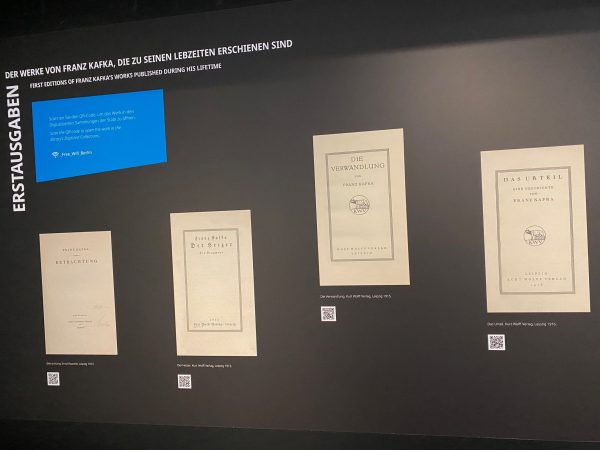
Opera Politics
We know that sports and international politics have ample links. This holds true for Opera performances, either due to the way they are presented or due to the content of the libretto. The opera Jeanne d’Arc (Giovanna de Arco, Jungfrau von Orléans) by Guiseppe Verdi was composed in 1844 and had its Premiere at La Scala in Milano 1845. The libretto is based on the drama written by the playwriter Friedrich Schiller. Later in the 19th century musical pieces followed that dealt with the court judging Jeanne d’Arc. The opera by Verdi creates a strong female voice and character which outperforms men around her. Obviously, she was and remains for many a quasi-mythological heroine. In short, this constitutes great plots for drama and operas. This is centuries old despite the rare occasions of more recent performances of Jeanne d’Arc in form of Verdi’s opera or other forms.
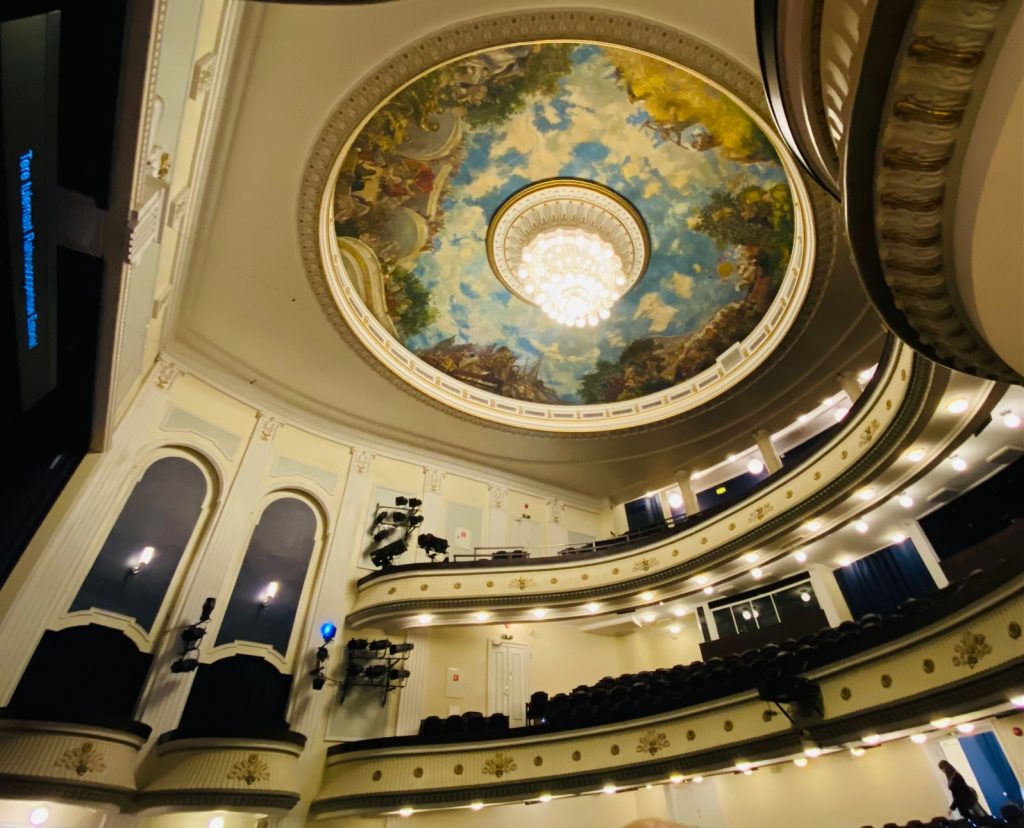
The Opera as arena of politics is currently tested in the Opera at Tallinn Estonia. Due to the aggression and occupation of Ukranian territory by Russia the plot of Jeanne d’Arc regained another European location of potential application. Ukraine pushed back the Russian invasion and struggles to win back its territory from the invaders. The performance of the Opera recreates an impressive Jeanne d’Arc in the person of Elena Brazhnyk who was trained at the National Tchaikovsky Music Academy of Ukraine. The evening inspired hope in many respects. Talents from Ukraine or trained in Ukraine reach out into to the world. Similarly, we have much reason to be inspired by courageous acts. Operas do politics. “Bravi”, as they say in Italian.
(Image: Opera Tallinn-Estonia2024-4-18)
Electricity
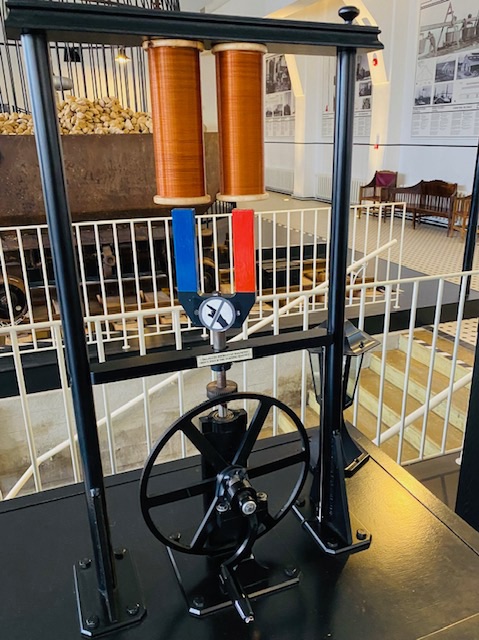
We all use electricity, not only daily but continuously. But do we really know or remember how it works? Surprisingly, we care very little about the energy provision or the physics behind it. Therefore, from time to time it is useful to dive into the details of generating electricity and thereby energy and how it arrives at our doorsteps or desks. In science museums you can literally walk through the history of power generation. A fine example is the Energy Discovery Centre in Tallinn, Estonia. Even for those you did all at school turning the handles of generators is a playful reminder of the basic principles of electric power generation. The efficient use of it, is a topic that needs to be covered as well. Searching the web for demonstration videos is fine as well, but the physical activity of moving induction coils and releasing sparks is difficult to rival. Opening up your mind for the physics of our lives yields a better grip on the challenges of electricity grids and local production of electricity. Are you already a prosumer? Combining electricity production and consumption in one household is surely a forward-looking strategy. Raising awareness for these topics concerns all generations. Take time for a power play, it is truly enlightening. For teaching professionals or want to be there are exciting programs out there, too. Just one suggestion for 2024 in Colorado, US.
Schachliteratur
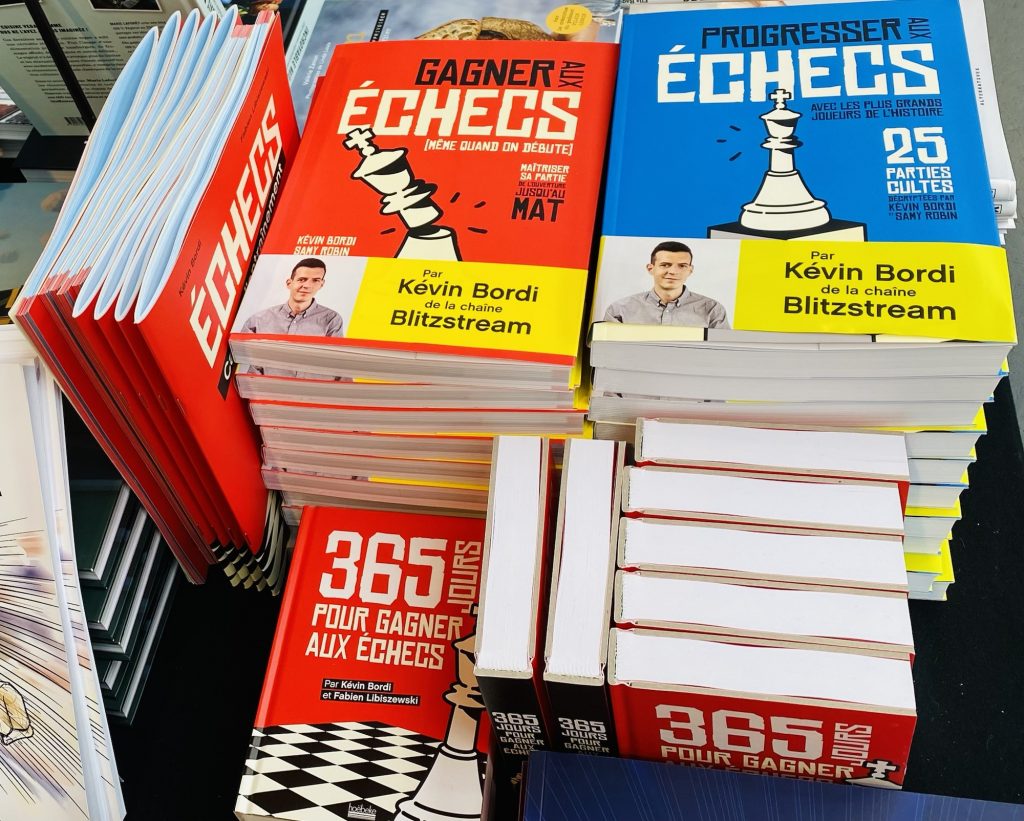
Es gibt sie noch, die Personen, die Schachbücher lesen und kaufen. In vielen Sprachen existiert die Niche der heimlichen Strategen. „Teaching old dogs new tricks“ oder ist es eher „teaching young dogs old tricks“. Das ist eine empirische Frage. Nicht nur Zeitungen für sogenannte BildungsbürgerInnen haben noch kleine Spalten zumeist mit Schachproblemen. Manchmal findet sich Schachspielen sogar als Schulfach. Lesestoff zum Schachspiel findet sich reichlich. Schach in der Literatur ist jedoch verschieden von der Schachliteratur, die sich mit Strategien und Tempi befasst.
Das Lesen von Schachliteratur mit Meisterpartien hervorragender Spielenden ist vergleichbar dem Lesen einer Partitur einer Symphonie oder Oper. Das Kino spielt sich dabei überwiegend im Kopf ab. Gelegentliche unvermittelte Gesten oder Ah-laute sollten den Spielenden ihrer Verzückung wegen entschuldigt werden. Vielleicht sollten die Schulen diese Kulturtechniken mehr vermitteln. Macron‘s Vorschlag Theaterspielen mehr in den Schulen zu vermitteln erscheint in diesem Vergleich als ein Entgegenkommen an die „Generation der sich ständig selbst inszenierenden“. Mehr Spielen ist aber schon mal ein wegweisender Vorschlag.