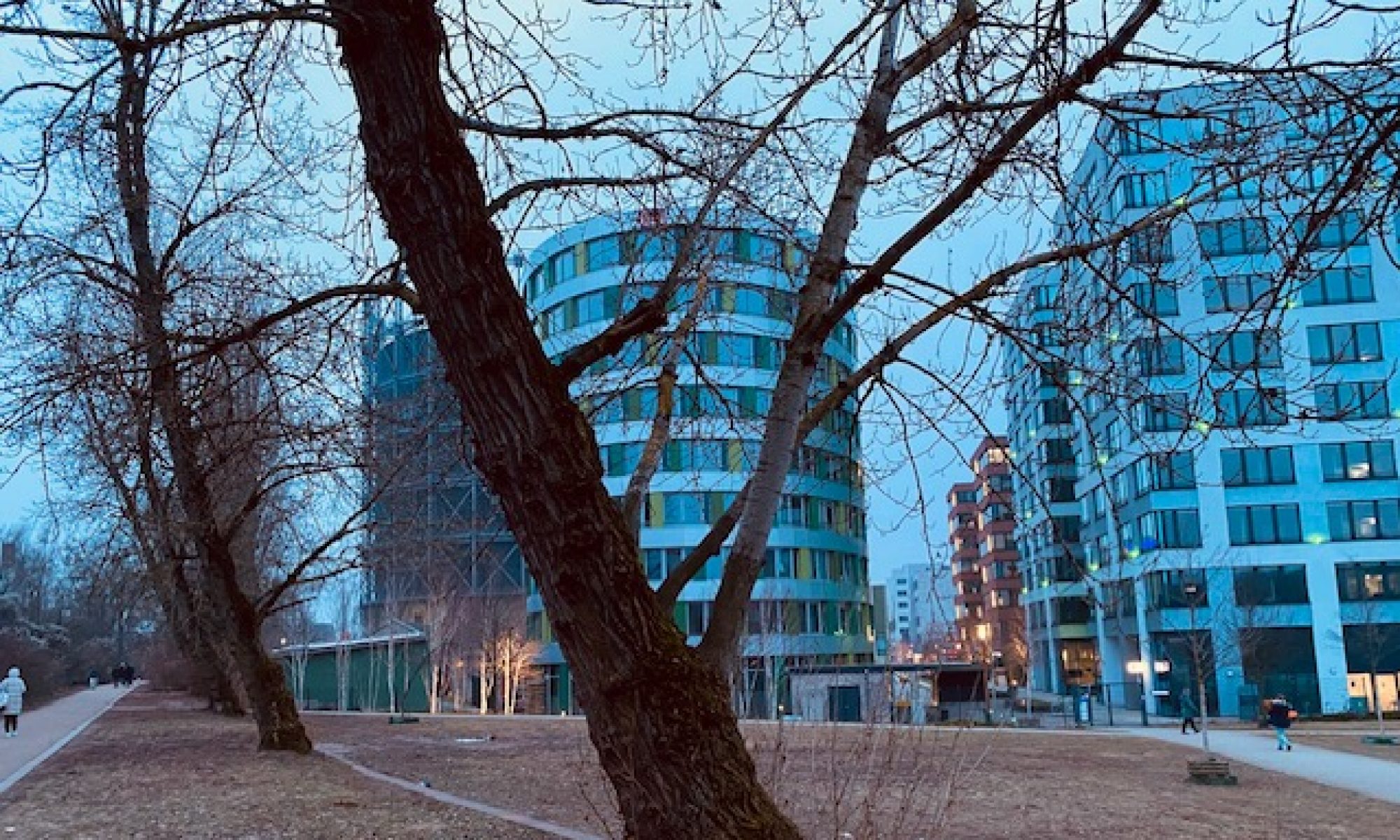
Research on the Shoa and the Nazi crimes has a clear cut separation into millions of victims and millions of perpetrators. There is only a very small group of persons who risked their lives in their attributed or chosen role of perpetrators and saved lives. Most of those persons received recognition later, some decades later. The vast majority of persons were oblivious to their prior roles and some even tried to defend them themselves through a variant of victim blaming in recurrent attempts to reduce their guilt. Another frequent excuse is to recur to a perpetrator’s own experience as a victim of abuse or tough childhood. In a static perspective this might work, but the learning and reflection ability of humans apply to all persons irrespective of age, if they show the willingness to do so. victimization is powerful tool to justify a role as perpetrator later on. Criminal courts assisted by psychologists statements accept guilt reduction. After all those considerations the basic classification into victim or perpetrator remains a valid differentiation, only very few cases allow for a more nuanced assessment of the case. (image extract of Rachel Baes MRBAB Brussels) 
Nazi Doctors
The role of medical doctors during the Nazi domination in Germany has been revisited by the professional organization of statutory medical doctors (Kassenärztliche Bundesvereinigung KBV) in collaboration with the Center for Research on Antisemitism (ZfA TU Berlin). The exhibition entitled „Systemic Disorder“ first shown in the main entrance hall in front of a conference room offers a thorough review of the role of medical doctors throughout the Nazi period. Politically undesirable physicians were rapidly banned from the profession and promotions given to NSDAP party members. The totalitarian approach transformed the whole apparatus of the medical profession into a politically streamlined organization ready to commit crimes like forced euthanasia or selecting „insane“ persons for special medical treatments in other institutions. Selection of forced laborers for firms or declaring them unfit for work, which in many cases sent those persons to concentration camps, was part of the streamlined medical doctors. It took decades after the „Wehrmachtsausstellung“ in Hamburg that another profession has done its homework. Great to know that this important exhibition, documentation and catalog is traveling now across Germany for at least a year. It is another milestone in coming to understand how presumably intelligent people were part of a highly efficient selection and killing machine during the Nazi domination in Germany. (Image, Berlin KBV 2004, catalog p73, SystemerkrankungSystemerkrankung) 
Question Tomorrow
« Tomorrow is the question ». This is the imprint on the 8 table tennis tables in the Martin Gropius Bau 2024. As part of the Contemporary art exhibition by the artist Rirkrit Tiravanija, the tables are very busy throughout the day and invite people to meet, play and greet. If tomorrow is the question, today is the answer. Is it? Maybe the answer is the day after tomorrow? Time appears to be the answer and the question. Such questions touch on basic philosophical questions about our relationship to and concept of time. Future orientation or even the belief in life after death touch upon basic religious beliefs. Intergenerational transmission is useless if there is no tomorrow or concept of tomorrow. Sustainability is most relevant if we are convinced there will be a tomorrow. Fatalists or warmongers rate today so much more than tomorrow that everything is subordinated to the urgency of now. Not easy to strike the right balance between „for now“ and „for tomorrow“. Simple financial discounting of benefits which accrue only tomorrow do not solve the urgency issue of behavioral concerns. My personal discounted value of ice cream tomorrow might be superior to ice cream now, but it is based on the tacit assumption that the shop still exists tomorrow or any other time in the future. The exhibition invites people not only to play table tennis but also to discuss the question of tomorrow across language barriers and across tables and cultures. 
Sociology in Art
Sociologists study and teach a lot about social capital. James Coleman and Pierre Bourdieu each have coined social capital as a major foundation of societies. Therefore, the exhibition of the artist Rirkrit Tiravanija “happiness is not always fun” in the Martin Gropius Bau (Image below) is interesting beyond a justification art for art’s sake.
What does Tiravanija tell us about happiness and social capital we did not know before? The artist went to a Chicago based art school, hence, it is likely that he has been confronted with the concept of “social capital” by Chicago sociologist James Coleman. The Berlin exhibition of Tiravanija can be walked along and experienced through the lens of the creation of social capital as a form of art. Art raises awareness to the importance of social capital for the ways we live together and form communities. The Berlin exhibition, meeting place or play ground is worth multiple visits as the participatory experience changes each time. In each of the rooms we reflect on our cultural practices like sports, music, printing or cooking as forms to create community. Each time we take home a little bit of social capital as well. “Happiness is not always fun”, but for sure You’ll have many happy moments throughout the visit of the exhibition. The guided tour by curator Yasmil Raymond (2024-12-19) added yet another little bit of spice to the exhibits. For a few moments we felt like a strong link between Chicago and Berlin, just like those sociologists in Berlin who studied and continue to study James Colemen’s foundations of social theory.

Famous Neighbors
Sometimes people believe they can catch a bit of fame, if they live in a prominent neighborhood. Next to a famous person or the glamor surrounding such a place is inspiring. In Berlin the honor or fame is transmitted for example with the street names of composers. Everybody knows Johann Sebastian Bach and around Christmas time many of his compositions will be performed again. Directly next to Bach street we find Flotow street. It needs a bit of info about music and music history to identify the honor for Flotow to appear next to Bach. Well, Berlin you are „wunderbar“. You have made my day just on one of the first few days of the direct train connection between Paris and Berlin started. We grow together in small steps. 
Reconciliation
European history is a long history of atrocities committed against humanity. The Documentation Centre for Displacement, Expulsion, Reconciliation in Berlin (Image below) captures this history in a comprehensive manner. We are quickly overwhelmed by this weight of history and the implications this has for the understanding of the people on the globe. This relatively new learning centre has, beyond the memorable permanent and temporary exhibitions, a room of silence to recover from the hard work of remembrance, always in view of reconciliation.
The library allows personal search and research of migration documents and biographies. All centuries have their history of displacements, but the Nazi terror surpassed all prior records and forced millions into displacement or death. We are still working on this heritage and the enlightenment of how these atrocities could take place. Full consciousness of the terror and horror of the 30s and 40s is necessary to guard against the many attempts to falsify historical events or discard the sorrow of millions of people and their families.
Reconciliation remains a continuous challenge. A large part of diplomacy has to deal with reconciliation beyond concerns of daily affairs. It is not just a matter for head of states and days-off during a year. Stillness helps to deal with the challenge, especially if it is very difficult to find adequate words. 
Air Concept
Well yes, this is the latest fart in design and architecture. The Berlin International University of Applied Sciences composed an exhibition on “Air Architectures” which takes air seriously. The international group of 7th semester students took Air Architecture seriously and developed their ideas in the context of a curated exhibition. Nice semester project.
Air is a fundamental precondition for humans to (co-)exist. The biology of air (breathing) or the chemistry of air (fine particle matter) have been studied extensively. The physics of air flows in cities receive more attention as well in architecture. Interior design has yet a lot to contribute in the age of heat pumps and air conditioning.
Let’s think architecture from the perspective of air and air flow. Depending on our cultural background we might have very different associations with air. Indian or Chinese practices like yoga or Tai Chi teach us to take air more seriously than Western practices. Most architecture in cold countries of the northern hemisphere aim to keep air to the outside of buildings. Yet, the percentage of humidity of air is a serious concern of architecture as well. Air flow and quality then becomes a key issue of construction and architecture, somehow through the back door.
Maybe in approaching architecture we might think first of what is or has been the architect’s concept of air or aerodynamics. 100 years after the death of Gustave Eiffel and the Olympic Games in Paris, we still gain from thinking about air (not only air pollution) and its dynamics. Looking forward to the next generation of air architects.
(Image: Exhibition, Air architectures, at Berlin International, University of Applied Sciences 2024-12) 
Chinny Trait
In evolutionary biology there is still a discussion about the functional explanation of why humanoids developed a chin. A recent paper by Meyer-Rochow adds a new functional explanation for the evolution of the chin to the literature. Across cultures and sufficiently distant populations of humans, similar patterns of the use of the chin have been observed. In comparison to other species under the superfamily “Hominoidea”, our bites are only of minor strength and apes, Orang Utans have not developed a chin quite like us, homo sapiens. Origins of the chin as “weapon” in fighting and broader social selectivity remain hypotheses without sufficient proof of evidence.
In addition to the functional explanations of easier “mastication” or formation of words, chins might serve as an additional part of the body to hold items to the chest. This function, of holding tools or stuff could have been an advantage for our ancestors and became a favoured trait. During the pandemic our chins became a supporting or hindering reason in the struggle to wear masks for extended periods of time (see image below).
Nowadays, we ask ourselves about the social selectivity into becoming a violin player with this important function of the jaw and chin to hold the instrument. A rival hypothesis is, of course, that holding things with our mouth, like needles or screws, in sewing or handicrafts could eventually make the chin disappear. The bipedalism of hominids, freed our hands for other tasks and the evolution of a chin could similarly reinforce the efficient use of our hands.
Novel use cases for the chin, like holding your smartphone while typing on a keyboard or while opening doors, might enhance the chinny trait of hominids.
Over hundred of thousands of years the interaction of the bio->psycho->social (BPS) spheres of life may have interesting traits for us down (or up) the evolutionary line.
(Image: European parliament, Brussels 2020-7-23 address by Ursula von der Leyen in “masked assembly”).
Kids Space
Political claims to reserve more space for kids in cities have a tough time. Kindergardens or child care in general are scarce and the lobby for kids is often limited in time and extent, since it is the parents that usually are the ones to advocate while their children are small. Jointly parents and children of young age experience the tough atmosphere to find, preserve or extend the space for kids.
The Gropius Bau in Berlin has opened up an exhibition space reserved to children 3+ as part of an art project “BauBau” designed by Kertin Brätsch 2024. A colorful room and installations as “loose parts” are the starting point to delve into a real/fantastic world were kids reign. There are a few so-called “playworkers”, who accompany the endeavours, if need be. At the end of the day the room was still in pretty good shape I would say assuming that “children set the tone and decide what happens in this place”. Safe and supportive environments for children are scarce and parents are always challenges in their attention to watch out for risks of all sorts in public city spaces.
Even if the “play space” is free of charge, it takes parents or kindergarden managers to reserve the space.
An early experience of a museum from the inside is likely to have lasting effects on children and the parents. They might have fond memories of a museum as an exciting space also for them. It constitutes a nice continuation of the outdoor “radical playground” project during summer 2024.

Korea relieved
On Saturday 14th of December 2024 the Parliament of Korea voted with 204 out of 300 votes, the required 2/3 majority of the parliament to dismiss the president. The declaration of martial law has been the most serious attack on democracy in Korea since its founding in 1987. It is the 3rd impeachment of a Korean president in this short time of democratic life cycle. After impeachment the constitutional court has to confirm the impeachment also with 6 out of 9 judges in favor of impeachment. In 2017 the judges confirmed the impeachment of a president due to corruption charges, but in 2004 another president was reinstated after illegal campaigning charges were retracted. Democratic procedures hinge on checks and balances in the constitutional set up of a state. Nominations, votes of confirmation of judges are important safeguards against illegal martial laws to restrict or even abandon democracy. Pressure from the street, the people at large, is another safety net of democracy. It should not be the last resort for democracy’s survival as it is likely to come at high costs of human lives. 