
Woman artist scandal

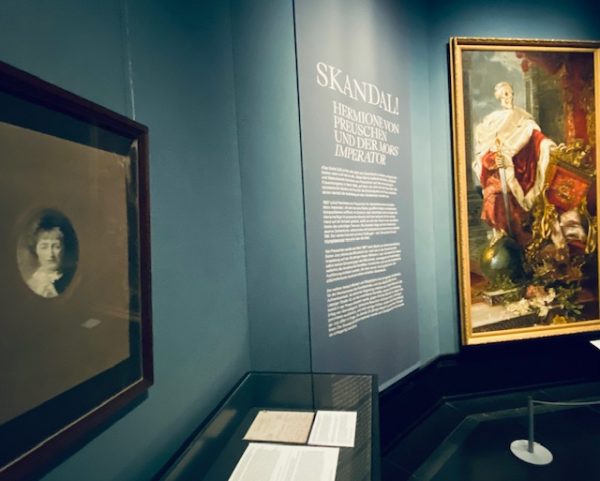
The painter Hermine Schmidt-von Preuschen, little known today, had to face strong forces in the established art community of her time. The skills and audacity she displayed at an early stage of her career as painter is epitomized in her work “Imperator Mors”. This painting dates back to 1887 and was rejected by the art academy in Berlin for their official exhibition. The woman artist was already at that time confident enough that her painting was of sufficient quality to deserve to be not only considered in the exhibition, but also to be seen by larger audiences. Similar to the refused painters of the impressionist movement, she decided to mount her own exhibition. The turnout to this proved to be quite a success according to the press cuttings presented as part of the exhibition in Berlin at the “Alte Nationalgalerie” 2026-5. Maybe it was the intended philosophical topic or message that killed the chances to be part of the art academy exhibition. “Imperator Mors” shows death or a skeleton to be the ultimate ruler of our fate. For all those who believe in some sort of life after death, this can be viewed as a “Scandal” in itself. The scandal created with such a depiction probably overshadowed the fact that the provocation came from a woman artist. Still very avantgarde for the end of the 19th century. (Image: Hermine Schmidt-von Preuschen and her painting Imperator Mors 1887)
Silence revisited

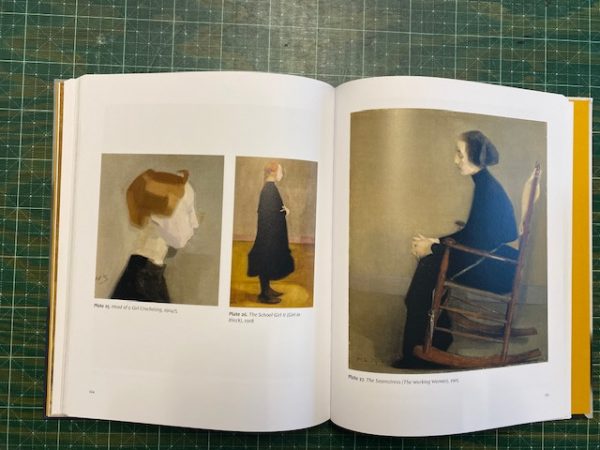
In most cultures, particularly western ones, we are less and less used to silence. Keeping silent for 1 hour is almost framed as an exercise of meditation. In the presence of other persons silence is often misinterpreted as not being interested or even intelligent enough to contribute to the conversation or discussion. Therefore, the title of the exhibition “Seeing silence”, which rediscovers and honors the paintings of Helen Schjerfbeck. Her Finish, Swedish speaking roots, with a broad European training in the arts, made her an accomplished painter in the impressionist’s tradition with a focus on painting portraits. The catalog from the exhibition (THE MET 2025) gives a great overview of her paintings when silence of her models tell stories. Portraits of women are particularly powerful examples of tranquility, and reading, but also uneasy silence in rocking chairs. The biographical sketch of Helen Schjerfbeck by Dita Amory sums up the vocation as “All I desire to do is paint” (p. 15). Towards the end of the 19th century and the 1st half of the 20th century this meant work in silence and she chose to work on silence as well.  (Image: catalog in library Brussels 2026-2) 

Cyprus Aphrodite

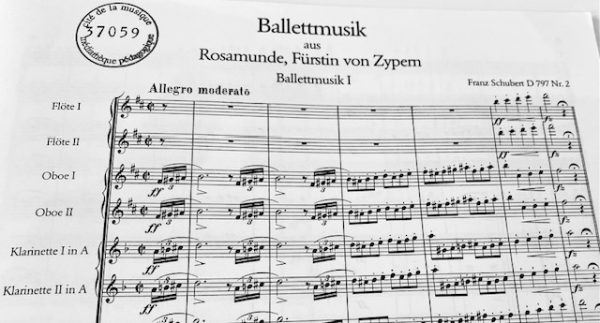
The legendary tales about Aphrodite and Cypriote cultural heritage have inspired not only a series of conquerors, but also composers of the romantic period in the 19th century. Somehow in praise of monarchy, Fromental Halevy composed the Opera “La Reine de Chypre”, inwhich the last Queen of Cyprus had to abdicate in the medieval era.  As a formidable example of French opera style, Richard Wagner transcribed it for salon-type recitals for voice and piano. The ballet music by Franz Schubert “Rosamunde, Fürstin von Zypern“ is yet another romantic piece built on the legendary associations with the island and its history. The exhibition “Cyprus at the BNF” in Paris proposes a transversal view across centuries based on their multiple collections. The western bias of what we in the western hemisphere of the world defined as being of interest becomes visible and transparent. The oriental perspective has been complemented by a small selection of exhibits from the Bank of Cyprus Cultural Foundation. A critical perspective on what enters our collections and archives is a great scientific accomplishment, at times when biased views from politicians have become more common again. 

Saint-Simon Utopia

Towards the end of the 18th century and during the early 19th century, the early signs of what the industrial revolution would mean for the working people became visible. Saint-Simon had lived through the ups and downs of the French revolution himself and had been to the Americas with La Fayette before he developed his utopian socialist vision of a unified class of working people, which for him included blue as well as white collar workers. At the advent of the 2nd industrial revolution through general and agentic Artificial Intelligence (AI) in 2025, we shall most likely witness a renewed interest in utopian scenarios and grand ideas of what the future of technology, society and humanity might be like. In 2026 we shall re-read Saint-Simon quite a bit in order to learn about ways to make sense of arising trends and how to come up with a positive utopia that can motivate people to thrive again for more equality within and between societies. 

Napoleon legacy

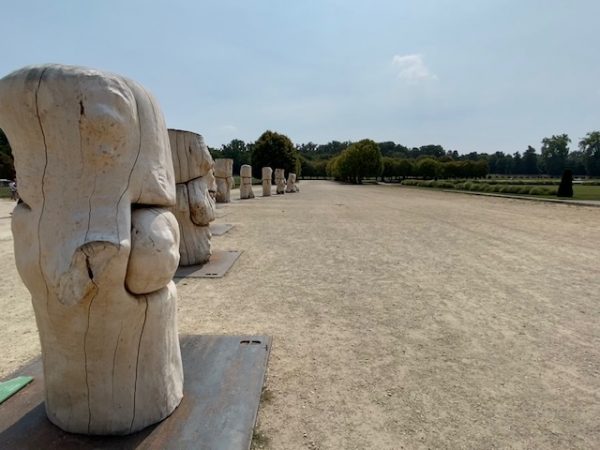
It is huge historical project to try to summarize the legacy of Napoleon Bonaparte. AI is by design less hesitant to come up with any length of a summary statement some with good references on which the statement is based. In combination with a visit at Fontainebleau and a first hand impression of the environment of the autocratic ruler, the remainders like the introduction of a Civil Code to guide also administrations to lawful conduct, we still see influences of this legal innovation in many other countries across the globe. The recognition of Jews as equal citizens and to allow equal access to property and many professions have been influential across Europe mostly in occupied territories. Military service for Jews in Napoleon’s army was another consequence, which spread into the Prussian army and the 1st world war. It is in the 21st century that we see shifts towards more authoritarian governance styles spreading again, we did not want to see this happen until Russia‘s war in Ukraine. (Image: La Chair de la forêt, Frénésie des Géants by  Wang Keping Fontainebleau 2025-8)

Fontainebleau library

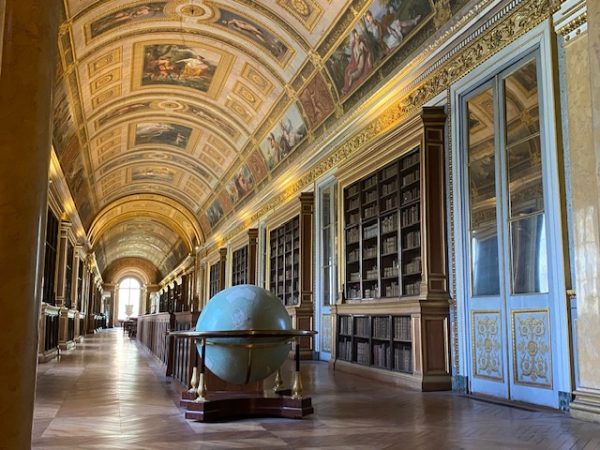
The “Galerie de Diane” in Fontainebleau has been built during Napoleon’s reign. It hosts the library with a large collection of books. The function of the books seems to be more to intimidate the persons passing by rather than ready for inspection. The globe at the entrance reflects the ambition of the ruler. The fact that you have to walk some stairs upwards increases the impression to be little compared to this universe of knowledge. It is great that libraries have flipped this perspective and today we study the period of Napoleon’s reign with our democratic values in mind. The top-down approach was the incarnation of Napoleon’s style of government. Despite the revival of such governance styles in the 21st century across the globe, they are unlikely to last for more years than Napoleon’s fate. A simple reason for this may be the only representative or intimidating role of knowledge in such forms of governance rather than an open mind approach. 

Fontainebleau Throne

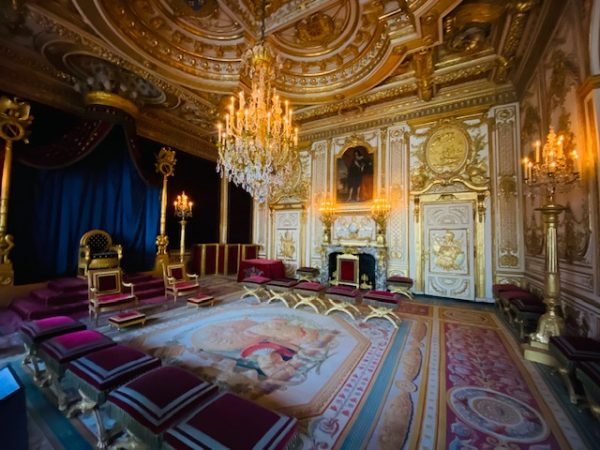
The French history is full of kings and emperors who have ruled the country. The Chateau Fontainebleau has the longest history of kings who lived there and held office, a pre-modern version of “home office”. The most remarkable and distinguished furniture of a king is the throne reserved for office hours. Napoleon created a special throne room at Fontainebleau which is also the only one preserved in its original form until today. It is just one of the home office rooms of the emperor. The antechambers, council room and study had to be passed before to reach the ear and audience of the emperor. The history of the home office and thrones have been intertwined ever since. 

Roof under snow

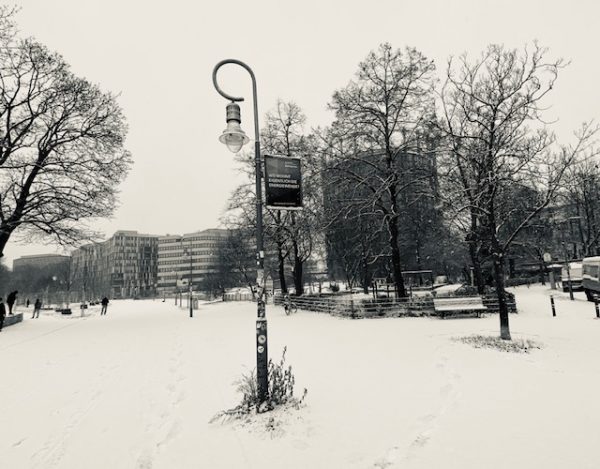
The painter Caillebotte has captured Paris roofs under snow. Hundred years later this will be a rare event. The original painting we can still admire, the original scenario will be a rather rare event. Snow changes city life as everyone walks slowly and traffic as well as other noise is softened by snow as well. Mankind is changing the course of history through global warming while ignoring the consequences for later generations. The links between art and science are closer than we tend to believe.

Climate Awareness

The Musée d’Orsay has prepared a wonderful walk through its permanent exhibition of late 19th and early 20th century installations to reflect upon climate and climate change. Raising awareness about the treasures lost and those we are about to lose in the next few years. Impressionist painters have depicted landscapes, cities and monuments covered in snow, which the next generations will no longer be able to enjoy the same way. The roofs of Paris covered with snow has become a feature of a distant past. Additionally, the impression of the massive steam trains crossing metal bridges appear as the daunting future of technical progress. Mixed feelings of fascination and risk associated with those machines were captured by those painters’ eyes. Nowadays we are aware of the consequences of this technical progress for our planet. The walk through museum with a focus on climate related paintings is eye opening indeed. (Image: Extract of Éduard Veuillard, Le jardin des Tuileries, Musée d’Orsay, Paris) 

Maison de santé 1861 Berlin

In the middle of the 19th century Berlin was a small city. The area of Schöneberg (pritty hill) was still perceived as the rural outskirts and featured the first botanical garden next to the town center. A little bit more outside of Berlin the “Maison de santé” was founded as early as 1861 to cure mainly respiratory diseases and what later became the first private clinic proposing a new way to treat psychiatric disorders. Dr. Eduard Levinstein was the founder and the clinic had continued its operations for almost 50 years with his wife and sons taking the lead later on. Prof. Wilhelm Griesinger, known for the scientific approach of psychiatry was a proponent of the non-restrained approach to psychiatric disorders, which allowed persons move more freely while being supervised. The documents and the publication (1877) shown in the exhibition at Museum Schōneberg demonstrate the scientific approach to the treatment of addictions, most notably morphine, which had been widely used during the war of 1870 as tranquilizer and pain relief. The wave of addictions needed hospitals and clinics to treat these addictions. The “Maison de santé” had been established as a retreat and cure for other addictions as well. The memory of the early scientific approaches is an inspiring place and reminder to take care of all forms of addiction. Taking care of body and mind is still the state of the art approach today.

The Exhibition catalog is forthcoming, but the visits and material on display of interest beyond the inhabitants of the „Pritty Hill“. Exhibition catalog is forthcoming