
VCs shun SA

Venture Capitalists have an eye on long-term safety of investments. Political upheavals, unrest or instability can deter investments as much as risks to the safety of the workforce. The abbreviation “SA” in Germany has at least 2 meanings. (1) Historically, it refers to the “Sturmabteilung”, which was important in the rise of the Fascist movement and Nazi-terror in the 1920s, 1930s. Foreign investors were right to shun away from investments during the rise of the Fascists in Germany as a total loss of the investment was to be expected. (2) In 2026-8 the abbreviation “SA” in Germany stands also for “Saxony-Anhalt”, one of the Federal States of Eastern Germany, formerly the GDR between 1949-1990.
The “Wallstreet Journal”, which is read by many international investors showed on its title page of WSJ 2026-9-7 a report by Bertrand Benoit on the disastrous election in Saxony-Anhalt giving the extreme right-wing party AfD close to an absolute majority of votes. The abandoned investment by Intel into a chip-production near the capital of SA, Magdeburg, has been in retrospect a rather wise investment decision. The internationality of the employees, who build and operate such plants, might have contributed to them feeling rather unsafe in a hostile environment towards foreign workers.

intel processor logo

Codes of Emperors

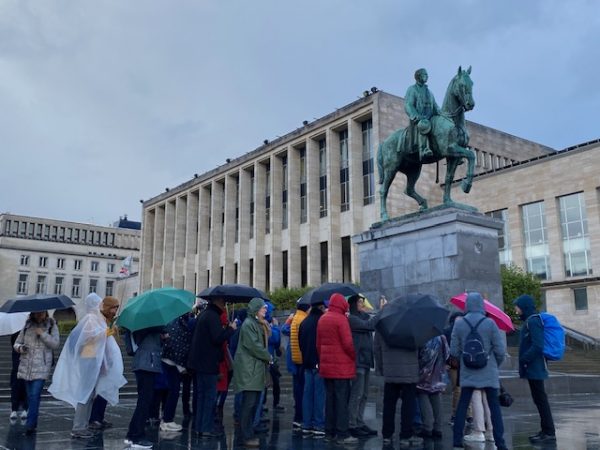
Even in the 21st century we spot the ancient codes of emperors. In Brussels the statue of King Albert, who ruled until 1933 and celebrated the first centenary of the Kingdom of Belgium in 1930, shows the Emperor riding a horse without saddle. This iconic position was started as a symbol of a powerful leadership by Marc Aurel and continued by Napoleon’s reign as well as several other ones.
The position on the elevated podium of the emperor on the horse, which further raises him beyond the level of the people, all contribute to the idealized perception of the king above the people. Such a vertical or hierarchical perspective on society or even mankind, including the colonial approaches of the emperors, are the lasting attributes of those times.  According to Els Witte et al. who wrote on the political history of Belgium, King Albert I was also named King Knight by some.
The portrayal and self-portrayal played an important role already centuries ago. No surprise that democracy has brought about an avalanche of idealized self-portraits or “selfies”.

Polyartist Colette

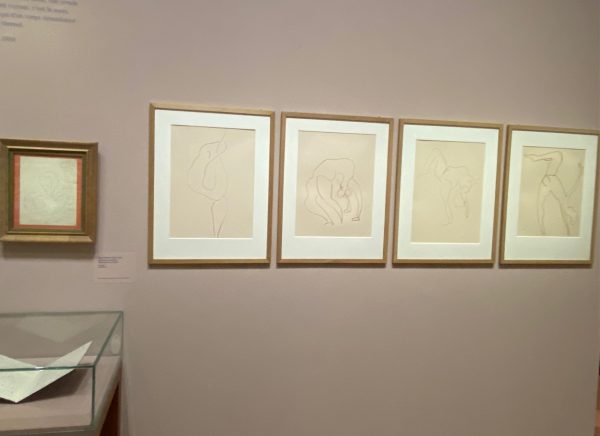
It is a complex task to do justice to a polyartist like Colette. The curators of the exhibition “Les mondes de Colette” (BNF 2025) Bouvard, Dimerman, Le Bras do a great job to present the biography of Colette, the writer, journalist, dancer in music halls, model (for Matisse) and entrepreneur in all facets of her activities. The role model of an emancipated women as early as the 1910s, 1920s and 1930s. The struggle of women artists in the early years of the 20th century to make a living from art is well documented already. To make a living of writing has always been a challenge if you do cherish your independence and liberty of expression. Versatility in artistic production is one escape route. Colette made a strength of this in diving into different forms of art and professional activities close to the artistic and creative world. In a quite unique way, she became her own muse for her own artistic work; and a character and inspiration exploring many facets of live. The economic misfortune experienced her parents became a source and force of inspiration.
Contrary to the expectations of the market of arts and literature, she did not feel like sticking to just one activity. Her most lasting achievements, probably, were her literary accomplishments for most people, although Matisse immortalized her in his specific style of abstraction.
Polyartists just like Polymaths, make more comprehensive contributions to our experiences.
(Image:Lithographie by Henri Matisse of Colette, exhibition Colette at BNF 2025).

ravel up Ravel

To ravel up is a contranym. It can take a specific meaning and the opposite at the same time. Therefore, it is a perfect term to describe the composer, pianist and conductor Maurice Ravel. Born in 1875, he lived through great deceptions as aspiring pianist at the Conservatoire de Paris, but achieved glory through his famous compositions like the “Boléro” created for a ballet performance at the Paris Opera.
Previously, he had written several remarkable piano pieces, which were recently honored by the piano music magazine “Pianostreet”.  In an article with links to 5 performances of Ravel’s piano compositions you can ravel up in the emotional world or cosmos of Ravel. You may also unravel his compositional style marked in some of his most famous pieces with the variations of a single theme or motive. The “Sonatine” completed in 1907 might be considered as a precursor of later work (Boléro) as he refined his composition techniques to build, for example, on a single motive and develop a whole piece reworking and with reappearing incidences of the same motive.
Ravel himself appears as contranym, as he combined modern musical influences, like from jazz or innovative structures of musical compositions with the classical forms of composition. Listening to Maurice Ravel allows to better understand the transition from classical music to modern worlds of music. Thanks to “Pianostreet” we can follow these paths. For a biographical account the splendid movie “Boléro” takes you on an unraveling musical journey of Ravel.
(Image: Repainted piano in Berlin shopping center 2024)

Violence Potential

The book (editor Sabrow 2023) and the exhibition “Gewalt gegen Weimar. Zerreißproben der frühen Republik 1918-1923” need a broad European audience. The violence, which in the medium term destroyed the newly founded democracy of the Weimar Republic in Germany, is linked to the immediate aftermath of the 1st world war. The relatively calm abolition of monarchy in Germany did in no way prevent the eruption of violence within the new democracy. Extreme forces prepared in organized ways (Organisation Consul) and some in open public discourses the potential for the use of violence. Armaments left over from war equipped the Freikorps Movements and the potential to use the weapons was present at all times in the aftermath of WW1 in Germany. The contributions to the volume provide a detailed account of these 5 crucial years when democracy was able to defend itself against all odds. The strategies to take control of the country were built on a violent rhetoric which prepared the ground to put violent talk into action later on. This spiral of violence is hard to de-escalate once started. However, democracies have to foster ways to calm the spirits in periods of high potential violence. Elections as well as the campaigns before are the arms of democratic change. They should be used as such to pave the way to compromise.

Exhibition at Topography of terror Berlin 2024-6

Co-authorship Kafka

In science Co-authorship is a tricky issue. Therefore, many higher reputation journals list precisely who has contributed what to the paper. In the teaching and supervision of bachelor, master or doctoral dissertations it is imperative to scrutinize the original contributions of authors to the subject. There are huge differences between universities to the amount of innovation or originality that is required to award degrees or the publication of the research and results. Rüdiger Safranski published with Hanser 2024 an essay on Kafka which has 224 pages, but a 16 page long list of the sources of the copy-paste citations used from the orignal Kafka writings. By scientific co-authorship practice Kafka should claim co-authorship of the book and the costs of the „Process“ should be paid by the publishing house. However, I enjoyed the many links between comments and the originals next to each other. It is like a data analysis that sticks plausibly to the original data. AI still has a hard time to rival with these skills, although AI is catching up faster than many of us might believe or want to believe. From a social science perspective we might say the original work of maybe only 180 pages is inflated to make for a longer text of 240 pages. This justifies, probably, the publisher’s price (€26) and the marketing costs. On the other hand it becomes evident that Kafka has an enormous impact on writers and seems to take possession of them in an encompassing fashion. You move with him, but rarely beyond him. Tough lessons indeed from the publishing world.

Kafka Kafkaesque

The last 4 years in the life of Franz Kafka had been challenging due to his tuberculosis. Despite these challenges he realized additional, lesser known pieces of literature from 1920-1924 including a collection of aphorisms. The interpretation of these pieces is quite controversial and making your own judgement about these pieces should be left to each person. The most debated elements are his level of abstraction. Additional examples of animals enter into the arena. Mice received his attention in his last work. Whereas Josef was the name of principal characters before, Josefine was his last character. Continuation, discontinuity or dialect dialogue between the characters, up for interpretation and debate. The role of artists or writers in society was also a recurrent theme in his work and life. Great to have an easy access in the Leselounge at Stabi Potsdamer Straße as an extension of the exhibition of the family photographs in the Stabi Unter den Linden.

Communicate Broadly

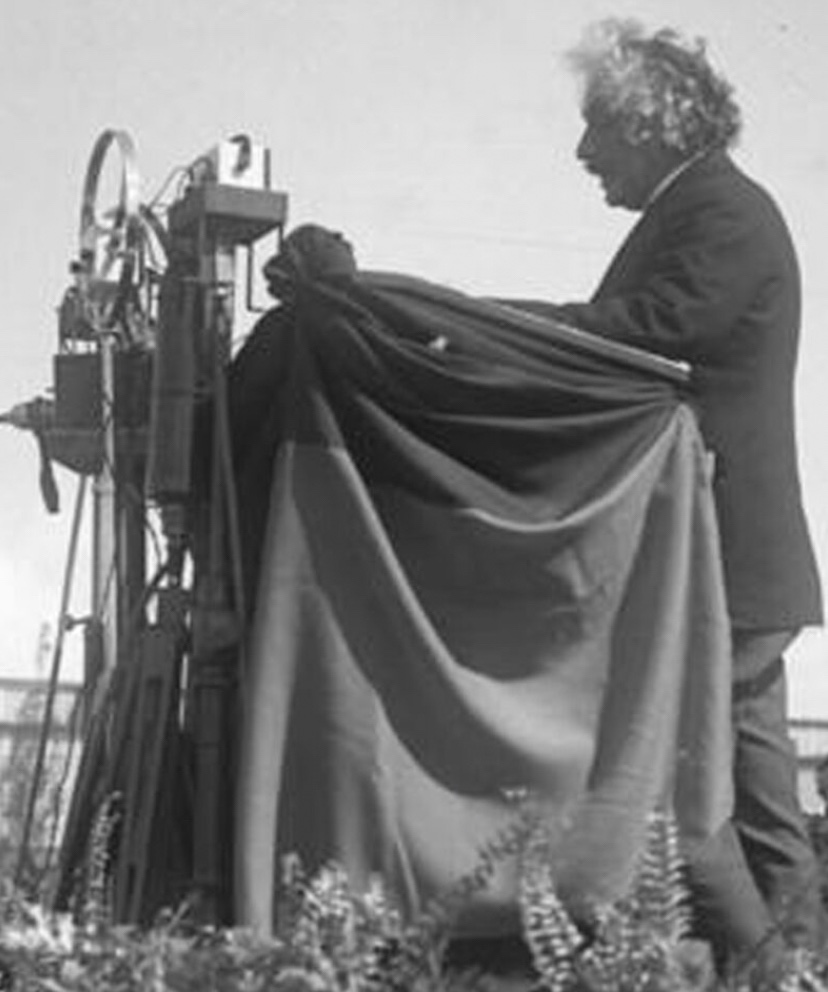
Broadcasting before podcasting has been a kind of revolution in communication technology. The potential of mass communication was promising at the beginning with cultural practices spreading to wider groups in society. Let us take the example of the Rundfunk-Sinfonieorchester Berlin (RSB). Suddenly the audiences grew enormously and it became a public duty to allow the participation of the masses in so-called high art. The foundation of the Rundfunk-Sinfonieorchester Berlin had and has again such a mission. In a memorable address to the foundation of the radio Albert Einstein gave an historic address (Link). He praised the scientific method of discovery and the engineering skills that allowed the new technology to serve all people. The fascists in Germany were early in abusing the technology to manipulate society. Albert Einstein was well aware of this danger to society. His speech is a historic testimony before the waves of emigration began fleeing Nazi-Germany. The best brains were the first to sense the power of the new communication technologies to influence the masses. Broadcasting is around with us in even more invasive ways and many praise themselves to be influencers.

Albert Einstein 1923 Speech Radio Berlin

Georgia

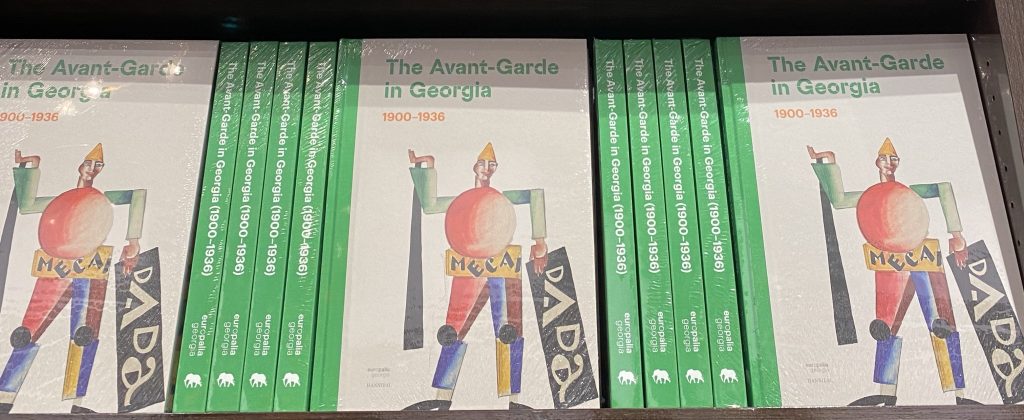
The Republic of Georgia is honored with a wide ranging program in Brussels in the series of countries presented as part of the”Europalia” events and exhibitions. The exhibition at Bozar in the center of Brussels has a focus on the years between 1900-1936. It is astonishing to look at the creative examples of adaptations from western modern art with cubism and expressionist resemblance. Many artists had travelled to western parts of Europe or trained at well-known art schools there. Own adaptations to paintings, theatre and cinema yielded a unique style of Georgian modernism before Stalinism put an end to independent artists and their creative work.

During the short spells of political independence Georgia managed to re-establish each time a remarkable will to its own culture. Unity with artistic pluralism is a core value of the European unity and union as well. We are many and happy to have a chance with Georgian people to celebrate their artistic past and future.

catalog of exhibition Brussels 2023

Too big

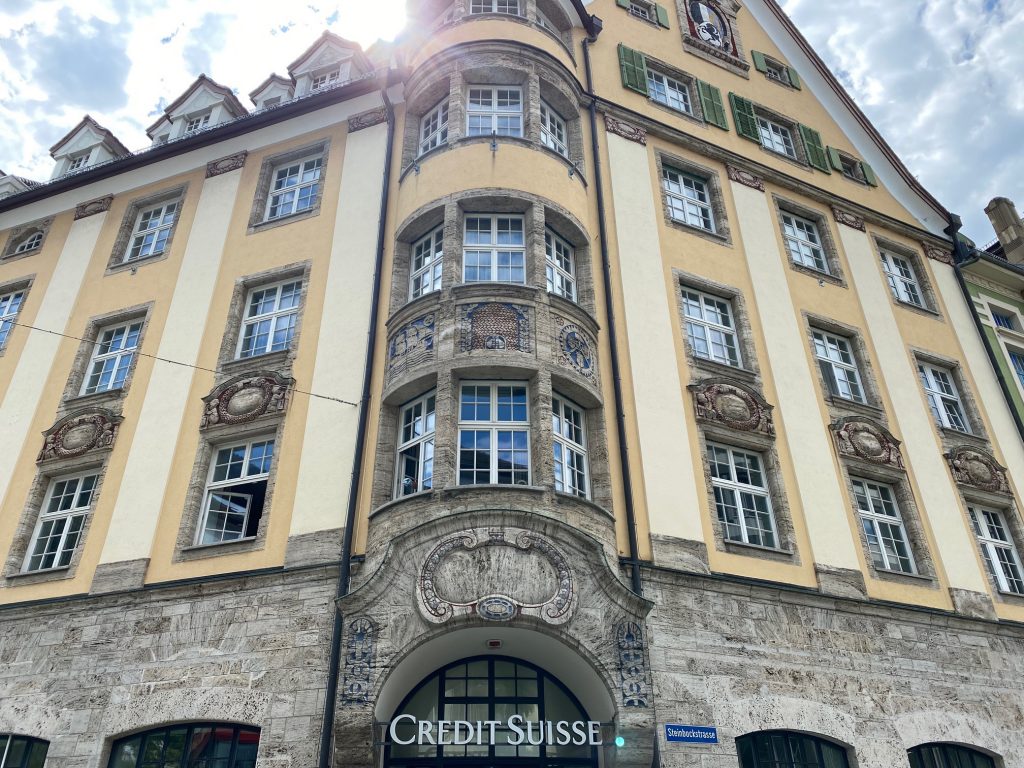
Too big to fail. We all thought that after the financial crisis some fifteen years ago, we would not deal with the same kind of problems again. The banking sector in Switzerland has proven us wrong. One of the 2 big banks Credit Suisse in Switzerland was about to default and asked for 170 billion state guarantee middle of March 2023. Only after a forced merger with the other big bank UBS (which was rescued in 2008 already) and the huge state guarantee the solvency of the even bigger bank was re-established. Tax payers were expected to foot the bill. Less than 6 months later the Finance Minister Karin Keller-Sutter announced that there is no longer a risk for tax payers to pay for the mismanagement of the bankers involved. This is a relief for the political system which is going to the polls next year.

Many unresolved questions remain. Financial market supervision is faulty to say the least. Banking left to bankers as controllers is risky. Apparently fines do not work only prohibition to exercise similar functions (internationally) again is likely to be effective (NZZ 2023-8-9 S.19). Other remedies lie in a complete overhaul of the governance system of banks and beyond. Supervisory boards should in theory be able to assess the risks incurred by the management board. Failure to do so has no consequences for them either. Representatives of the employees in the board is likely to introduce more longer term concerns into decision-making. Saving jobs is a valuable goal not necessarily in the interest of investment bankers. Capitalism is at high risk of survival and with it our democratic systems. It was not a bank in Niger that got into trouble, but at a major European financial center. Too big to fail in a tiny country still sends shivers throughout Europe. And the other big bank is growing even bigger now, probably un-savable now. If I had a bucket of Swiss Franks, I would rather sell them.