Embedded Artists

The Brussels districts have their specific identities. 

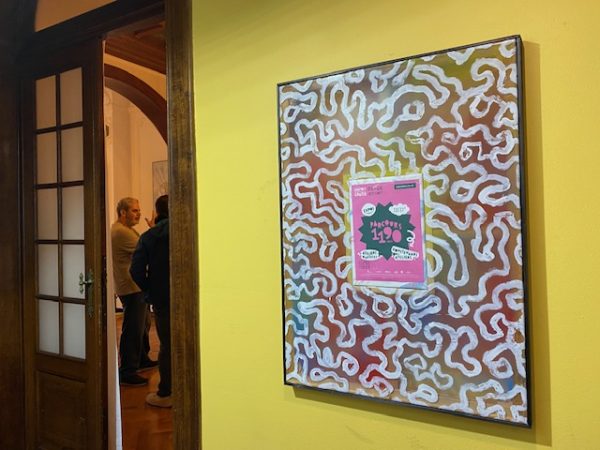
The Forêt district is reconfiguring itself rapidly. In addition to the Modern Art Gallery Wiels, It hosts a multitude of diverse artists. Many of them opened their doors to the public as part of the 4 days of Parcours 1190. It turned out to be a truly Inclusive experience in the broadest sense possible. The immersive experience of seeing the work and the artists, some of them in their private homes, created a sense of an embedded connection to their work and personalities. The artists are embedded in the district around them nd the people of the district might feel a bit more connected to the artists surrounding them. The artist has integrated the pink poster of parcour1190 into one of his works under the overarching theme of inclusion. Social inclusion can take many forms, The Brussels district Forêt has added new dimensions to it. (Image entry to Hassan Bouzougarh‘s exhibition on 2025-10-5, Brussels Forêt). 
Inclusive images

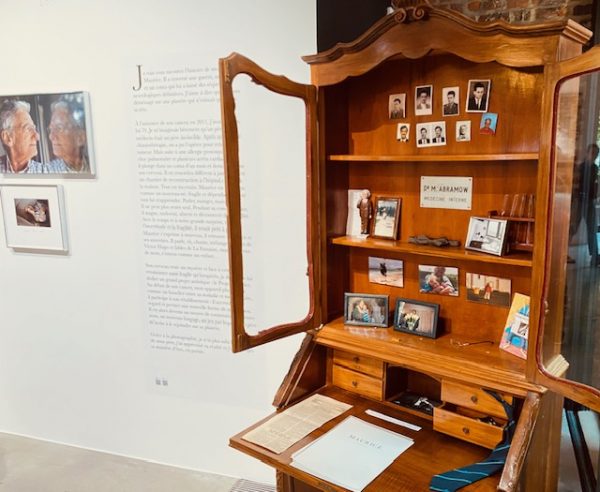
In the last 2 decades we can observe a strong concern among photographers to broaden the spectrum covered by images beyond well established imagery of non-binary gender. Diversity in imagery has taken a broader scope to extend, for example, the age range of people who are portrayed as central topic of exhibitions. The topic of mental diversity is more recent and needs a similar or even increased sensitivity to do justice to the whole spectrum of people. The photography of people with mental challenges necessitates a much more careful approach to the persons and complex personalities the photographer intends to portray. Trust and the development of trust of more vulnerable persons is a time sensitive process. The work by Charlotte Abramow “Maurice, Tristesse et rigolade” is a fine example of a photographer who portrayed over a long time of taking care of her father, previously a medical doctor, The years of the final stages of the life course of her father have been the subject over many years as the survivor of an extended medical coma had to struggle with the tough challenge of re-learning basic life skills again.
Abramow portrays her father as an actor of his “second life”, where the borders between reality, reconfigurations of his memories,   and “mise en scene” to co-produce the images. The images go far beyond the portrayal of aging and mental challenges as a deficit of persons. Yes, it is an integral part of these persons, but there is so much fun and positive emotions that derive from the intensive collaboration of actor, father and photographer that the images stick with us for a longer time. The presentation of props along with the photos creates an immersive installation, which strengthens the emotional bonding with the inclusive images of the later phase of the life course of Maurice.

Sink / Rise

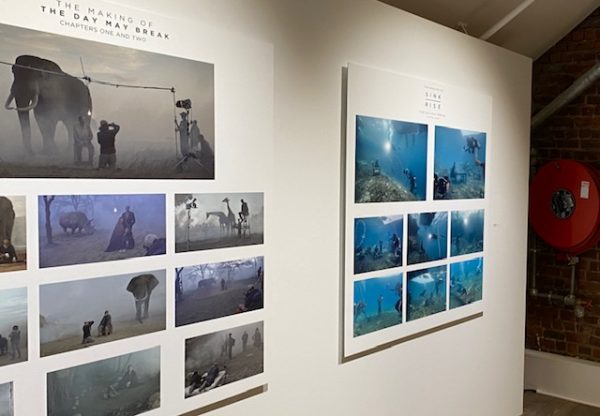
Nick Brandt presented his engaged photographic projects “The day may break” in Brussels at the Hangar Gallery space in Brussels (2025-9-21). The photographic work spans the globe to document and tell the story of a an endangered planet. The environmental and social fabric is at risk of an unprecented scale in the 21st century. Rather than producing hours of documentation, Nick Brandt focuses on images that stick. His “mise en scene” is meant to haunt us. And it succeeds in it. In the best sense of a tradition of a “photographe engagé” he intends to convey messages, even whole narratives to us about and from people in remote places, who are endangered through our inaction or paralysis in front of the challenges posed by global warming and climate change as well as the social and societal consequences.
We can save people from drowning in floods and rising sea levels. The chapter Sink / Rise of this project was produced with people from the Fiji islands who participated in the futuristic scenario of a sunk island. Without accusations, these people question us. Why? How? What for? Where to? – without speaking a word. They spend time in on a sunk island, surrounded, submerged by beautiful, but morbid, turquoise water and the graveyard-like remainders of a broken coral reef. These are photographs not of these people, but about them, about their likely fate, and (very important) produced with them as empowered actors. May they have a chance to rise like a phoenix from the ashes from these photos.
The documentation on the “Making of …” (image below) as part of the same exhibition allows transparency and additional insights into the artist’s work and proceedings.
(Image: Hangar Gallery, Brussels 2025-9-21, On the making of Sink / Rise by Nick Brandt)


500 years Motherhood

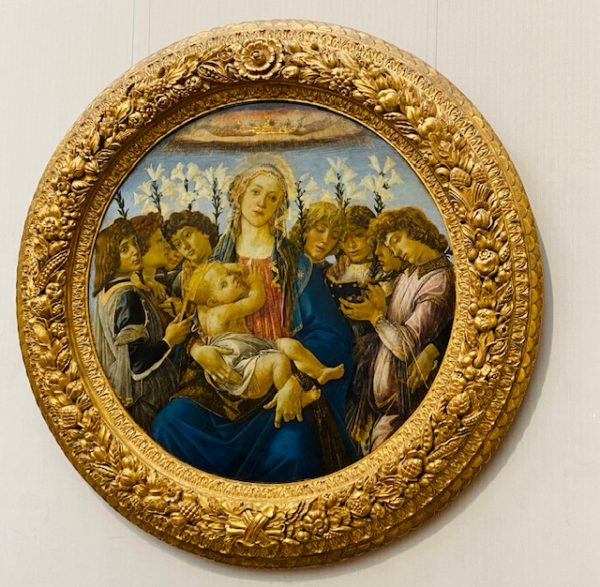
The history of art is full of depictions of motherhood. The catholic church has largely contributed to this phenomenon. Sandro Boticelli created in 1478 his painting of Maria and the child surrounded by singing angels. As Maria is said to know about the tragic fate of her child, her facial expression is rather sad or apprehensive than full of joy. The public acclaim has lasted already for more than 500 years. The women and people who sympathize with this depiction seem to share some of the worries about the future of both mother and child. Apparently, this has not changed over the course of the centuries. In the 21st century such concerns still have a co-determination effect on women to lead to lower fertility rates in most parts of the world. Fertility depictions in art history might serve as early indicator of behavioral changes. Some take centuries to play out. Technological,  medical devices or social policies can amplify such seminal trends. (Image: Sandro Boticelli and disciples , 1478, Gemäldegalerie Berlin)

Raffael Madonna

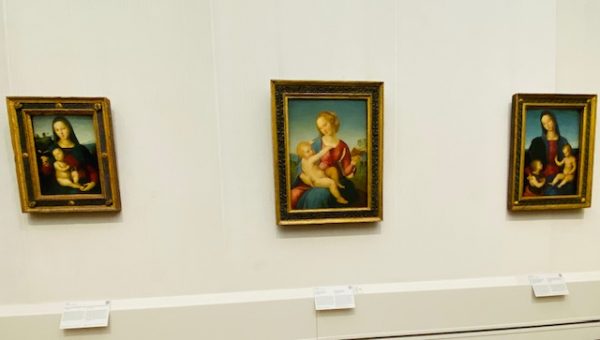
„Mary and the child“ has been the success painting of Raffael around the years of 1500. 3 variants on this topic are presented at the Gemäldegalerie Berlin. Each pose varies only slightly, but each tells a very different story. The Madonna changes the regard from beyond the child, on the child, then to another child. An interesting sequence as such, which puts the relationship with the child also in perspective. The child develops over the sequence from the fast learner into the person with „power grip“ to the one that is spreading benevolence. The different stages of the life course are somehow taking place within a short period of the child. (Image: Raffael, Mary with Child, Gemäldegalerie Berlin)

Gentileschi Gentileschi

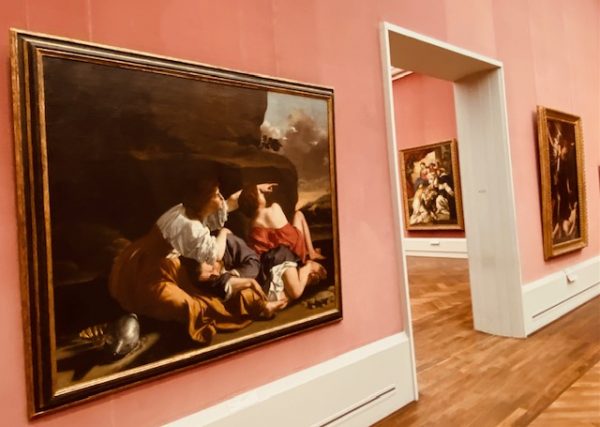
There are 2 Gentileschis that entered the history of art. Orazio the father and his daughter Artemisia. Orazio painted many scenarios based on the bible. The incestuous relationship between Lot and his daughters is difficult one to portray and to do justice to the moral concerns involved. Artemisia, similarly, did not shun away from difficult stories of the bible and added a personal twist to these stories in putting her face into the biblical depiction. The cruelty of the stories become more explicit this way and maybe also her deviant position to the biblical narrative. (Image: Orazio Gentileschi‘ (1622/23) „Lot with his daughters“ Gemäldegalerie Berlin)

Caravaggio Gentileschi

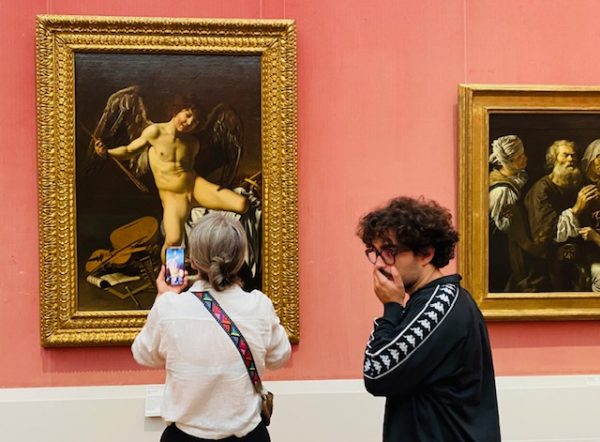
The „Gemäldegalerie“ in Berlin features in the permanent exhibition the famous Caravaggio painting of „Cupid as Victor“ (1601) in the same room with  Orazio Gentileschi‘ (1622/23) „Lot with his daughters“. The paintings show the same technique of painting with the stunning effects of light and shade. Gentileschi‘s own daughter became equally successful as painter applying the same technique and maybe even more recognized as her father. Berlin and Paris jointly allow to trace interesting new perspectives on the history of art from a gender perspective. The male domination in art of the 16th and 17th century was pervasive, but Artemisia Gentileschi a formidable exception. (Image: Caravaggio „Cupid as Victor“, 1601, Gemäldegalerie Berlin)

Le Brun Selfie

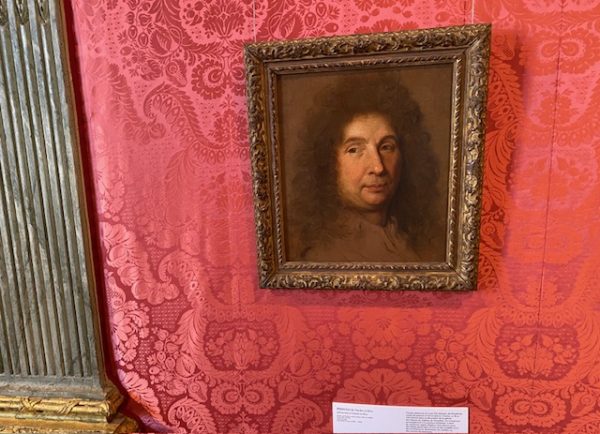
The great painter and decorateur of the French monarch Louis XIV was Charles Le Brun. He was careful about the way he wanted to be remembered in history. His late 17th century self portrait is exposed in the Musée Histoire de Paris Carnavalet. Rightfully put in front of elegant red “tapisserie”, the selfie is remarkable for its attention to details. The hair is drawn with high precision and not a single one seems out of place. The painter does not focus on the person in front of him, but rather on some detail next to or behind the depicted Le Brun. The dress chosen is rather an ordinary person’s one or a person devoted to his work and artistic craftsmanship. No hands, no arms, no shoulders. The sole focus is on the head or should we say the brain and facial expression. Realistic painting is probably the closest you can get to today’s selfie-mania. Le Brun’s decoration and paintings in Versailles and churches ate probably some of the most popular backgrounds of selfiies even in the 21st century.

Photographe engagée

Marie-Laure de Decker is featured in the “Musée européenne de la photographie” (MEP) as a photographer committed to capture truth in situations of conflict. She started her career with documentary photos from the Vietnam war. Rather than searching for spectacular scenes, she succeeded in her attempt to capture the more emotional and, therefore, relatable moments for her various audiences. With a firm commitment to the human in her work, the photos by Marie-Laure de Decker reach a level of extraordinary sensitivity to what it means to stay human in violent situations and even military conflict. The portraits of politicians, workers, professions and famous actors applied the same approach. Rather than days or weeks Marie-Laure de Decker spent months or years in the regions of her documentary photo series ranging from Vietnam, South Africa throughout the apartheid regime, Pinochet years of dictatorship in Chile, the 2 parts of Yemen to a prolonged stay in Chad.

The exhibition in the MEP in Paris curated by Victoria Aresheva  raises awareness to the additional fact that photo journalism became an affordable profession only after specialized agencies were created that granted authorship rights to photographers, which ensured later use of their work in edited volumes as well as working for several newspapers or magazines. (Image: Marie-Laure de Decker, self-portraits, MEP Paris exhibits 2025-8). 

Emotional history

The making of emotional memories of a city is an art in itself. Many cities have professional photographers who accompany all major events in a city over years. Paris has had the chance that artist photographers and film makers have contributed greatly to the emotional history of the city. Agnès Varda was such a formidable person whose images and movies moved people and allowed to share emotions about the city’s busy and diverse neighborhoods. The « Musée Histoire de Paris Carnavalet » combines an autobiographic perspective with the emotional depiction of live in Paris from the 1950s onwards into the late 20th century. (Image: Agnès Varda, 1950 self-portrait, MEP Paris).