
Odessa Berlin Odessa

With a sense of partnership, it is possible to travel between Odessa and Berlin in the “Gemäldegalerie” in Berlin 2025. Due to the war of Putin in Ukraine the “Museum of Western and Eastern Art” in Odessa had to relocate its treasures to safe places. The Gemäldegalerie offers a chance to view the splendid collection nevertheless. The curators’ team in a spirit of “art intelligence” propose, in a splendid way, most oeuvres from Odessa next to an example by the same painter from the Berlin collection. The visitor leaves the exhibition enriched by an experience of “jumelage” (engl. sister cities) of partnerships between museums, cities and their people.
In fact, we have shared the same imagery or visual heritage in Europe for centuries . The collections of paintings ranges from the 16th -19th century art  or from Frans Hals to impressionist influences.
We shall cherish the return of the collection to Ukrainian Odessa as soon as possible. The image below shows the places of origin (yellow dots) of the art works of the Odessa collection across centuries (map from the exhibition).

Dépaysé in gallery

The installation ar the Neue Nationalgalerie in Berlin entitled „Fog Sculpture“ takes us from the sculpture garden of the Gallery into a tropical forest atmosphere. Just changing the humidity and visibility through the artificial production of fog transforms the perception of the artworks. A kind of Asian flair surrounds the western sculptures in the garden. The fog installs also a mystification whoch we know in art from the romantic painters like Caspar David Friedrich for example. All long-term followers shall appreciate the new perception of the artworks thanks to Fujiko Nakayo. It’s definitely more than old wine in new bottles. The artwork brings a more global twist to the preexisting sculptures and reminds us in Berlin even of the wrapping and unwrapping of the  Reichstag building by Jeanne-Claude Christo. We see the sculptures or architecture differently after they disappeared temporarily and reappear again.

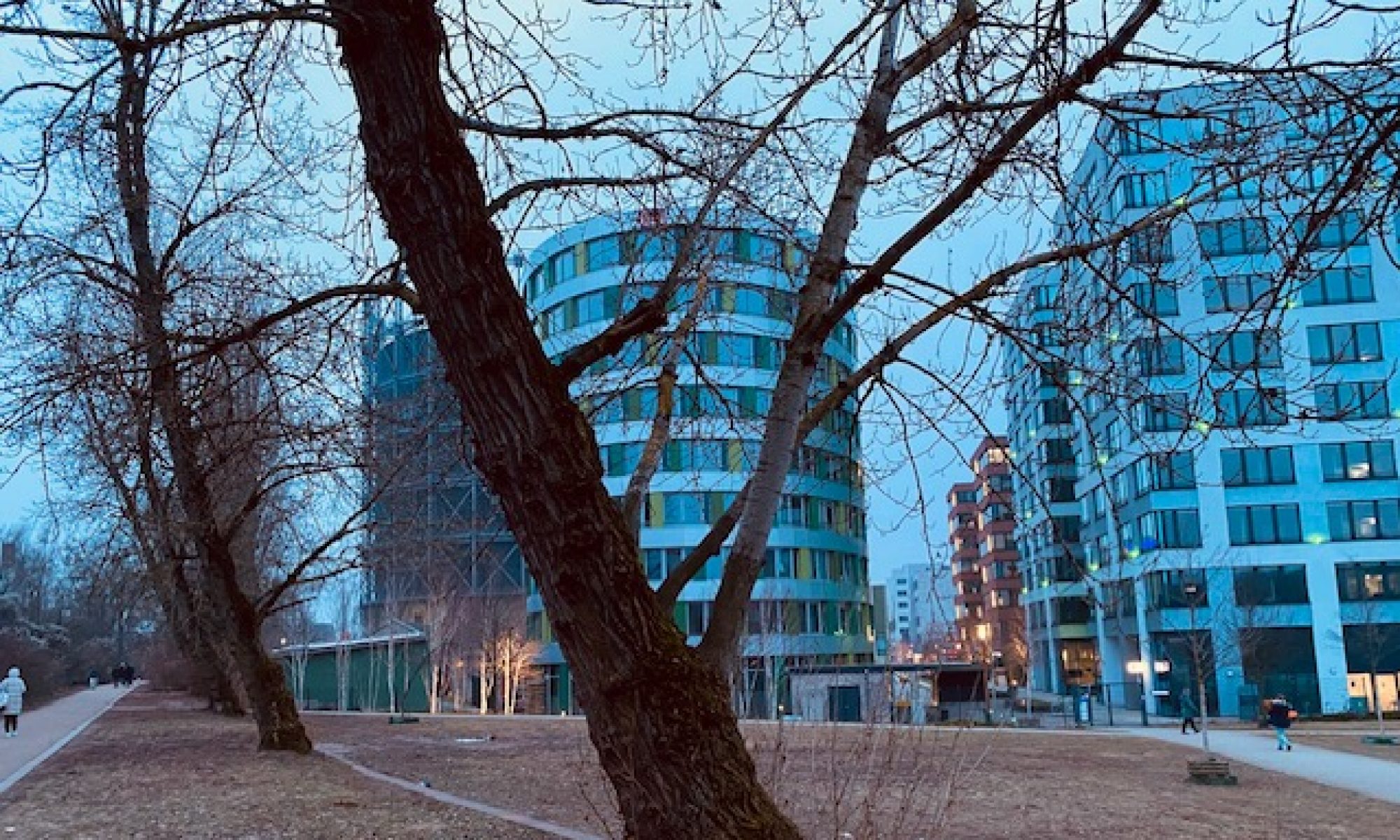
Berlin building

Yes, 35 years after re-unification Berlin is still building at lots of places. The boom years of building hotels for tourists, offices for ministries, which were moving from Bonn to Berlin, is now followed by a „surprising“ need to have sufficient vacancies in private housing. Berlin is still growing in terms of population and, of course, this creates additional upward pressure on the housing market with particularly high increases on the rental market. In order to achieve a narrowing of the gap between demand and supply, Berlin is building higher as well as digging deeper into its sandy ground. In such huge open spaces near Südkreuz it is then feasible to explore and later exploit geothermal energy for years to come. Maybe it is not a surprise that apparently a Texas (USA) based investor has bought the ground and builds in Berlin. Drilling in Berlin for energy from underneath is a worthwhile business. Hence, drill baby drill has a new Berlin meaning to it. 

Dream together

„Dream together“ is the title of the exhibition of Yoko Ono at the „Neue Nationalgalerie“ in Berlin 2025. The title is an invitation or even an incitement to dream jointly with others. We need to dream of peace on all sides or parties in a war. Start with the dream and then move on to working together on it. The participatory art projects of Yoko Ono are a recurring event in Berlin and at the Neue Nationalgalerie (Cut piece). The installation „Wish Tree for Berlin“ in front of the gallery is popular with visitors who leave hundreds of written wishes to the windy spring days. Origami folding, stone assembling or a simultaneous chessboard playing with all white pieces and fields encourage to imagine a world differently, beyond the treaded belligerent paths. For more inspiration and imagination just continue to the Martin Gropiusbau for more artworks from Ono or just watch the clouds pass by changing the lighting of the olive tree carrying lots of wishes.

Lviv Ukraine

Small galleries can make a real difference. In Berlin the gallery “streulicht” has a selection of photos in an exhibition that portraits artist from Lviv in Ukraine. Hans Hugo Hoffmann manages in his photographs to depict the extraordinary resilience of Ukrainian creative persons who live through a protracted war of their country against the Russian aggressor. The persons embody the strength of resisting through their art work despite the wounds inflicted on their families or the people of Lviv and the whole of Ukraine due to the war. The persons portrayed try to continue their normal day to day work, knowing that nothing is normal anymore in Ukraine. “Bizarre Normality” characterizes our perspective on these artists, who are thrown into a world of events that we no longer thought might be possible in Europe. Bucha and other crimes by Russian soldiers in this Russian aggression leave traces in the faces of Ukrainian people and even beyond. We all wish that the people of Ukraine can return to “normality” as soon as possible, although we know that nothing will be normal as it was before the Russian invasion.

Local history

In Berlin and many other big cities in Germany like Munich and Hamburg there are local history projects which tell the stories of specific places or a house linked to liberation day or deportation or courageous acts during the Nazi  grip on Germany and terror across Europe. The initiative « Denkmal am Ort » has become a kind of citizen science project which brings people together to raise awareness again for the cruelties committed under the dictatorship of Hitler and the fascist political movements. Remembrance is not a passive form it can take many active forms as well by simply trying to find an answer to the question what happened during the 30s, 40 and 1950s in the house you are currently living in? Access to archives of cities and small towns can tell very surprising stories about local history. It is a great inter generational experience as well and sometimes the unspoken history turns into a great conversation about history and responsibilities. History is everywhere you just need to keep your eyes and mind open.

Constitutional Responsibility

The memory of horrors caused by Nazi-led Germany before and during the 2nd World War is our constitutional obligation in the Federal Republic of Germany since its beginnings in 1948. 80 years after the unconditional surrender this has become a state responsibility. Since the shift of tone introduced by Richard von Weizäcker on 8th of May 1985 framing the end of the 2nd WW as liberation day in Europe and Germany. On the same day, 40 years later, the top 5 political instances of democracy in Germany, president, chancellor, presidents of the parliament (1st chanber), the council of the regions (2nd chamber) as well as the constitutional court. The constitutional and moral responsibility of the crimes is not reserved to a presidential address, but all pilars of democracy in Germany committed to the narrative of a liberation of Germans and Europeans at the end of the 2WW. It is a truly European topic to celebrate the end of war jointly in all countries. This is even more the case as the memories of the last survivors of the Shoa in Europe is less transmitted by the rare survivors until today due to very old age. The impressive unity of the top constitutional powers sets a the path for a far reaching renewal of the acknowledgement of a specific constitutional responsibility to counter extremist tendencies. The speeches by Frank-Walter Steinmeier and Julia Klöckner in the Bundestag (Link in German) were remarkable in explaining in plain language, why we are happy about this liberation also in Germany. The emphasis of the end of pervasive and endless oppression and suffering caused by the Nazi-regime are an essential part of this feeling of liberation. With this commemoration Germany today has become even more a European nation which takes its historical responsibility seriously.

Liberation Day

In Germany the celebration of the liberation day 2025-5-8 change years of mixed feelings about what happened during the 2nd world war. In Berlin this day is a bank holiday now and more and more people subscribe to the view that the liberation from Nazi-terror was a blessing for German people. The “Neue Wache” is the room of silence in honor of all victims. We shall always remember. Fighting the early tendencies remains the most effective strategy to avoid extremism of fascist groups. It is the task of Germans born also long after the war to keep the memory of the atrocities alive and to care about prevention of new ones.

Ugly duckling revival

Ever since Hans Christian Andersen created the fairy tale of the “ugly duckling” (1843) the story has been adapted to all forms of theatre. The adaptation of the fairy tale to the stage in 2019 and the revival in 2023 at the “Deutsches Theater” in Berlin keeps inspiring people to surpass their restrictions or inhibitions, whatever they may be. This early 19th century fairy tale is a fine piece of the search of identity of a person. As it deals with the difficulty of individuals to find their own identity, the fairy tale deals already with the fitting of an individual into society. Society exercises pressure on individuals to conform to written and unwritten rules, which tend to hold up rules like “one size fits all”. Differentiation and allowing individuals to be different from an established norm becomes a central theme of modernity and even more so in the post-modern world. It is the essence of democratic societies to practice a tolerance of persons being or just wanting to be different. The performance at the “Deutsches Theater” might be a test of your level of tolerance or acceptance of diversity for some, but at the time of rising intolerance in and beyond the U.S. under Trump, such performances are dearly needed to celebrate the rich cultural heritage and achievements of far reaching tolerance. It becomes more evident what we are about to loose (again), if such performances would no longer be possible in a controlled or financially overly restricted world of theatre.

Persistent beauty

The fashion industry is known for its fast turnover of beautiful designs from season to season. Some designs and often just single pieces survive the fast turnaround of the fashion industry. In many cities we find shops that sell so-called vintage cloths and objects. For men and women it is feasible to rediscover pieces of longer lasting beauty or even persistent beauty. The persistence of an image of beauty may follow the classics of designers and specific brands, but it may also have a very personal touch referring more to a person’s own life course (when we were young) or associated with freeing yourself from your family or societal context. The 60s and  70s were such time periods with radically changing images and ideas about beauty. Since then more individualised clothing seems to take hold, although there is an equally strong tendency of social or age groups to identify themselves through specific clothing, showing that you belong to the “in-group”.