Documentation Inclusiveness

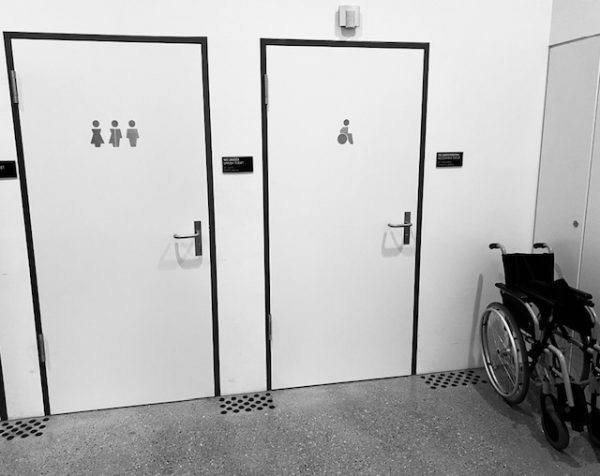
If we don’t measure it, it will not improve. Many public institutions and private organizations make great efforts to improve inclusiveness in day to day operations, but many barriers are still all around us. Both need monitoring in form of data bases and visual documentation. In a Berlin museum inclusiveness appears to be the most natural thing, nothing to worry about or to call out “wokeism”. Just small improvements in basics and everyone feels welcome.

Projection Painting

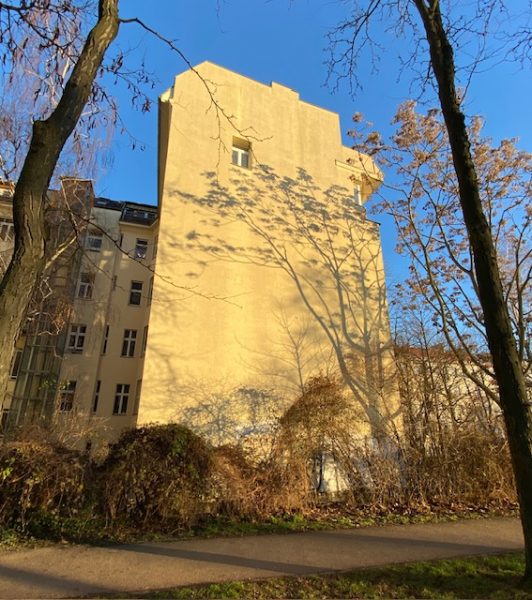
Nature teaches us lots of tricks. Bionics are all around us in the 21st century, but the marvelous projection of a winter tree on a huge screen comes close to a naturalistic painting. The projection of the branches and leaves of a tree originates from the early sunset in December 2025 in Berlin. Nature teaches beauty and the techniques to imitate or reproduce the effects. Its up to us to keep our eyes, senses and minds open to enjoy the beauty in our surroundings. 

Piano & Dance

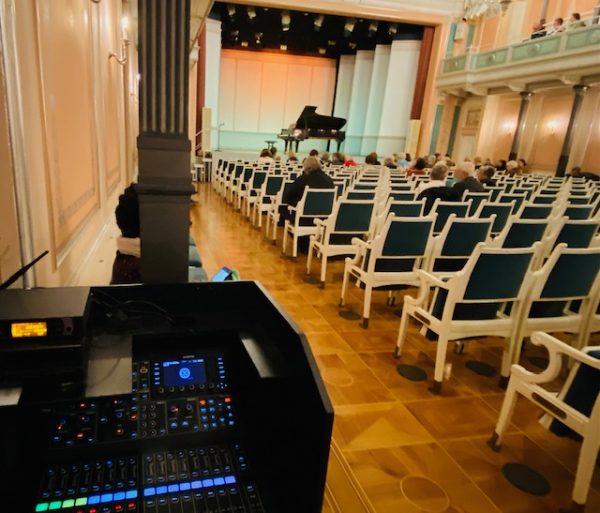
Young talents sometimes offer innovative approaches. This was the case of Amiri Harewood in his performance of short piano pieces in the Espresso series at the Konzerthaus in Berlin. In an effort to take the Berlin audience on a lunchtime journey his program started with Schostakowitsch and Rachmaninow to move to less familiar repertoire from George Walker and Joshua Uzoigwe to “Valses Poéticos” from Granados. The live performance by Amiri Harewood in Berlin was at its best when he started to move head and shouldlers, breathe in tune and dance a bit while playing the piano. This rather unique feature of his performance is certainly different from a “stiff upper lip” or rigid posture we observe too often. This created an interesting “Kontrapunkt” for many in the audience who rather came for the espresso and to visit the building expecting some classic piano in the historic setting of the Konzerthaus Berlin. It took a while until people realized they were up to a unique piano experience. “Neuer Wein in alten Flaschen” = young, fresh music in old bottles or settings.

Konzerthaus Espresso

Classical music in classicist architecture sounds like a perfect match. The audience is packed with people mostly 60+ years of age. One of the spectators happily admitted that without the espresso before the concert she would have a hard time to follow closely because after lunch at 2 p.m it is time for a rest rather than excitement.
The series of short concerts at lunchtime suits particular audiences. It is probably the only concert series where the queue in front of the toilet of men is equally long than the one for women. The short concert program allows for more experimental formats as well. Musicians who develop a solo program of shorter than standard concert hall duration can appear in high reputation locations and gain experience of performing in such prestigious settings.
With a “Zugabe” from the performer, but also in form of a small piece of chocolate for the audience at the exit, 21st century, classical Berlin knows how to charm its aging audience and population. Young performers learn that the mature audiences don’t bite any more. In case the sound and peaks become too modern they just adapt sound level of their hearing aids. It is perfect for all generations.

EU Digital Sovereignty

If we try to search for digital solutions, we shall encounter a whole lot of American and Chinese products, but very few European companies that are able or willing to compete. Hardware mainly comes from China, software from the US, at least until AI was not working in the background. If we add Russian interference to destabilize our digital infrastructure to the scenario, we are not really fit for the challenges of the 21st century. The very definition of a country or political union is the affirmation and competence to assure its sovereignty, particularly in cases of territorial conflicts with neighboring countries. My health or mobility data are a rather private affair, however, our state governments in EU-Europe have done little to ensure our data integrity. Business is also at a loss, if they do not spend heavily on data security themselves, usually relying on external cooperation. 

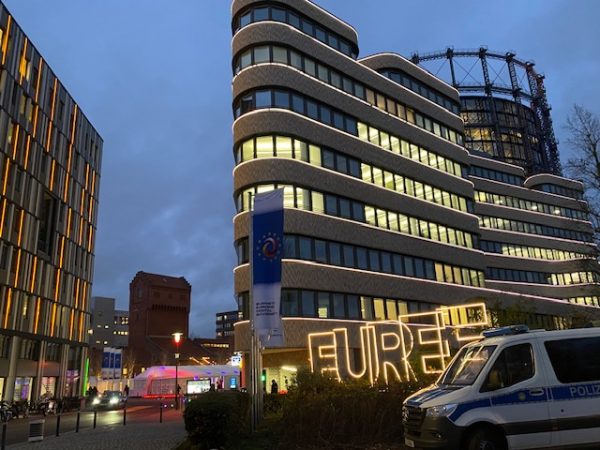
The EU digital sovereignty summit took place in Berlin on the EUREF campus in 2025. It can only constitute a beginning for intensified cooperation in  this long overlooked policy area. It will be tough to catch up where production has been abandoned for decades.  
Headless Saint Dionysius

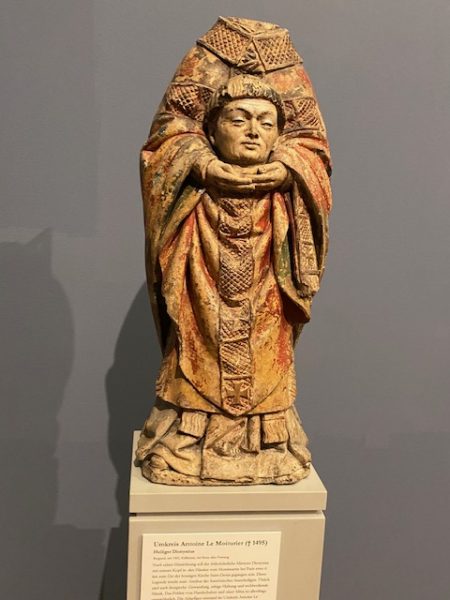
Denis of Paris stands for the Saint Dionysius, who is reported to have walked after being decapitated as martyr for his christian beliefs by the Romans in the 3rd century, all the way from Paris to St Denis in the suburb of Paris. We do not only find such a statue at Notre Dame in Paris, but also a medieval version in the Bode museum in Berlin. The cathedral of St Denis in Paris became subsequently the place for the coronation and burial of many French kings. The last king who lost his head through the guillotines was Louis XVI. It took almost another 200 years to abolish capital punishment altogether in France. Robert Badinter devoted his career to fight for this appeacement within the nation. (Image: Statue St Denis in Bode museum Berlin).  

Freedom of art

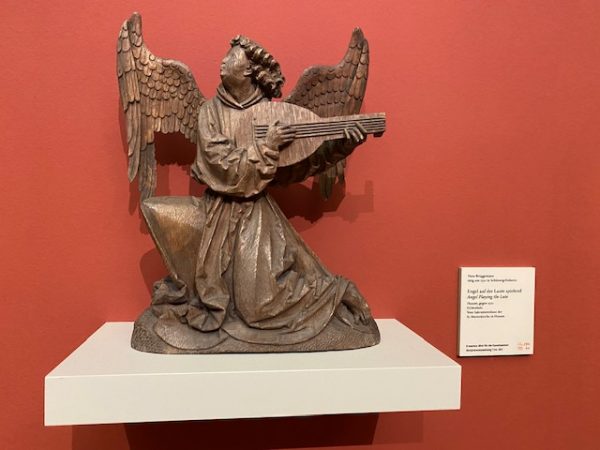
Some depictions or statues of the 16th century quite expressive and average expressions of their time. An angel who is playing the lute in a rather extroverted way is amongst the remarkable artifacts we can discover in the Berlin Bode Museum. The Angel playing the lute is an oeuvre by Hans Brüggemann from 1520 in Husum. The angel certainly performed holy music with interesting postures, which resemble more rock stars of the 20th century or youth performing an act of “air guitar”. Artists always tested the limits of the freedom of art and expression. (Image from Brüggemann Angel playing the lute, Bode museum Berlin, 1520) 

Surrealism Networks

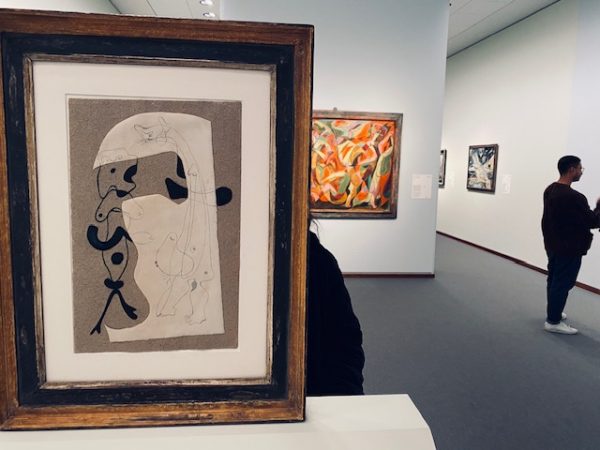
The research project on the networks of artists in the group of surrealism ranges from the male proponents Breton, Ernst, Magritte, Miró to female painters like Lenora Carrington and Dorothea Tanning. The collection of Ulla und Heiner Pietzsch, donated to the Neue Nationalgalerie in Berlin, excels not only in the depth and breadth of the collection of surrealism, but also in the way it contributes to our understanding of artistic movements and network dynamics. For those familiar with the theoretical and literary underpinnings of surrealism by André Breton, the collection allows to follow the traces of ideas into artworks. Interdependent inspiration in multiple ways becomes visible in this exceptional exhibition. The special concern and concept to honor provenance of the artworks makes the trajectories of each artwork explicit. Thereby, the geographic dimension, importance of collectors, galleries and personal relationships to gallerists become tangible. Additionally, the seizure of the 2WW heightened the need to have contacts to survive Nazi-terror. You find it all condensed into just one room at the Neue Nationalgalerie Berlin thanks also go to the Zentralarchiv to facilitate and participate in the research and documentation. (Image: Miró Collage, Berlin Neue Nationalgalerie 2025)

Gentileschi Gentileschi

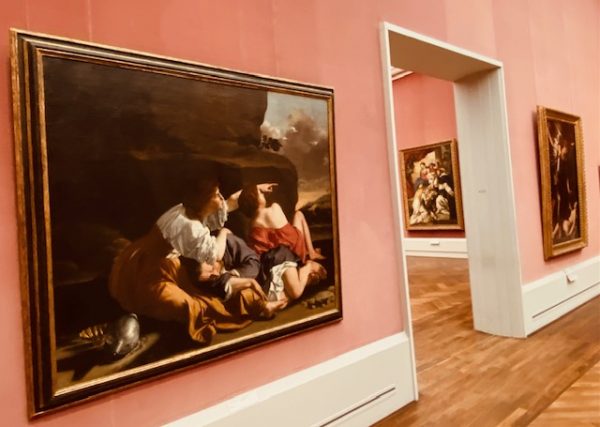
There are 2 Gentileschis that entered the history of art. Orazio the father and his daughter Artemisia. Orazio painted many scenarios based on the bible. The incestuous relationship between Lot and his daughters is difficult one to portray and to do justice to the moral concerns involved. Artemisia, similarly, did not shun away from difficult stories of the bible and added a personal twist to these stories in putting her face into the biblical depiction. The cruelty of the stories become more explicit this way and maybe also her deviant position to the biblical narrative. (Image: Orazio Gentileschi‘ (1622/23) „Lot with his daughters“ Gemäldegalerie Berlin)

Claudel & Hoetger

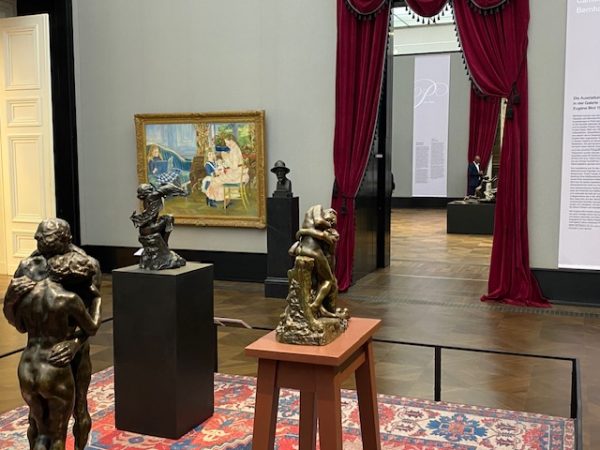
It is well known that artists joined other artists and groups to get inspired. The entangled relationship between Camille Claudel and Auguste Rodin has become a special example of the tricky relationship between learning and co-creation or inspiration. The role of galerists in building a reputation for artists is less well understood. The “Alte Nationalgalerie“ in Berlin opens up this black box a bit through juxtaposition of Camille Claudel, Bernhard Hoetger as disciples of Auguste Rodin. The influences are rather obvious, yet each disciple developed her/his unique style. The emancipation was not without frictions. The galerist Eugène Blot organized a joint exposition of both disciples in 1905 in Paris, which is partly reproduced in Berlin 2025. Great work by the curators of the exhibition Yvette Deseyve and Sintje Guericke who managed to bring together unique sculptures from 3+ museums and a great explanation of the links between the artists as well as the proximity of ateliers. (Image: view of showroom in Alte Nationalgalerie Berlin, Claudel & Hoetger 2025)