
Litfaß Advertisement Column

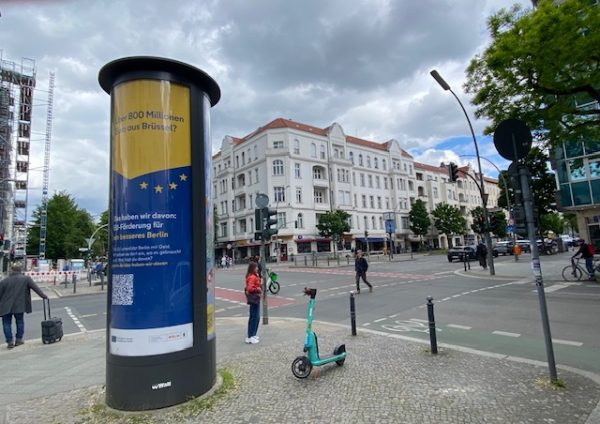
Berlin has renovated some of its early say notice boards and advertising columns. The original „Litfaßsäule“ has already the round column shape where you clued a poster on the sirface so that it was visible to several persons interested to look and read. After more than 150 years after its invention, Berlin has digital advertising columns which resemble the original Litfaß design. Rather than the spectator walking around the column, the column now turns around in a steady manner so that nearby you can see the whole advertising content from all points in the neighborhood. Simple change, but a remarkable improvement in the reach of the advertisement. Retro-lighting increases the duration of the effects as well. Mass communication and commercial innovation can sometimes just improve on an existing marketing channel, and still reach a specifically targeted audience.  
Renovated sacred architecture

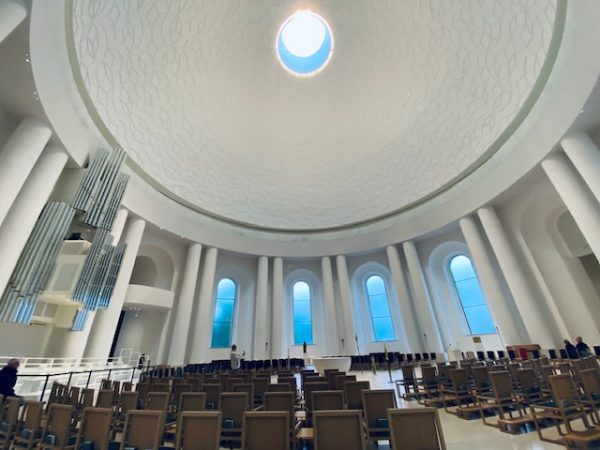
The 18th century catholic St-Hedwig Cathedral in Berlin has been renovated in the 2020s. The sacred building benefits from its central location in Berlin near “Unter den Linden”, Staatsoper, Staatsbibliothek and Humboldt University. The remarkable round shape of the church and its dome appear small from the outside between the high buildings in the surroundings. The size becomes more visible from the inside. The renovation made the choice to clearly define the center of activities again with the “altar” in the middle surrounded 360 degrees by the audience. Every visitor will be fascinated by the sound design of this renovated sacred architecture. The organ, orchestras and choirs have to handle this with care. Speech is transmitted with astonishing clarity. The sober interior focuses on essentials and might give the impression to be in a protestant church rather than a catholic one.
Silence or rain on the roof become an experience in itself, believing or not.

Portrait of or about

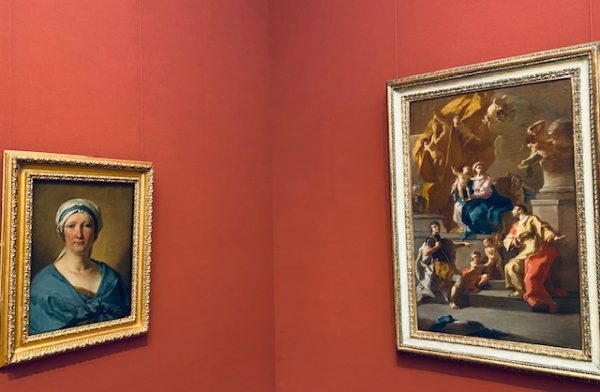
In some galleries or for curators of an exhibition, the crucial question is not only the overall message, but the best positioning of artworks in the available space. In many national galleries what hangs next to another piece is rarely seen as an opportunity for exploration and experimentation. A recent visit to the “Gemäldegalerie“ in Berlin allowed to explore the vicinity of 2 paintings, which are very different in appearance. The one (by Pierre Subleyras 1740) is just entitled “Portrait of a woman”, the other one next to it, “Virgin and Child Enthroned, with Angels and Two Saints, Domenico Mondo 1773). The former portrait has almost a modern touch to it as the beauty consists in the simplicity of the person depicted, whereas the latter painting portrays a rather empty message of splendor and power. The conscious confrontation of portraits or paintings with each other is the high art of curatorship. It is even more pointed than a guided tour of a gallery as the simultaneous rather than the sequential confrontation is the issue. 

Woman artist scandal

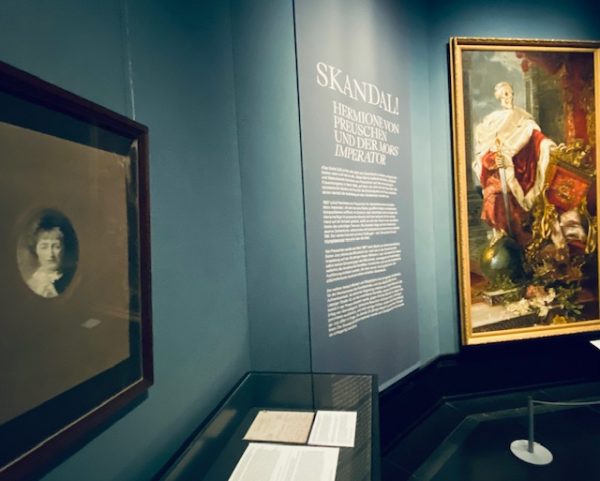
The painter Hermine Schmidt-von Preuschen, little known today, had to face strong forces in the established art community of her time. The skills and audacity she displayed at an early stage of her career as painter is epitomized in her work “Imperator Mors”. This painting dates back to 1887 and was rejected by the art academy in Berlin for their official exhibition. The woman artist was already at that time confident enough that her painting was of sufficient quality to deserve to be not only considered in the exhibition, but also to be seen by larger audiences. Similar to the refused painters of the impressionist movement, she decided to mount her own exhibition. The turnout to this proved to be quite a success according to the press cuttings presented as part of the exhibition in Berlin at the “Alte Nationalgalerie” 2026-5. Maybe it was the intended philosophical topic or message that killed the chances to be part of the art academy exhibition. “Imperator Mors” shows death or a skeleton to be the ultimate ruler of our fate. For all those who believe in some sort of life after death, this can be viewed as a “Scandal” in itself. The scandal created with such a depiction probably overshadowed the fact that the provocation came from a woman artist. Still very avantgarde for the end of the 19th century. (Image: Hermine Schmidt-von Preuschen and her painting Imperator Mors 1887)

Jobs First

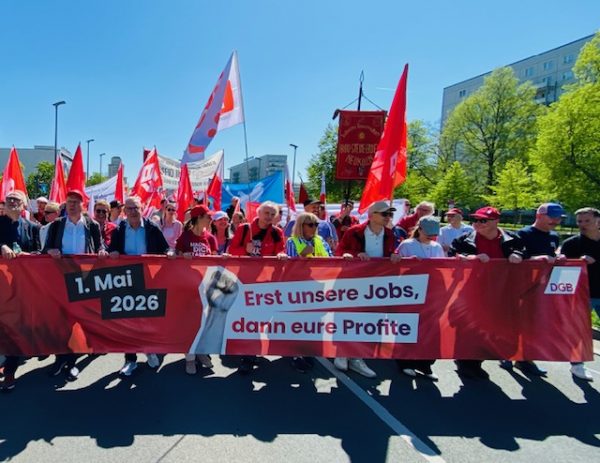
The Berlin demonstration of the 1st of May has chosen to put „Jobs First“. Jobs before profits is a widely accepted claim by trade unions to highlight the importance of work in our societies. Particularly in times of robots and AI taking jobs away, this motto is well chosen as a principal risk in 2026. The current technological innovations seem to aim primarily at the maximization of profits for companies rather than the benefits for society as a whole.  The Berlin parade on the 1st of May managed to achieve a great mobilization, which is a great success for the labor movement and a demonstration of power and solidarity when in many countries basic employment rights and even the 1st of May as a social tradition is attacked.

Democracy in architecture

Over centuries we have pondered how to bring more democracy into architecture. This very idea is different from designing parliaments or other democratic institutions like courts or the representation of executive power in a democracy. Bottom-up or direct participation, beyond the pseudo open participation in a competition for the chosen best design, could take the form of voting by and/or listening to the people before any realization. Rather than relying on the choice of elected representatives, we may envisage the observation of people’s choices. Such a kind of bottom-up approach has been chosen by Anna Jung and Lea Krueger who let persons chose, where they wanted to take a rest at the Kulturforum in Berlin by moving chairs to a  specific place or a nearby location. Rather than yet another grand design people could freely choose their favorite niche for 1 or 2 chairs. Sometimes just looking for shadow next to a wall or under a tree, sometimes desperate for a little green spot. Democracy in architecture can simply mean to think architecture from the people’s perspective or an observed user’s experience. Democracy in architecture could resemble a bit more the internet revolution and think in terms of user interface, UX-design. With the construction of the “Berlin Modern” well under way, such green niches shall be appreciated by many people passing by and those who would like to rest for a while.  

Free Lunch

Who told you that there is no free lunch? On the premises of “The Berlin Philharmonic” a group of toddlers and babies had a free musical lunch. On the occasion of the lunch concert on 2026-1-28 in the spacious entry hall young musicians (piano, Ana Bakradze, and violoncello, Carlo Lay) gave a concert with Sonatas from Beethoven (op. 69) and Britten (op. 65) to an exceptionally broad range of ages in the audience. People fully enjoyed the concert, irrespective of uncomfortable seating also on stairs, if they managed to find a seat at all. The occasional breast feeding seemed to be the free lunch for some privileged babies. The adults were invited to contribute a donation to the UN refugee fund. Instead of the usual seasonal coughing, there were delighted outcries from the youngest, which enchanted the aging audiences additionally. The 2 musicians excelled in concentration on their performance in spite of the challenging setting.

Konzerthaus Organ

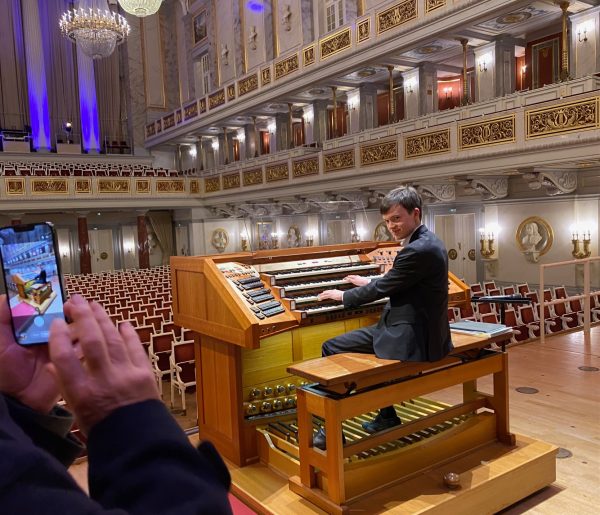
In the Espresso Concert series we have had the chance to listen to young talented musicians. On 2026-1-7 Julian Emanuel Becker charmed the audience with 5+1 pieces in the “Großer Saal“ on the Jehmlich Organ (4 manuals, 74 registers, 5811 pipes). The program ranged from Bruhns, Bach, Mendelssohn Bartholdy to 2 pieces by Jehan Alain, which made for an interesting surprise. Mastering this huge Konzerthaus organ with impressive skills at just 20 years of age caught the attention of the Berlin audience including the tourists on visits. The enthusiasm of Julian Emanuel Becker for his instrument and the brief introductions he gave himself to each piece created a unique learning as well as musical experience for the entire audience irrespective of age and prior expertise. The „Espresso addicts“ of the Konzerthaus even took the chance to chat with the young organist to learn more about the marvelous instrument and the next steps in his promising career. The studies in Paris at the Conservatoire have been important steps in the careers of formidable pianists and composers for more than 200 years. Becker will surely return to Berlin to give concerts again. Try to catch a seat, if you can. (Image: Julian Emanuel Becker 2026-1-7 at the Konzerthaus Jehmlich Organ)

Rotational energy

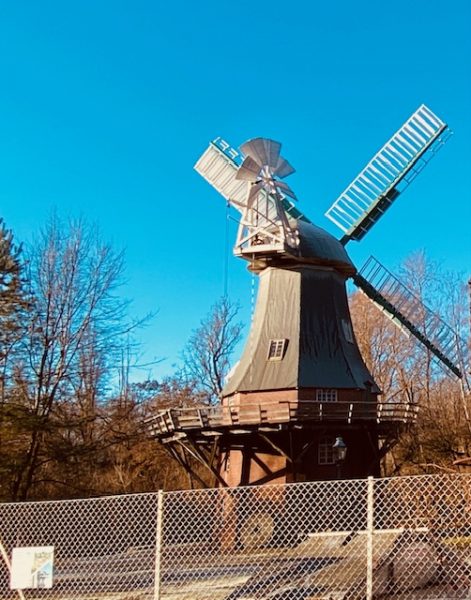
We all know rotational energy from our bicycles. lighting used to come from a small rotational energy source attached to a wheel (dynamo light) which produced sufficient electricity to lighten a front and back light. The use of rotational energy, however, is much older than the application on the bicycles, which have been largely replaced by batteries and LED-lights. The first so-called Post-mills stem from Normandy as well as the Rhine riversides around 1200. It took about 800 years to make a splendid comeback as energy source in the age of the „All electric society“ of the 21st century in the making. The „Deutsche Museum of Technology“ in Berlin has great examples of such rotational energy sources on display in the museum‘s park. You can walk a path through the past and future of rotational energy sources.

Utopian Mobility

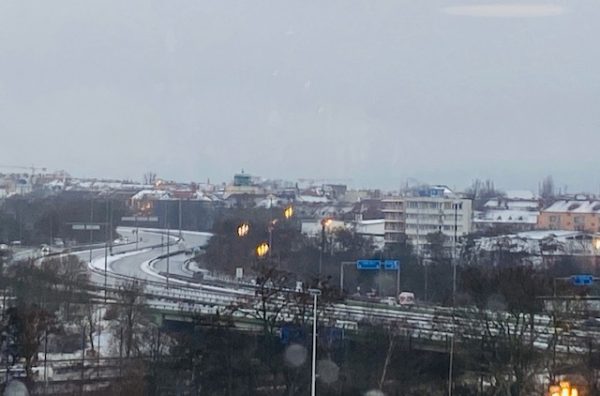
From time to time we have to reconsider our investments in mobility infrastructure. What seemed to make sense in the 50s,60s or 70s often makes no sense 60 years later. Highways, which separate city districts like walls belong to rather utopian visions about City life and mobility, progress and living conditions. These utopian individualized mobility solutions don’t seem to serve us as well as we believed, or were made to believe, more than half a century ago. Empty highways midday at the turn of 2025/26 tell their own story about liabilities from the past and outdated ideas of technical and social progress. Sharing solutions have become very popular and the younger generations adopt already different mobility patterns than older generations. Each generation adheres to its own more or less utopian mobility model, adjustments are likely to be made accordingly.