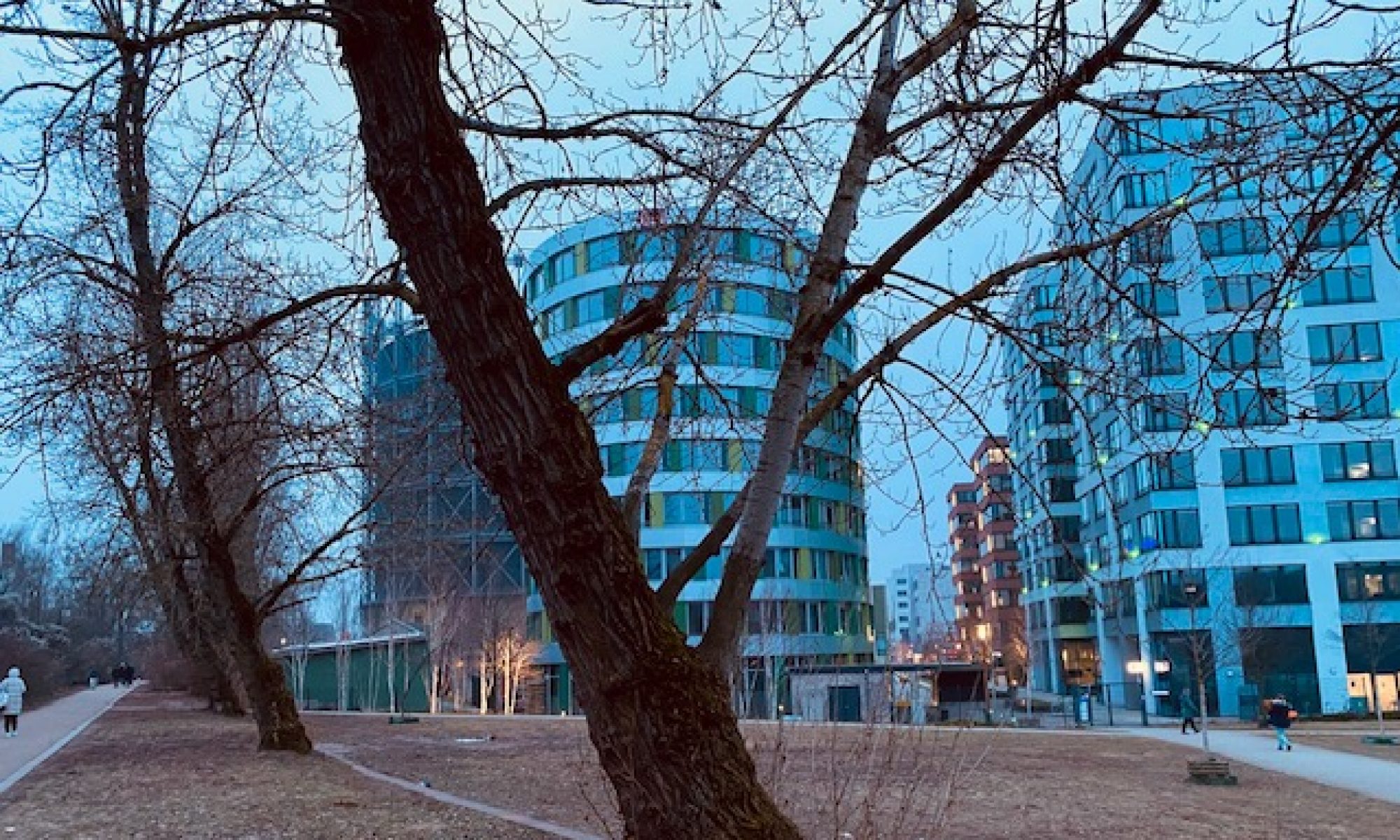

The greening of facades of houses is an old tradition in many western countries. The outside of a home then changes colors with seasons. The home for insects and birds feeding on them makes a small contribution to biodiversity as well. Greening interiors is a more rare instance. Of course flowers and plants can contribute a lot, but there is yet more scope to green entire walls inside your home or office.
Moss has advantages to add humidity to the air. You might like the acoustic effect as well in busy environments. Taking care of moss is not easy. Professional assistance (Link) or renting options might be a good option for office buildings. The wellness enhancing effects are also interesting for some people who susceptible to the calming effects of a more natural environment. It is a matter of care and respect for air quality that is reflected in the design using green interiors.
Circularity is another advantage of the materials. We can so a lot for biodiversity if we really wanted to even in urban spaces. Global warming will force us to think more and more, and sooner than later to make use of such innovative solutions. For the time being they remain a luxury option. For the wealthy, greening interiors is easy, it much less an option for restricted budgets and people who are obliged to focus on short-term survival. However, we have to get started with the greening of our planet again, any way. 
Californication
In a song by the „Red Hot Chili Peppers“ the term californication appeared for the first time as far as I remember. This song is rather critical of the superficial californian way of life. The belief in the dream that you may get rich quickly in California has suffered another blow wit the thousands of homes burned in the wild fires in January 2025. Dry and arid areas are spreading and the lack of water makes it very hard for firefighters to protect homes, particularly in difficult to reach valleys. Stormy weather adds to the speed of fire spreading. All these elements are predictable additional risk of climate change. Californication is the old and new word to describe a trend of acceptance of increasing climate risks by at the same time neglect of environmental precaution. Hollywood is just around the corner there and the film industry might come up with some other narratives than just the previous californian dream. Get rich fast, then run away. Sustainability is a more difficult concept and yet it keeps getting more and more attention. 
Aridification
Man made climate change and local policies increase speed of aridification (Link). It is not only the Sahara desert that is spreading out, but the lake Aral is another horrible example of the disrespect mankind attributes to its own resources of living. As more regions become arid due to our faults and long term consequences of industrialization we provoke human resettlement of an increasing scale. Water resources are and have been for centuries the major reason for people to settle nearby. Aridification of the soil like in California increases the risks of wild fires. The costs associated with aridification are very high and such areas can no longer be insured through normal private insurers. In most cases poor people or countries are affected the most, but we are all likely to bear the consequences in one way or another. We will have to accept that the size of habitable areas on earth decreases while the peek demography of humans is still at least a decade away from now. Not to tackle aridification is not an option. When shall we ever learn? (Image: sketch for Hagar and Ishmael in the desert, by Navez 1819, MRBAB) 
Air Concept
Well yes, this is the latest fart in design and architecture. The Berlin International University of Applied Sciences composed an exhibition on “Air Architectures” which takes air seriously. The international group of 7th semester students took Air Architecture seriously and developed their ideas in the context of a curated exhibition. Nice semester project.
Air is a fundamental precondition for humans to (co-)exist. The biology of air (breathing) or the chemistry of air (fine particle matter) have been studied extensively. The physics of air flows in cities receive more attention as well in architecture. Interior design has yet a lot to contribute in the age of heat pumps and air conditioning.
Let’s think architecture from the perspective of air and air flow. Depending on our cultural background we might have very different associations with air. Indian or Chinese practices like yoga or Tai Chi teach us to take air more seriously than Western practices. Most architecture in cold countries of the northern hemisphere aim to keep air to the outside of buildings. Yet, the percentage of humidity of air is a serious concern of architecture as well. Air flow and quality then becomes a key issue of construction and architecture, somehow through the back door.
Maybe in approaching architecture we might think first of what is or has been the architect’s concept of air or aerodynamics. 100 years after the death of Gustave Eiffel and the Olympic Games in Paris, we still gain from thinking about air (not only air pollution) and its dynamics. Looking forward to the next generation of air architects.
(Image: Exhibition, Air architectures, at Berlin International, University of Applied Sciences 2024-12) 
Mobi Tech
There is much more to mobility and technology than new cars and bicycles. Innovative infrastructure provided by new public services allows new forms of mobility technology to strive. Charging points across a country are crucial to ensure smooth and smart mobility for example with e-cars and e-bikes. Software guides us to next or cheapest charging point in the surroundings. Public services provide the basic data on this and need trustworthy updating and repair of the infrastructure to avoid frustrations. Navigation systems need up-to-date info on areas with restricted mobility due to high emissions (diesel) or illegal parking of shared bikes and rollers to avoid a banning of share options in inner cities. Data allow the guidance of traffic and combinations of different modes of transport. Mobility tech is nowadays a largely data driven process and public services provide important basic services and information for innovation and reduction of emissions in the field of multimodal mobility.

Water Quality
Obviously, water is not just an issue of quantity, but also quality. The availability of sufficient quantities of water in a region depends on rain, its storage, and the use of these water resources. The quality of water is a subsidiary issue, as lack of inflow causes concentrations of nuisance in water to rise. Global warming will most likely intensity the concern for not only the quantity, but also the quality of water.
Public services are in charge to sample and monitor levels of water quality for consumers. Independent of public, private or public private partnerships in this field there is a need to check from time to time the quality of water. Public institutions do a great job in monitoring water quality, but as science progresses there are new sources of pollution that enter the already complex analysis of water quality. New chemicals and remains of medical or pharmaceutical analyses have been retrieved from water and, sometimes, they have reached critical or unhealthy levels.
More detailed monitoring is necessary and new digital tools allow to improve just this type of monitoring to inform policy makers on shifting patterns.
A project of that type “Urban Green Eye”, for example, allows to monitor the artificialization of previous vegetation to show up on satellite images of Germany. Independent groups, citizens or communities might find it useful to use their own sampling and testing to guard against abuses or dysfunctional public monitoring systems. Start-ups like “Hydroguard” offer services to support activists, communities or public services in their own efforts to ensure water quality. 
Water as a Service
Most of us are happy to turn on the water tap and enjoy the bubbles of fresh water. In other parts of the world this is considered a luxury and precious good. Public infrastructure takes care of water supply and treats waste water. We hardly even notice. This is changing in many regions of Europe now and Berlin and its surroundings are a good example of the challenges of water as a service. We need to sharpen our awareness that, yes, climate change again, has changed the priorities of water supply. Some East German regions face already a water supply shortage due to lack of rain water and adequate measures to store rather than evacuate rain fall. The German weather service (DWD) offers not only the info on rain fall, but also several indicators on soil humidity from 10cm to 200cm under the surface. These measures are important for crops and agriculture, but also for trees and vegetation in general. The droughts of the last years show a lack of humidity in large parts of East Germany.
This is the starting point for the “citizen science” project in the region of Brandenburg. The “Wassermeisterei” brings together people interested in water management to monitor soil humidity with a shared infrastructure and citizen enthusiasts to raise awareness and draw conclusions on the local preconditions for agriculture and forestry. Knowing about the evolution of water availability over time allows to make more informed judgements about the need and potential of a continuous and improved “water as a service”. The presentation of the project on the e-government fair was a reminder to take water more seriously and to value this crucial resource with more respect. 
Ranking Enterprises
The Spanish economic newspaper has published on its front page an updated ranking of the top 10 Spanish companies using environmental, social and governance (ESG) criteria (see below). elEconomista.es on 2024-10-12 shows through this updated ranking that ESG criteria continue to be relevant information for investors. It is not just a nice to have information but gives important information on the sustainability record of a company. Continuous monitoring is key to show and reward the efforts and investments companies have made to improve sustainability. This information needs large distribution in order to keep up the awareness that there is more to a balance sheet than just turnover, profit margins, debts and investment. Churning of employees creates costs to society as a whole as well. Any early information on ESG indicators, therefore, allows a much broader assessment of the full impact of enterprises, 360 degrees and over time. Certainly a good example to follow up on.

Happy Runner
The happy runner is a nice example of how hard it maybe to experience happiness through running. The so-called runner’s high is available to everybody, if you manage to run long enough already. Most predictions put the threshold distance at about a 1 hour run. The reward for this effort is a special feeling that exceeds the pain or it makes you forget or supress the pain at least temporarily. Special reinforcements can be achieved through the big city runs in exciting places with thousands of people cheering you on. This has become a big business as well. Training for such an event might raise your feeling of happiness substantially. The chemistry of the endogenous production of stimulants of happiness in our body has been enlightened substantially in recent years (partly as doping control). Most of the brain active drugs our body can produce itself, although this involves a lot of physical and mental effort. The rewards are pretty healthy for most runners contributing to their basic level of happiness. Running outside, has contributed more to happiness for me more than the same exercise on a treadmil. Maybe, the environment is part of the happy runner’s high effect. 
Traffic Speed
Most people use cars or other automotive vehicles (e-bikes, e-scooter) to get faster from point A to point B. However, speed of traffic causes trouble for other groups of mobile persons. Demands on attention rise, despite the abundant use mobile phones even during driving a car. Mapping systems and services from A to B have become an almost daily exercise. Statistics on road accidents that involved inadequate speed are between 20 and 30 percent of all deadly road accidents, depending on the source of information and country (Example D). Frequently, speed is not the only cause, but other behavioral mistakes occur jointly.
Traffic signs are a basis to make drivers aware of accident prone locations. Too many of them may even lead to the opposite effect of ignoring the signs. Reducing the speed of traffic in inner cities is a steep challenge and many cities invest substantial amounts of money and effort to monitor and try to control better excessive speed. Schools, sports centres and shopping areas are all hot spots of automotive and pedrian encounters. They deserve special attention. Penalizing excessive speed is one way to nudge behavioral change. Although the statistics on the huge amounts of penalties awarded does not seem to alter the behavior of traffic participants in the short run. For some it appears to be a regular part of their budget of mobility with no consequence for behavioral changes.
For years the dangers of inadequate traffic speed in cities made young families and older persons leave more risky inner cities, but adaptations of hot spots and increased control systems seem to work in the long run. The “externality” of inadequate traffic speed is higher costs for the health system and society at large. About time to make a “behavioral turn” in traffic speed. 