Road injuries

Road injuries are a serious matter. The lives lost and people suffering from lasting injuries continue to be a major health hazard on a global scale despite significant reductions over the last 3 decades, mainly in wealthier countries . The Global Burden of Disease study (Ng et al. 2026) shows that between the ages of 10-39 fatal road injuries are the main cause of death for young men. The study has no data to speak to causal effects, but the basic statistics show a clear pattern according to gender. Several factors need further exploration:
1. Men are known to have a much larger share of the total amount of road traffic in most countries, which leads to a higher risk exposure.
2. Men seem to take higher risks when driving, which puts them at higher overall risks as well.
3. Responsibilities for road incidents are not investigated, which leaves other causes or contributions to road injuries (like alcohol or drug abuse) unaccounted. (Source: Ng et al 2026. Global, regional, and national burden of road injuries 1990–2023, p.7)

Woman artist scandal

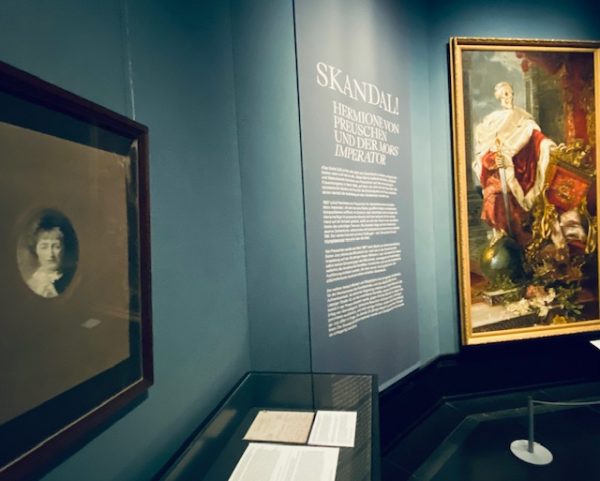
The painter Hermine Schmidt-von Preuschen, little known today, had to face strong forces in the established art community of her time. The skills and audacity she displayed at an early stage of her career as painter is epitomized in her work “Imperator Mors”. This painting dates back to 1887 and was rejected by the art academy in Berlin for their official exhibition. The woman artist was already at that time confident enough that her painting was of sufficient quality to deserve to be not only considered in the exhibition, but also to be seen by larger audiences. Similar to the refused painters of the impressionist movement, she decided to mount her own exhibition. The turnout to this proved to be quite a success according to the press cuttings presented as part of the exhibition in Berlin at the “Alte Nationalgalerie” 2026-5. Maybe it was the intended philosophical topic or message that killed the chances to be part of the art academy exhibition. “Imperator Mors” shows death or a skeleton to be the ultimate ruler of our fate. For all those who believe in some sort of life after death, this can be viewed as a “Scandal” in itself. The scandal created with such a depiction probably overshadowed the fact that the provocation came from a woman artist. Still very avantgarde for the end of the 19th century. (Image: Hermine Schmidt-von Preuschen and her painting Imperator Mors 1887)

Given then Chosen

Family is first given and only later in life family becomes a matter of choice. This is a rather sequential perspective on family matters. A lot of ethnological as well as sociological research shows that the shadow of the given family can reach long into an individual’s later life. It is essential to be or become aware of the mutability of what constitutes a family. The ethnological variability across the globe of the norms and legislation that govern families is amazingly broad. The interference of religious beliefs and practices have always attempted to gain access to the nucleus of family life as an attempt to influence the “given part” of family.
It is a much more complex issue to understand and research the “chosen part” of partnership trajectories in a broader sense and from a life course perspective (Fasang et al. 2024). The social background and upbringing in a broad sense have a lasting impact on most people. However, there are enormous degrees of freedom to later on choose your friends, family or families. Societies across continents have chosen and invented particular rites of transitions between families and how to bridge networks. It is amazing that we tend to devote so little thought to this nucleus of our societies. 

Pictures at an exhibition

The playlist on Spotify, which accompanies the exhibition “Unforgettable” in Ghent, is an interesting extension of the unforgettable artists into today and tomorrow. You may be inclined to share your opinion in the way Maria Iskariot does it in “Dat find ik lekker” or more like Sophie Straat in “Dansen met de dood”. Anyway, women artists are coming front stage and this is great news despite all the backlashes we, unfortunately, witness in the 2020s. The curator of the playlist Murielle Scherre has managed to take us, a bit like the exuberant Modest Mussorgsky in his “Pictures at an exhibition”, beyond the marvelous exhibition rooms to a broad exploration of contemporary women artists’ world of imagination in music, visuals and songs. A great intergenerational accomplishment. 

Screenshot

Forgotten but Unforgettable

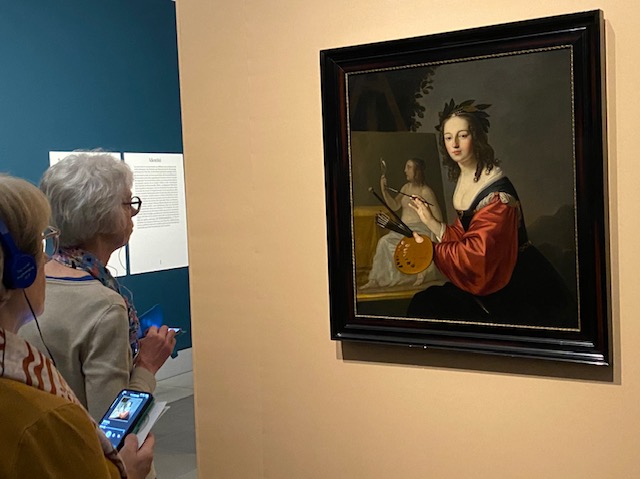
Many women painters and artists who worked during the 17th and first half of the 18th century have been forgotten until recently. The galleries of the time and many years later gave little attention to the women artists of that time. Most of them were relegated to be of minor importance in the course of art history. The exhibition of the Museum of the Fine Arts Ghent in Belgium has accomplished to rectify this place of women painters in art history. The fine pieces of art, ranging from painting to sculptures, were frequently signed by men, probably to achieve higher market values and become visible in the public sphere at all at their time.
The exhibition is a kind of a revelation of how difficult it was for women to move from an “object of art” to be the subject painting including painting themselves. This also dealt with the view or regard of others towards women. Additionally, the exhibition features a section on “Social Expectations”, which deals with the expectations of the Flemish and Dutch societies towards women. Family values, marriage, wealth and social status were of utmost importance.
These women painters were forgotten far too long, but have staged their comeback as “Unforgettable” in the 21st century.
(Image: “Pictura at an exhibition” taken in the MSK Ghent 2026-4)

Telework Challenge

There is a seminal trend that many employees prefer to have a choice to work on the premises of the employer or remote from home. This flexibility has become a major element of collective bargaining on work and time in larger companies in order to clarify rights and obligations.
In France it is about 1 in 5 of employees who do telework one day per month (1 in 6 in Nouvelle Aquitaine). The higher up in the hierarchy a person is, the more likely s/he is to do telework. Higher levels of educational attainment and seniority in a company also improve the access to and use of telework. There are still many employees who would like to do telework in their jobs, which technically could be done remotely, but who cannot do it (1 in 3). Most of those are denied the possibility by their employers.
Data from a survey in Germany from 2014 showed that before Covid-19 men were worked more often remotely than did women (Lott & Abendroth, 2019). The latest figures from France 2024 show that women have overtaken men as remote workers (Askenazy et al. 2025). As working from home has become more a part of the “standard employment relationship” today, the fears of loosing out on career opportunities due working from home seems to play less of a role nowadays, probably for both gender. Compared to 2014 the costs of equipment and availability and ease of installation of fast internet have become more affordable and might push the spread of telework even further.
The data from France show a strong positive correlation of remote work and commuting distance to work. Hence, long commuting distances “drive” more people into telework, which makes a lot of ecological sense, too.

Fighting the Beast

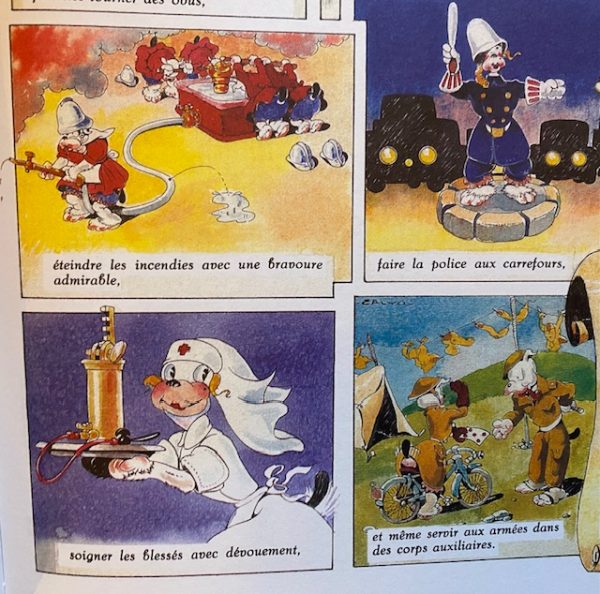
The earliest post 2nd WW cartoon stems from Calvo in France, published in its first edition in 1945. After the first part entitled “When the beast became unchained”, the second part could report on the happy ending “When the beast was overturned”. Amongst the admirable comprehensiveness to talk about the preparation of war, the battles and atrocities committed by the wolves, the allied forces of animals gained the upper hand. The role of women in the fight against the beast takes almost a whole page in the historically precise narrative of the 2 WW. With a fine sense of necessary historical detail, the reporting of British women (the female dogs in the cartoon) as essential part in the war effort to win the war against the beast(s). Women exercised professions were not previously allowed to enter. Gender awareness as early as the mid 1940s was rather advanced at the time.
Great topics to talk about with your children or grand-children.

Age of maturity

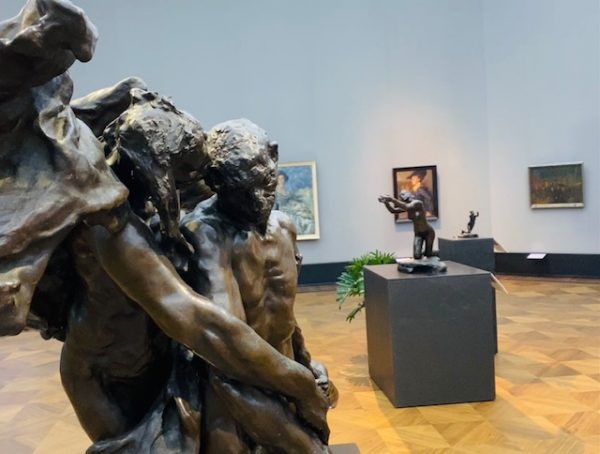
The bronze statue by Camille Claudel „L‘âge mûr“ is her most famous works. It is part of the exhibition Claudel & Hoetger in the “Alte Nationalgalerie“ in Berlin. Usually the statue is part of the permanent exhibition in the „Musée d‘Orsay“. With the depiction of different stages of the life course and somehow revealing the emotional trajectories of the persons the scene of human joy and tragedy becomes tangible beyond her personal fate. The scenario and arrangement in the Alte Nationalgalerie allows to focus on this particular work with an emphasis on the trajectory and the evolutionary path. A unique arrangement does better justice to the particular message of the artist than being surrounded by too many other works of art. (Image: extract of Camille Claudel‘s „L‘âge mûr“ in showroom Alte Nationalgalerie, 2025-8)

Gentileschi Heroine

The choice of a woman as heroine in a painting beyond religious topics was innovative in the early 17th century. Artemisia Gentileschi chose Cleopatra as her character in the ultimate scene of Cleopatra‘s life. The heroic act of guiding the poisonous snake to bite her under her arm is the ultimate act of Cleopatra to have served her country and people. As history books are full of male heros Artemisia Gentileschi succeeded in drawing attention to the biased gender stereotypes in art and art history beyond the 17th century.

Gentileschi Selfie

Today the production of „selfies“ is all around us. Selfies are shot almost instantaneously and several times a day by use of modern smartphones. About 400 years ago the first woman to produce a selfie was Artemisia Gentileschi. As (one of) the first female painter in art history to have created a painted image of herself (which is transmitted today) Artemisia Gentileschi made history. Her unique biography, style and craftsmanship of the early 17th century in Italy made herself a renowned painter. Her choice to depict herself rather than somebody nobel or rich was quite unusual for the time. The audacious choice of herself as her „sujet“ became even her trademark. Later paintings by her with biblical topics were also subject to her reinterpretation based on herself as the female character in the narrative and image. In this respect her work appears so much ahead of her time that her impressive work speaks to all generations today. (Image: extract of Jael and Sisera by Artemisia Gentileschi 1620, Musée Jaquemart André“ in Paris 2025-8)