Beware Albedo

At times of high radiation from the sun, we suffer from high “albedo” values surrounding us. Albedo is scaled between 0 (black) and 100 (white) and is a measure of the reflection of light. Dark surfaces have a low Albedo, which means they absorb a lot of light and store this energy in form of heating. On the contrary, white surfaces or reflector materials like mirrors absorb very little of light as they reflect the light and, therefore store very little of it as heat.
In housing or urban planning this is an important indicator to take into consideration when planning for summer heat reduction, for example. Inner cities with dense construction, lots of windows, which in most cases absorb rather than reflect sun light, Light absorption and storage during the day will contribute to heat urban environments and inner cities during summer nights. This might be comfortable during winter, but in hot summer days the high reflection value creates additional discomfort.
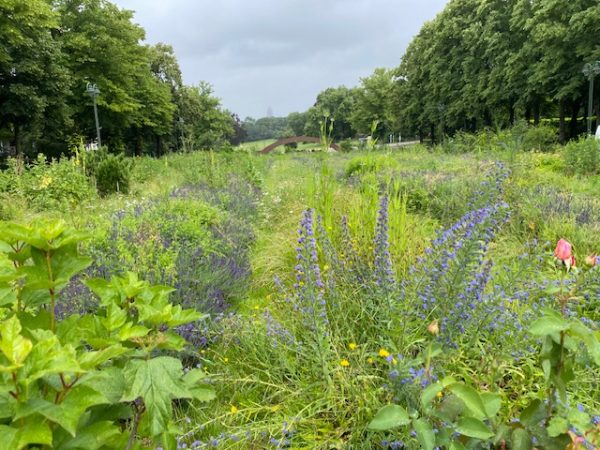
Greening of cities is a powerful answer as vegetation absorbs the sunlight, but does not store it in form of heat. The glaciers and huge snow fields have shielded us from the earth heating up too fast in the past. Unfortunately, the lack of knowledge about “albedo” has lead us to undervalue these shielding effects. Light absorption by the earth is an additional driver of climate change in form of global warming. (Image: Brussels, Forest, Park Duden Community Gardening 2026-5)
Projection Painting

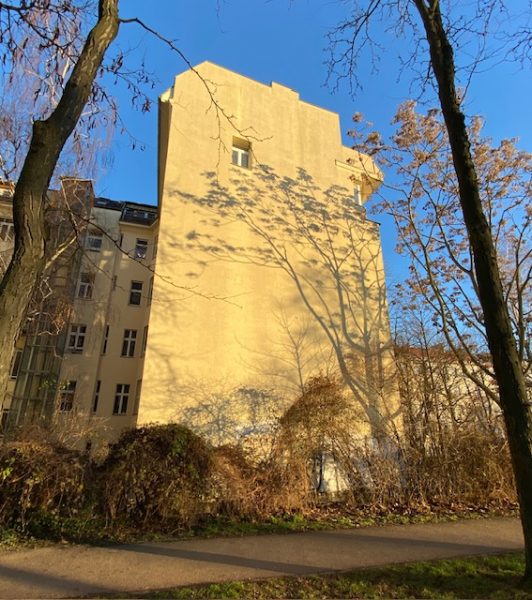
Nature teaches us lots of tricks. Bionics are all around us in the 21st century, but the marvelous projection of a winter tree on a huge screen comes close to a naturalistic painting. The projection of the branches and leaves of a tree originates from the early sunset in December 2025 in Berlin. Nature teaches beauty and the techniques to imitate or reproduce the effects. Its up to us to keep our eyes, senses and minds open to enjoy the beauty in our surroundings. 

LED light

For decades now, we have the LED light technology around us. In many instances we do no longer realize the presence of light emission devices (LEDs) for example in our television screens or in road lighting. However, this still is an exciting field of electrical engineering and the replacement of gas lighting as well as other electrical devices with higher energy consumption are high on the agenda for sustainable lighting. There are important health and security aspects related to lighting (sleep and road traffic).
In Berlin the demonstration and test area for innovative LED lighting is also an open-air museum which can be experienced throughout the year. The party-goers and club visitors might best know the demonstration street as part of the “Deutsches Technik Museum” The energy saving potential of LEDs use in street lighting is substantial and should interest most rural and city councils. The demonstration of the differential effects of targeted lighting and broad illumination based on the same technology is impressive. Of course, the design aspect of LED-technology with the colourful potentials are of interest beyond the technical aspects to replace for example gas lighting. There is much more to lighting than just opening your eyes in the morning. (Image FG Lichttechnik TU Berlin)