Traveling with-in books

Of course we like to travel or move it. Why not Madagascar? Most people would start to prepare such a journey online for a starting point. On the Frankfurt book fair, the publisher MairDumont reported that very quickly after we zoomed in on a destination, we ask ourselves: what info to trust. For publishers and authors the issue a crucial one as to build a reputation as a trustworthy brand is longer term investment. Holding up trust and to communicate about it, are the next on the agenda. Books or ebooks have this image as most of them are edited in a careful way with cross-checks by several persons. The not-social-media complement rather than replace a trusted source. People navigate between these forms. Authors who have insight knowledge and evidence that links and information have been validated are necessary conditions for success. We still travel with advice from books. Probably even more of us “travel in books”, where the reading of a travel guide becomes a fantasy journey. Traveling with or in books has a great ecologically-minded future, too. 
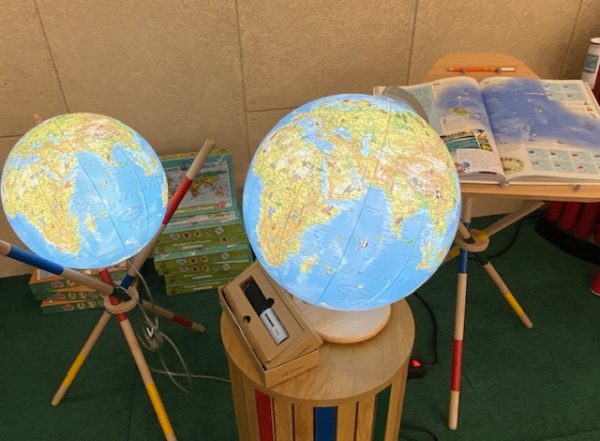
globe travel book imagination

Long run

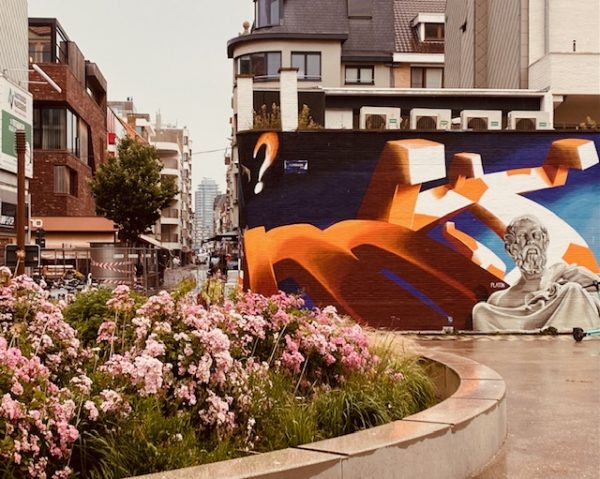
The future orientation is a principal component of any investment. If a society stops investing its impeding its own ability to adapt and grow. Investment costs today will likely generate returns in the medium or long run. A caveat applies. Some investments may cause long running liabilities, like nuclear energy. The choice of which investment to choose, therefore, is crucial. The investment in people is likely to have a positive return in the long run because it remains an investment that has a high potential to adapt to changing circumstances rapidly. Training as scientist allows to do both fundamental research or to choose an applied field with little reorientation. A focus on the long run has advantages of likely stable returns if previous forecasts in what to invest were correct and reliable. This is the point where besides the difficulty to make good (technological) choices, probabilities enter the equation. The longer the time horizon, the greater the probability that relevant changes, which impact the future returns, shall occur. At best, some of these may cancel out each other in the long run. The potential that some risks are “too big to fail” does not mean that shall not occur (zero probability does not exist in technical nor human decisions. A sound theory of social investment would be a great step ahead for humanity in the 21st century. (Image: Ostend street art 2026-6) 

Gone paddling

Similar to windsurfing, paddling has not only a physiological, but also an ecological impact. Rather than using external power the equipment requires a good sense of balance on the board and propulsion originates in your own muscles. The benefits are great for mind and body and sharing a board is the standard way of getting your regular exercise.
There are more and more stations near the sea or on lakes available in 2026-5, so that it has become a much more accessible form of exercise. Paddling is also an age-inclusive practice, since the “probability to fail“, with the pleasure of spontaneous diving, is spread relatively equal across ages. Learning curves, however, may differ substantially across generations depending on prior balancing experiences. The ecological bottleneck consists in the access to sufficiently clean water resources so that the healthy and fun exercise shall have positive long-term health effects. 

Valuable Donations

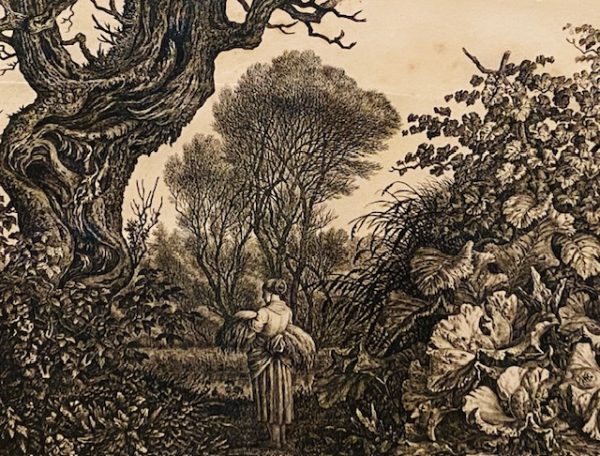
The of a donation to a national gallery is often a curse but may reveal only much later as a blessing. More galleries across the world give due credit to their generous donors. The collection of impressionist paintings by Caillebotte figures today very promising in the Musée d’Orsay in Paris. The fine collection by Chistoph Müller endowed to today‘s “Kupferstichkabinett” exposed in the Gemäldegalerie in Berlin has been on display in a small room. The „Kräuterblätter” (herbes on paper) by Kolbe 1815/1824 are fine pieces of etching with a focus on what might get lost in our biodiversity in coming years. Old trees were surely on his list (Oak trees 500+ years old). A collection of depictions of herbs and flowers a part of an ecological treasure which the generations after the painter and eventually the collector Christoph Müller began to value a lot. Some collectors are far ahead of their time by treasuring the past. (Image: Extract of „Kräuterblatt mit Schnitterin“ Kolbe 1815/24 Donation Christoph Müller shown in Gemäldegalerie Berlin 2026-5)

Home Wind energy noninvasive

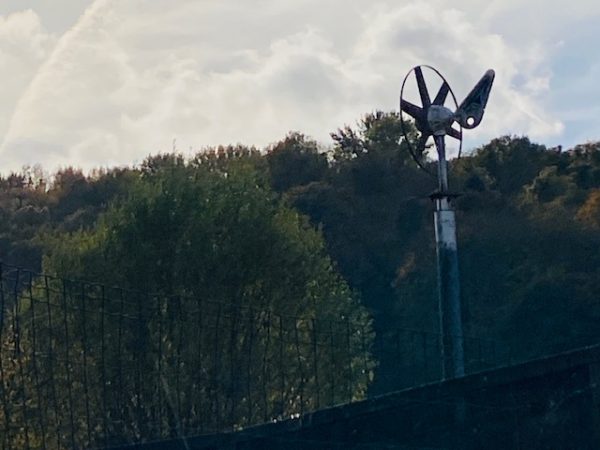
The abundance of wind energy in some regions has made the use of this source of energy more popular. During long winter nights the harvest of wind energy is a wonderful source of free energy. Regulations and oversize wind turbines have tarnished the image of wind energy in some regions. However, even in France and not only in this small village of Asterix and Obelix who resist the Roman empire, that we can find tiny wind turbines providing small amounts of energy. For all those households that have a battery they can use this power whenever they may need it. Suddenly, we are looking forward to the stormy autumn season.  

Green trade flows

The statistics on trade flows reported by the UN Department of Economic and Social Affairs have a comprehensive data base in the background. The descriptive inspection of the raw data on trade flows comprising solar panels, batteries and electric vehicles shows a stark imbalance of how future-proof the trade between countries is. The New York Times (David Gelles et al. 2025-6-30) has put this information into an impressive graphical design to show the magnitude of the imbalance of how China trades in green products with the world and how the USA is losing out on future-proof low carbon emission trade. Despite the fact that China is still heavily emitting CO2 today due to burning coal for electrical power, the investments at home and trade with the world is moving into the opposite direction. We have seen many of these industries at risk in Europe, like solar panel production, batteries and increasingly electric vehicles, without the western countries getting organized to address crucial business and economic challenges. Falling behind in these industries and trade will shift global balances in the near future. Renovation through innovation is more promising than holding on for another decade to inefficient and more polluting energy sources. Repairs of homes and buildings have long lasting effects, which we can, nevertheless, change today.

Robot repairs

Robots have been used mostly in industry for assembling, transport or sorting tasks. There is also a role in disassembling to enhance circularity. To repair electric or mechanic devices there is an enhanced version needed which starts with a diagnosis of the problem. Algorithms can sort out promising from dead end routes of repairs. However, the recognition of objects into things that can be repaired and those without repair potential is a worthwhile assistance. Beyond the economic and ecological rationale for repairs, there is an emotional or nostalgic sense to it as well. Maybe, from a life course perspective any object related to the teenager years of a person qualify for nostalgic value. Even simple robots or AI-assisted objects may qualify for this in future. Artificial friends will be like tamagotchis in need of repairs.

Permanently anxious

„There’s a set of forces that want us to be permanently anxious“, is the phrase chosen by Tony Cokes in the exhibit just outside the „Palais Populaire“ in Berlin in 2025-5. International politics and the economic upheaval caused by Trump’s tariffs contribute to the already existing other sources of anxiety like nuclear energy and warfare. Global warming causing more extreme weather events add more man-made reasons for anxiety. The next generations will have to foot the bills we have left to them unpaid. Our current shortsightedness increases anxieties which previous generations have not known of a similar kind or in that combination. 

Community building and solidarity are ways to overcome such overwhelming anxieties. Supranational organizations like the European Union have an even stronger role to play to reassure its people with credible signs of solidarity. We are not alone in the struggle to overcome the anxiety that is creeping up around us. We are certainly stronger together than individually dealing with unspecified fears. „We shall overcome …“

Greening Interiors

The greening of facades of houses is an old tradition in many western countries. The outside of a home then changes colors with seasons. The home for insects and birds feeding on them makes a small contribution to biodiversity as well. Greening interiors is a more rare instance. Of course flowers and plants can contribute a lot, but there is yet more scope to green entire walls inside your home or office.
Moss has advantages to add humidity to the air. You might like the acoustic effect as well in busy environments. Taking care of moss is not easy. Professional assistance (Link) or renting options might be a good option for office buildings. The wellness enhancing effects are also interesting for some people who susceptible to the calming effects of a more natural environment. It is a matter of care and respect for air quality that is reflected in the design using green interiors.
Circularity is another advantage of the materials. We can so a lot for biodiversity if we really wanted to even in urban spaces. Global warming will force us to think more and more, and sooner than later to make use of such innovative solutions. For the time being they remain a luxury option. For the wealthy, greening interiors is easy, it much less an option for restricted budgets and people who are obliged to focus on short-term survival. However, we have to get started with the greening of our planet again, any way.

January Spring

The early signs of spring in Europe usually show up in March. The monthly data from the Copernicus Climate Change Service (C3S) show that „average temperature over European land for January 2025 was 1.80°C, 2.51°C above the 1991-2020 average for January,“ (Link). The warming throughout January has several consequences. Vegetation starts into spring earlier. This means that people with allergies of early flowering suffer earlier during a year. Winter rest in animal lives will be shorter. The risks of droughts in some regions combined with floods in other regions is increased as well. Rockslides in the Alps and flooding in Italy and the Baltic states add to the costs of climate change. 

Western Europe, witnessed a relatively „dry January“, even for those who kept drinking alcohol throughout the month. Heating and heating costs came down a bit and friends of gardening were surprised by some early showings of flowers of spring even in Paris neighborhoods (image below) as early as the first few days in February 2025! Strange new world. It all seems to happen a bit faster than most scientists expected. Time for adaptive behavior is shortened as well.