Health data

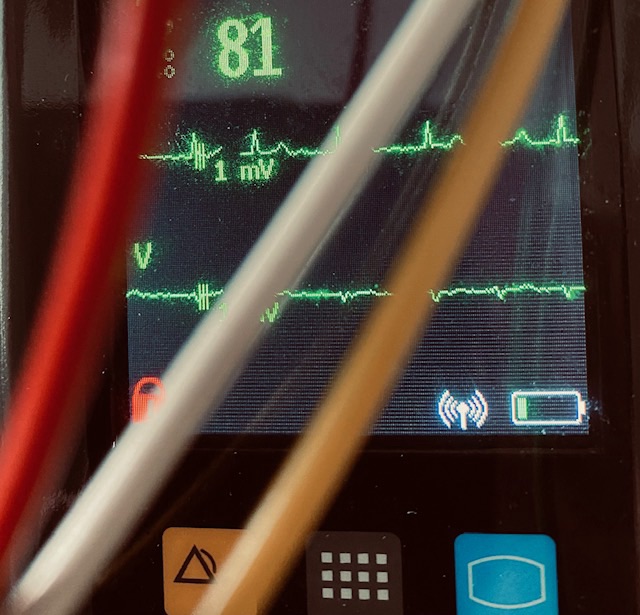
2025 will be a crucial year for health data across the EU. Germany introduced the electronic patient card, which can store basic information to then access data in the health insurance cloud for medical doctors, hospitals and other related health services. Potentially this is a great step ahead as some tests do not have to be repeated if they had been completed recently before already.

In pseudomised form, research may draw samples from such databases to enhance our science based understanding of disease. The evaluation of public health interventions becomes easier and medium and long term efficiency of measures can be assessed in many instances.
The Belgian research using health data has met to discuss the potential and limitations to link health data to other data sources to allow more complete and more complex analyses of health and disease processes. Another extensive data source sits on our smartphone. Collection of steps walked, sleep patterns or heart beats give valuable insights into a person’s own contribution and care about personal health. Although data are frequently incomplete, researchers are used to estimate missing data on the basis of existing or comparable person’s data. The basis for improving health for all are quite promising, data handling and linking them will be a challenge to the competence of all stakeholders and everyone involved in better health. It will be stressful before it becomes a routine.

Shorter is better

Contrary to a lot of received previous recommendations, the shorter duration of antibiotics prescription and use (3-5) days is overall better than the prolonged use of durations between 7-14 days (JAMA Link).  A so-called narrative review of medical studies (Lee et al.2023) reports more precise results separate for medical indications (pneumonia, sinusitis etc.), which tend to go in the same direction for the majority of indications. In view of the serious issue of antimicrobial resistance, a consequence of overconsumption and too widespread use of antibiotics (also in animal health and food production), the slogan of shorter is better should receive serious attention.
It is not only a medical, pharmaceutical or public health issue. The topic has become an issue of nutrition as well. The food chain contains largely unknown amounts of antibiotics as well, especially if larger amounts of animal or fish products are part of it.
The knowledge from these sciences has still to filter through to the broader public. This means it has become a social science topic as well. The transmission of knowledge and patient expectations on prescriptions, which is also linked to regulations concerning sick leave, make it more difficult to shorten prescriptions of antibiotics. There is a steep challenge to change behaviour according to the new mantra “shorter is better” with respect to antibiotics, even if we know that it is better for all of us in the medium or long term.
(Image: Jan Harmensz. Muller, De keuze van de rechte levensweg 1571-1628, MRBAB, Brussels)

On Dosage

  1. Dosage is key. We all know it from everyday expériences. Certainly from drinking alcohol we know the tricks that dosage can have on us. Consumption in small doses is fine and enjoyable, but larger amounts cause all sorts of trouble. In pharmacology the effect of dosage is applied with particular virtue. Small doses even of a poison can have beneficial effects. More of rhe same might well kill you. The same rationale applies to other fields as well. Physiological training effects depend a lot on the right amount of training and the timings or intervals between training sessions. In managerial, economic or social applications the question is not only about what is the right remedy, but also how much of it. The interest rate decisions of central bankers are mostly concerned with dosage rather than « whatever it takes ». A minimum wage increase is equally about dosage and we all have additional examples.
    Even in art, take painting or music, dose and pose, that is the question. It is quite surprising that such an overarching issue has received rather little attention, comparatively or only among specialists in each field.
    It appears strange, but it is possible to have only a little bit of war, as opposed to comprehensive conflict. The applications of dosage are manifold.
    Learning about dosage might prevent binge learning at first and binge viewing later on. In the age of tiktok and social media, dosage has become a key competence. (Image Extract of Gustave Courbet Die Welle 1870, Alte Nationalgalerie Berlin).

Bi-directional Sleep

For most of us bi-directional sleep is a question of sleeping on the left or right side, or on our back or front, head left or right. In immunology bi-directionality of sleep has another meaning. The immune system is linked to sleep in a bi-directional manner. Good sleep enhances the immune response of cells (direction 1) and infected blood cells for example send a signal to the brain to extend sleep. The study by Huynh et al. (2024) in Nature has demonstrated this bi-directional mechanism. It allowed mice who slept well after an imposed heart attack to recover in a better way than those whose sleep got interrupted during the experiment. The most natural response to a heart attack or acute coronary syndrome is more sleep. This is induced by an inflammatory reaction in the brain, which « orders » your body to increase deep sleep. 😴 Sleep is more than just rest, it may be part of healing. ❤️‍🩹 (people looking at Caspar David Friedrich „Infinite Landscapes“, exhibition Alte Nationalgalerie Berlin 2024)

Science Fraud

It is a big issue if publications in science in high reputation journals have managed to pass a rather lengthy and thorough peer review process and still contain evidence based on fraudulent data. The worst case scenario that based on this wrong evidence tests of useless drugs are performed on patients in hope of an honest concern for their health. In fact the financial rewards and even academic rewards have been achieved only through the successful publication of a bias introduced into the data and/or analyses of the data. The fraudulent researcher became subsequently Director of the institute of agingwhoch is part of the American National Institute of Health (NIH) and an academic reference in health sciences far beyond the USA. It is the merit of Charles Piller and his team to persist in challenging the treatment recommendations which were concerning Alzheimer and Parkinson diseases. The checks and balances in the academic research have failed and a serious reconsideration of the procedures should follow, not just business as usual. The reputation of scientific research is at stake beyond the natural sciences and medicine, although the normal way of proceeding is just to qualify such events as singularity and specific to a single discipline. Aging is also not just treated by one single discipline. Hence, there is a need to review the review process and publication practices. The Boeing airplane control failures were also indicating that reviews of technology are subject to high risks. Independent checks and control are hard to ensure in advanced subject matters, but sufficient time and resources have to be devoted to the process. (Image Repair Lab Deutsches Technikmuseum DTM2024).

Own Insulin

People who suffer from type 1 diabetes do not produce enough insulin themselves. The World Health organization estimated that „in 2017 there were 9 million people with type 1 diabetes; the majority of them live in high-income countries“ (WHO 2023). The report on successful reprogramming of stem cells of a person to produce insulin again and subsequently transplanting these cells into the same person allowed to produce own insulin again for that same person (Mallapaty, 2024). The hope for millions of people with type 1 diabetes is high that eventually there will be a cure to the disease. Scientists caution that there are no data yet for how long the transplanted own stem cells will produce insulin. Hence, the hope is driving research forward on a promising way forward. The case of type 2 diabetes is very different as additionally the absorption of insulin in the body causes problems. We keep walking and building muscles to facilitate the insulin absorption in the body to guard against the onset of type 2 diabetes. Interaction of diabetes and aging is another topic that needs our attention as rapidly aging societies are at higher risks to face many more people with various forms of diabetes.

Back pain

Most people know some form of back pain. This is understandable as an ever increasing share of people work in seated positions and spend additional leisure time in a similar position (gaming). Recurrent back pain is a frequent diagnosis. An Australien study has found a rather simple remedy for the widespread pain. The WalkBack experiment succeeded to significantly reduce recurrent lower back pain in study participants. Individualized and progressive walking accompanied by an education program did the trick. Keep on walking and try to extend the range of the exercise. It’s amazing to witness how the human body adapts to being challenged. Learning about the mechanics at work like the release of own personal “pain killers” hormones helps to trust in your body’s positive response to each dose of the challenge to pain. Do not walk too quickly too far. Stretching is a must and not an option. Go for it. Modern technology (in any smartphone) supports your efforts with counting your steps and measuring distances. Keeping track of a “pain diary” might give you guidance not to overdo the exercise and pause activities. Join a group of friends or people who are like-minded and get adequate shoes and clothes to feel comfortable while walking and afterwards as well.

Patient Empowerment

The empowerment of patients is a well-established practice in the treatment of diabetes. Measuring your own blood sugar and adjusting your medication to the self-monitored data is common practice. For patients with high blood pressure this patient empowerment is less prevalent. A medical study carried out in Valencia (Spain) by Martínez-Ibáñez et al. (2024) has tested the effects of such a self-monitoring and self-medication experiment.
The results publishes in (JAMA) gave rise to considerable attention in the profession as the empowerment of patients is one way out of the likely increasing shortage of medical professionals in aging societies. Whereas other studies found that total costs to the medical system might increase, the study in Spain provides evidence of the cost-reduction effect of such an empowerment. 24 months after the beginning of the trial. After the establishment of a “medication based on an individualized prearranged plan used in primary care” the self-administering participants achieved a significant decrease in their blood pressure that lasted until the end of the study after 2 years. The drop-outs of the study seem to follow a random pattern.
The conclusion gives support to the potential of patient empowerment in the widespread treatment of higher blood pressure beyond the regular visits of medical doctors. The monitoring of changes in lifestyle add to this to keep the costs of health care under control in aging societies.

Weight Stigma

The fashion industry has for a long time produced images of mostly women and men that did not correspond to the normal weight distribution of people. Skinny models were present across all media. The so-called social media of today amplify this trend further. The “Barbie hype” has reinforced the idea of low weight as a socially desirable norm. In scientific research the term coined for this phenomenon is “internalized weight stigma” (IWS). A study shows (Highes et al. 2024) it affects more women than men and more people who are described as socioeconomically disadvantaged adults. Pressure to lose weight originates from multiple sources and social media platforms have given rise to bullying. A major outcome of IWS is eating disorders as eating is often wrongly associated to be the only cause of higher weight. It is not. Many other factors contribute to the actual weight of a person. Even the overuse of the body mass index (BMI) as short hand version to define overweight or obesity is misleading for persons with strong muscles. Just fixing on one parameter of body shape or weight tends to reinforce weight stigma. “Keep walking” and a regular healthy diet, this avoids to internalize a weight stigma. Exercise is fun, the more you do it in a group, the easier it is to get going regularly. We ought to keep trying and eventually it will become a routine.

Causal Benefit Model

In the field of medicine we move more and more towards precision medicine. Previously, the term of personalized medicine was used which suggested to a certain degree that a personalization might be feasible. The budget constraints have forced us to change the term to avoid unrealistic, untenable promises. In the field of cardiology scientific advances advocate to shift from a risk-based model of treatment to a causal benefit model. (Kohli-Lynch et al. 2024 Link). Long-term benefits of a treatment are more promising, if the treatment addresses the causal mechanisms at work. It is wide spread practice to deal with general risk profiles as guidelines as the precision medicine based on a causal benefit model is far more laborious since to search the causal mechanism at work requires additional testing of hypotheses. This becomes immediately clear if genetic causes enter into consideration. Nevertheless, medical research advances more and more in this direction. Genetic testing has been shown to be useful in analyzing and treating issues like sudden cardiac arrest (in survivors). We are somehow aware that genetics may play a role here, but we shall need a lot of additional studies to make the causal benefit model a feasible option for widespread applications. Targeting research in this field will offer new avenues for precision medicine in the 2020s.