Holocaust commemoration

The commemoration of the Shoa or the Holocaust is part of an international remembrance of atrocities against humanity. It needs to be present in countries beyond Germany, even if Germany under Hitler’s rule caries the sole responsibility for the ruthless execution of a plan and the murder of 4 million of its own people of Jewish decent and additional 2 million Jewish people of neighboring countries. In the speech by Tova Friedman, a Shoa survivor, she pointed to the perceived threat which children posed to the Nazi-regime as witnesses of mass murders. There she is. In front of the whole nation she testifies for what seems like a distant past, but for many this past is still not over. Responsibility of Germany does not stop after a certain number of years, maybe in judicial terms, but a moral obligation to act against denial of these atrocities is primordial. 20 years after the inauguration of the memorial of the holocaust in the center of Berlin and the exhibition center “topography of terror” (image below, 2026-1-27) we should start an initiative to make the International Day of the commemoration of the holocaust a national day, of commemoration, where all daily routines are paused in Germany to give people time to act and reflect on what can be done that such atrocities will never happen again.

Memory design

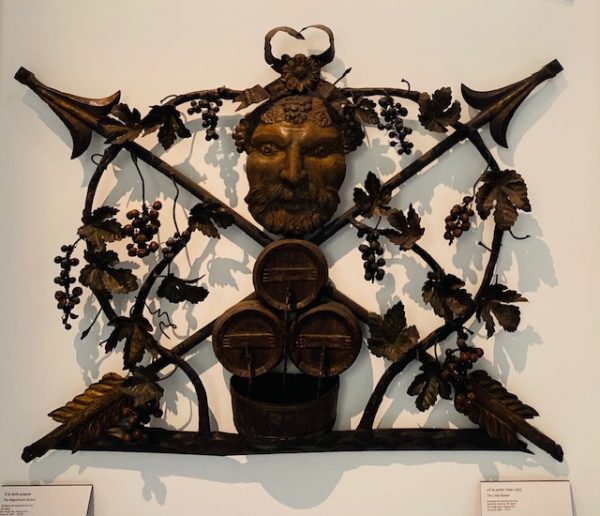
The progress in the field of genetic editing and design is astonishing. The research group of Johannes Graeff tested the “behavioral consequences of epigenetically editing the Arc promoter within engram cells”. Plasticity is a key feature of memory formation and the experimental evidence shows that this plasticity can also be interrupted. Moreover, the scientists were able to demonstrate a reversibility of retention or un unlearning of manifestations in memory of mice. The bidirectional reversibility of memory expression has potentially therapeutic value for traumatized humans eventually. However, if memory becomes part of a design feature of human species, the risks involved are just as important as the potentials. In totalitarian political systems techniques of “memory design” might be able to adapt such influences on memory, which used to be called brainwashing. Ethics commissions could get ready already to define safeguarding of human memory.  (Image: The fountain of Bacchus, Museum of Paris, 18th century wine merchant entry)


liberté urbanité

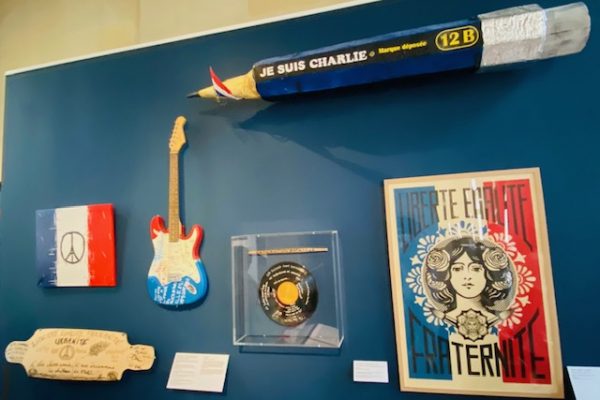
In the museum of the history of Paris “Musée Histoire de Paris Carnavalet” we find a special place devoted to the commemoration of the terror attacks in Paris in the Bataclan event location and the office of the journal “Charlie Hebdo” (see image below”. The skateboard on the bottom left of the wall raises the value of “urbanité” next to liberté, égalité, fraternité. The attack of an urban living style with youth going out as they like and journalists and caricaturists speaking their minds freely had been attacked, but continues nevertheless. This statement is part of the Paris state of mind. 

Memories updated

In Berlin and many other German cities it is a regular practice to scrutinize the memory inscribed into street names. In order to correct the honors given to persons with a past as fascist or responsible for mass killings street names were changed at several points in the history of the city. Streets named after battle fields, for example, are a continuous point of discussion. It is important to keep the perspectives of victims in mind. Therefore, changing street names is a little contribution to rethink the role of places and persons. Such changes are sometimes very controversial as people become accustomed to names, some might even not care much at all. Recognition and responsibility, however, have a lot of currency in historical perspective. Overpainting like in the paintings from Gerhard Richter has an important function in society and can be one way of coping with the demons of the past.

Leber JA

In Berlin Schoeneberg there is a memorial in preparation for the courageous couple of Julius and Annedore Leber. Julius Leber has been incarcerated several times by the Nazi officials, tortured and finally executed in Berlin. A link to the group of people trying to overthrow the NS regime (1944-7-20) caused his arrest and execution in January 1945. His wife Annedore published several accounts of the resistance movements, which existed during the NS regime. These people were aware of the fact that they were risking their life with such activities, but persisted nevertheless. We owe Julius and Annedore Leber a decent commemoration as we need to remember that such courageous examples existed even until the last few months of the NS dictatorship. The site allows for a building and learning center which could serve as an archive and encouragement to fight for democracy. It is less obvious than we thought it would be.

Paris libéré

It is with great pleasure to follow how Paris commemorates the liberation of Paris from Nazi-Germany 80 years ago. (Quote from De Gaulle “Paris libéré”.) On the 25th of August 1944 the city of Paris was finally liberated by French armies and the support of the local resistance movement. Similar to the journey of the Olympic flame on the way to Paris, we can follow each city celebrating the liberation from the occupants. Beginning with the landing in the Normandy of the Allied troops, the chasing of the enemy has been a matter of time, but still incurred huge human losses. More than 4 years of Nazi symbols in Paris were finally brought to an end and celebrations on the streets became a symbol for the enormous relief this liberation has meant to the population of Paris, France and hope to many neighbouring, but still occupied territories.
Several documentaries on television and radio allow to empathize with the joy of this time. Enduring the hardships imposed and, for many, risking their lives in clandestine networks of the resistance were honoured by the success of the liberation of the city without the massive destruction, which was to be expected.
A book edited by Ulla Plener (2007) highlights the supporting role played by some women originally from Germany to support the French Resistance movement. It still is not common to understand the retreat of Nazi-Germany also in Germany as the progressive liberation of the country from the terrors of a dictatorship.

Commemoration Paris

The cemetery “Père Lachaise” is a spacious area of commemoration in the 20th arrondissement in Paris. Many famous people have been buried there or moved to this cemetery eventually. Edith Piaf, Gustave Caillebotte or Frédéric Chopin are known across borders. You find also a small monument for the controversial founder of homeopathy 200 years ago “Hahnemann” there. He spent his last 8 years in Paris before he died at the age of 88 in 1843. From a social science perspective it is interesting to note that commemoration is much more decided by the descendants like in the case of Hahnemann or the popularity of the person, like for Piaf, than the person her/himself. The tradition of joint graves for families holds for the Paris born painter and collector Gustave Caillebotte despite his movements to other places. The freshly cut flowers on the grave of Piaf show that the performances of the artist have made deep and lasting impressions.

Image History

The archives of the history of movies and/or television show to us the multiple ways how images capture our attention and memories. Visual narratives are an own category of our personal and collective memory. The wide range of visual experiences are a powerful way to influence. Not only the movies and stories matter, but the whole range of images associated with the cinema world. Poster collections, newspapers and today the so-called social media multiply the original images. The Deutsche Kinemathek allows a special, critical understanding of image history as Germany has been using and abusing images and movies in a very manipulating manner historically. The message is: do not take images for face value. The ways and techniques to manipulate images have been widely used and are all around us today. Whereas the mass media in previous decades have dominated the collective memories we have entered into an era with many more subcultures that evolve within their own bubble of images. An original attempt to cut 65 movies of German film history into less than 4 minutes is presented in the exhibition (Milkowski and Simbeni). It focuses on gestures and “les regards”, “Blicke”, how the actresses and actors seem to look at us. Eyes capture attention, and this as soon as we open our eyes as children. Our brain works as image recorder and our memory algorithms tend to favor image recognition while processing images continuously. We do not know much about our own image sorting algorithm or algorithms yet. Research on aging of the brain gives some hints. With declining short term memory the images stored in long term memory take the upper hand. This makes an understanding of the history of images even more important.

Time Perception

There are many different angles from which to look at time. Of course, we all do it several times a day or during boring meetings. The study by Ma, Cameron and Wiener (2024) highlights the bi-directional link of perceived time and memorability. Visual stimuli alter our perception of time. Watching a video we all make the experience that the perceived length of the time spent watching varies according to content and maybe only the cutting technique applied to shorten the perceived length. Similarly it has been demonstrated that looking for longer at an image and grasp the meaning or implicit story we tend to remember the image for longer. In courts it is a usual procedure to question the memory capacity of persons and the sources of bias. The study by Ma et al. demonstrates the impact of the size of the scene, how cluttered it is and aspects of memorability in visual perception. Our memories are co-determined by these factors. The other direction of causality i.e. that memorability determines the time perception seems equally at work. This apparent undetermined element, so far, calls for additional care when analyzing recall from memory. Memory is not only selective in terms of content, it also is subject to the impact of all sorts of visual stimuli.
Time can be many things. For humans it is everything but exact. In science we measure time with ever more exactitude and try to standardize time on the moon now. In addition to exact time, humans have perceived time and subjective versions and even concepts of time. About time to take time more seriously.

Memory Struggle

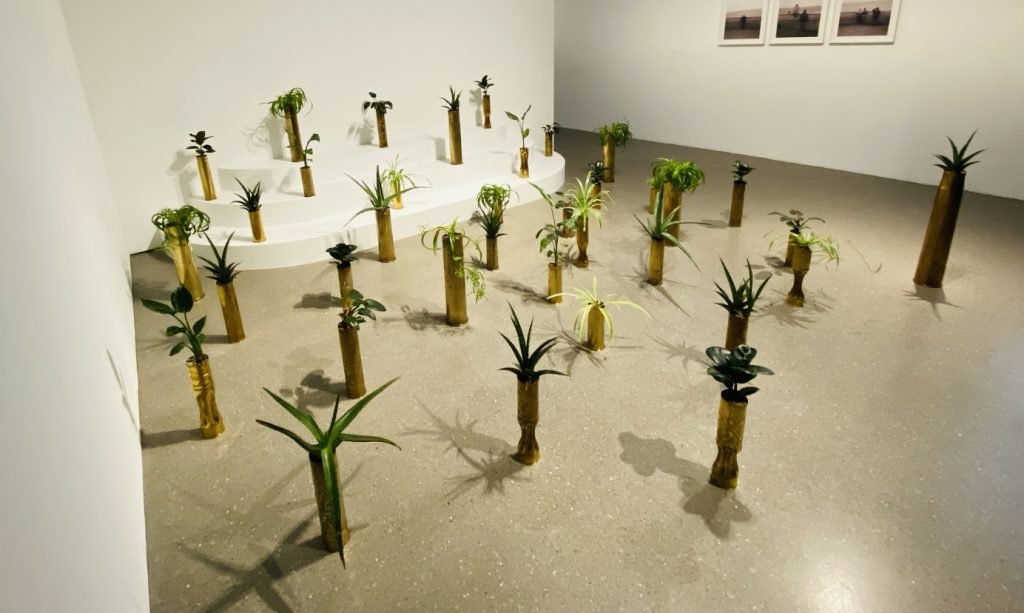
The struggle of memory is also the memory of a struggle. The exhibition in the Palais Populaire in Berlin doesn’t leave spectators untouched. It is a struggle to recover memories which were attempted to be eradicated. This is the univeral message of this exhibition. The colonial past and crimes are part of the struggles of artists from these cultures to re-establish their rights to their own views, traditions and memories. Grass and plants may cover the shelled soil and people, but traces or mortars are often left behind. Light from different angles needs to be shed on these places to reveal the shadows of the wounds. The atrocities and exploitation linked to colonialism and imperialism keeps us struggling with those memories. Just before we jump to the conclusion that it is a memory of a past struggle, we are reminded that consequences are still haunting the present and with the Russian aggression in Ukraine we have to realize the fight against imperialism continues in the 21st century. Thanks for memorable moments and impressions in view of a global arts and history experience. (Image of art work installation by Sammy Boloji, untitled 2018, exhibition Palais Populaire, Deutsche Bank foundation)

Sammy Boloji, untitled 2018 exhibition Berlin 2024