
Law and Legality

Some persons consider themselves to stand above the law or push all interpretations of regulations beyond usual understanding of it. Even after a person has been dealing with pharmaceuticals or drugs used also for doping purposes, the conviction of such a person may take several years if not decades. In France, Mr Bernard Sainz seems to be a good example of such a relentless case of practicing para-medical consultations to assist mainly cyclists in endeavors to win championships or professional status. Le Monde  and Cash investigation have raised awareness of the public for such dubious practices. The “French Federation du cyclisme” and medical doctors association fight a continued legal battle against this persons exercising illegally such doping assistance. 

With apparently 56 legal procedures in connection with this person, the legal system has to bear the majority of costs of such illegal practices.

The reach of such dubious practices might be extended if the systems beyond doping, but for assisted euthanasia cannot be controlled effectively. Hence, the precursor cases of positive stimuli like doping pose similar challenges to the legal system as “negative stimuli” weakening persons as assistance to die. The end of a life course is not only a medical issue. Society-wide debates need to take place in order to organize a large consensus on the implications more liberal practices shall entail. 

(Image: Palais de Justice, Paris 2025)

Great Petit Palais

The Petit Palais in Paris was built together with the Grand Palais for the World Exhibition in 1900. The great architecture of both buildings is complemented by great interiors. The Petit Palais has also been the home of donations to, as well as commissions by, the city of Paris since 1870. This means that a sizable collection of sculptures and paintings has accumulated since then. In spring 2025 the visit of these collections is free of charge and gives honor to the donors and artists exhibited. Over time the collections spread more than 2500 years of art history similar to the exhibition at the BNF gallery Mansard. In the 21st century the exhibition of a piece of art, which stems from the North of Syria reminds us that art is a treasure that can last even if the civilization has been lost or at interrupted for many centuries. This is an important aspect of taking a long term perspective on international politics and history. The breadth of the collection allows a stroll through art history in a splendid setting. Romanticism and impressionism receive a little bit of attention, but the architecture of the Petit Palais invites you to delve into lesser known territory. This, probably is the specific merit of the joint presentation of otherwise necessarily eclectic collections of donors across centuries.

(Image: Anse de chaudron Syrie du Nord 700 years before our time, Petit Palais Paris).

La défense Végétale

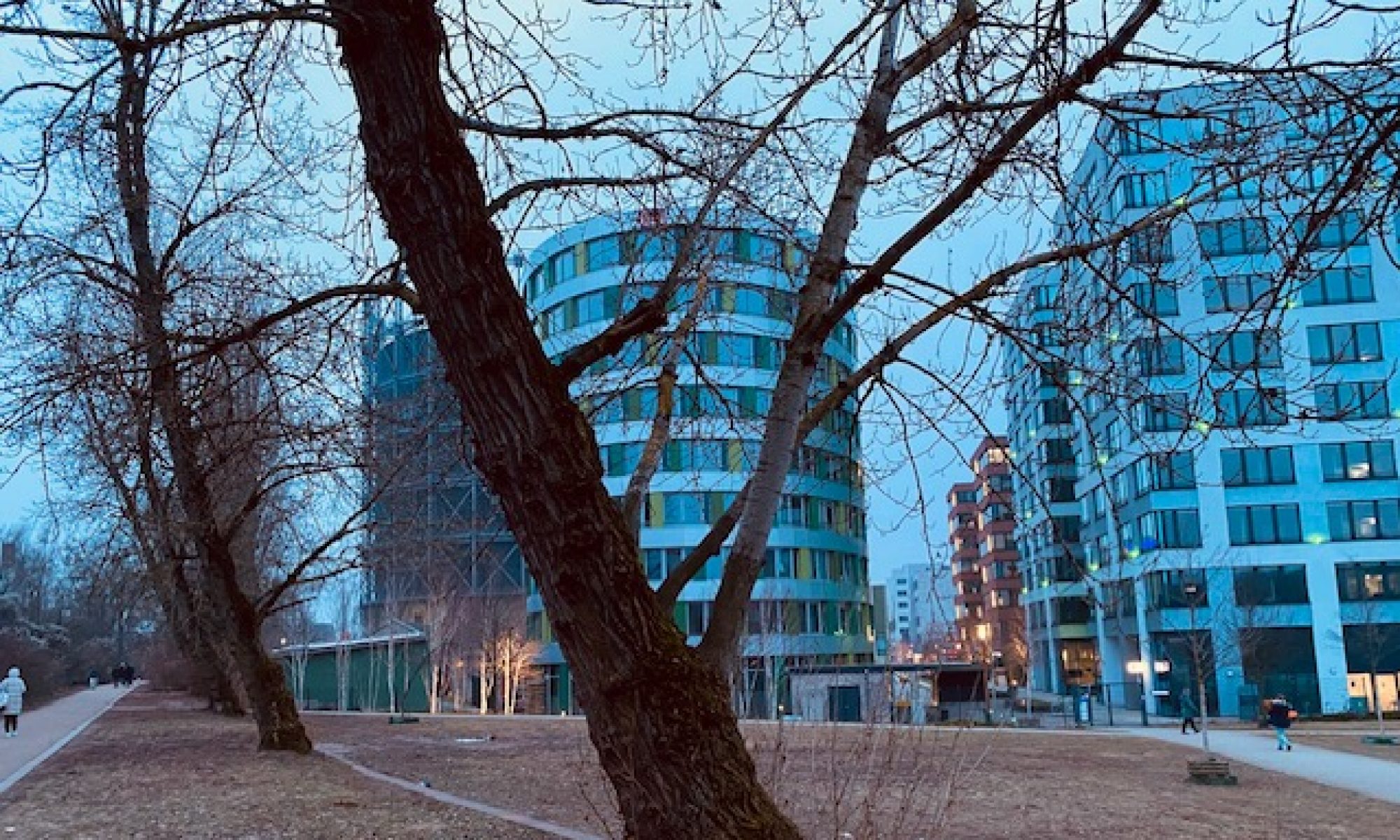
Greening a metal and concrete block and buildings is a big challenge. The logic of unrealistic growth and big business has left liabilities for future generations. More vegetation in inner cities is part of our responsibility towards future generations. Therefore, urban planning has started in Paris to get rid of concrete walls and floors.

Eventually the district might have a more human touch which attracts citizens and new businesses and services. The adaptation of the infrastructure to facilitate mobility with bicycles and secured pedestrian paths has started but will take a lot of time before people adopt again these more healthy modes of transport. The big boulevards reserved for polluting transport is no longer adequate in combination with residential living spaces.

It will take a change of a whole generation to accomplish such a fundamental change. The reduced demand for office space due to more employees choosing to work from home contributes to such a change as well. Many other cities go ahead with similar changes (Copenhagen, Berlin). In combination with the „All electric society“ there are fundamental changes at work which will make inner cities more attractive again. Ease of clean transportation and other infrastructure for urban lifestyles ensures that cities remain strong points of attraction. They keep pulling people from nearby and far away towards them, if we like it or not.

La Défense reframed

  1. The whole new business area „La Défense“ was a huge investment project with international speculators highly motivated to reap the benefits of a business location just next to Paris, which at best would even feel a little bit like being „intra muros“. However, being at La Défense you see „L’Arc de triomphe“ only quite far away and you don’t really get the impression that you are in Paris. The high rising buildings around there originally gave god reasons for expensive office space. Few residents spaces made the area uncomfortable in the evenings after office hours. After 2025 most office spaces no longer are attractive for businesses and lack behind environmental standards of the 2020s.  Many projects attempt to renovate the former office space into residential buildings with a considerable loss in the value of previous office space. For people working in the multiple shopping centers there this might be a feasible option if the rent is not excessively high. Students in transit through Paris might find this attractive as well. Families, however lack an adequate infrastructure as this area was built for an outdated business center and business model where families were believed to obstruct business efficiency. As the project developers have written off their investments over 25 years society can clean up the remaining space and repair. It will be another medium term project to re-create a convivial environment and community there as before the overriding device was make money there and run to a more human and diverse space.

Louvre empty

The Louvre in Paris is never empty. The paintings and splendid statues are there 24/24 and 7/7. If you want a quiet moment in front of the sculptures you have to choose a time beyond the normal visiting hours. In fact even a view from outside without queues is a pleasure and gives the impression of a huge empty space with just a few pieces of art. The lights add a nice touch to this special evening atmosphere. It is worth trying to catch a glimpse of the size of the building and the sculptures. Well, we should keep this a secret rather than spread the knowledge about such “Paris moments” in otherwise busy times and crowded places.

Expo Disco

The combination of music and dance is a powerful, captivating experience. From folk dance traditions across the globe to ceremonial performances. In the past this combination has often related ro religious practices. Later manifestations include classical ballet, modern dance and disco music and dancing. History is full of examples that have been turned into mass culture. 

Rock on festivals and rap in clubs or hip hop outside have complemented this experience over the last few years. Each time the combination made the popular difference. Therefore the Disco exhibition in Paris just next to the Conservatoire de musique et de dance de Paris and in the building of the Paris Philharmonic is an appreciation and respect to the disco culture, popular mostly during the 70s and 80s. From a sociological perspective the throve by minorities for recognition of their cultural practices and diversity has been a driving force. Andrew Diamond has coined the expression of „disco at the intersection of minorities struggles“ (p.70 exhibition catalog). At the origin of the disco movement, there was the aftermath of the 60s power struggles. Black, women, gay and student protests asked for „all power to the people“. Music and dance were forming identities. Posing and showing off became part of disco. People created and lived their own utopia in glamorous lighting.

Image: Exhibition shop Paris Philharmonic 2025.

ravel up Ravel

To ravel up is a contranym. It can take a specific meaning and the opposite at the same time. Therefore, it is a perfect term to describe the composer, pianist and conductor Maurice Ravel. Born in 1875, he lived through great deceptions as aspiring pianist at the Conservatoire de Paris, but achieved glory through his famous compositions like the “Boléro” created for a ballet performance at the Paris Opera.
Previously, he had written several remarkable piano pieces, which were recently honored by the piano music magazine “Pianostreet”.  In an article with links to 5 performances of Ravel’s piano compositions you can ravel up in the emotional world or cosmos of Ravel. You may also unravel his compositional style marked in some of his most famous pieces with the variations of a single theme or motive. The “Sonatine” completed in 1907 might be considered as a precursor of later work (Boléro) as he refined his composition techniques to build, for example, on a single motive and develop a whole piece reworking and with reappearing incidences of the same motive.
Ravel himself appears as contranym, as he combined modern musical influences, like from jazz or innovative structures of musical compositions with the classical forms of composition. Listening to Maurice Ravel allows to better understand the transition from classical music to modern worlds of music. Thanks to “Pianostreet” we can follow these paths. For a biographical account the splendid movie “Boléro” takes you on an unraveling musical journey of Ravel.
(Image: Repainted piano in Berlin shopping center 2024)

Endless Questions

The winner of the Niépce prize 2024 has been awarded to Anne-Lise Broyer and features prominently at the BNF in Paris. The exhibition of the professional photographer reflects by way of photographic “still images” on the historic fate of the mediterranean basin. Each and every image has no answers, but keeps posing questions. In the long alley of the BNF in honor of Julien Cain, we walk through history of more than 2 thousand years in photographs up until today and even beyond. Let’s keep asking the most fundamental questions again and again. The exhibition entitled “Est-ce-là que l’on habitait ?” invites us to ask ourselves about the historic origins of so-called Western culture in the mediterranean basin. Ancient philosophy and arts are the foundations even of our current ideas of democracy and freedom.
However, what has become of this in the 21st century? The original statue of freedom has suffered badly. What has become of the freedom of mobility at a time of barbed wire fences rising between countries that influences each other over thousands of years? How about nature? How about religion and freedom of expression? Where is progress? Where is regression?
For centuries we have sought answers in libraries starting from the Library of Alexandria to the treasures of art and knowledge of today across the world. Let’s make more intensive use of these treasures where we shall find answers to most of our questions of the past, to the past and of future interest.

Hugo intergenerational

Well, this entry is not about Hugo Boss, whose name is probably known to more people worldwide nowadays than the French poet and writer Victor Hugo. The latter Hugo, however, is likely to be known to more generations to come than the former one. In his 19 years of exile with his family he had the unique chance to get to know his grand children a bit closer, which was rather unusual for the late 19th century. The romantic poet was charmed to an extent that he could help it, but to express himself in a longer poem. „L‘art d’être grand-père“ (The art of being grandfather)“. Victor Hugo experienced the death of own children and his wife before and his grandchildren surely gave him reason to believe in a more joyful tomorrow. Comments on this poem mention the idealised vision of the romantic regard on children and even more so on his own grandchildren. « Leur front tourné vers nous nous éclaire… … Ils trébuchent, encore ivre du paradis. » 

We forget all earthly quarrels just listening to the soothing sound like children’s rhymes. Hugo is a master of all literary classes and he ensured that his intergenerational legacy would be part of this.  (Image: Maison Victor Hugo, Paris, writing desk ro stand in front of)

Shoa Memorial

In the neighborhood of the Paris City Town Hall you find the Mémorial de la Shoa. There is a constant flux of visitors and pupils with their teachers passing through the rooms. They all continue to be really moved by the shocking images and their efforts to try to understand the full extent of the Shoa and the terrible effects it had even on survivors of the concentration camps. The continuation of the memory of the memories of those survivors by young people is one of the strong points of this exhibition. The transmission of memories finds many new ambassadors against the tendency to forget or downplay the horrors committed by the Nazis. 

Of course it is overwhelming as an experience, but it all the more necessary to keep memories alive and guard against each tendency of denial. In the age of fake news and historical deep fakes, it will be all the more important to immunize people against any attempts of manipulation of historic truths. The availability of the information online and through youtube-videos is an indispensable next step in the preservation and dissemination of the documentaries. The Mémorial of the Shoa in Paris is an essential part of this commemoration as 76.000 Jewish persons were deported to concentration camps from France as well.(Image: Mémorial de la Shoa, Paris 2025)