Gentileschi Selfie

Today the production of „selfies“ is all around us. Selfies are shot almost instantaneously and several times a day by use of modern smartphones. About 400 years ago the first woman to produce a selfie was Artemisia Gentileschi. As (one of) the first female painter in art history to have created a painted image of herself (which is transmitted today) Artemisia Gentileschi made history. Her unique biography, style and craftsmanship of the early 17th century in Italy made herself a renowned painter. Her choice to depict herself rather than somebody nobel or rich was quite unusual for the time. The audacious choice of herself as her „sujet“ became even her trademark. Later paintings by her with biblical topics were also subject to her reinterpretation based on herself as the female character in the narrative and image. In this respect her work appears so much ahead of her time that her impressive work speaks to all generations today. (Image: extract of Jael and Sisera by Artemisia Gentileschi 1620, Musée Jaquemart André“ in Paris 2025-8)

Zadkine museum

In the middle of Paris you will find a small former atelier of Zadkine. Transformed into a museum, the place is a cosy place to learn about sculpture and the different materials used. The preparations in form of designs or smaller trials with other materials are common practice to arrive at the sometimes monumental pieces. The visit of the permanent collection is even free of charge. A splendid experience in a surprising spot of silence next to buzzing city streets. Depicting musicians and musical instruments has been Zadkine’s shared passion with Valentine Prax. Great that he managed to reach the USA in time before the Nazi persecution could reach him. However, exile often means hardship as well. 

Zadkine Van Gogh

Ossip Zadkine has been a sculptor in cubists’ art tradition. He created famous sculptures of Vincent van Gogh after the death of the renowned painter and his friend. The Zadkine museum in Paris allows to get a great impression of these artworks. These sculptures reveal an interesting life course perspective on both artists sensitivity and transformation of their impressions of others or emotions more generally. The first study depicted below by Ossip Zadkine of van Gogh shows how he carefully studied the traits of van Gogh and his personality in order to better understand the evolution and death of the fellow artist. The emotional and broader psychological aspects of a character captured both artists. Doing justice to these inner feelings and society’s judgments about art and artists at their time of creation had strong impacts on both artists. 

Paris 2024+1

Urban Planning has to deal with the medium and long term time horizon. This is a challenge in a world of short term preferences of financial markets and creditors. The Paris Olympic Games of 2024 demonstrate in an impressive fashion that a balance between these different time horizons can be achieved. The whole of France debates 1 year after the opening of the olympic games what has remained of the investment and the exceptional achievements for the country and its population. The newspaper “Le Figaro” of 2025-7-26 p.12 has published an interview with Tony Estanguet, one of the main organizers concerning the subject. The best of the Paris games 2024 for him was “to see the whole country work together”. The united spirit to make these Paris games a success remains a special experience in an often very divided society. In 2025-7 the “vasque” has survived in “Les Tuilleries” after some debate once the games were over. Therefore, a bit of the Olympic spirit can still be experienced in the center of Paris where the games have become a part of French history. 

Climate Awareness

The Musée d’Orsay has prepared a wonderful walk through its permanent exhibition of late 19th and early 20th century installations to reflect upon climate and climate change. Raising awareness about the treasures lost and those we are about to lose in the next few years. Impressionist painters have depicted landscapes, cities and monuments covered in snow, which the next generations will no longer be able to enjoy the same way. The roofs of Paris covered with snow has become a feature of a distant past. Additionally, the impression of the massive steam trains crossing metal bridges appear as the daunting future of technical progress. Mixed feelings of fascination and risk associated with those machines were captured by those painters’ eyes. Nowadays we are aware of the consequences of this technical progress for our planet. The walk through museum with a focus on climate related paintings is eye opening indeed. (Image: Extract of Éduard Veuillard, Le jardin des Tuileries, Musée d’Orsay, Paris) 

Paris Gare

Train stations in metropolitan inner cities are hot spots of traffic and mobility. The number of people passing through these exchanges are impressive. Public transport systems are continuously put to the test of their capacity to handle passengers who want to get from A to B the fastest way possible. In Paris the RER lines, metro and buses to a great job in handling the affluence of passengers. The comparatively small number of passengers arriving and departing nyy taxi, however, still take a disproportionate amount of space. That’s part of the differentiation or inequality of mobility in Paris. Person‘s in need of assistance should have special access to central points of mobility like train stations. Everybody else could rely on shared modes of transportation otherwise the millions of inhabitants will not be able to get around in a comfortable way.


Archi Geometry

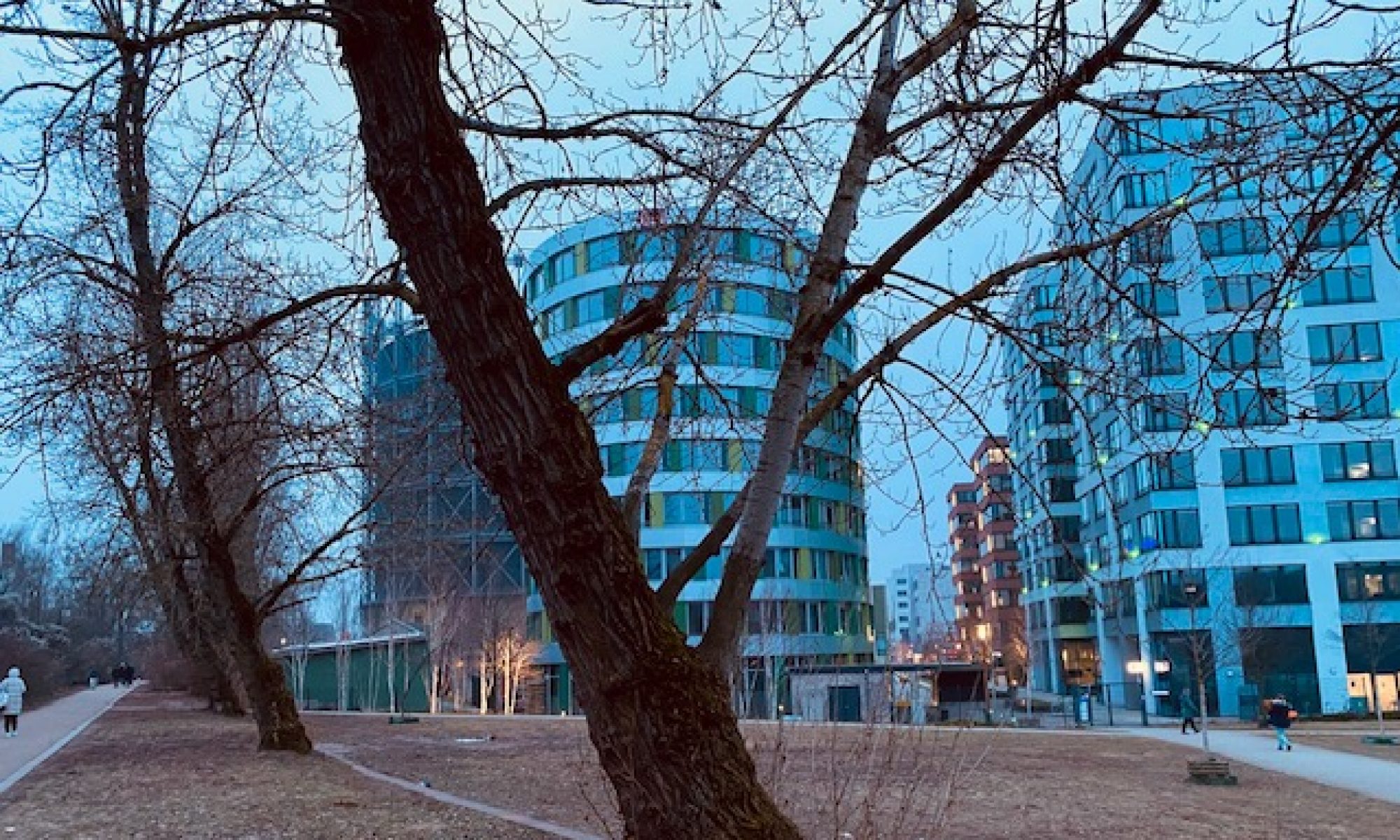
Architecture has an obvious and visible link with geometry. Clear lines, rectangular or triangular shapes have dominated for centuries since the Greek temples. Geometry was a discipline that has attracted many scholars and particularly architects. Nowadays the shapes are much more diversified and sometimes complex. The calculation of surfaces, curved lines and shapes have become an issue of more complicated mathematics. Volumes of irregular shapes are a challenge for most people to calculate and heating or cooling sich buildings adds considerable complexity. It is, however, rather relaxing and fascinating to look at the marvels of modern shapes in architecture. Technology and material science have allowed us spectacular progress and designs in recent years. Paris offers a splendid perspective on such developments. 

Sovereignty of People

In France the judiciary has made an influential decision to ban a politician from the possibility to be elected after conviction of fraud. This is just what is to be expected from the 3rd power in the organization of a democratic state. It is surprising that there was a political debate about a person convicted for a crime to be eligible for public office. Several eminent scholars published columns in major newspapers to support the judicial decision. Pierre Rosanvallon focused both on the justification of the verdict and the constitutional role attributed to the judiciary to operate as a kind of memory of the “general will of the people”, the ultimate sovereign. In the struggle of power within a state the judiciary defends individual rights as well as moderates between the executive and the legislative branch. In the theory of democracy this creates a double bind situation in which the individual has a right to be defended against the state and individuals who ask for judgment of cases one against another one. Eric Halphen has also argued in favor of the often neglected role of the judiciary to stand up for the “general interest”, a notion which is not easy to define without historical references in each country and its historical trajectory of democracy. The short debate about the role of the judiciary has strengthened the defensive capacity of the French democracy. Other, even mature democracies may turn their eyes on the decision of the judges involved not to shun away from unpopular decisions. The independence of the judiciary is part of the sovereignty of the people and non-negotiable part of it.

Body Soul Membrane

The 40 art works from the Pinault Collection on display at the “Bourse de Commerce Paris” deal with a depiction of the body and soul in the broadest sense. The range of works from paintings, sculptures and video installations is impressive. The link between the body and the feelings or emotions is obvious. Contexts leave deep impressions on bodies and frequently embodiments do not fit emotions. The membrane between the two instances creates an additional barrier or chance to align both instances. Racism and discrimination are recurrent topics in the exhibition. This makes the exhibition a welcome antidote against the increasing risks of violence in many societies. Artists have a subtle emotional connection to suffering of people and their art work does not shun away from confronting us with violence experienced by large groups of society. Body and soul membranes are also an internal or intimate affair, which words can only address with difficulty. Many artists therefore chose other ways than writing or drawing to express or cope with this reflexive relationship of body and emotions. We do not leave the exhibition unmoved, maybe even a bit unsettled in our emotional state of mind. Our own membrane might be moved or become unbalanced after the visit. 

Wall Membrane

Walls are meant to separate persons. In certain circumstances, however, they work more like a membrane, which allows for example sound to pass walls. We are sometimes surprised to find out that we might hear almost every word that is spoken in a neighboring apartment or home. Listening without seeing is in fact a perfect set up for a comedy to evolve around this theme. Unintentional listening might turn into noisy listening and 2 lives start to intermingle. This is predestined for a comedy to evolve as does the theatre play by Lilou Fogli “mur mure”. The turning tripartite scenario by Jérémie Lippmann makes the 2 rooms arrangement visible where listening and seeing both separated actors a delightful experience. Understanding without seeing is better than seeing without understanding. Misunderstandings are frequent with the focus on appearances of persons. It is somehow the opposite of what our social media platforms suggest with their focus on stylized images and AI-enhanced photo editing. Hearing maybe the better seeing. In that sense the theatre play is in the emancipating tradition of authors like Ibsen or Chekhov, emancipating us from the dominant and overwhelming presence of selfies and self promotion.