
Balance and justice

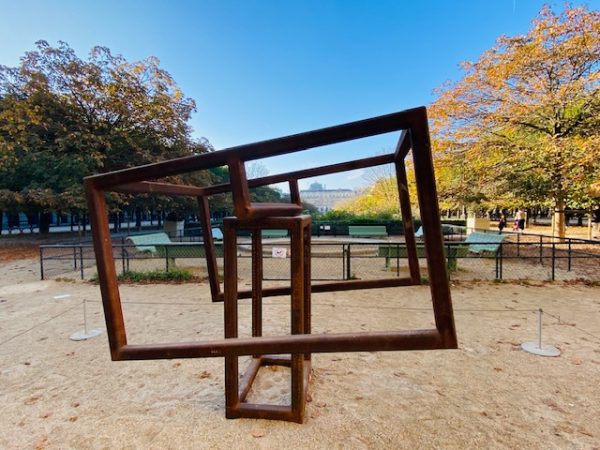
Justice is often represented with the symbol of a balance. This dates back at least to the Roman times when the Roman law reached an unprecedented spread across Europe. The philosophy of law dating even further back to the Greek philosophers, notably Aristotle, founded comparative law with his comparison of constitutional principles in various Greek city states of his time. Striking the right balance, therefore, is encrypted into law, legislation and the American constitutional principle of checks and balances. In Paris the sculpture in the “Parc du Palais Royal” of heavy metal balance at the opposite end of the park is moving as well. Facing the ”Conseil d’état” and the “Le conseil constitutionnel”, this is a forceful reminder of the basic principles of a republic and democracy.
In the 21st century, particularly, since the weights attached at each end of the balance pull more forcefully at the moment in several countries.
Institution building and safeguarding the existing ones have become “the challenge for democracies in 2025 in many “centuries-old” democracies.
(Image: Sculpture by Raul Mourao in Parc Palais Royal, Paris 2025-10)
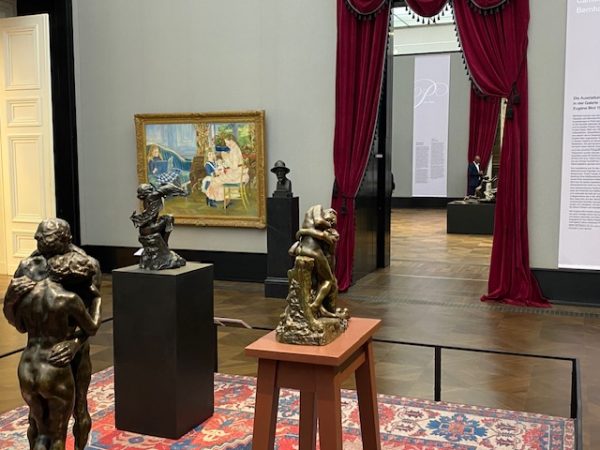
Claudel & Hoetger

It is well known that artists joined other artists and groups to get inspired. The entangled relationship between Camille Claudel and Auguste Rodin has become a special example of the tricky relationship between learning and co-creation or inspiration. The role of galerists in building a reputation for artists is less well understood. The “Alte Nationalgalerie“ in Berlin opens up this black box a bit through juxtaposition of Camille Claudel, Bernhard Hoetger as disciples of Auguste Rodin. The influences are rather obvious, yet each disciple developed her/his unique style. The emancipation was not without frictions. The galerist Eugène Blot organized a joint exposition of both disciples in 1905 in Paris, which is partly reproduced in Berlin 2025. Great work by the curators of the exhibition Yvette Deseyve and Sintje Guericke who managed to bring together unique sculptures from 3+ museums and a great explanation of the links between the artists as well as the proximity of ateliers. (Image: view of showroom in Alte Nationalgalerie Berlin, Claudel & Hoetger 2025)

Paris Sorbonne

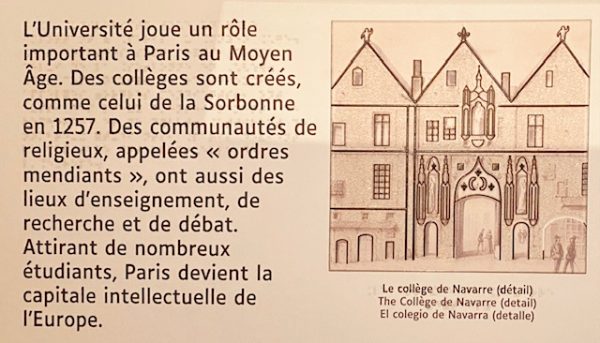
The history of the university on the left bank of “La Seine” dates back to 1257 when Robert de Sorbon an advisor to Louis IX was asked to create a unifying structure of several colleges which provided room and board already. The location on the left bank in Paris allowed these colleges to escape the religious doctrines and archbishop who dominated the right bank. The choice of the name of the advisor rather than the King was already showing early signs of independence which was cherished by generations of students and professors. The Colleges had individual names like “Collège des Bernardins” or “Collège de Navarre” and operated under the title of “La Sobonne”. The “Musée Histoire de Paris Carnavalet” shows an early design of the Collège de Navarre. Independent thinkers and writers were formed there who became very influential later on in their careers. Thomas d’Aquin was one of them.

Paris Olympics history

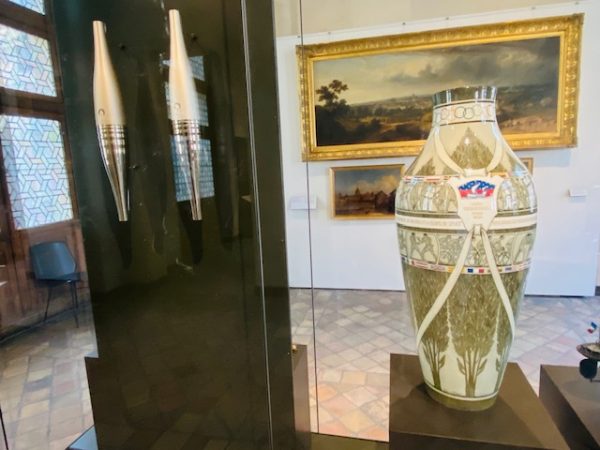
The 2024 Paris Olympic Games will go down in history as the event that has achieved to put Olympic Games and Paralympic Games on an equal footing. At least this is the message the  museum of the history of Paris tries to transmit. In the “Musée Histoire de Paris Carnavalet” we find a vase from the Games from 1924 in Paris next to the 2 Olympic torches, one for the Paralympics and one for the Olympics 2024. Both torches are the same only a different logo on them, same message, same spirit. The impact of these games is likely to set an example for many years to come and other hosts of the Games will be measured against this benchmark. Making history is one thing, taking care of the posterior image another one. Paris has taken of this as well.

liberté urbanité

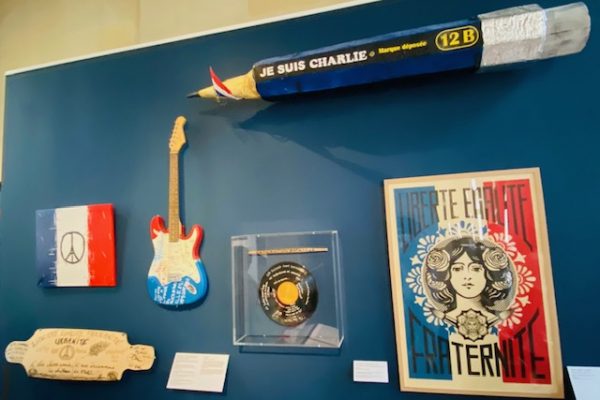
In the museum of the history of Paris “Musée Histoire de Paris Carnavalet” we find a special place devoted to the commemoration of the terror attacks in Paris in the Bataclan event location and the office of the journal “Charlie Hebdo” (see image below”. The skateboard on the bottom left of the wall raises the value of “urbanité” next to liberté, égalité, fraternité. The attack of an urban living style with youth going out as they like and journalists and caricaturists speaking their minds freely had been attacked, but continues nevertheless. This statement is part of the Paris state of mind. 

Le Brun Selfie

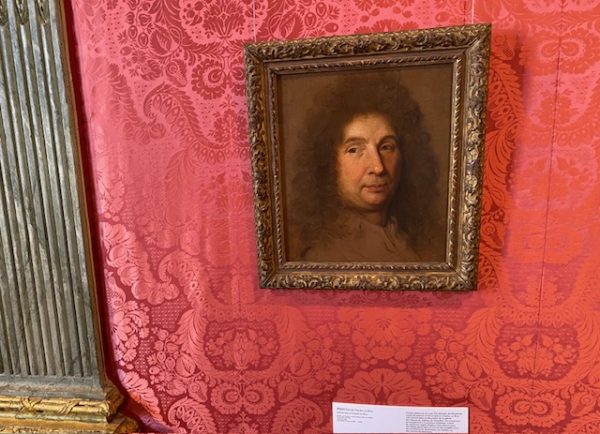
The great painter and decorateur of the French monarch Louis XIV was Charles Le Brun. He was careful about the way he wanted to be remembered in history. His late 17th century self portrait is exposed in the Musée Histoire de Paris Carnavalet. Rightfully put in front of elegant red “tapisserie”, the selfie is remarkable for its attention to details. The hair is drawn with high precision and not a single one seems out of place. The painter does not focus on the person in front of him, but rather on some detail next to or behind the depicted Le Brun. The dress chosen is rather an ordinary person’s one or a person devoted to his work and artistic craftsmanship. No hands, no arms, no shoulders. The sole focus is on the head or should we say the brain and facial expression. Realistic painting is probably the closest you can get to today’s selfie-mania. Le Brun’s decoration and paintings in Versailles and churches ate probably some of the most popular backgrounds of selfiies even in the 21st century.

Home for dog

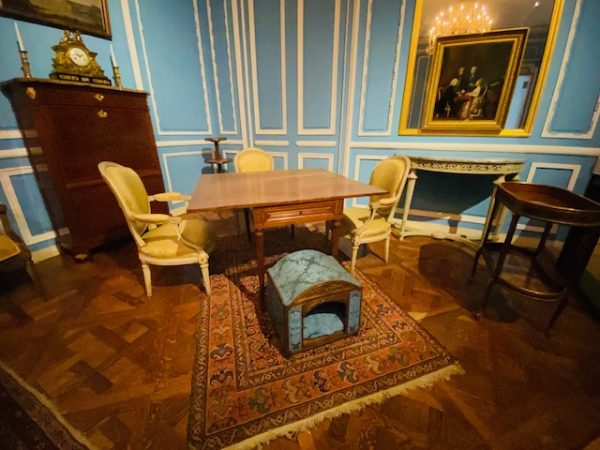
The places where some dogs live can be rather big. But even tiny dogs may enjoy a luxury home like their owners. This was certainly the case for the dog’s niche in a Paris home, a few years before the French revolution (1785). The exhibit is a testimony of the tough inequality of the late 18th century in Paris, where some enjoyed far reaching luxury and large parts of the population were forced to live in poverty within Paris or the suburbs with little access to basic sanitary facilities. The discrepancy between the luxurious homes of pets and the average person might serve as an indicator for income and health inequality. The Musée Histoire de Paris Carnavalet has a great stock of artifacts that can speak to the issue. Image: Musée Histoire de Paris Carnavalet dog niche 1785). 

Paris History

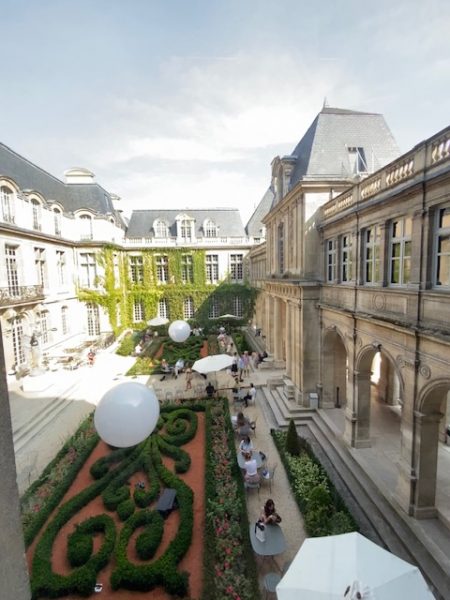
The “Musée Histoire de Paris Carnavalet” is the starting point for visitors of Paris and social scientists to better understand the making of this metropolitan city throughout centuries. The only common factor over the years is the astonishing determination to reinvent the city every 100 years whilst the best features of the previous periods are preserved. It is the concern for the very long-term time horizon that makes the city quite unique. Even a social revolution (1789) unlike most other countries managed to preserve most buildings, churches and royal palaces. Restorations are undertaken with a careful approach to shield its architectural and social heritage. Even the radical transformation by Haussmann over almost 20 years until 1870 to build large corridors in the city is subject to revision in modern visions of the future of Paris. The app of the museum is very helpful to learn more details about each chosen object of the permanent exhibition. The social fabric of the city can be studied further through app’s feature when representatives of local social organizations speak about their personal piece within the huge collection on display. The larger the “fundus”, the more the rationale for selecting pieces becomes an issue. (Image: Musée Histoire de Paris Carnavalet inner court 2025).

Emotional history

The making of emotional memories of a city is an art in itself. Many cities have professional photographers who accompany all major events in a city over years. Paris has had the chance that artist photographers and film makers have contributed greatly to the emotional history of the city. Agnès Varda was such a formidable person whose images and movies moved people and allowed to share emotions about the city’s busy and diverse neighborhoods. The « Musée Histoire de Paris Carnavalet » combines an autobiographic perspective with the emotional depiction of live in Paris from the 1950s onwards into the late 20th century. (Image: Agnès Varda, 1950 self-portrait, MEP Paris). 

Femmes Photographers

Paris puts 2 women photographer into the spotlight. The MEP and the Musée historique de la Ville de Paris feature a gender perspective on photography. Both photographers have a common starting point in black and white photography.  Each moved on to develop their art into an additional direction later during their career. Marie-Laure de Decker shifted from the early camera technology from black and white images to color photography in the later stages of her career. Agnès Varda moved from her initial b/w photographic work on to the production of videos for cinema, mainly focused on life in Paris from the early 1960s onwards. An evolution over the professional life becomes evident for both through these retrospectives of their respective work. Technologies evolved and became more accessible for artists’ creative expression. Both moved on to adopt new techniques and challenges. Great personal learning experiences and models for today’s challenges.

(Image Marie-Laure de Decker, L’image comme engagement 2025-8 MEP Paris).