
Flower Power

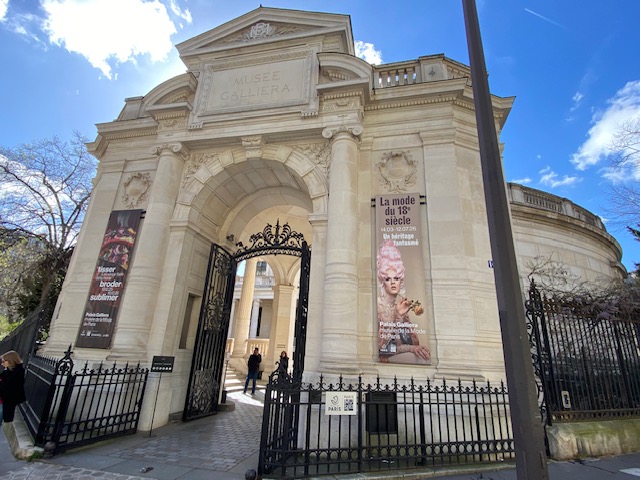
In the 1960s the flower power movement originated in the USA. The association of flowers in all their shapes and shades within fashion has played a role already over centuries. The most prominent use of flower imagery can be traced back to the 18th century when the many specialized professions contributed to the embellishment of humans through the reference to motifs around flowers. This is made explicit in the exhibition and catalog of “Tisser, broder, sublimer” in the Palais Galliera, Musée de la mode in Paris 2026-3. Nature and especially flowers have so many different shapes to offer that it can serve as an endless inspiration to creation and the arts. Power has been derived from special dress and community building as well. Flower power is interesting in this regard because it has been and keeps being used what is now known as the fashion industry as well. The soft power of beauty and sensual persuasion is lasting flower power.  
Art Station

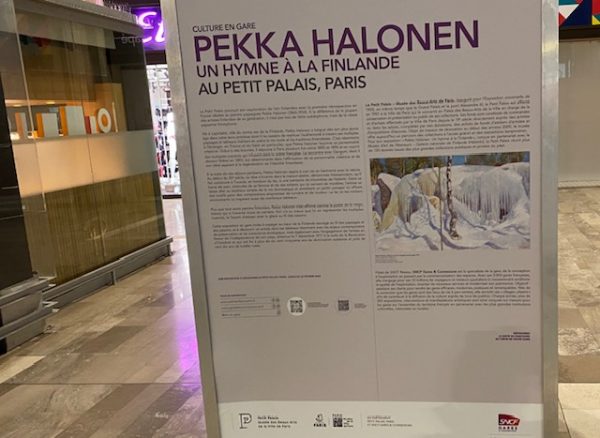
Mobility takes time. All people who travel frequently know the long waiting times at train stations. Be for commuting between places or long distance travel, we can hardly escape from the moments when time gets long and longer. The Paris train station Gare de l’Est has brought art in form of posters to the station as a kind of accessible micro-exhibition. The cooperation with the Petit Palais in Paris allows to give more people a taste or at least an appetizer to art work. Most people rush by, but some spend some minutes reading, inhaling exhaling, and continue to their destination or next date. In the battle for attention such initiatives like art in the station hold societies together. People with very different horizons cross each other for short moments in time.

Konzerthaus Organ

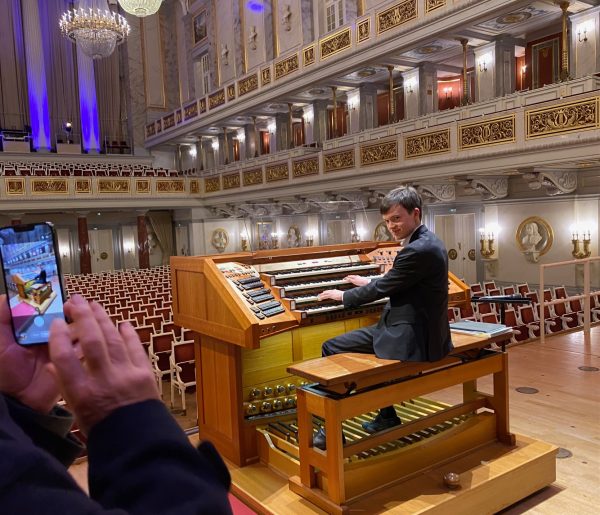
In the Espresso Concert series we have had the chance to listen to young talented musicians. On 2026-1-7 Julian Emanuel Becker charmed the audience with 5+1 pieces in the “Großer Saal“ on the Jehmlich Organ (4 manuals, 74 registers, 5811 pipes). The program ranged from Bruhns, Bach, Mendelssohn Bartholdy to 2 pieces by Jehan Alain, which made for an interesting surprise. Mastering this huge Konzerthaus organ with impressive skills at just 20 years of age caught the attention of the Berlin audience including the tourists on visits. The enthusiasm of Julian Emanuel Becker for his instrument and the brief introductions he gave himself to each piece created a unique learning as well as musical experience for the entire audience irrespective of age and prior expertise. The „Espresso addicts“ of the Konzerthaus even took the chance to chat with the young organist to learn more about the marvelous instrument and the next steps in his promising career. The studies in Paris at the Conservatoire have been important steps in the careers of formidable pianists and composers for more than 200 years. Becker will surely return to Berlin to give concerts again. Try to catch a seat, if you can. (Image: Julian Emanuel Becker 2026-1-7 at the Konzerthaus Jehmlich Organ)

Dancing School

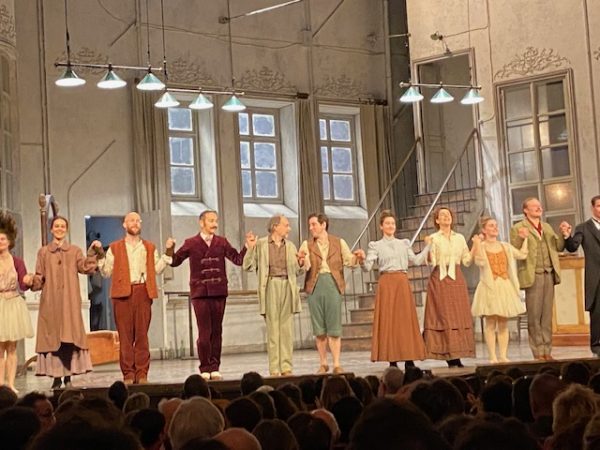
Most of us know very little about what happens in a dancing school. This has intrigued artists for centuries. The Paris-based “Comédie francaise” has chosen the “L’école de danse” de Carlo Goldini as one of the pieces to enter its repertoire in 2025. Whereas modern dance celebrates the freedom of motion of humans, the early 18th century theatre piece by Goldini is a comedy in which the tyrannic ballet teacher attempts relentlessly to maximize profits based on the talents of the dancers either by placing them at a high reputation theaters or marrying them. Of course, each time a sizable commission has to be paid to the dealer of talents. Sounds familiar to what happens in other professions today, doesn’t it?
The borders between “dealing with love” and “dealing in love” become blurred in this comedy and Goldini shows his talent to play out intrigues on stage in an admirable way. It is a pleasure to experience the fun on stage with the manifold intrigues. (Image: actors of Comédie francaise in L’école de danse 2025-12).

Europe x.0

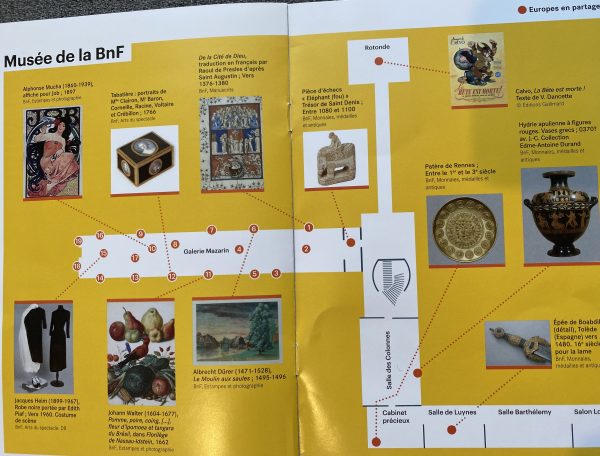
There are many places to ponder, think or dream about Europe. The centre of Paris is certainly a great place for this. More precisely, the “Galerie Mazarin” invites us to pass the centuries looking and reading about artefacts that made Europe or all different versions of it across history and geographic spaces. The short extracts of chansons that we share and shared across Europe are presented in their original language, which highlights the multilingual heritage of the different versions of Europe. There are parts of the heritage, which have fallen into oblivion like the customary use of tobacco exposed with a “tabatière” and a poster advertising paper for your cigarettes. Of course, the “Robe noire portée par Edith Piaf” on a stage is another highlight of the visual and audio joint European heritage.
Where do we go from here? Image Europe with an emphasis on its shared culture. There is so much diversity to be found in each country and regions within countries, but a shared appreciation of the valuable contributions to the whole. This builds a shared European strength, which has proven to overcome several fierce wars. This is the future-oriented version of Europe xx.0. (Image: BNF Musée Europe en partage, 2025)

EU Digital Sovereignty

If we try to search for digital solutions, we shall encounter a whole lot of American and Chinese products, but very few European companies that are able or willing to compete. Hardware mainly comes from China, software from the US, at least until AI was not working in the background. If we add Russian interference to destabilize our digital infrastructure to the scenario, we are not really fit for the challenges of the 21st century. The very definition of a country or political union is the affirmation and competence to assure its sovereignty, particularly in cases of territorial conflicts with neighboring countries. My health or mobility data are a rather private affair, however, our state governments in EU-Europe have done little to ensure our data integrity. Business is also at a loss, if they do not spend heavily on data security themselves, usually relying on external cooperation. 

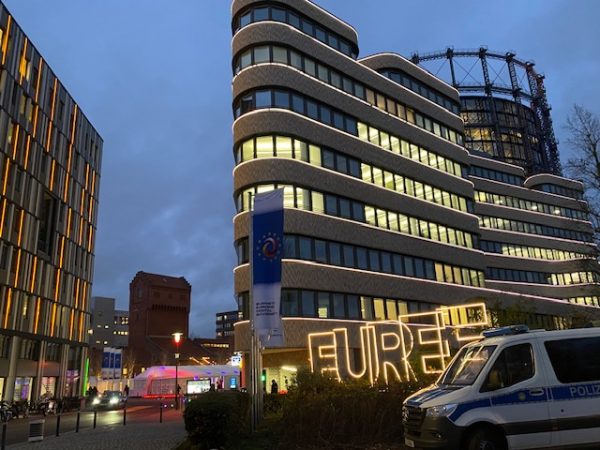
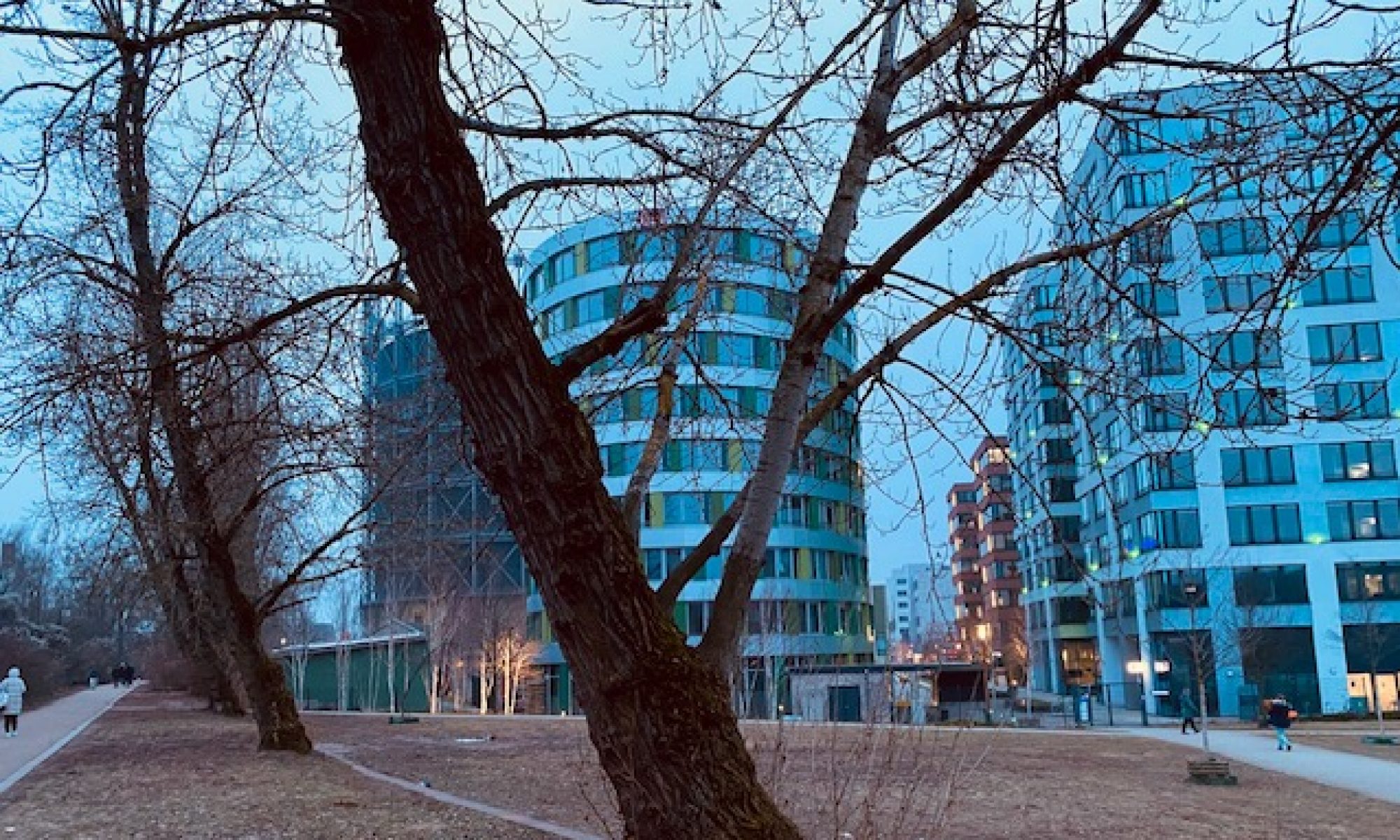
The EU digital sovereignty summit took place in Berlin on the EUREF campus in 2025. It can only constitute a beginning for intensified cooperation in  this long overlooked policy area. It will be tough to catch up where production has been abandoned for decades.  

Headless Saint Dionysius

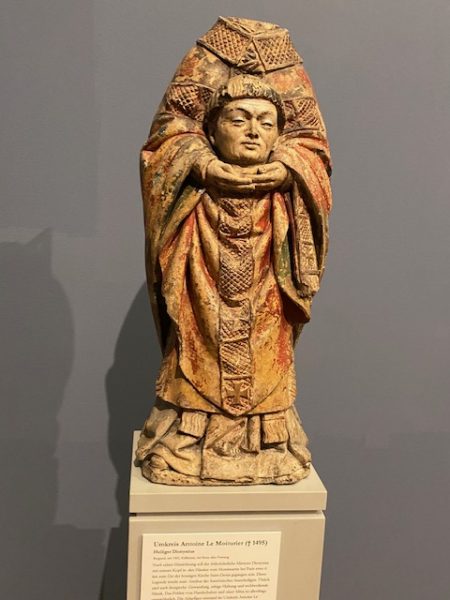
Denis of Paris stands for the Saint Dionysius, who is reported to have walked after being decapitated as martyr for his christian beliefs by the Romans in the 3rd century, all the way from Paris to St Denis in the suburb of Paris. We do not only find such a statue at Notre Dame in Paris, but also a medieval version in the Bode museum in Berlin. The cathedral of St Denis in Paris became subsequently the place for the coronation and burial of many French kings. The last king who lost his head through the guillotines was Louis XVI. It took almost another 200 years to abolish capital punishment altogether in France. Robert Badinter devoted his career to fight for this appeacement within the nation. (Image: Statue St Denis in Bode museum Berlin).  

Surrealism Networks

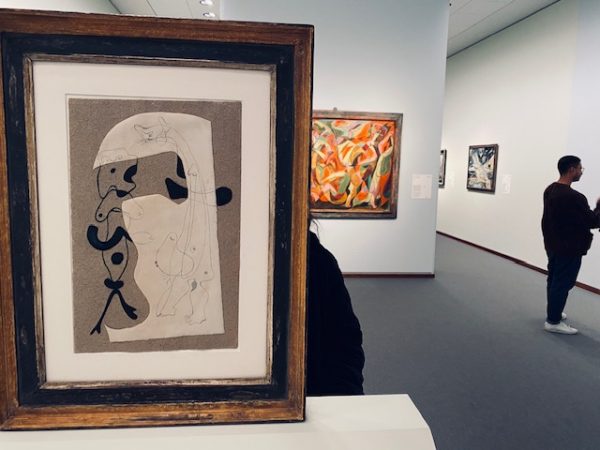
The research project on the networks of artists in the group of surrealism ranges from the male proponents Breton, Ernst, Magritte, Miró to female painters like Lenora Carrington and Dorothea Tanning. The collection of Ulla und Heiner Pietzsch, donated to the Neue Nationalgalerie in Berlin, excels not only in the depth and breadth of the collection of surrealism, but also in the way it contributes to our understanding of artistic movements and network dynamics. For those familiar with the theoretical and literary underpinnings of surrealism by André Breton, the collection allows to follow the traces of ideas into artworks. Interdependent inspiration in multiple ways becomes visible in this exceptional exhibition. The special concern and concept to honor provenance of the artworks makes the trajectories of each artwork explicit. Thereby, the geographic dimension, importance of collectors, galleries and personal relationships to gallerists become tangible. Additionally, the seizure of the 2WW heightened the need to have contacts to survive Nazi-terror. You find it all condensed into just one room at the Neue Nationalgalerie Berlin thanks also go to the Zentralarchiv to facilitate and participate in the research and documentation. (Image: Miró Collage, Berlin Neue Nationalgalerie 2025)

Popular Sociology

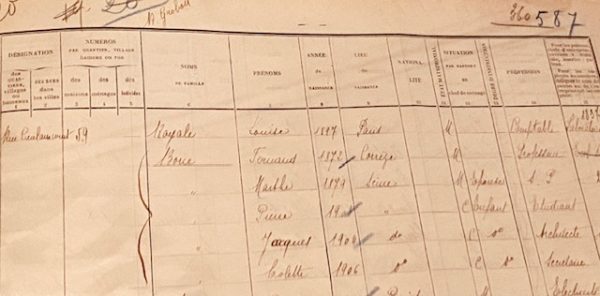
Sociology, like other social science disciplines, has often difficulties in reaching bigger audiences. However, in combination with a museum which specializes in the history of a big city like Paris, the insights can suddenly become very popular. The “Musée Carnavalet of the history of Paris” has mounted an exhibition, which builds on the population censuses of 1926,1931 and 1936. The access to the complete original records of 3x about 2 millions of people has become a national treasure for social scientists and the public at large.
People flock to the exhibition. Some do it to learn about the past of their districts or streets. Others to learn about historical facts, which are sometimes linked to the family anecdotes and broader historical narratives. Out of this interest grows an understanding of macro- and micro-level social processes, which makes use of basic statistics.
People ask themselves: Is your (family) story unique or is it part of a more general pattern or social process like urbanization or social mobility.
(Image: original census recording sheet – Paris)

Opera design

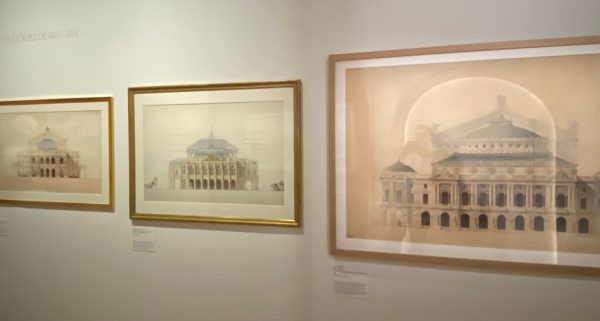
France celebrates 150 years of the National Opera Garnier in Paris. The exhibition in the splendid building traces the history of the building from the competition for the design to the legendary performances and celebrities attending. The stairs outside and even more so inside are built to enhance the glamour around operas and dance. The drawings by Garnier are a highlight as much as the videos about celebrities walking up the stairs of an Opera building.
Charles de Gaulle, as many French Presidents before, dressed and took the famous stairs to impress the official invitees. The image of de Gaulle together with Konrad Adenauer is another interesting example of opera politics showing the authentic friendship after the fierce fighting of the 2 WW, the Nazi-terror and Shoa.
The design of the Paris Opera 150 years ago made for an impressive ritual performance of state diplomacy enhancing international reputation.
(Images: 150 years of Opera Garnier Paris – 3 designs, winning design by Garnier on the right).