Dream Peace

To dream about peace is as old as humanity. However, the people who work on the development of weapons and train to use them vastly outnumbers those who think or dream up peace. The strategies and advice about warfare ranging from Aurel to Clausewitz have been studied carefully and the short-cut summary “if you want peace, prepare for war” sounds like a plausible solution to many problematic war-like situations (hybrid wars) even today. Let’s give it a try and dream up peace. There exits already an extensive literature on peace-keeping (forces) an the difficult role of the UN in these efforts. How about a challenge to this conventional wisdom. Voting in the UN should be weighted. The weights are inverse-proportional to a country’s amount of production and trade in arms measured over the last 10, 50, 100, 251 or 2501 years. The probability to favour peace in such a reformed voting system of the UN would shift further peace rather than arms trade and use of weapons in conflict. Of course, a crucial point is the definition of what is a weapon. Hybrid war and dual-use technologies could undermine the new balance of power at the UN. If countries with no arms production and arms trade get the upper hand at the UN decision-making, the peace-keeping force could still be mandated and delegated to joint forces. This could work as a disincentive for Trump to try to sell arms and enter into large-scale arms trade between the US and China. (Image: Ikarus-by-Picasso-at-UNESCO-headquarters-2024-Paris).
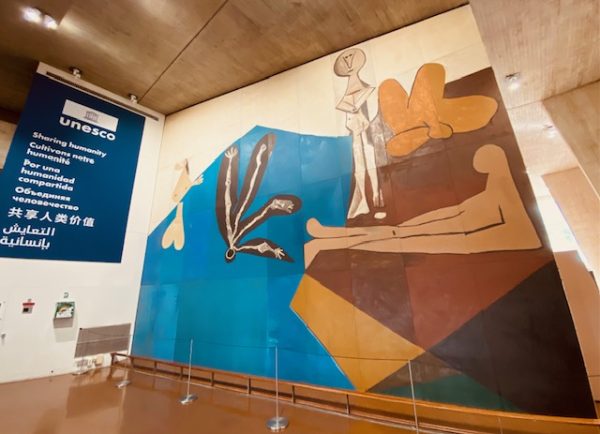
Ikarus-by-Picasso-at-UNESCO-headquarters-2024-Paris.jpeg

Chess without Queen

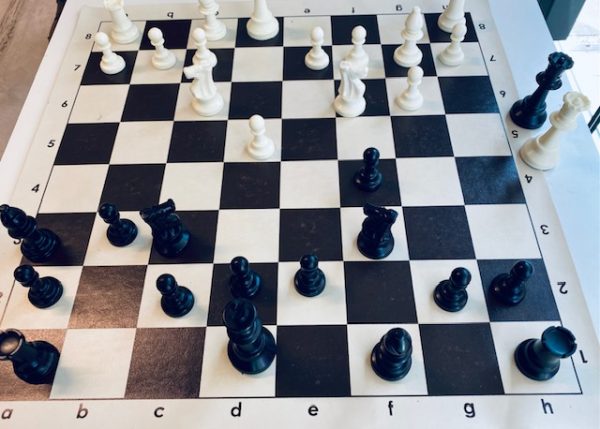
It is perfectly possible to play chess without a player having a queen on the chessboard. This certainly gives an advantage to the opponent, but in case of a lack of an adequate strategy or being overly confident to win, the advantage can be compensated by the party who does not have a queen in the arsenal of weapons. The paper by Lissner & Warden (2026, p.109) on the new way of war following the Russian invasion of Ukraine in 2022-2-24 states that “nuclear weapons have not given Moscow the coercive leverage many assumed they would.” Nuclear weapons hit the civilian population without differentiation the hardest, just as much as taking nuclear power plants as strategic war targets would do. What we have seen so far in Russia’s strategy is to use civil infrastructures of water and heating as targets within Ukraine as part of a kind of psychological warfare against the Ukrainian civil population. The more committed Ukrainian soldiers, even with the lack of a nuclear weapon, seem to hold the line against the Russian aggressor that so far has restrained from the nuclear option, if the Tschernobyl disaster has not been a precursor of a weaponisation of nuclear infrastructure.

Perestroika – Glasnost

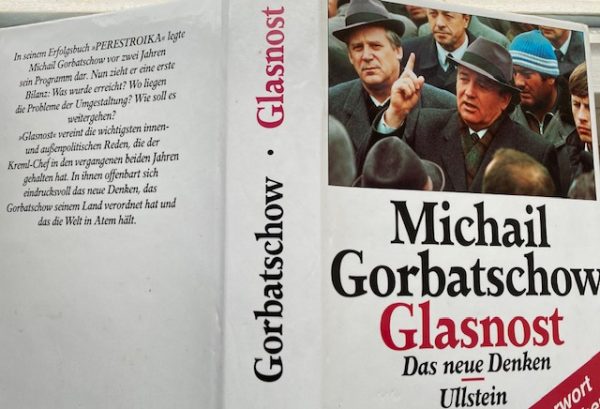
The extraordinary leadership of Michael Gorbatschow with his introduction and subsequent implementation of the principles of Perestroika and Glasnost has changed the lives of millions of people in Eastern Europe to the better. The independence of occupied countries became feasible. The aim to build a “socialist state based on law” (p. 86) and the belief in the power of the people without differentiation of what information is for all and what information is reserved to closed party circles and leadership were perceived as sweeping reforms. More than 25 years later there is little left over from these radical reforms. Putin and his narrow circles have locked in people and their freedom of expression again. The practice of Perestroika and Glasnost have been relegated to a distant dream again. (Image: book cover Gorbatschow).  


Korean Epilogue

The exhibition on the Korean Provisional Government closed with a stimulating epilogue. The call on visitors to spread the message of peace resembles religious practices. The long struggle for Korean independence and freedom for the people in South Korea leaves them wishing the same for all Korean people and beyond 75 years after the beginnings of the Korean War. From a German and Eastern European perspective this unaccomplished wish resonates a lot. The small stickers with messages from visitors propose short thought pieces like “South and North Korea shall be together” and “Peace starts with inner peace”. The wisdom in these statements lies in not giving up on ideals, however distant they may appear. There is always the possibility of small steps ahead.

Korean Independence

The independence of a country is sometimes a long struggle. At particular points in time, a window of opportunity may open up, which allows to change the course of history. In many cases the opportunity to gain independence has been prepared for several decades, at least from 1919 onwards to come to fruition only after the end of the Pacific war, shortly after the Nazi-regime was defeated. The long and relentless preparation of the Korean Provisional Government ensured that a consensual constitution was ready to be adopted and elections to be held. The resulting division of Korea into 2 parts (South and North), just like East and West Germany, is rather long lived on historical time scales. For that matter, the hope of a peaceful unification needs to be reiterated again and again. The informative exhibition of the Korean Cultural Center to Belgium and the EU highlights the continued “Dream of Peace” which continues even after more than 100 years.

Dream together

„Dream together“ is the title of the exhibition of Yoko Ono at the „Neue Nationalgalerie“ in Berlin 2025. The title is an invitation or even an incitement to dream jointly with others. We need to dream of peace on all sides or parties in a war. Start with the dream and then move on to working together on it. The participatory art projects of Yoko Ono are a recurring event in Berlin and at the Neue Nationalgalerie (Cut piece). The installation „Wish Tree for Berlin“ in front of the gallery is popular with visitors who leave hundreds of written wishes to the windy spring days. Origami folding, stone assembling or a simultaneous chessboard playing with all white pieces and fields encourage to imagine a world differently, beyond the treaded belligerent paths. For more inspiration and imagination just continue to the Martin Gropiusbau for more artworks from Ono or just watch the clouds pass by changing the lighting of the olive tree carrying lots of wishes.

Known Unknown

Many musicians and poets remain unknown to larger audiences. “A complete unknown“, young singer, musician and songwriter Bob Dylan has reached fame and fortune with his poetry and popular songs that marked a whole generation. He became the best known unknown of country music in the USA who found sympathy for his expression of protest across the world. „How many times must the canonballs fly, before …“. At the time of renewed militarization of the Western states to defend our way of life, the protest song is oriented towards Russia to stop its war in Ukraine.
The poster in Berlin to advertise the biographical movie on a „Litfaßsäule“ (round sign posting column) dating back to the 1920s in Berlin brings us back into the historical state of mind of crucial crossroads in history. Retreat from war, preventing war and aggression remain topics for us today as well. Peace might be the happy time in between wars marking history.
Berlin is a great place to walk through more than a century of war and aftermath. Rebuilding takes decades and is part of the Berlin state of mind. as well as a sign „to overcome“ conflicts.

Reconciliation

European history is a long history of atrocities committed against humanity. The Documentation Centre for Displacement, Expulsion, Reconciliation in Berlin (Image below) captures this history in a comprehensive manner. We are quickly overwhelmed by this weight of history and the implications this has for the understanding of the people on the globe. This relatively new learning centre has, beyond the memorable permanent and temporary exhibitions, a room of silence to recover from the hard work of remembrance, always in view of reconciliation.
The library allows personal search and research of migration documents and biographies. All centuries have their history of displacements, but the Nazi terror surpassed all prior records and forced millions into displacement or death. We are still working on this heritage and the enlightenment of how these atrocities could take place. Full consciousness of the terror and horror of the 30s and 40s is necessary to guard against the many attempts to falsify historical events or discard the sorrow of millions of people and their families.
Reconciliation remains a continuous challenge. A large part of diplomacy has to deal with reconciliation beyond concerns of daily affairs. It is not just a matter for head of states and days-off during a year. Stillness helps to deal with the challenge, especially if it is very difficult to find adequate words.

Olympic Criticism

The Olympic Games are, like every international organization, subject to criticism. In democracies this is part of the DNA of democracies that you can voice your criticisms openly without being threatened by persecution or arrest. The Olympic Games have since its beginning in ancient or modern times favored sport disciplines that have a link to warfare. The spectrum of disciplines has been extended recently to blur a bit this belligerent image of the Games. However even the break dance is performed in a kind of battle or competition between two adversaries. This is the reason why totalitarian states have (had) a predilection to show off their state sponsored warriors in the Olympic Games. Nazi Germany and the Berlin 1936 Games were the worst example of how the Games can get abused only to demonstrate a country’s force through athletes. Dictatorships of our times are not much different in this regard. Showing how many successful athletes (soldiers) you are able to produce is somehow an indicator of your professional training system of elite performance. Now, add to it the top performance in the Paralympic Games like Paris 2024 and you can even demonstrate how well you are able to care for and train potentially even also for mutilated warriors. Criticism of preparations of warriors and war masked through sport competitions are maybe unfair or utterly displaced here. It is, nevertheless, much better to compete on the sports-field rather than with loaded weapons. Only in retrospect, we often understand, why some nations made such enormous efforts to demonstrate a commitment to win as much as possible. With a growing enthusiasm for the Olympic Games the critical reflections rise as well.

Paris libéré

It is with great pleasure to follow how Paris commemorates the liberation of Paris from Nazi-Germany 80 years ago. (Quote from De Gaulle “Paris libéré”.) On the 25th of August 1944 the city of Paris was finally liberated by French armies and the support of the local resistance movement. Similar to the journey of the Olympic flame on the way to Paris, we can follow each city celebrating the liberation from the occupants. Beginning with the landing in the Normandy of the Allied troops, the chasing of the enemy has been a matter of time, but still incurred huge human losses. More than 4 years of Nazi symbols in Paris were finally brought to an end and celebrations on the streets became a symbol for the enormous relief this liberation has meant to the population of Paris, France and hope to many neighbouring, but still occupied territories.
Several documentaries on television and radio allow to empathize with the joy of this time. Enduring the hardships imposed and, for many, risking their lives in clandestine networks of the resistance were honoured by the success of the liberation of the city without the massive destruction, which was to be expected.
A book edited by Ulla Plener (2007) highlights the supporting role played by some women originally from Germany to support the French Resistance movement. It still is not common to understand the retreat of Nazi-Germany also in Germany as the progressive liberation of the country from the terrors of a dictatorship.