Xmas as information sharing

In modern theories and tests of the importance of information sharing, social learning in groups and the spreading of information in social networks are known to be powerful mechanisms. Hierarchies and survival might be at issue. In the animal model based on mice it the scent that is the byte of information. For humans thinking of information or narratives are probably more appropriate. The story of Xmas has been spread rapidly and the kings arriving to bring presents testify to this powerful mechanism of information sharing in social networks even before the so-called social media existed. Ever since, written accounts of the story were added in addition to regular meetings of persons who continued to share the story. Add music and theatre to the transmission of the story and the mechanism reaches even broader audiences, and maybe devoted believers. As behavioral flexibility might increase as well, more than one interpretation or ritual of the same narrative is likely to arise over time. In the animal model food is the major reward system. For humans the reward systems are more complex with forms of delayed gratification. Information sharing about the importance of delayed gratification takes us into new spheres of humanity versus rational choice. (M-P Brussels). 

Headless Saint Dionysius

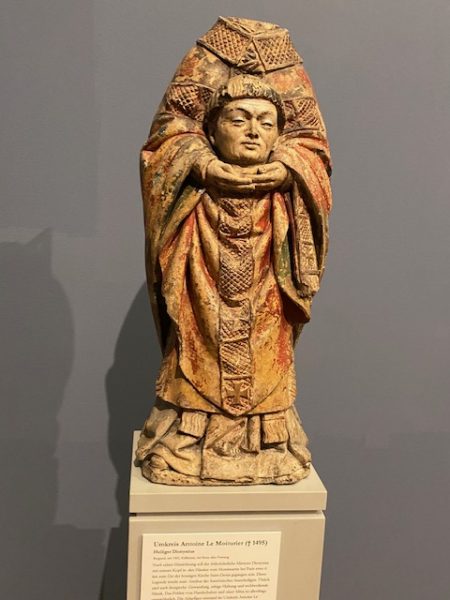
Denis of Paris stands for the Saint Dionysius, who is reported to have walked after being decapitated as martyr for his christian beliefs by the Romans in the 3rd century, all the way from Paris to St Denis in the suburb of Paris. We do not only find such a statue at Notre Dame in Paris, but also a medieval version in the Bode museum in Berlin. The cathedral of St Denis in Paris became subsequently the place for the coronation and burial of many French kings. The last king who lost his head through the guillotines was Louis XVI. It took almost another 200 years to abolish capital punishment altogether in France. Robert Badinter devoted his career to fight for this appeacement within the nation. (Image: Statue St Denis in Bode museum Berlin).  

Place of the Church

What is the place of the church(es) or religion in society? Some would answer that the answer depends very much on the historical period which you focus on. Social scientists would zoom in on the changes that have taken “place” and the reasons as well as major actors of these societal changes. Churches are highly symbolic places with exposed visibility and demonstrations of power. Therefore, it is interesting to follow the changes in the architecture of churches. Whereas biblical communities gained in wealth and power over the centuries, they moved from the backyards to the city centres and the market places for centuries.
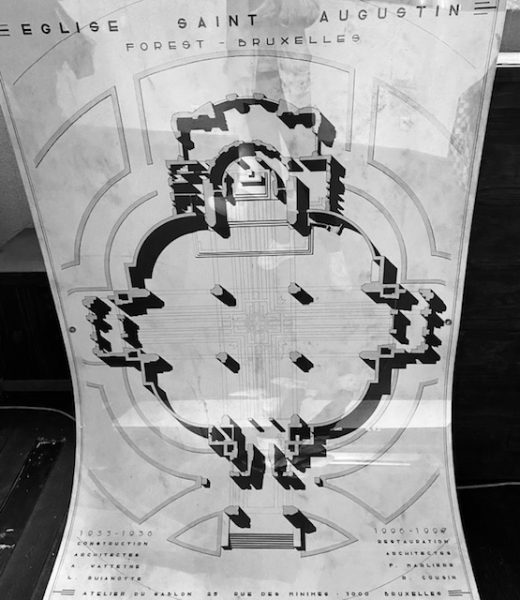
In the early 20th century many cities have grown so rapidly that in newly built suburbs new churches were considered an obvious extension of the places where churches belonged as well. In several instances the planning of a city’s extension was still being organised around the idea that a church should be the (new) focal point. At the same time the ideas of democratisation entered into churches as well leading to the deviant choice of round shapes rather than the traditional linear structures. The hotel became visible from all angles and was positioned as the mid point and rayons or beams could be imagined to reach into the newly built suburban areas. Frequently the road traffic was organised accordingly. Saint Augustine church in Forêt Brussels is a prominent catholic architectural example of this.
Another example of a round shape church with a place defining architectural function is the evangelic Königin Luise Gedächtniskirche in Berlin. Much smaller in size and in the axes that originate from there, the “Place of the Church” aims to fulfil a similar function, a central place in the new suburbian area.

Modernist Urban planning

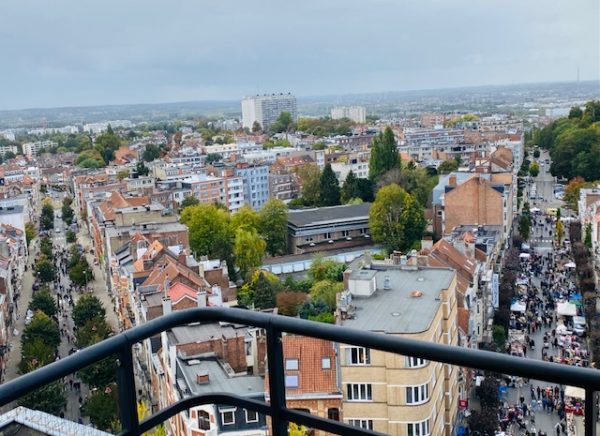
Saint Augustin in Brussels is one of the lesser known defining architectures in Brussels. It is visible from far away much beyond the immediate surroundings. Situated on Altitude 100 it is on the highest hill in Brussels with a 58 meters high Campanile built out of concrete in 1933 in a predominantly art nouveau style. The order of the St. Augustines in the center of Brussels was terminated and at the outskirts of Brussels as a new city suburb was being built starting in the late 19th century An appropriate way to demonstrate continuity despite discontinuity was the placement of the church in the middle of a roundabout and a star-like organisation of roads des descending from the top. The form of an equal length (orthodox) cross is in the spirit of the unity of the Christian churches. Even despite the prominent and exposed situation, most people pass by with little concern for the innovative, architectural features of this edifice. (Image: View from capanile St Augustin Brussels). On a small scale this urban planning concept resembles the Paris of the « Arc de Triomphe » and the views and corridors which we designed and implemented.


Unity is key

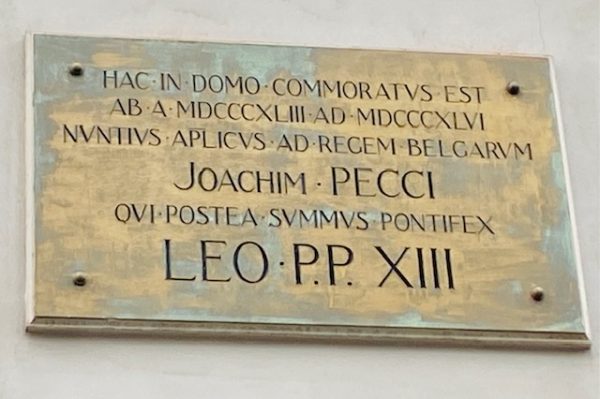
The choice of the motto “In illo uno unum” by the new Pope Leo XIV of the catholic church in 2025  highlights his choice to devote his efforts to the unity of all christian churches on earth. This is a centuries old dream of the diversified interpretations and practices within the christian beliefs and traditions. The inaugural sermon of a Pope therefore takes the form of a high stakes announcement for the coming years (Link). The next document from Leo XIV speaks to the importance to preserve the earth as the creation of God with all its diversity as a whole as well as in its parts. We might translate this back into “In illa uno unum”, where in illa stands for the earth, as a female and nature-turned version of the Pope’s chosen Motto. The choice of the tradition of Popes named Leo, like Leo XIII previously was another matter of signalling to his followers that he is firmly embedded into the Augustine tradition of Christian beliefs and traditions and practice. A concern for unity is necessarily bound to bring together peoples from all corners of the planet on the foundation of equality and a sharing and preservation of the riches of the world. (Image in Brussels, Joachim Pecci as ambassador of Vatican in Belgium before he became Pope Leo XIII). 

Deus ex machina

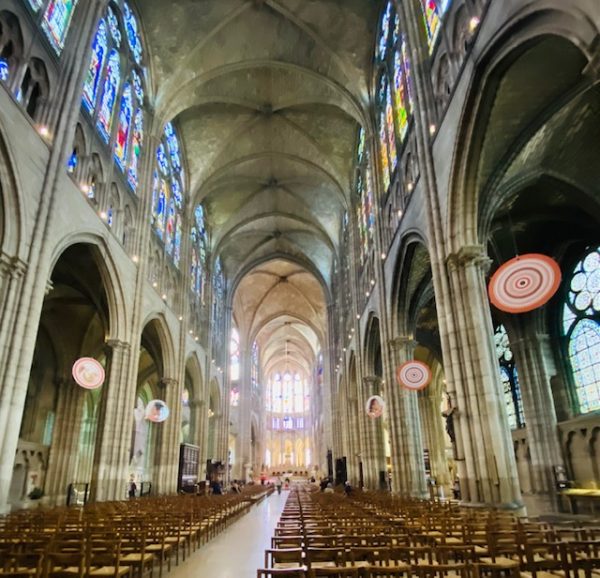
The term “deus ex machina” used to be applied more in its figurative meaning. With the rise of digital tools like chatbots, facilitated and enhanced through AI, God is speaking to us not only in multiple languages, but also from our pockets through our smartphones and headsets. This is a rather recent form of “deus ex machina”, which we did not expect some years ago. The bible as e-book or pdf-file has been around for some decades, but only more recently we can enter conversations with God through chatbots as another version of “deus ex machina “ about almost everything (and pay for it via digital credit card). Programming of such an AI-tool is easily achieved. AI will prepare a weekly or daily sermon or prayer for you, following your predilections of your favourite quotes of the bible. An interesting twist to the programming is to use authorized as well as unauthorized translations of the bible across several centuries.
Another interesting enlargement of the input data base is the inclusion of interpretations and discussions not only within your own religious community, but beyond. Maybe the discussion of several different religious chatbots with each other could prevent aggressions due to differences in basic beliefs. These “dei ex machina” might further our understanding of what makes us humans different from machines and machine-based solutions of human conflicts.
As genetic clones of ourselves have become already technically more feasible, our digital alter-egos (the comprehensive collection of traces in the internet and digital images, plus social scoring) help to empower those “dei ex machina”.
This kind of “Brave New World” asks us to be rather brave ourselves.
(Image: interior St Denis Basilique Cathedral Paris 2024)

Individual and Cosmos

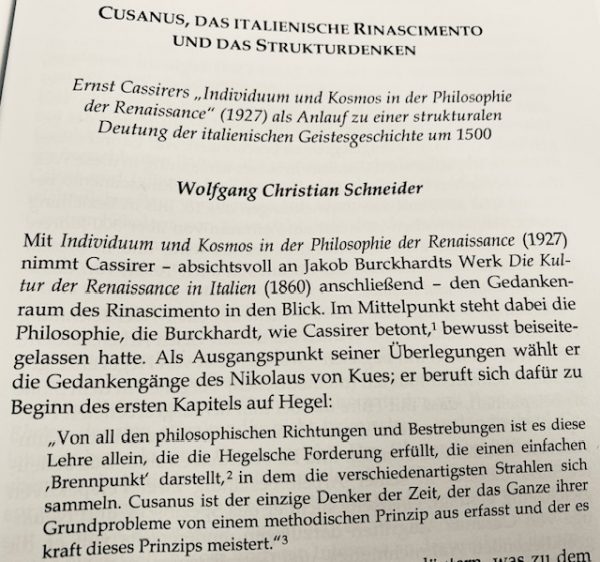
The major work by Ernst Cassirer “Individual and Cosmos” can be read from a perspective of the history of ideas (Schneider, 2024 in Coincidentia). The work of Cassirer refers back to Nikolaus Cusanus in the way that the worldly ideas concerning the sciences and everyday life of the individual are embedded into the perspective of the cosmos. The latter (cosmology) is of course at the time of the 15th century dominated by religious doctrines. Schneider highlighted the merits of Cusanus as a major contribution to the Italian  “Rinascimento” due to his ability and willingness to draw on all the best knowledge available at his time. A frequent travel to Italy and Rome including the library of the Vatican was a precondition to gather such an overview. Schneider opens up another interesting debate about the competence of Cusanus to read and write Latin and Greek. Contrary to previous statements he highlighted the fact that Cusanus created new words or notions that were unfamiliar or new at his time. Nowadays such creations are very common to express new ideas or combinations of concepts. At his time this was interpreted rather as a lack of clarity or imprecise language.  

Gentileschi Gentileschi

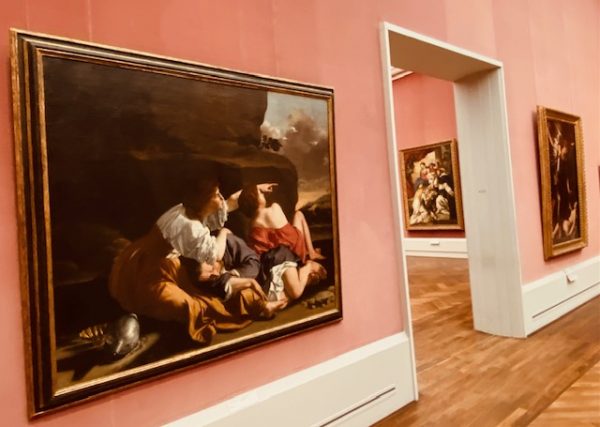
There are 2 Gentileschis that entered the history of art. Orazio the father and his daughter Artemisia. Orazio painted many scenarios based on the bible. The incestuous relationship between Lot and his daughters is difficult one to portray and to do justice to the moral concerns involved. Artemisia, similarly, did not shun away from difficult stories of the bible and added a personal twist to these stories in putting her face into the biblical depiction. The cruelty of the stories become more explicit this way and maybe also her deviant position to the biblical narrative. (Image: Orazio Gentileschi‘ (1622/23) „Lot with his daughters“ Gemäldegalerie Berlin)

Jewish Heritage

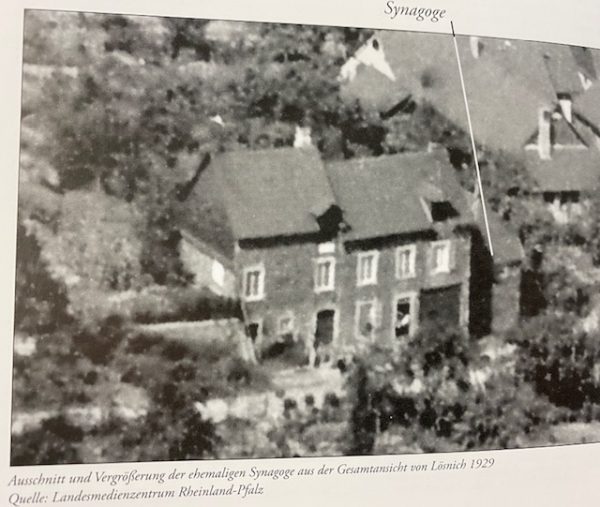
In the Germany of the 21st century, we have to dig deeper into history to understand the Jewish heritage due to the horrific terror of the Nazi-regime and it’s millions of supporters. The traces can be found in some historic photographs even in the countryside. Marie-Louise Conen and Hilde Weirich (2010) have thoroughly studied such documents for the Moselle village of Lösnich. The little annex to a house served as a Synagogue (image below). The village has a history of Jewish settlements which extended to neighboring villages as well. Interestingly, the heritage of Napoleon’s occupation of the Rhine and Moselle regions brought equally for all men (not yet women) and the separation of the state and religion making Jewish life, property acquisition more easy. The tolerance of the 19th century was then reversed by Nazi Germany again. History is present in many places, where we do not seem to expect it nowadays. 

Paris Sorbonne

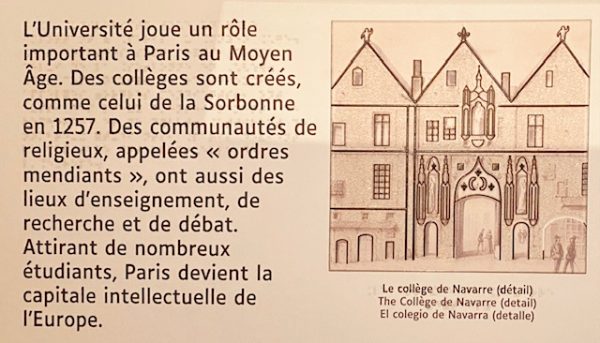
The history of the university on the left bank of “La Seine” dates back to 1257 when Robert de Sorbon an advisor to Louis IX was asked to create a unifying structure of several colleges which provided room and board already. The location on the left bank in Paris allowed these colleges to escape the religious doctrines and archbishop who dominated the right bank. The choice of the name of the advisor rather than the King was already showing early signs of independence which was cherished by generations of students and professors. The Colleges had individual names like “Collège des Bernardins” or “Collège de Navarre” and operated under the title of “La Sobonne”. The “Musée Histoire de Paris Carnavalet” shows an early design of the Collège de Navarre. Independent thinkers and writers were formed there who became very influential later on in their careers. Thomas d’Aquin was one of them.