It is a moving image to see a hundred demonstrators at „Unter den Linden“ in Berlin just next to the Russian Embassy. The Georgian flag and Georgian people actively seek the association with the European Union and the values it stands for. Irrespective of a large majority of the people of Georgia‘s wish to become part of the EU they have to fight hard to be heard. Next to the Ukranian protests in Berlin it becomes very evident that these two nations fight for living standards and values which are so „self-evident“ for us European citizens that it is all to easy to forget about our neighbors who have to endure hardships with uncertain outcomes. The experience of having lived together under one roof with people from other countries allows to realize that we have so much more in common than what separates us. Our house and home of the EU has much to offer, more than we tend to believe in our daily routine. 
Commemoration
In The month of November we commemorate those who died and particularly all those who died in the combat for freedom and democracy. The Russian aggression does not show many signs of ending the killing of soldiers and civilians on both sides. Ukrainian forces struggle to resist the Russian occupation of its territory as Russia is sacrificing thousands of lives for small gains of territory it is unlikely to defend in the coming months if Ukraine possesses longer reach weapons. A new spiral of an apocalypse is most probably the result of the Russian insistence on external aggression to cover up more internal problems. A lost generation of young soldiers who died in combat or suffered mutilation will be the outcome of these atrocities. The inflationary effects of wheat and energy prices globally have caused additional casualties in countries that had absolutely no stakes in this war. Russia is to blame for those additional casualties as well as the adverse effects on the world‘s climate due to the fighting and destroyed materials that need replacing later on. The young Russian generation will have to stand up against Putin‘s call to war and put down their weapons. This is one way to end the spiral toward yet another apocalyptic experience in Europe and the silent killing through hunger beyond Europe. (Image: BNF Paris, Apocalypses 2024)

Comprehensive Conflict
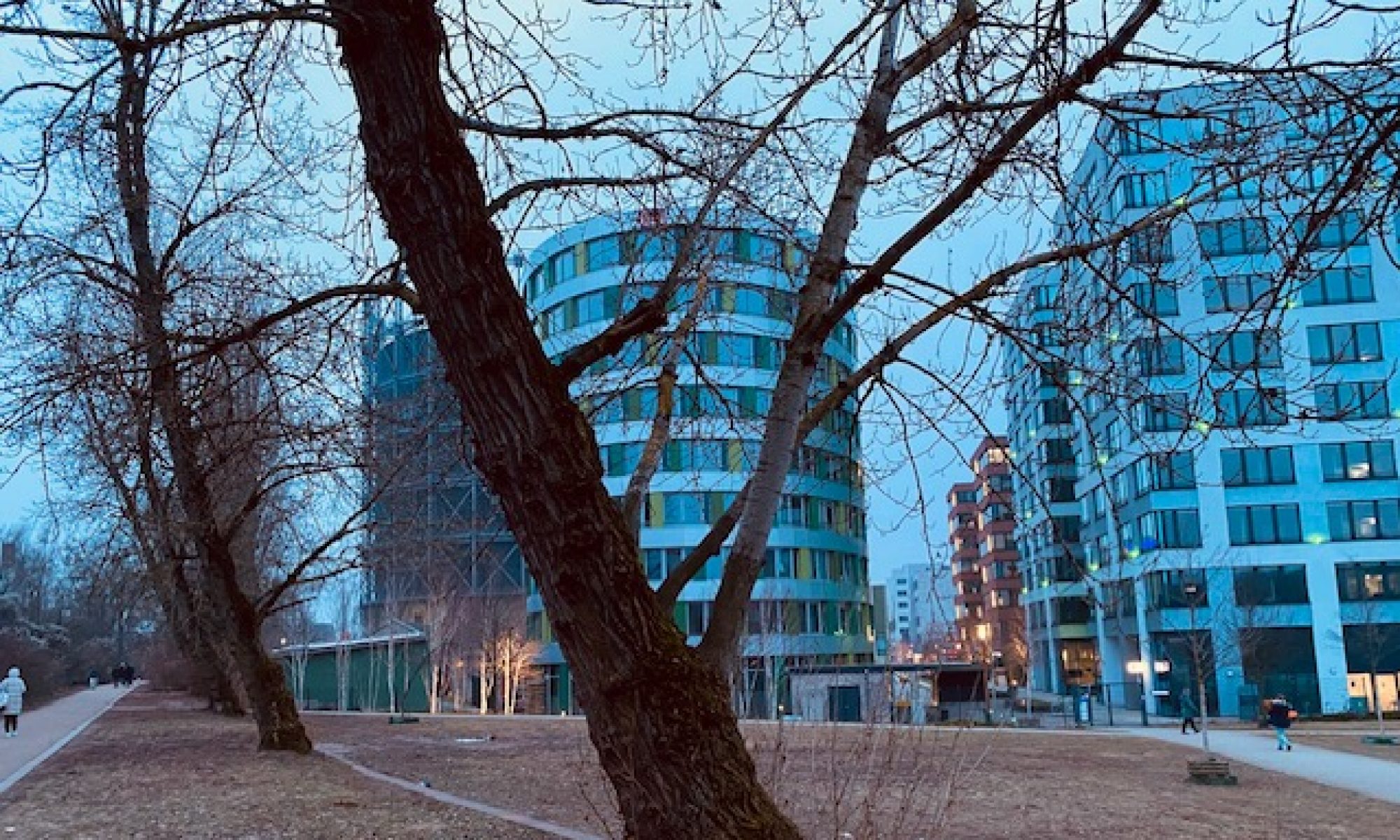
In a recent paper Mara Karlin (2024 Foreign Affairs LINK) has stated the need for the Western World to understand and even prepare for comprehensive conflict. Particularly in response to Putin‘s war on Ukraine’s territory and the threats and potential use of the full range of weapons including cyber warfare, destruction of energy resources and military production sites the current war comes close to total war. Several European countries have made significant steps to increase budgets for the new forms of comprehensive conflict management. This starts with adequate discussion in public on the dramatically changed security situation after the „Zeitenwende“ caused by Putin. The forceful Ukrainian response with much financial assistance from the West has pioneered drone counter strikes and by this put an end to the Russian progression into its territory. In order to match the total war ideology Putin is implementing in Russian society the Western world will have to rethink production models and strategic defense capabilities in all areas to match the rather real threats by Russia. The prevention of the spreading of comprehensive conflict is of utmost importance since the risk of an expansion of Russian influence and suppression of any internal resistance in Russia has devastating consequences. The 2024 book by Tatjana Tönsmeyer „Under German Occupation, Europe 1939-1945“ (own translation of German title) demonstrates what it meant to live under the domination of an inhuman dictatorship which is ready to use all out war and violence at any occasion. We have to confront this, even if we don’t want to face it. Nevertheless, the Russian aggression is also strongly targeted on its own people not to take risks of separation from Russia as this would mean devastating destruction to those regions and people who dare to do so. External explosions are therefore for Putin a prevention of implosion of the Russian Federation similar to the Soviet Union previously. Comprehensive Conflict extinguishes any remaining internal opposition as intended collateral damage. In Western countries, however, we shall have to argue with opponents and build majorities through understanding the issues at stake not through silencing opponents and opposition. The debate about comprehensive conflict is only about to start, but it is likely to last for several election cycles. (own image, Contemplation on infinite landscapes, Berlin 2024)

Russian Demographics
Dictators prepare their countries long before for upcoming wars. One indicator of such strategies is the pursuit of “natalist” policies. These are demographic policies that aim to increase a country’s population so that the human losses endured during war maybe recovered faster. Russia has had such a policy doctrine in place for quite many years. Only, it didn’t work. Alain Blum and Sergei Zakharov (2023) have shown this in their paper on “L’obsession nataliste de Poutine“. Rather than achieving a growth in the population, at best, the further rather rapid decline of fertility and the population size before the war is reflected in the data (until 2022). The recent objection of youth and women to bear more children is subject of massive opposition of Putin’s forces inside the country. So-called total fertility of 1.5 per woman before the war is as low as or lower than in many other European countries. However, on the other end of aging is mortality or life expectancy. The data show a rather bleak picture of Russia already before the invasion of Ukraine. Based on data published from INED in France Russia has about 1.000.000 more people dying in 2022 than babies born. Bad handling of the Covid-19 pandemic (inefficient vaccines) is also a reason for this dent in population size. Adding outmigration of youth that does not want to stay in a country that goes to war with peaceful neighbors, this bleak population outlook is the disastrous heritage of the Putin years of Russia in the 21st century for generations to come as well. 
Scorched earth
The Russian military strategy in Ukraine is yet another example of scorched earth. Upon retreat the space is left in a devastated state. Worst of all are the land mines that kill or mutilate even after the immediate danger has passed. The logic in the Russian aggression in Ukraine is particularly strange as the Russians were arguing this is their land and claim the people living there were mostly Russians. The retreat of Russian troops eventually will leave huge territories scorched. The destruction of energy infrastructure is also clearly targeting the population at large to make entire regions difficult to live or survive in during the approaching cold winter months. Decentralized energy provision rather than huge power plants have become a survival strategy for Ukraine and probably its neighboring countries. Sensitivity to the dangers of scorched earth is important to get priorities right for relief.
Artists sometimes show us the way ahead with bright colors, if only we were able to see or understand the signs or signals. (Image extract from Mark Bradford “Scorched Earth”, SMB Berlin, National Gallerie der Gegenwart im Hamburger Bahnhof, 2024-9)

Ukraine Chess
Strategies in Chess, sometimes, inform strategic behavior in wars. In chess there are clear definitions of 2 opponents and their material. Modern warfare has blurred both elements. Opposing parties build alliances and the material allowed or available is hotly debated as well. The war of Russia on Ukraine territory, nevertheless, resembles a variant of a chess game considering the different stages of the game. All starts with Russia choosing its opening attacks. A rather aggressive version of the opening is the King’s Gambit in which a fast attack tries to overwhelm the opponent. Ukraine, because of the surprise and lack of immediate support from neighboring countries, chose a careful defense trying to hold the lines amid a fast forward moving assault. A further restriction for Ukraine was to not use weapons from supporters on Russian territory. In chess this would mean your defense is not allowed to cross the middle line of the chessboard. For example the so-called Sicilian defense does exactly this for many moves of the opening. However, in the middle game this changes and the defense might prepare forceful attacks based on a solid defense. With 2 and 1/2 years into the war the opening has played out and we see middle game strategies take the upper hand. In chess this consist in attempts to gain material advantage, possession of strategically important positions and psychological stamina to mention a few. The middle game can drag out for a long time, especially if a balance of power persists. Even in an unbalanced situation peacemaking takes time as well. In any case, during the opening phase the “Sicilian” defense can handle a defense that is restricted to “own half” of the chessboard, but in the middle phase such a restriction is an even more severe impediment. Relaxing this imposed restriction by supporters opens up additional possibilities for the defense as well as counter strikes. (Image: Shredder Chess App White opens with Kings Gambit and Black answers with Sicilian defense)

International Geometry
Geometric forms sometimes serve to make international affairs more transparent or descriptive. The Weimar triangle is such a formula, which helps to show the links between states. In the journal “Le Monde” of 2024-9-13 an interview with Radoslaw Sikorski reflects the shifting side lengths and military weights within this triangle. The Polish Minister of foreign affairs points at the threats from Russia to violate the air space of Poland and the legitimacy of Poland and the Ukraine, of course, to defend its air space and territorial sovereignty. The guarantee of international law, however, is heavily dependent upon adequate international geometry beyond the Weimar triangle. The meeting with a representative of the Pentagon (US) enlarges the scope of the triangle.
Talking about the reach of missiles in defense is yet another exercise in geometry as this depends on starting and supposed, or reachable, end points. The use of GPS-signals in civilian and military applications is another example of how geometry is ruling our modern lives. Let’s embrace it, rather than shun away from the geometry behind it. (Image Exhibition room at Wiels Art Centre, Brussels 2023).

Segregated Estonia
In cities of Estonia the segregation between the majority of Estonian speaking persons and Russian speaking persons has a long tradition. The Russians built new housing as part of their occupation of Estonia and housed their own persons there and sent their children to Russian speaking schools in these neighborhoods. The paper by Kadi Kalm et al. (ESR, 2024, 208ff) demonstrates the persistence of this “colonial” segregation over generations. However the authors show that desegregation of schools is a remedy to such previous housing and education policies. Learning the majority language is a definite step towards later integration into society just as (marital or household) union formation or labor market success do. The Baltic states have managed to escape from the Russian occupation but the Russian neo-imperialism is not entirely tamed. This explains a great deal of the anxiety of Estonia and other previously Russian occupied Eastern European states of a Russian backlash. Military commitment and a strengthening of the European Defence Union is a consequence. (Image Medieval Town Hall Tallinn Estonia 2024)

Schooling Ukraine
It is hard to imagine what it will mean to go to school, if your father has to defend your country, Ukraine, and freedom of education instead of Russian indoctrination. This is tough for all children in countries that have to defend themselves today or in the past. For Ukrainian children and families who had to flee their country this means that they have to go through another education system, not out of choice, but instead of their normal way through their education system. This means a lot of additional challenges for them. In Germany alone the educational authorities have counted more than 200.000 children in schools at the beginning of 2024. Additional efforts are undertaken to allow mothers as well to learn a foreign language to facilitate communication with the receiving countries. We have to make huge efforts that these children are not a scared generation of pupils but rather a strengthened generation of young persons with solid learning experiences in another country. Some will stay in the receiving countries, many will return and rebuild their homes and communities. Our support and assistance needs to be a long term commitment beyond the end of the war after an eventual Russian retreat from Ukraine territory. Solidarity is not a fixed-term commitment. We shall be put to the test and should not hesitate about our continued support.

Superstates reloaded
We live in an age of superstates. Such is the conclusion of Alasdair Roberts (2023). China(1.4), India (1.2), USA (0.33) and the EU (0.45) in billions of people jointly host about 40% of the world’s population (UN data). The Russian Federation with a population of 0.15, Japan 0.13 rank further behind, for example Pakistan 0.24 and Indonesia 0.27. Nothern, Eastern and Western Africa (0.25;0.46;0.42 respectively) have a huge unfulfilled potential that does not reach the impact it deserves.
These big and populated entities contrast with the increasing number of small states that have become new members of the United Nations. The institution of the United Nations, through its setup as an international rule based governance structure, has facilitated small states to seek voice and influence in the international arena of politics. The UN had 51 members in 1945 and has now a membership of 193 of all listed states of 237 on the globe. The increase in membership is due to many small states joining the UN after independence from big imperial powers. The international power relations, however, are only partially determined by population size but economic and military factors. The so-called superstates reach power through their power of direct and indirect “persuasion. Therefore the relationship between small and big states remains a delicate balance of power. Russia attempted to grab Ukraine and its population of 410 millions to remain in the league of superstates by population size and has suffered a hefty setback which further unsettles the disequilibrium of its male (68) and female (78) population with predominantly male soldiers’ lives lost.
Whereas we have seen the small states’ numbers on the rise in the last few decades, the expansion of superstates from Russia, China, India or Pakistan remain a threat to peace on the globe. The crystallization of a multi polar world order is on its way, but the stakes are high and unsettling in many respects. The fallout of war stalls the adaptation to climate change and increases the millions of starving people on the globe. the attempt to reach superstate status by already big states is probably the greatest danger we shall face for the coming years. Preparing for the instability of the world in transition to an increasing multi polar world order will dominate the political agenda of many intermediate powers as well as smaller states. (Image Globe Moscow 1994, displayed Stabi Berlin 2024)
