Reason for war

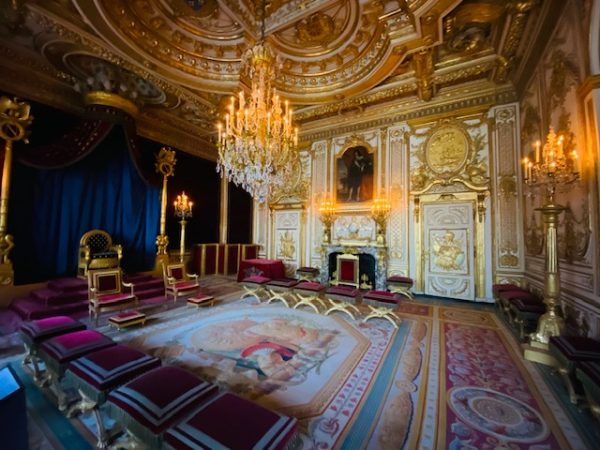
In his “Propositions on Happiness”, the French philosopher Émile-Auguste Chartie, called in short Alain (1925), takes issue with the strange predilection for war. In his proposition XLII Agir, he writes on war: “Je crois assez fort que ce qui plaît dans la guerre c’est qu’on la fait”. In later paragraph   XLVII on Aristotle, he takes up his recurrent concern to explain happiness with the importance of agency in one’s own life and actions. “Faire et non pas subir, tel est le fond de l’agréable“. In taking both quotes together, we understand that for Alain the reason for war consists primarily in the desire to demonstrate agency. In order words, the position of power, of being in charge, being in control of the political situation are the prime reasons to go to war. With the first quote stemming from 1911 Alain had already a sound understanding of what would happen decades later in the 1st and 2nd World War. Even Putin‘s war in Ukraine is probably a cynic demonstration of agency in a seemingly otherwise rather paralyzed country. With this in mind, Putin‘s wars in the 21st century appear as another chapter in the endless pursuit of cynic reasoning. (Sloterdijk, 1983). (Image: Throne Room at Fontainebleau since 17th century). 
Weaponized Interdependence

The shift in the international political system is clearly expressed in the contribution by Henry Farrell and Abraham Newman in “Foreign Affairs” (2025 (Nr. 5) p.25). “… governments must navigate a terrain with many more players, figuring out how to redirect private-sector supply chains in directions that do not hurt themselves while anticipating the responses of a multitude of governmental and nongovernmental actors.”
As the number of bigger global players increases, the complexity to identify best strategies increases as well. Going it alone is only second best to coordinated actions. New matches of interests may result in the medium term. This could entail enormous long term realignments.
Russia attempted to play the China, and subsequently the India, card to achieve new strategic partnerships in this multipolar world. Other international players test new forms of alliances and strategies (like hybrid wars) in this period of weaponized interdependence as well.
The weaponization of such interdependencies puts critical limits to the basic economic rationale and a world building on comparative advantages together with trade, rather than going it all alone or try the coercive way of exploiting dependencies of mineral resources, supply chains, computing power and AI.
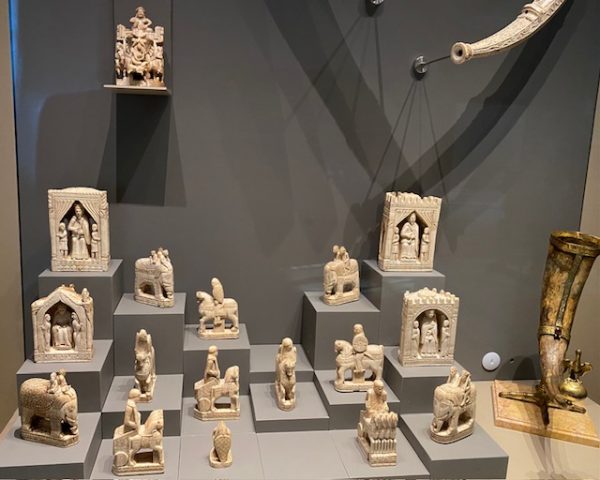
(Image: Chess figures attributed to Charlemagne, dating from 1080-1100 ” BNF Galerie Mazarin 2025-10)

Fighting the Beast

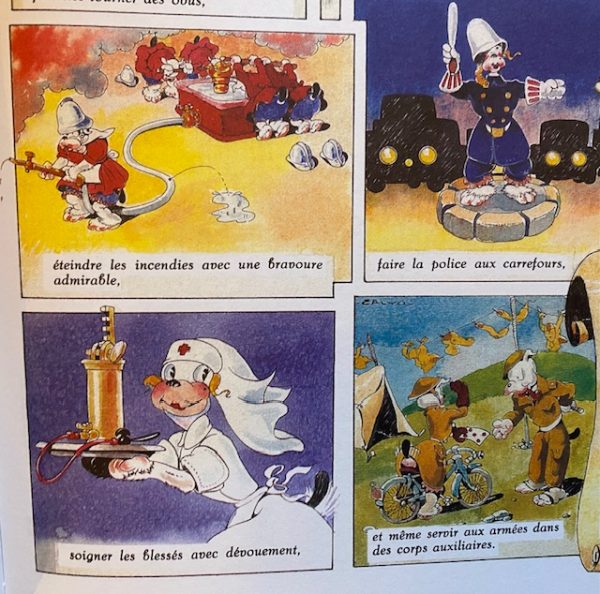
The earliest post 2nd WW cartoon stems from Calvo in France, published in its first edition in 1945. After the first part entitled “When the beast became unchained”, the second part could report on the happy ending “When the beast was overturned”. Amongst the admirable comprehensiveness to talk about the preparation of war, the battles and atrocities committed by the wolves, the allied forces of animals gained the upper hand. The role of women in the fight against the beast takes almost a whole page in the historically precise narrative of the 2 WW. With a fine sense of necessary historical detail, the reporting of British women (the female dogs in the cartoon) as essential part in the war effort to win the war against the beast(s). Women exercised professions were not previously allowed to enter. Gender awareness as early as the mid 1940s was rather advanced at the time.
Great topics to talk about with your children or grand-children.

Photographe engagée

Marie-Laure de Decker is featured in the “Musée européenne de la photographie” (MEP) as a photographer committed to capture truth in situations of conflict. She started her career with documentary photos from the Vietnam war. Rather than searching for spectacular scenes, she succeeded in her attempt to capture the more emotional and, therefore, relatable moments for her various audiences. With a firm commitment to the human in her work, the photos by Marie-Laure de Decker reach a level of extraordinary sensitivity to what it means to stay human in violent situations and even military conflict. The portraits of politicians, workers, professions and famous actors applied the same approach. Rather than days or weeks Marie-Laure de Decker spent months or years in the regions of her documentary photo series ranging from Vietnam, South Africa throughout the apartheid regime, Pinochet years of dictatorship in Chile, the 2 parts of Yemen to a prolonged stay in Chad.

The exhibition in the MEP in Paris curated by Victoria Aresheva  raises awareness to the additional fact that photo journalism became an affordable profession only after specialized agencies were created that granted authorship rights to photographers, which ensured later use of their work in edited volumes as well as working for several newspapers or magazines. (Image: Marie-Laure de Decker, self-portraits, MEP Paris exhibits 2025-8). 

Korean Epilogue

The exhibition on the Korean Provisional Government closed with a stimulating epilogue. The call on visitors to spread the message of peace resembles religious practices. The long struggle for Korean independence and freedom for the people in South Korea leaves them wishing the same for all Korean people and beyond 75 years after the beginnings of the Korean War. From a German and Eastern European perspective this unaccomplished wish resonates a lot. The small stickers with messages from visitors propose short thought pieces like “South and North Korea shall be together” and “Peace starts with inner peace”. The wisdom in these statements lies in not giving up on ideals, however distant they may appear. There is always the possibility of small steps ahead.

Preventive War

The term “Preventive War” is staging a revival in international politics. The recall of the famous quote “war is the continuation of politics with other means” from Clausewitz encompasses the idea of a pre-emptive strike and entering into war to avoid an enemy to grow too powerful at a later stage. In the age of weapons of mass destruction and the non-proliferation of nuclear weapons, an intervention to limit the spread of nuclear weapons has taken the form of a preventive war. The international community has been quite unsuccessful to limit the spread of nuclear weapons so far. Research shows that democracies are less likely to go to war than authoritarian regimes and dictatorships.
The preventive war strategy (Levy, 2008), however, is a means for democracies to defend their survival against the spreading and warmongering of authoritarian regimes. However, preventive war, by definition, is a war. The preventive aspects derives from the logic to avoid a much more devastating later war. There is a longitudinal assessment at the base of the calculation to enter now into a preventive war, rather than later into a more difficult defence. In anticipation of the defense, a pre-emptive strike is undertaken. In international politics the lack of a “policing of treaties and international agreements” has initiated the return of the neoclassical concept of national interest as a guiding principle for nation states. A continued threat to the survival of a state, Israel as an example, by the Iranian dictatorship makes the application of a preventive war strategy more likely.
Historically, democracies have applied such military strategies as a continuation of politics and diplomacy with other means. In this sense the 21st century is apparently no different from previous centuries. The revival of “Realpolitik” has been spurred by Putin and his war on Ukraine territory since 2014. How and when to return to the negotiation table is the litmus test of the preventive war strategy.
(Image: Paris, Hotel de la Marine, Le salon diplomatique 2025).

Archers destroyed

In the attempt to explain modern warfare to people, the Roman and medieval languages are staging a comeback. The archers have found their way from warfare into art history and back again. George Barros explains recent defensive actions by Ukrainian military forces as the strategy to put the archers out of power rather than the arches.
Destroyed or unfit air planes can no longer launch missiles or bombs. The Russian reserves are, however, fairly numerous, but the air strikes on the modern archers have demonstrated an astonishing military intelligence on the Ukrainian side. The technological advances of the Ukrainian military services may shift the balance or raise the costs of war to Russia, considerably.

Draft Lottery

For decades the “intergenerational effects of the Vietnam draft on risky behaviors” has been overlooked. Deza and Mezza (2025) identified several changes in parenting styles (PS) due to existence of a draft lottery. PS like uninvolved, permissive, authoritarian become more frequent. Similarly, risky behaviors of their children like smoking, drinking and drug abuse tend to increase. According to this new evidence on an old strategy to recruit military personnel the effects are not only directly on the persons drafted, but have lasting consequences onthe next generation as well. This increased overall the burden of going as well as preparing for war in the societies concerned. In view of the Russian aggression on Ukraine territory the consequences for both countries are considerable and shall be transmitted to future generations as well. Even neighboring countries fear and feel the heat of recruitment for armed conflict.


Killing fields

According to “Le Monde” dated 2025-5-26 the persons who died in the war initiated by Putin amount after 3 years to 250.000. The numb of injured soldiers would be 3-4 times as high. The loss of lives and tarnished life expectancy of persons involved in combat adds up to a huge loss for the Russian people. Being misled by political and military leaders, apparently substantial numbers of recruits for all sorts of services face the choice between the combat field or desertation. Tough choices which remind us of the moral conflict raised already during peace times if you were refusing to join the compulsory military service. Western people are better prepared for such moral dilemmas than the glorification of war in the Russian society. Of course, certainly in Germany we are thankful for the hardships the Russian army and people had to endure during the 2WW. Liberation Day would not have happened without the Soviets, Russia and Ukraine plus many other nations fighting until Nazi- Germany surrendered. The positional battles of the Great War seem to be back again enhanced with a war of drones. The killing fields for a generation of Russian troops is completely self inflicted. How many thousands Putin needs to acknowledge this cruelty? (Image exhibition by Yoko Ono Berlin Gropiusbau 2025-5).

Dream together

„Dream together“ is the title of the exhibition of Yoko Ono at the „Neue Nationalgalerie“ in Berlin 2025. The title is an invitation or even an incitement to dream jointly with others. We need to dream of peace on all sides or parties in a war. Start with the dream and then move on to working together on it. The participatory art projects of Yoko Ono are a recurring event in Berlin and at the Neue Nationalgalerie (Cut piece). The installation „Wish Tree for Berlin“ in front of the gallery is popular with visitors who leave hundreds of written wishes to the windy spring days. Origami folding, stone assembling or a simultaneous chessboard playing with all white pieces and fields encourage to imagine a world differently, beyond the treaded belligerent paths. For more inspiration and imagination just continue to the Martin Gropiusbau for more artworks from Ono or just watch the clouds pass by changing the lighting of the olive tree carrying lots of wishes.