There are multiple ways to link citizens to gardens. Most people would link citizens to the property of their own garden. This is more the perspective of people from the countryside. The aim of citizens who can afford it have a garden, many others wish to have one and all of them enjoy public garden spaces. An intermediate version of the public versus private property of citizens’ garden is the joint ownership of groups of like-minded people to work together in the shared property or rented garden space. The recreational and health effects are well documented, if care is exercised with utensils etc. Spring is the ideal time to join projects again as the results of a little bit of gardening will be visible and enjoyable for several months afterwards. Gardens are also meeting points for people of all walks of life as in the vicinity of the European Parliament in Brussels. The Citizens’ Garden has a different function to people gardening there. When you puzzled about Europe after a visit to the Parliament or the Museum of the History of Europe, then it is time for a stroll and relax in the garden nearby.
Alternatively, the Exhibition Centre of Tour & Taxis in Brussels not too far away from the North train station has an impressive indoor garden for the times of rough weather conditions. At the time of the book fair culture in the indoor garden made a splendid combination. There is a green version of Europe. It is like a small plant. It needs a lot of time and care to grow. 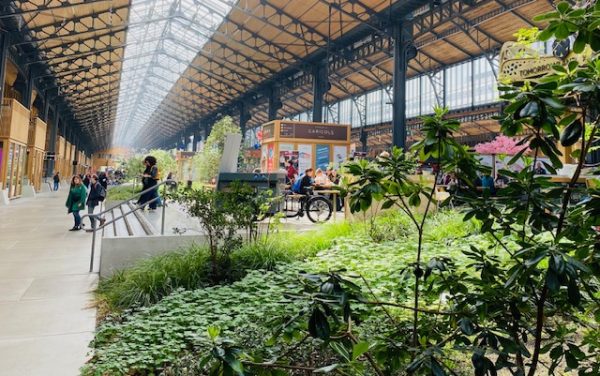
Forest Management
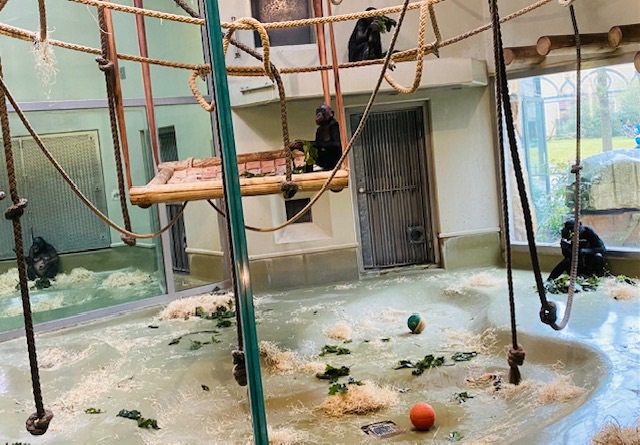
Responsible forest management is key. To safeguard against the loss of biodiversity the management of forests can achieve a great deal as the study in Nature of 2024-4-10 has demonstrated. Reducing hunting by humans in dense tropical forests allows bigger species to survive and thrive compared to forests with easy access by roads. FSC certification of forests helps significantly to protect wildlife. The ability to ameliorate biodiversity of forests is assisted by the Forest Stewardship Council (FSC) through the responsible management, preservation and limitation of access to wild forests. This is an important message that in fact it is still possible to preserve wildlife also of larger species if we only really commit to the cause. It is well worth to support such initiatives and monitor the progress. Of course, any such success attracts new hunters and a continuation of the FSC efforts is needed for the benefit of the whole biodiversity on our planet as there is no planet B.
Series Evaluation
The monitoring of TV series is a serious science. The evaluation of so-called binch viewing has redrawn attention to the field of media studies again. We observe a bit across Europe, following the US experience, the change of TV productions into series that may run over several years. The successful format of a TV series draws advertising to the relatively constant audience. Most series have a particular age group as their target group. Viewing behavior determines time slots allocated. Each group has its own prime time. The publisher of books had their successes with similar series of for example children’s picture books or cartoons. Asterix, Martine and similar book series have basically applied the same “serial” mechanism before. Popular success creates its own dynamics. Therefore the evaluation of such serial productions should stay on our research agenda of the social sciences as well.
In a radio discussion “France Culture” has juxtaposed the 2 currents of series evaluation in a concise way. One current of assessment holds the view that rather than high versus low culture, the debate should take popular culture seriously. It augments the set of experiences as the characters in a TV series live through a kind of “experimental setting” each time anew. The variety of experiences is catching popular attention as they are beyond the scope of the spectator’s usual life settings and thereby a learning opportunity. This highlights the value of the content in the evaluation. This requires a thorough scrutiny of that content to evaluate an emancipatory value of viewing it (Sandra Lauglier, 2023).
An opposing view is defended by Bertrand Cochard (2024) with reference to the conflict about one’ use of free time available to us and how we spend it. His criticism takes issue with the amount of time “lost” by viewers of series. Time is not spent twice. The loss of time alone or side by side rather than spending it with other persons or physically active constitutes a major risk to the social fabric of society.The jury is still out on the issue. We likely see the start of a series of entries on this topic as well.
Heroines
In youth we are open for a wide range of influences. Heroines in children’s literature, picture book or cartoons look back on a long history as successful influencers. Creation, transmission and criticism of stereotypes are all part of the scientific reflection on heroines and heros. Nowadays, influencers have taken over picture books through the use of more compelling videos.
In the 1950s,1960s and 1970s picture books or cartoons dominated the influences before mass media like television became more absorbing, addictive and powerful influencers. Children’s books are passed on from one generation to next generation. The French-speaking world (and beyond BBC reference) has witnessed the success of the illustrated booklets of the young “Caroline” (Hachette) and “Martine” (Casterman) exploring the world. Parents passed on their collection to children and had their own parents read the stories to their grand children.
Well, that’s how intergenerational transmission of cultural heritage has worked for a long time. It describes the basic social mechanism. Nevertheless, new forms of influencing emerged with new technologies. Successful illustrated narratives like “Caroline” and “Martine“ were adapted as television series as well. In France you could chose your side of either explorations with Caroline and her group of animals or the adventures of Martine.
Ideally it would be an occasion for the families and friends to discuss pros and cons of each character and, thereby, become aware of what is a stereotype, at least at a later stage of the life course. Gender stereotypes have evolved and to observe 2 boys colouring Martine images in public (Brussels book fair 2024, image below) was a positive surprise. It almost felt like a real world experience of the AI-enabled Barbie explorations. 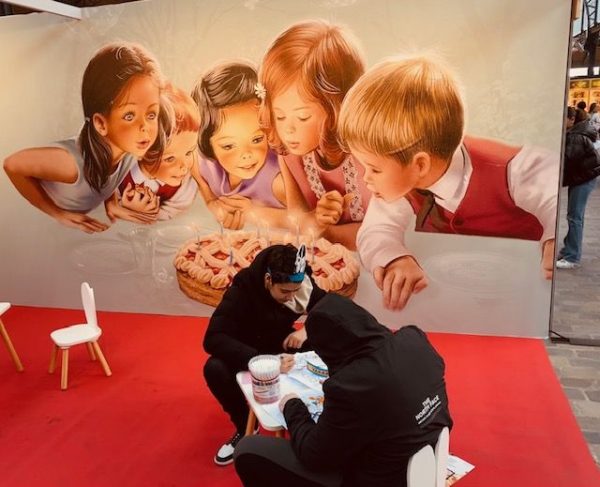
Surrealist 100
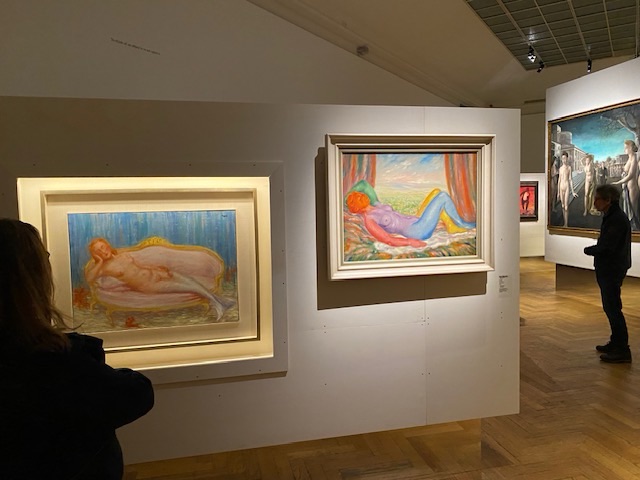
Belgium celebrates 100 years of surrealism with a special exhibition in Brussels at Bozar in 2024. The arts movement has much more to offer than just paintings from Magritte. Many other painters and intellectuals that were instrumental to create and perpetuate the movement are represented there. The French philosopher Breton as spiritus rector of the movement contributed innovative ideas and challenged the artists to do further and further on their journey to explore freedom of expression and freedom of association. The exhibition is centered around the surrealist idea to explore the association of words and images. This time the words are on the walls of the rooms and the images put up in the rooms as kind of obstacles on your journey. Keep challenging, keep questioning the sense of things and our imagination. The journey goes on and there are many artists who are still influenced by surrealism, for example Folon. The texts and images take you along on the journey into the surrealists’ world. If you want to challenge your own way to see things and the associative world, this is the place or catalog to refer to.
AI and PS
AI like in ChatGPT is guided by so-called prompts. After the entry of “what is AI” the machine returns a definition of itself. If you continue the chat with ChatGPT and enter: “Is it useful for public services” (PS), you receive an opinion of AI on its own usefulness (of course positive) and some examples in which AI in the public services have a good potential to improve the state of affairs. 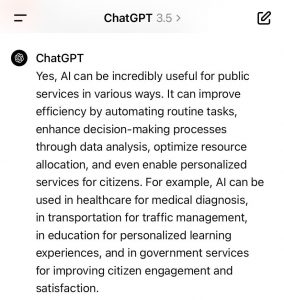 The AI ChatGPT is advocating AI for the PS for mainly 4 reasons: (1) efficiency purposes; (2) personalisation of services; (3) citizen engagement; (4) citizen satisfaction. (See image below). The perspective of employees of the public services is not really part of the answer by ChatGPT. This is a more ambiguous part of the answer and would probably need more space and additional explicit prompts to solicit an explicit answer on the issue. With all the know issues of concern of AI like gender bias or biased data as input, the introduction of AI in public services has to be accompanied by a thorough monitoring process. The legal limits to applications of AI are more severe in public services as the production of official documents is subject to additional security concerns.
This does certainly not preclude the use of AI in PS, but it requires more ample and rigorous testing of AI-applications in the PS. Such testing frameworks are still in development even in informatics as the sources of bias a manifold and sometimes tricky to detect even for experts in the field. Prior training with specific data sets (for example of thousands of possible prompts) has to be performed or sets of images for testing adapted to avoid bias. The task is big, but step by step building and testing promise useful results. It remains a challenge to find the right balance between the risks and the potentials of AI in PS.
L’Albatros
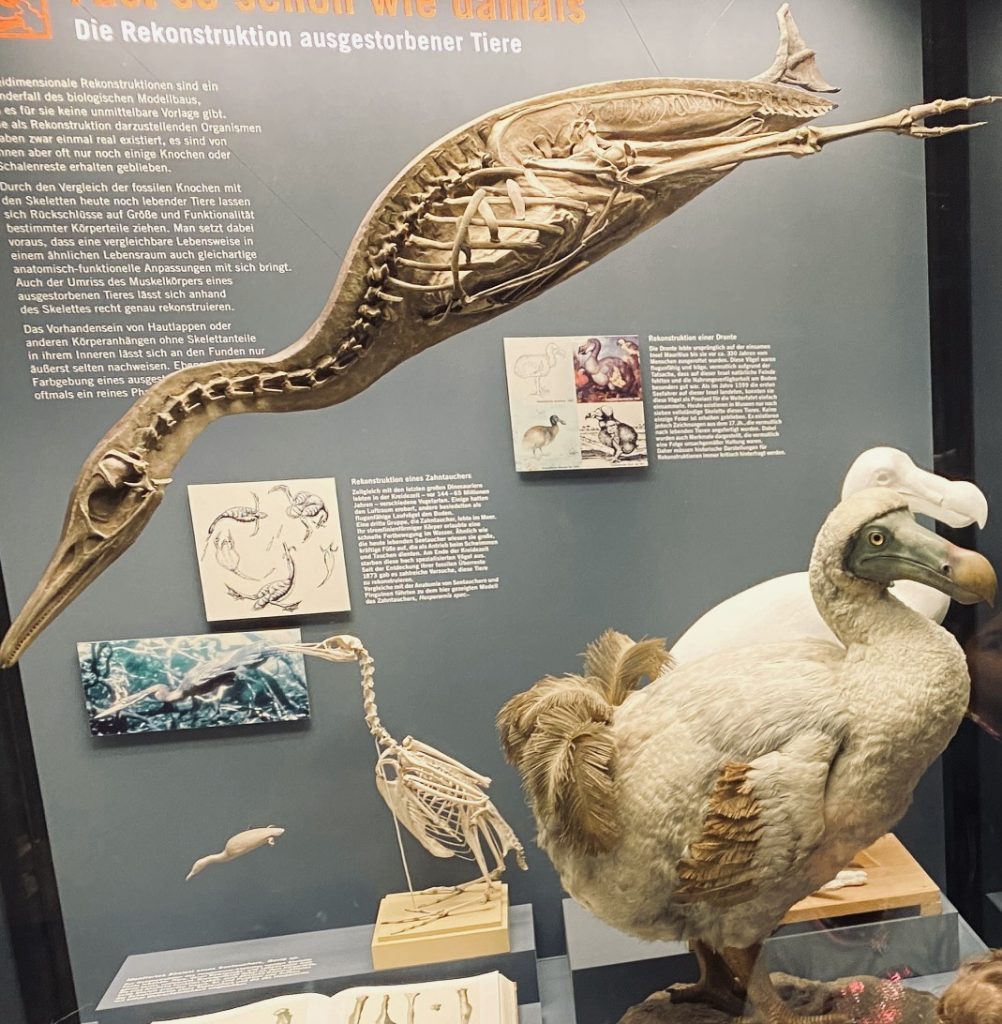
Charles Baudelaire has immortalized the albatross in his poem entitled “L’Albatros”. For me it appears like a poem about the beauty of the sea and sea life. The marvelous creatures that populate the sea and its surroundings sometimes seem strange to us. The albatross with its large wings unable to move properly on earth is one of these special animals. They are threatened by human beings in their very survival up to extinction even. A dedicated website to “Les fleurs du mal” with multiple English translations of the same poem may give us the impression that all those who translated the poem wanted to feel this little moment of sublimation like a poet just forgetting for a little while the weight of our earthly existence. The gospel tells us a similar story of life up in the air. It must be so much better to be free and not to be bound to restrictions of gravity. As gods would prefer to stay away from earth just somewhere up in space. The albatross and the sea keep teaching us lessons beyond their physical appearance. (Image bird “dodo” now extinct, model in Berlin Natural History Museum 2024)
Russian Angst
The title of a book “Russian Angst” by Thomas Franke summarizes the state of Russian society under Putin. It dates back to 2017, but the underlying process of Angst in the Russian society is increasing rather than diminishing due to the already 2 years long intensive hot war of Russia against Ukraine. The Russian Angst is a fear of a continued roll back of its authoritarian rule in Eastern parts of the world and its internal threat that its own people will claim more rights like freedom of speech, freedom of the press and effective democratic voting rights. In a dictatorship the “Angst” is a pervasive phenomenon which creeps into all spheres of live. Franke and Dornblüth (2023) describe the toxic society in Russia. Intoxication and torture of opponents are used by the Putin regime as a threat to suppress critical voices in Russia. Through this a climate of “Angst” is spread so that any internal opposition has to face very high risks to utter any discontent. The experience of a barbarian, totalitarian regime is well known. The threat to life and the presence of intimidation to any disobedient behaviour are strictly persecuted. Nevertheless, the need to think beyond the Putin regime is well under way. The more external and internal, real or imagined threats are countered with brutal force, the more the regime reveals its true kind of governance by force. This invites and leads to the strengthening of counter forces both internally and externally. It seems like box fight in the before last round of a very vulnerable, weakened and isolated boxer. Not many will bet on the likely loser and more countries who previously supported Putin will stop their erroneous policy. Russian Angst and loneliness will further increase. 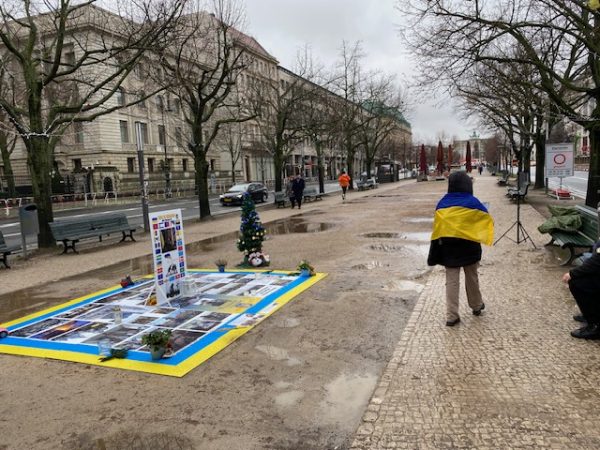
Sandbox Games
Children from a very early age onwards play strategic games. Even in the sandbox we can learn from surprising talents of how to get the shovel from the other player(s). Having grown up a bit the repertoire of strategies becomes a bit more sophisticated, but most children tend to apply the same ones now and then. For example, to obtain one of the always scarce places on the swing or the balance, you may reach your goal in attracting the occupant(s) to a supposed even more exciting object on the playground or outside of it. Once the occupants leave the swing to join you somewhere else, you rush back to the swing and hope that the other child(ren)/parents are not more powerful to take back the swing. Strategies on the playground are abundant. Most children run, or get run, through the full set of tricky strategies during their youth. If you still want to learn more, study economics (typical economist’s joke). Alternatively, if you like strategies claiming that other children are not following the rules or want to know how best to fix the rules so you’re going to win anyway, study law (lawyer’s jokes). If you believe fairness is your real best argument study sociology, philosophy or theology. Make sure most other people in the playground have a similar set of strategies otherwise fists and tears will be gaining the upper hand. 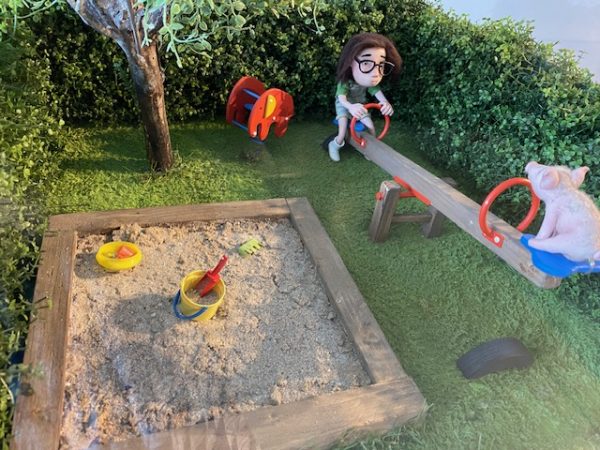
Zoo Visit
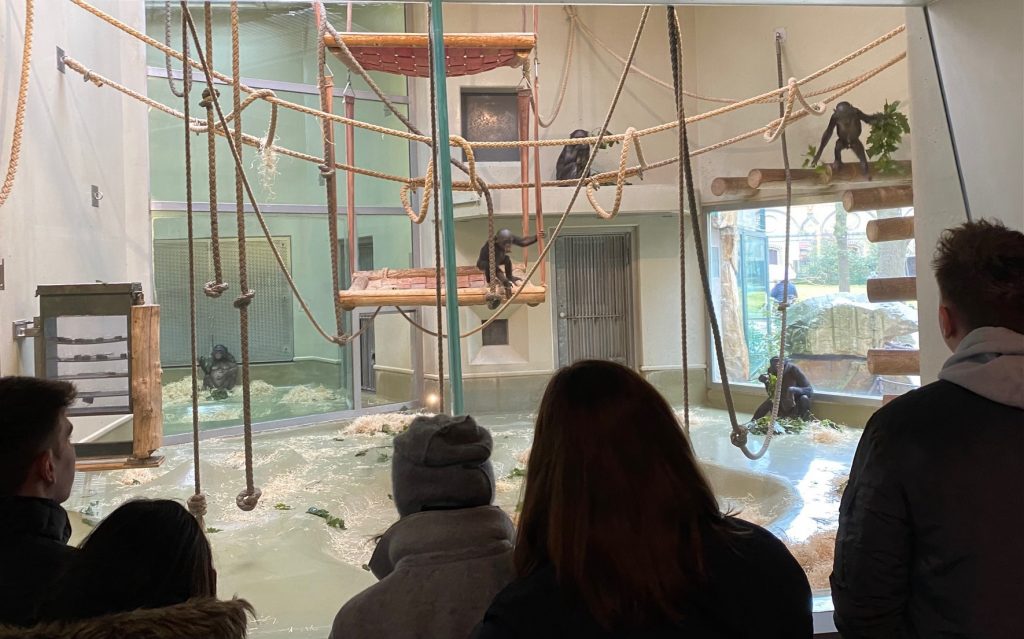
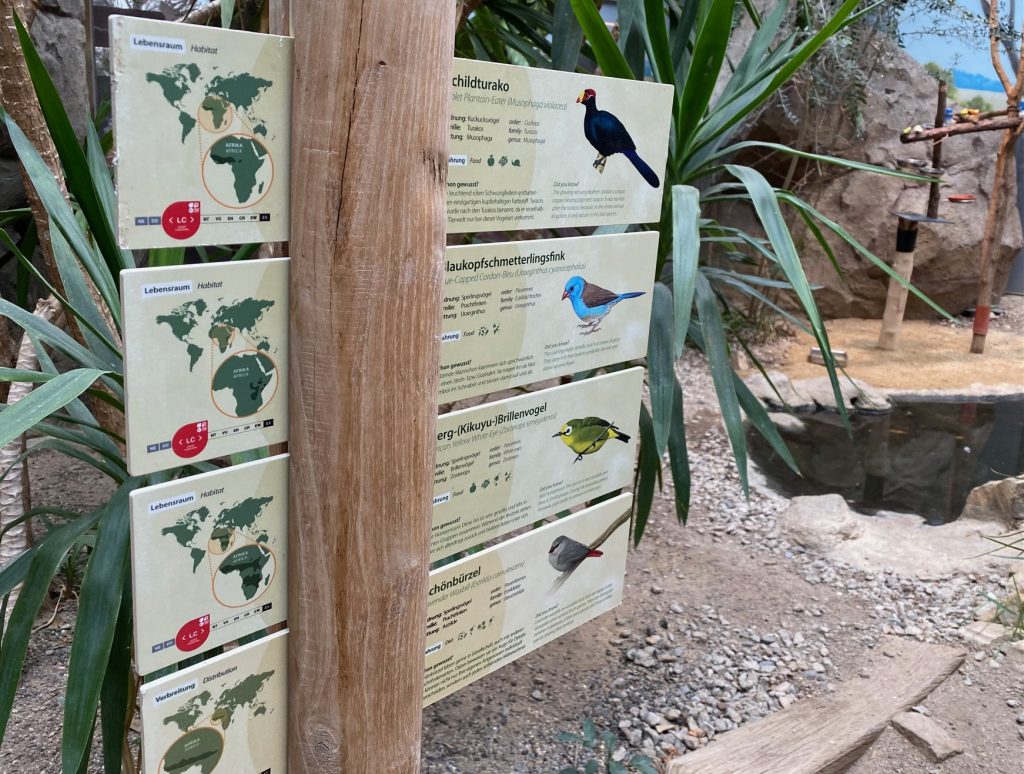
The visit of a zoo is always a great event. Accordingly the prices of a visit have reached levels that are beyond prices for a cinema entry. Usually a whole day is spent with high emotions watching animals sleeping, walking or eating. Sometimes we can watch a training session or a brief medical intervention. Learning about the beauty of biodiversity is important because we treasure more what we like. Looking into the eyes of an animal stimulates affection. Gathering support for the preservation of ecosystems was and still is a great effort. And yet, we have to move beyond preservation to the restoration of ecosystems like in the UNDP projects (Link). Animal parks can contribute to this if we encourage such cooperation and co-financing. The awareness, understanding and willingness to engage in restoration projects is largely increased after the visit of a zoo. A second round effect is the potential to reduce international travel to destinations with rich animal diversity. Restoration is a win-win situation for wildlife habitat and our planet as a whole.