
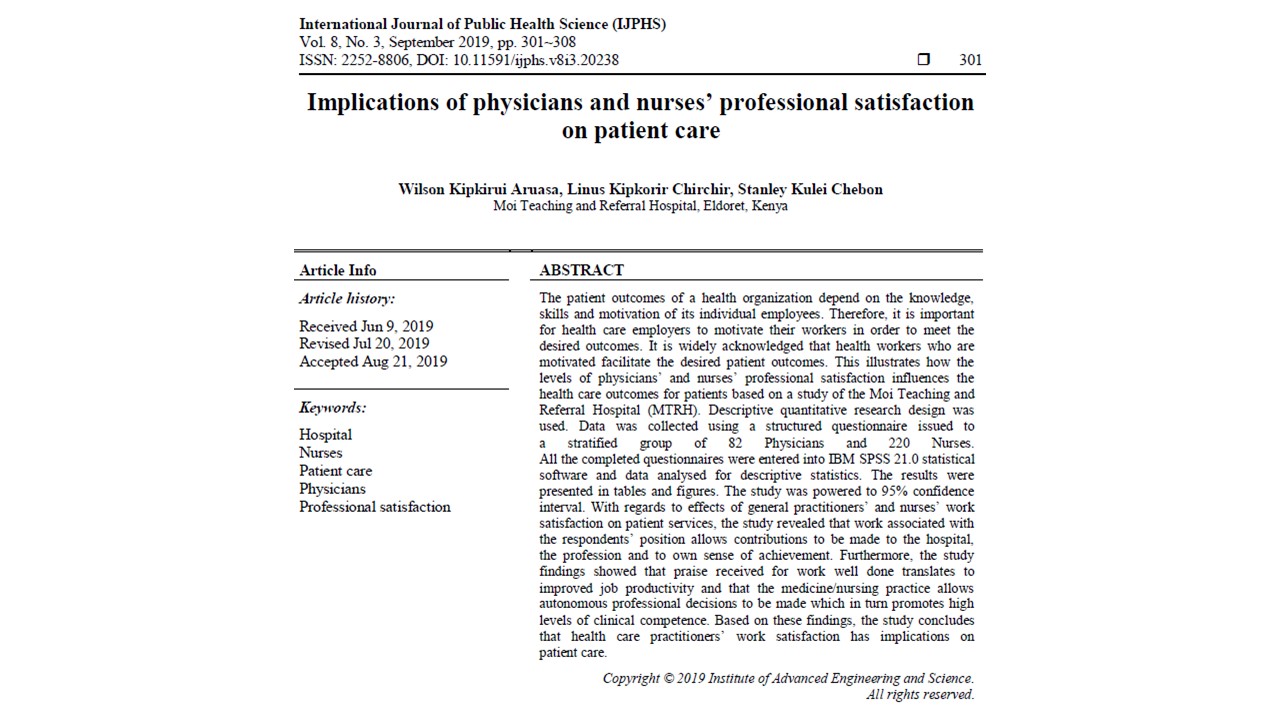
Whenever you have to go to a hospital, briefly estimate the happiness or job satisfaction of the person working there. This seems to be a good indicator of the probability that they perform, or are willing to perform, a good job. After all the staff is not all “superhumans”. Previous work on job satisfaction in the EU and Canadian nurses already indicates what a small inquiry into job satisfaction in a hospital in Keny revealed. Current dissatisfaction levels among hospital staff is unlikely to have no effects at all, but we do not even dare to collect appropriate data. In a previous study we used “nested” data collection team-leader and employees in the team to analyse such effects on varius team-climate parameters. Appropriate multi-level modelling of the data can yield trustworthy results. Would be nice to proceed with such a study across Europe. Outcomes measures such as medium patient satisfaction might be optimal to measure additionally. Well, just dreaming again about what kind of data we would need to roughly estimate how much more resources are needed in the health sector.
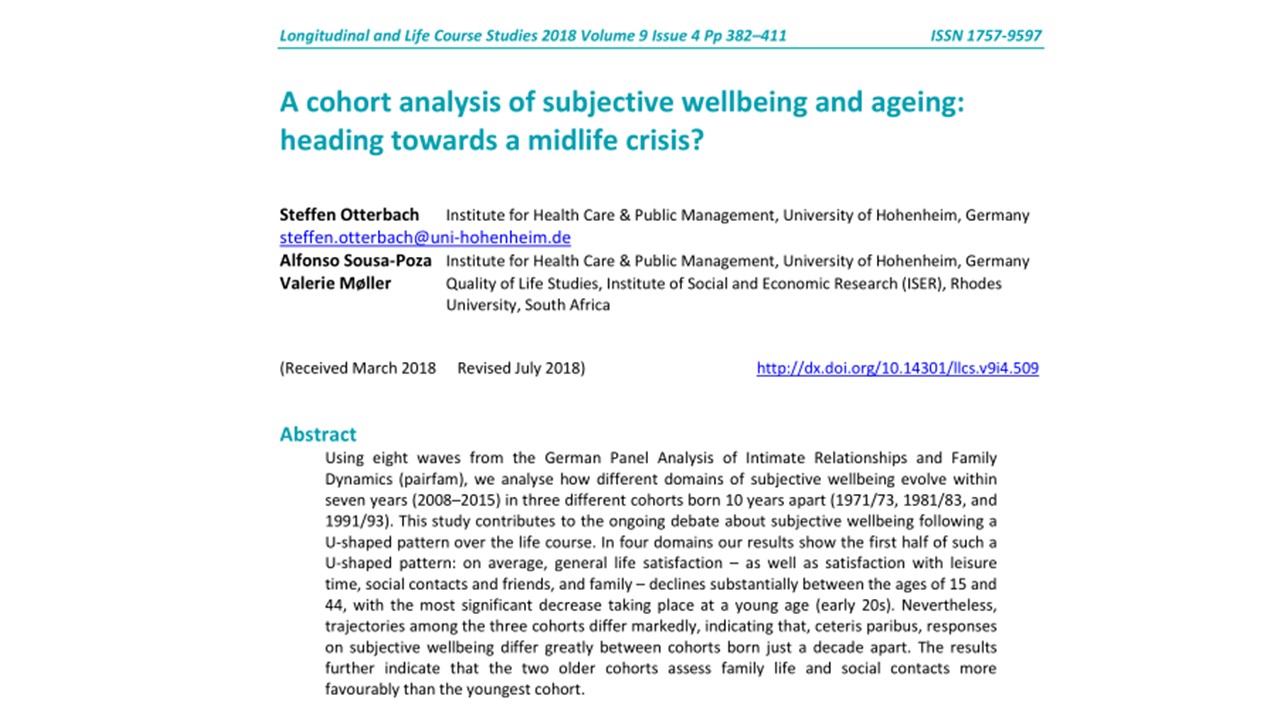
Who can’t get no satisfaction?
Life satisfaction, job satisfaction and satisfaction with family life and/or leisure continue to be a passionate research issue (Steffen Otterbach, Alfonso Sousa-Poza, Valerie Møller, 2019). Nice to find that most of my own research in this area is still coroborated with different cohort data recently. The good message is that former findings seem still to be valid. The bad message is that in young ages between 15 and 44 most of the satisfaction levels keep getting worse before they start to get better (mostly only after 45). Marriage has mixed effects, but having children is good for family life, but bad for your satisfaction with leisure time. Nothing really new here, you might have guessed it.
Would be nice to know more about regional or rural/urban differences of satisfaction as well as what might be consequences of satisfaction/dissatisfaction in the short or medium-term. But I am satisfied with the interim findings already presented.
Follow the link if interested in more. LINK
Die Rückkehr der Ungleichheit
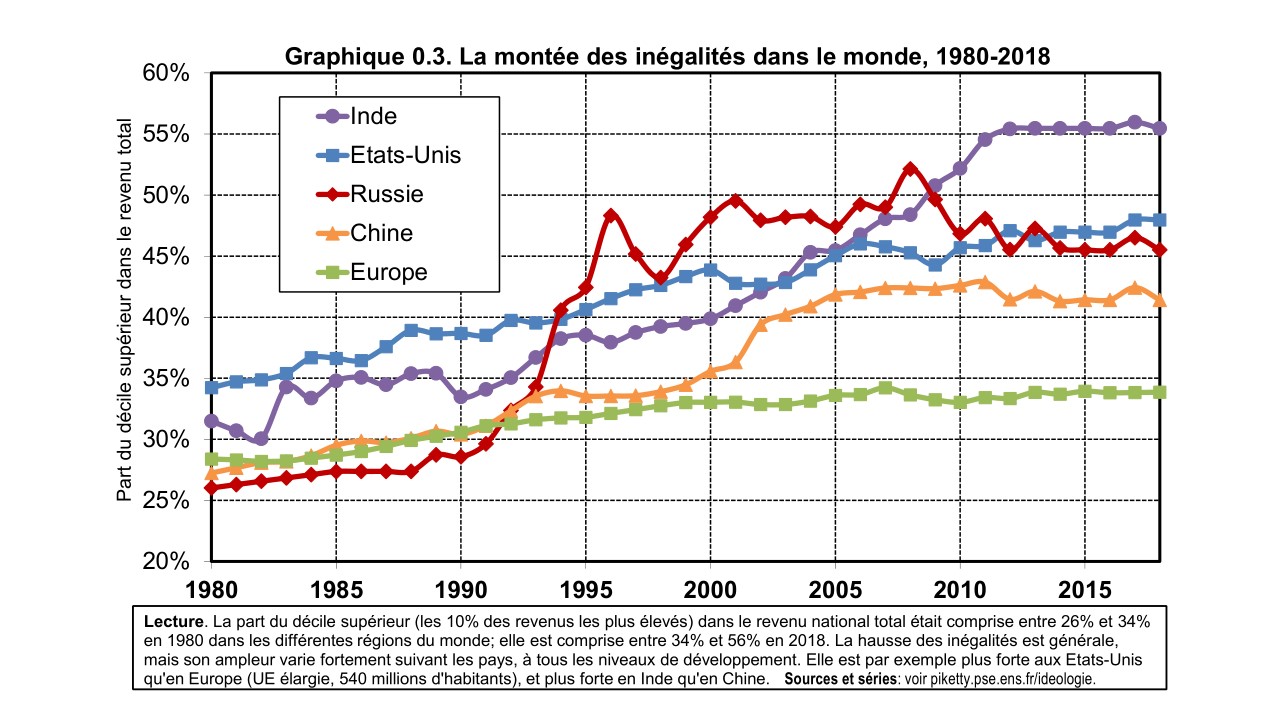
Thomas Piketty ist ein weiteres epochales Werk gelungen. Die französische Ausgabe seines Buches: “Capital et idéologie”, erschien im September 2019 (Éditions du Seuil) und umfasst 1200 Seiten. Die Fortsetzung von “Capital au XXIème siècle” ermöglicht aufschlussreiche Vergleiche mit anderen Ländern und Kontinenten. Daraus entwickelt Piketty eine Sichtweise auf die ökonomischen Ungleichheiten in Gesellschaften. Eine Perspektive, die ich in die Tradition der politischen Ökonomie einordnen würde. Es ist eindrucksvoll, wie der Anstieg der ökonomischen Ungleicheit seit 1980 dargestellt wird, insbesondere Schaubild 0.3 auf Seite 37. Die Einsicht auf S.39, dass sich die Ungleichheit in 2018 gemessen mit dem Anteil der wohlhabensten 10% einer Gesellschaft am Gesamteinkommen der Gesellschaft zwischen 34% in Europa, 48% in den USA, 55% in Indien, 56% in Brasilien und 64% im Mittleren Osten liegt, erklärt vielleicht schon einige der aktuellen politischen Unruhen.
Besonders intessant wird die Lektüre beispielsweise auf S.758ff. Da wird empirisch die verzerrende Darstellung des Bruttoinlandsprodukts pro Kopf für verschiedenartig ungleiche Gesellschaften dargestellt. Piketty scheut sich nicht die “Instrumentalisierung” einer vereinfachten Darstellung des BIP pro Kopf zu kritisieren. Besonders auf S.760 streicht er die ungleichen (Grund)besitzverhältnisse heraus: “En particulier, la concentration de la propriété n’a en réalité jamais cessé de se situer à des niveaux impressionnants dans les différents pays européens. Or cette concentration patrimoniale est en progression depuis les années 1980-1990, avec à peine 5% du patrimoine privé total détenu par les 50% les plus pauvres, contre 505-60% pour les 10% les plus riches.” Als Zusammenfassung der Daten des 10. Kapitels S. 489ff mit dem Titel: “Die Krise der Gesellschaften der Eigentümer” hat sich der Wert des Eigentums, für alle erlebbar auf den Immobilien und Wohnungsmärkten, insbesondere in großen Städten geutlich zugunsten der Eigentümer entwickelt. Dieser Trend hat insbesondere die Mehrfacheigentümer und obersten 10% der Gesellschaften überproportional begünstigt.
Ungleichheit ist aber nicht unabänderlich. Vielmehr betont Piketty in seiner Schlussfolgerung (S. 1191) in Abgrenzung zum “kommunistischen Desaster” eine soziale Idee oder Sozialismus der Teilhabe und einen sozialen Föderalismus. Wichtiger Bestandteil ist ebenfalls eine Teilung der Stimmrechte und der Macht in Unternehmen mit den Beschäftigten.
Absolut lesenswert. Die englische Version kommt erst in 2020. http://piketty.pse.ens.fr/
Mobilität neu denken
Unsere Faszination für individuelle Mobilität animiert zu künstlerischer Interpretation. Ein gutes Verkaufsargument für Einräder. Eine wahre Bereicherung auf der Mobilitätsmesse in Brüssel im September 2019. Viele Ideen zum Teilen von Rädern. Leider wenig Präsenz und Neuheiten rund um geteilte, öffentliche Verkehrsmittel dort präsent. Teilen von vorhandener Infrastruktur wie Wegenetze für mehr Arten von Fortbewegung kaum ein Thema. Eine Stunde komplettes Netz in Städten nur für nicht-motorisierten Personenverkehr freigeben. Es braucht mehr Wagemut mit Vorschlägen und Experimentieren, was denn gewünscht wird. So wie es ist, folgt der Tod durch Ersticken in Metropolen eher früher als später. Video einer Performance dazu ansehen -> IMG_2948

Ethical Investment 2019
With stock markets reaching new highs as well as the price of gold at a 6 months and one year peak, this is a perfect time for investors to rethink their strategies and create a new legacy. This new legacy is both for them as well as for society as a whole. This time it might be for Europe. Socially responsible investment is more easily found in Europe as stated in an article of 17.7.2018 in the Financial Times. #FridaysForFuture activists and your own children will thank you eventually. However, guidance on relevant indicators is both sketchy and scarce especially in the traditional financial press. Good opportunity for inter-generational discussions. In the years to come. 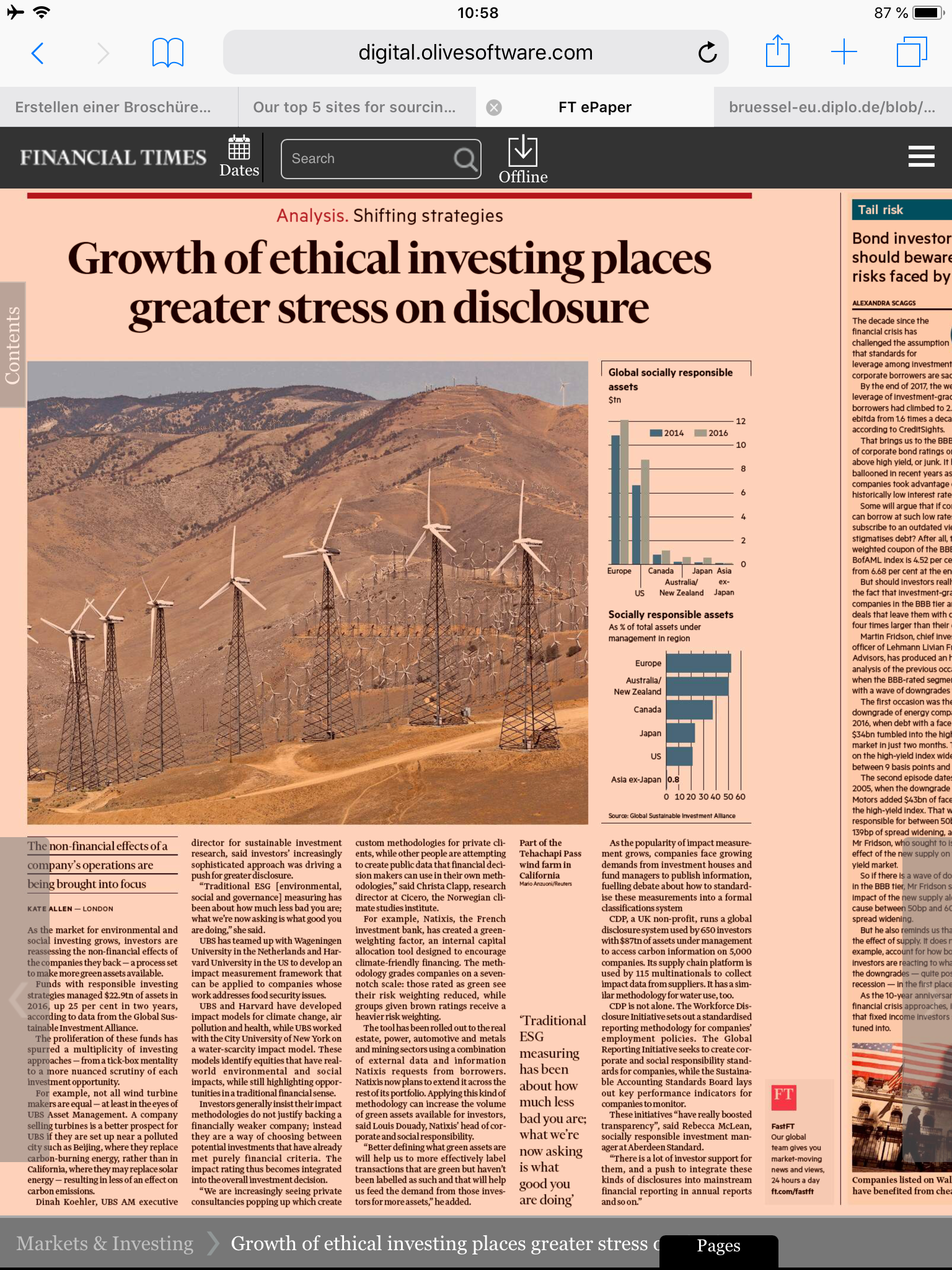
1. Mai
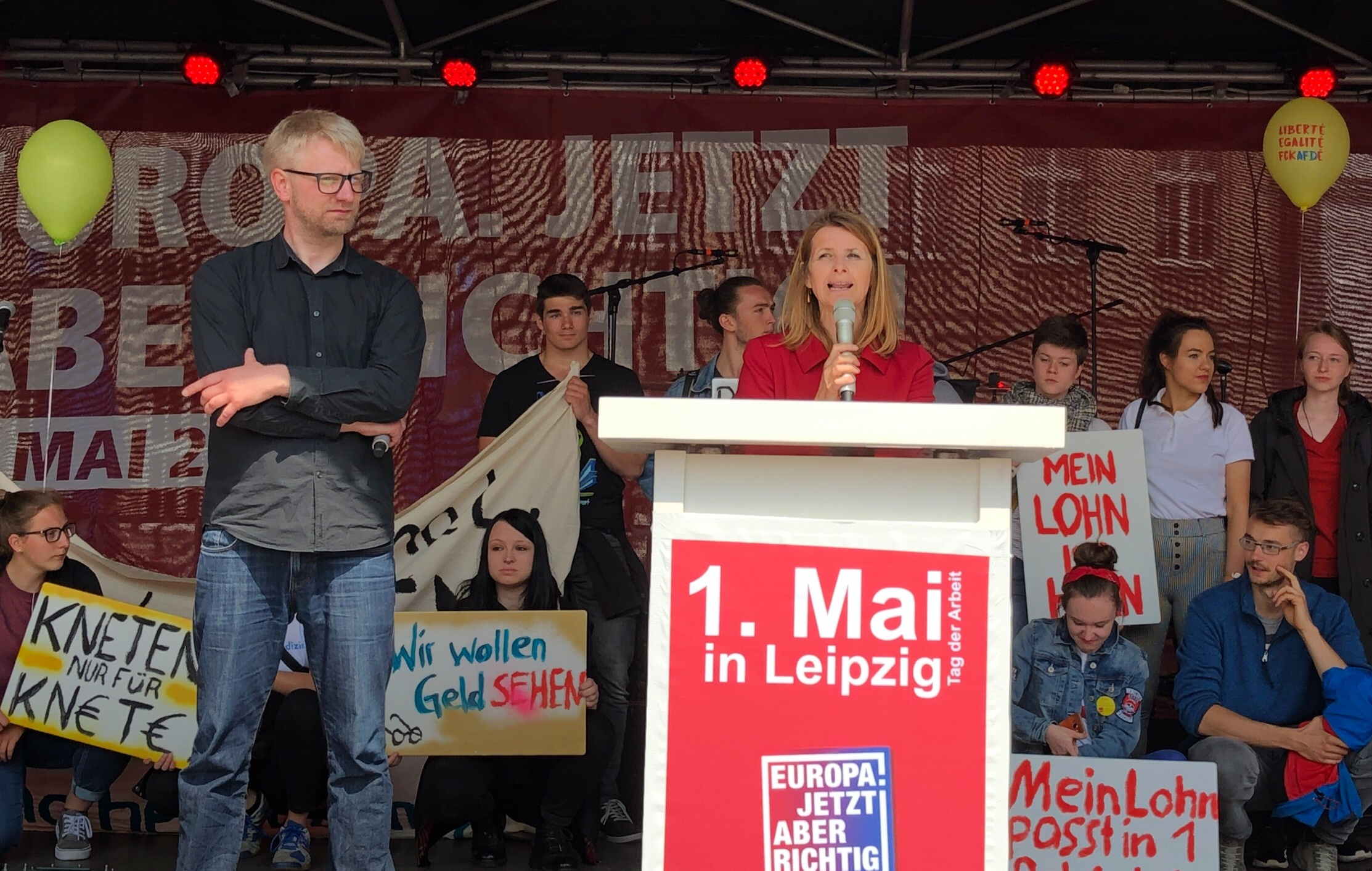
DGB hat passend zu 30 Jahre Mauerfall seine große Kundgebung in Leipzig auf die Straße gebracht. Engagierte Reden und anregende Stände von Mitgliedsgewerkschaften sorgten für ein gelungenes Event. Europa stand im Mittelpunkt. Das Medienecho war jedoch gerade mal durchschnittlich. Sobald gleichzeitig irgendwo eine extremistisches Spektakel veranstaltet wird, erregt das mehr mediale Aufmerksamkeit. So spielen die Medien das Spiel der Extremisten einfach mit. 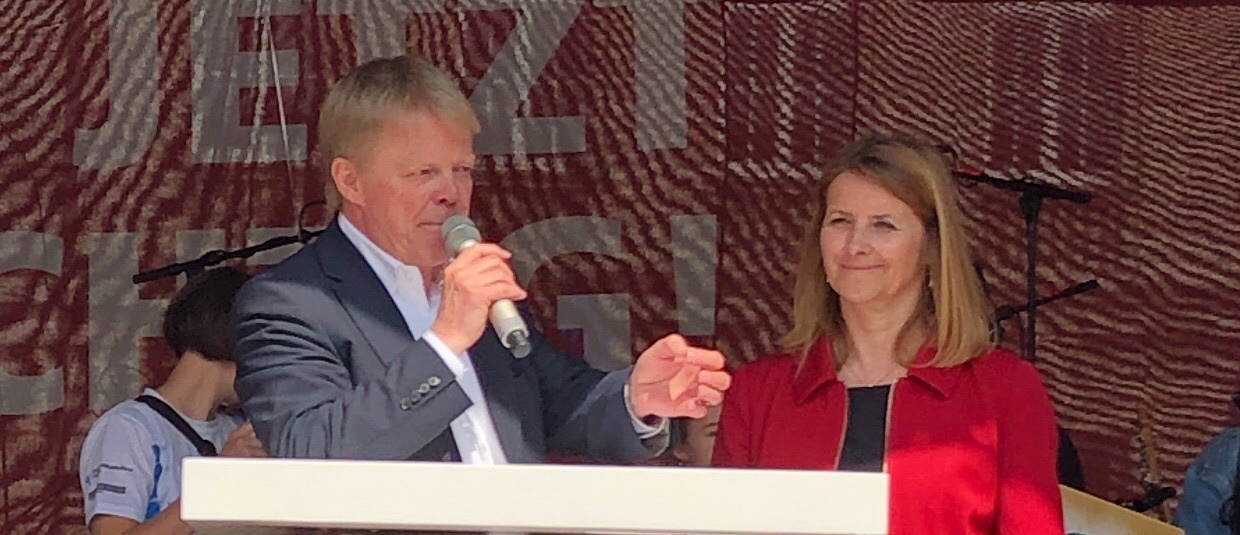
Speculation bubbles
Learning about bubbles is exciting. As kids we jump in the air to burst bubbles, as adults we are delighted to taste sparkling wine. It is easy to know that a bubble has burst (ex post). Many examples can be quoted in economic and social history on this. When bubbles burst hitting many persons this becomes an issue of political economy. Are we just behaving like “apes” with basic “animal instincts” as suggested by “Jan Bruegel d.J.”? Tulip mania is a part of European history and Bitcoin mania the most recent example of a bubble-like development of a specific market. How about creating your own currency. Here is how to do it. How to get drawn into a bubble can be physically experienced at Floralia-Brussels until 5.5.2019. You won’t look at tulips the same way afterwards.

more images here
Industrial Policy
Industrial Pioneers Summit: At the Hannover Messe on 2nd April 2019 Professor Detlef Zühlke, Executive Chairman, smartfactory-KL e.V. – Industrie 4.0 & Smart Factory talked about his baby: Industry 4.0, a word like a “cloud in the sky”. According to him the 4th industrial revolution with the smart factory, just like the smart home developments, is the current stage of development of industry. After the previous phase of the 3rd industrial revolution “automization”, which we also know from the home with our washing and coffee machines, we govern our factories and homes more and more from smart connected devices.
With artificial intelligence around the corner, the usual cooperation of users and machines or robots as standard, we need to make careful choices for the “User Interface Design” to develop it into a “User Experience Design”. Well put. The user wants green industries and products. Hence get your CO² footprint right as well.
Lots of sociology at the fair. Instead of individualization from the 80s and 90s the pioneers of industry now talk about “the segment of one” in production. It just means a specific product for each customer to make the person believe s/he is really individually served.
The nexus of global and local (glocal) politics and consumerism is adapted to production. Glocalization (definition here) in industrial strategy has a different meaning: bring your production very near the consumer or directly to customers, this also beats the mass production advantage of low wage cost countries. With big data from local customers you can tailor-make the product at the edge of your market (sneakers for example). Hannover Messe always worth a visit for sociologist, too. Greening of production not yet really a mainstream trend, but several “Leuchttürme” at places. 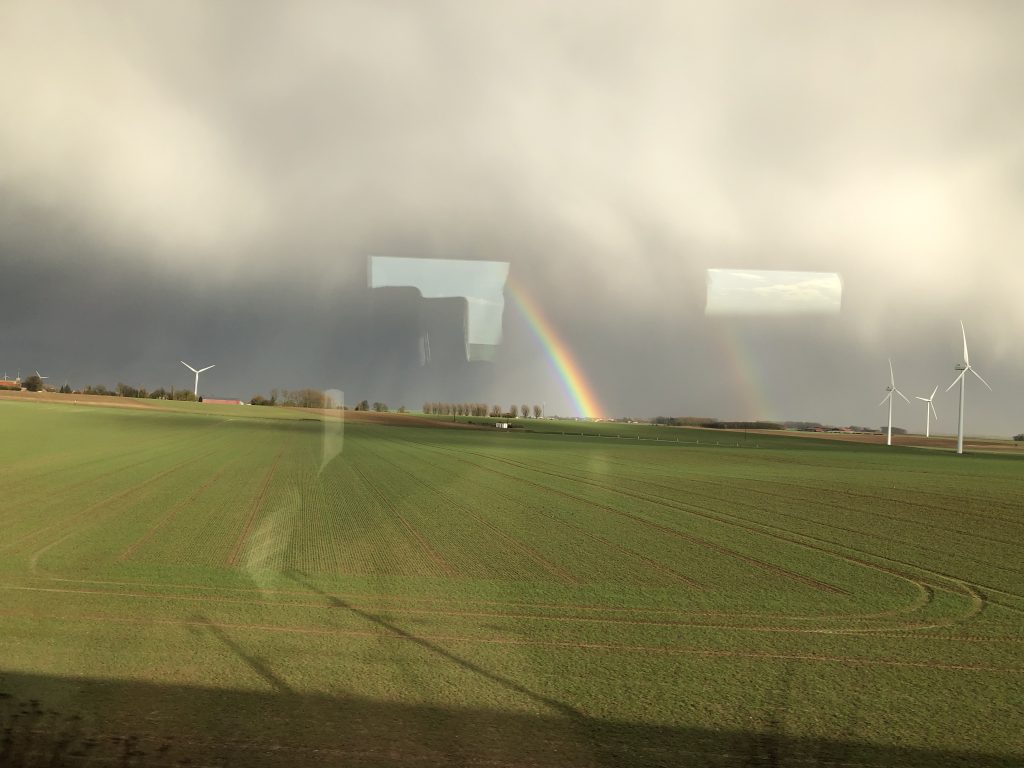
Sprachpolitik
Auf der internationalen Industriemesse in Hannover #HM19 wurde auf dem Pioneer Summit am 2.4.2019 wieder überraschend viel Deutsch gesprochen. Dem EU-Kommissar Öttinger auf Deutsch zuzuhören ist erfreulicher als auf Englisch. Der Vortrag von Klaus Helmrich, immerhin Mitglied des Vorstands der Siemens AG auf Deutsch zu folgen, ebenfalls bereichernd. Der unglückliche englischsprachige Titel “Thinking industry further!” kann man sich mit Industrie weiterdenken zurecht reimen. Genauer war dann der Untertitel: “Die nächste Stufe des Digital Enterprise”. Von “Made in Germany” sind wir längst zu “engineered in Germany” übergegangen. Aber das war Industrie 3.0. Bei der Industrie 4.x spielen vernetzte Standorte der Produktion, Entwicklung und Kunden eine zentrale Rolle. Sprachpolitik kann hierbei zu einem kleinen und bescheidenem Sicherheitsvorteil werden. Übersetzungsfehler von Längenmaßen (inch in centimeter) oder anderen Details verursachen kostspielige “Engineering Disaster” wohl auch bei AIRBUS industries aufgetreten.
Einigen Diplomaten und Journalisten zufolge wird selbst in der EU Kommission seit dem Brexit-Votum bereits mehr in anderen Muttersprachen geplaudert, zumindest in den Kaffeepausen. Willkommen in der alten, Neuen Vielfalt. Sprachen und Kulturen Verstehen lernen lohnt sich wieder. 
Bild von Victor Vasarely copyright http://www.fondationvasarely.org/ mehr Informationen zur Person https://de.wikipedia.org/wiki/Victor_Vasarely
Ausstellung noch bis 6.5.2019 im Centre Pompidou
737 Max 8 and Science
The 346 persons who died in crashes of the fairly new airplanes of Boeing 737 Max have nothing to gain from the ex-post evaluation of the crash. The journal “Scientific American” published an interview with a former Boeing employee who puts a relationship of the two crashes into doubt. The article in the online version of the 13th of March by Mrs. Gohd is full of stereotypes rather than scientific information. This puts science or science journalism into a bad light. Please read for yourself (Link here).
Let’s wait for the black box to be read! and then judge, but not wait for further casualties please. The “precautionary principle“, to protect persons from harm for example by introducing not suffienctly testes new technology, makes a lot of sense in the aviation industry. That’s why the EU might be slower in the adoption of some innovations, but is more likely to avoid fatal accidents as a consequence of hasty innovation.
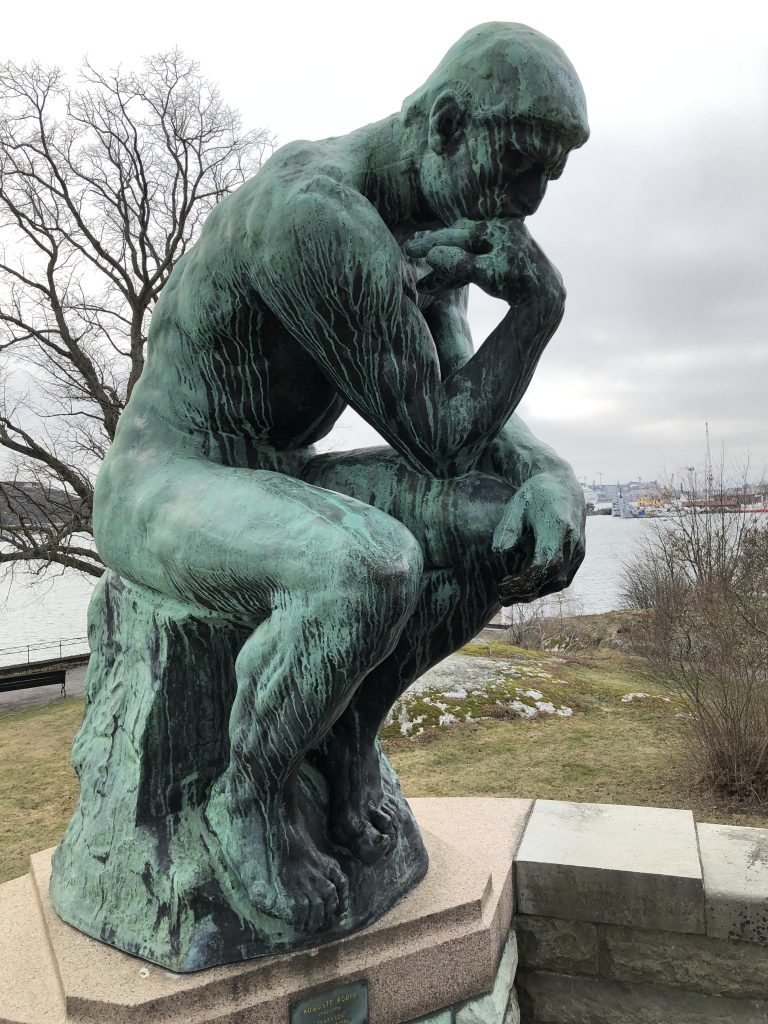
Rodin’s famous sculpture sums up the need and grief to think twice before you act. Mourning of the dead due to neglect of sufficient thought prior to action included. At least, this is my modern interpretation of this piece of art with respect to responsibility and the precautionary principle.
(Foto taken in Stockholm, Prince Eugen’s Waldemarsudde art museum).