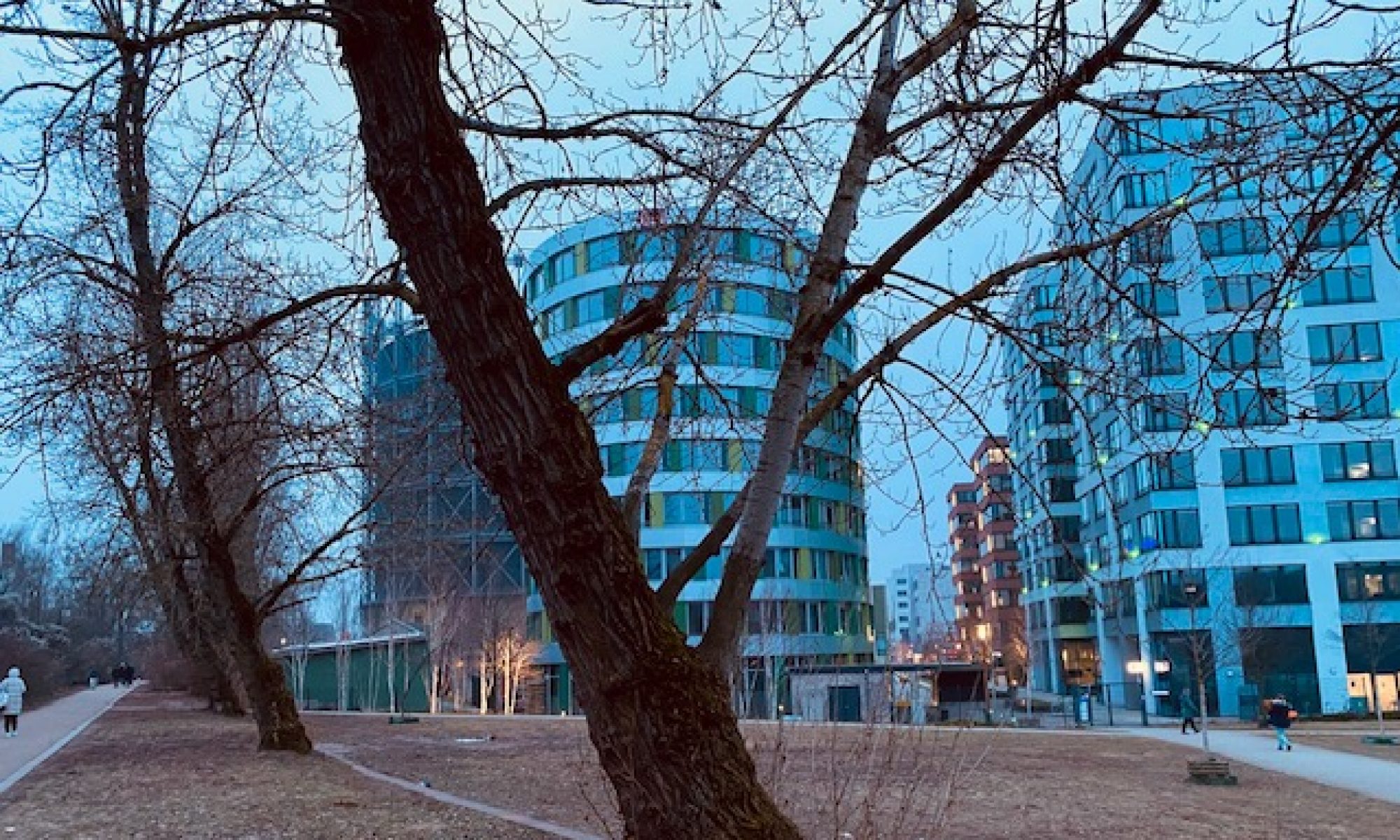

The visit to the splendid Nobel museum in Stockholm is of course a highlight for all scientists. Even if the social sciences including economics do not get awarded an official Nobel prize. More impressions of Stockholm here.
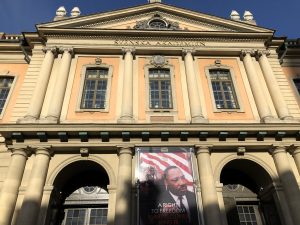
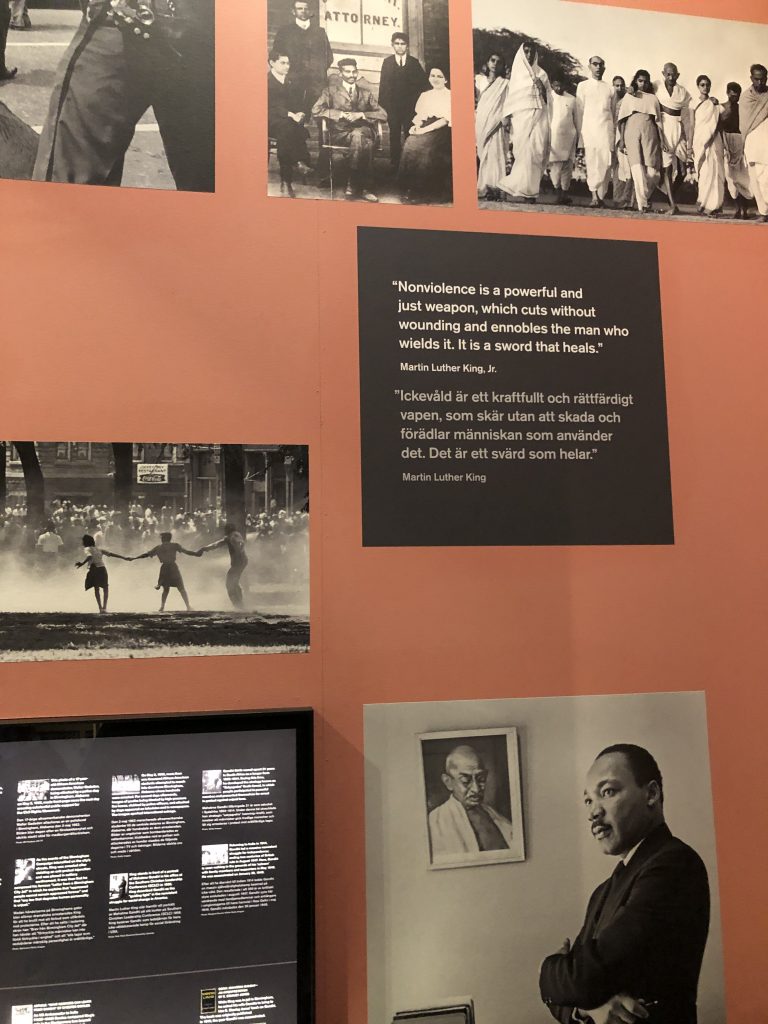
The Nobel prize for peace was awarded to Martin Luther King, but one of the persons he most admired Mahatma Gandhi never received the prize, or not in time before being shot.
… and some like songwriter Bob Dylan (not Dylan Thomas) received the Nobel prize 2016 for literature, most likely to give the Nobel prize a more popular image. Without intonation the poems sound rather flat and do not stand up easily against other previous awardees like Patrick Modiano 2014 or Herta Müller 2009.

Useful sources for further investigations are:
https://www.nobelprize.org/prizes/lists/all-nobel-prizes-in-literature/ or
https://en.wikipedia.org/wiki/List_of_Nobel_laureates_in_Literature , which also contains some enlightening overview statistics (male/female; languages) of laureates.
Splendid Public Libraries to replace Cathedrals
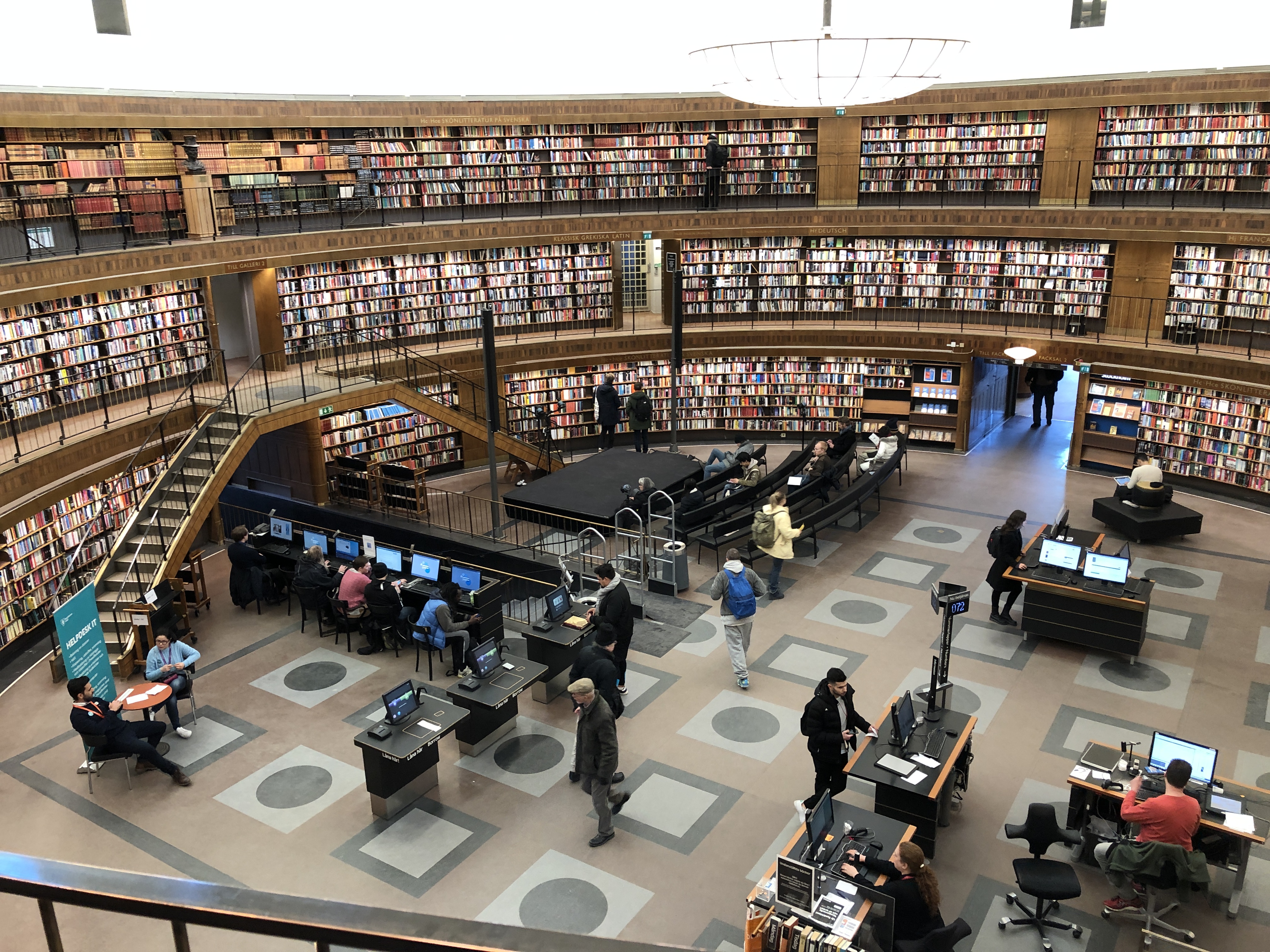
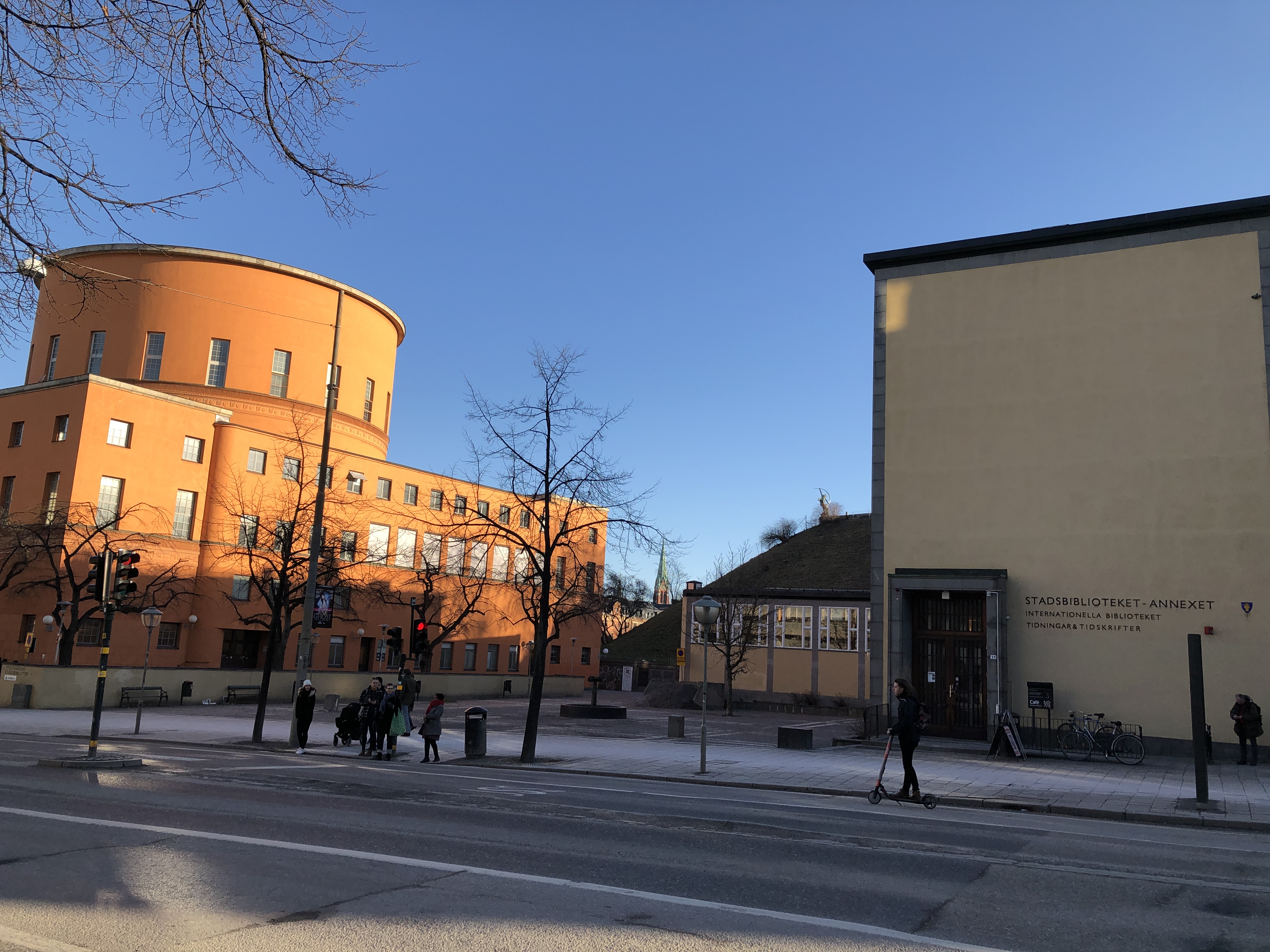
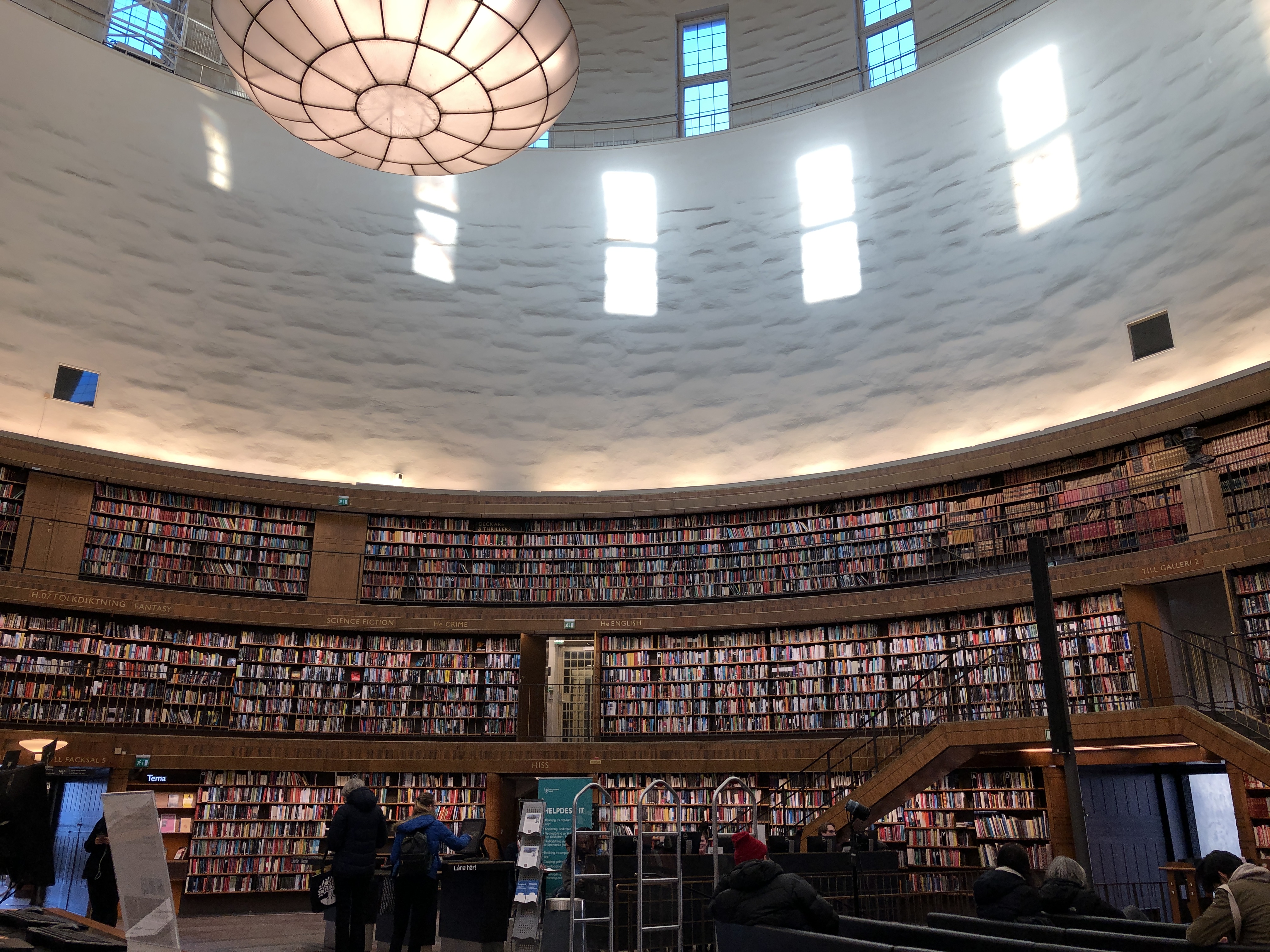
Renovated public libraries are modern showcases of architecture and access to knowledge. Recently the best places add the platform function of people meeting people there not only taking out and bringing back books. The Stockholm city library is an impressive example of all functions.
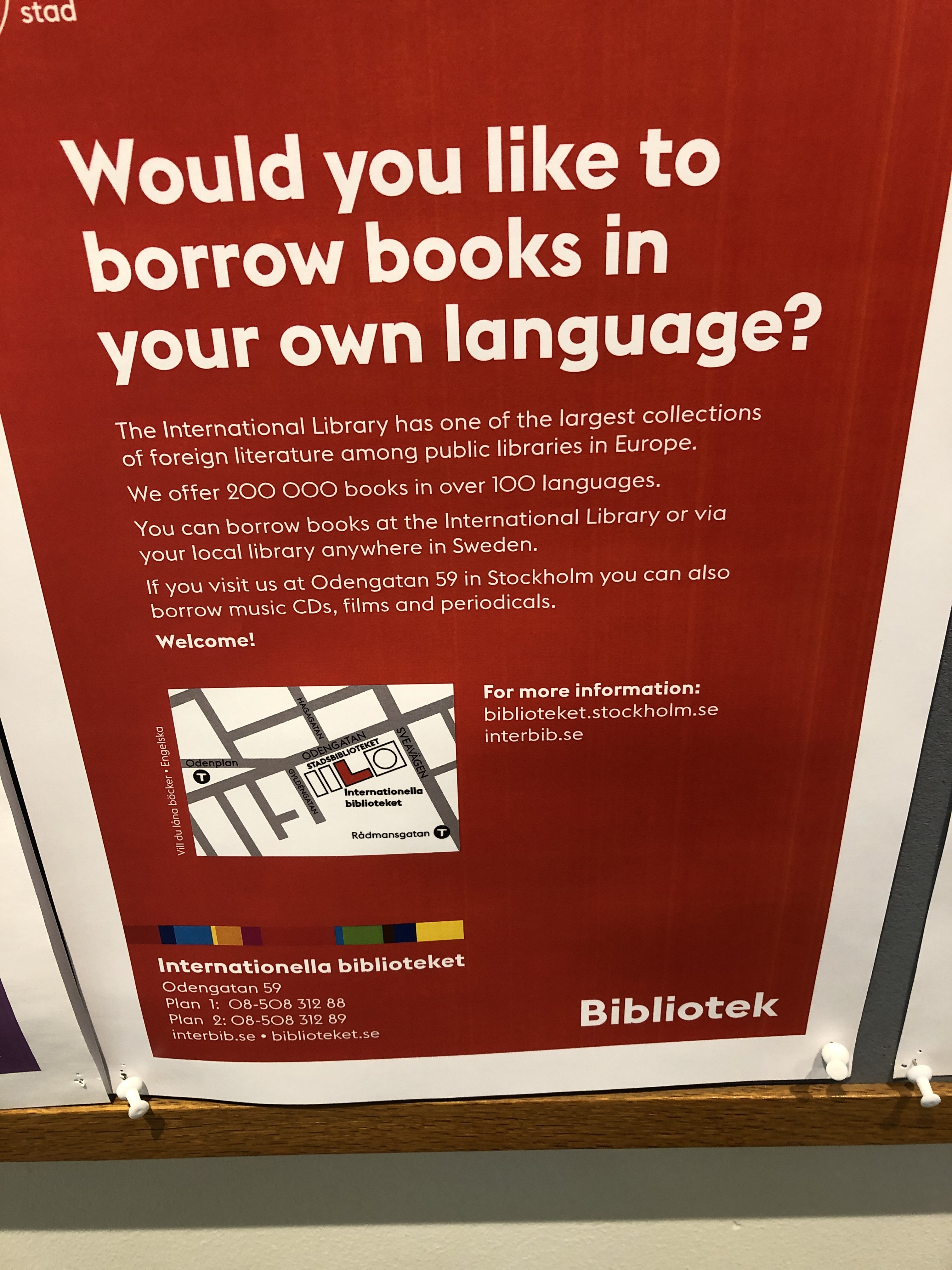
The library figures also in the list of the 25 best public libraries in the world shown by flavorwire: http://flavorwire.com/280318/the-25-most-beautiful-public-libraries-in-the-world You can actually walk up the stairs and access books directly. In the annex building is the international collection with its multilingual treasure as well as the press and journal sections. Impressive is the wide spread audience rather than intellectuals only.
The place is a top place for adult education and lifelong and lifewide learning.
Health and Care
Some surveys in the social sciences remain a reference due to their interesting scope of questions included. The Canadian National Survey of the Work and Health of Nurses is such a survey since they “dared” to ask a representative sample of 18.000 nurses, health care workers and care assistants questions including medication errors, fall injuries, and complaints of older adults in Canada. The study by Zafar Mehdi, Ramzi Nasser, Hildegard Theobald and myself reveals the importance of further training and sufficient staffing to prevent medication errors, fall injuries and other complaints of patients. DOI: 10.5539/gjhs.v11n3p111
Besides the interesting results of this study based on a little used data set, the study should encourage and reward transparency of medical practices and analyses (relevant in #Covid-19). Hopefully many other studies, ideally with longitudinal designs, will build on this interesting kind of data collection. Evidence-based human resource policies should not stop in front of hospitals and care institutions. Unfortunately, such sensitive data are still rarely collected, although conclusions are helpful for nurses, patients and society as a whole.
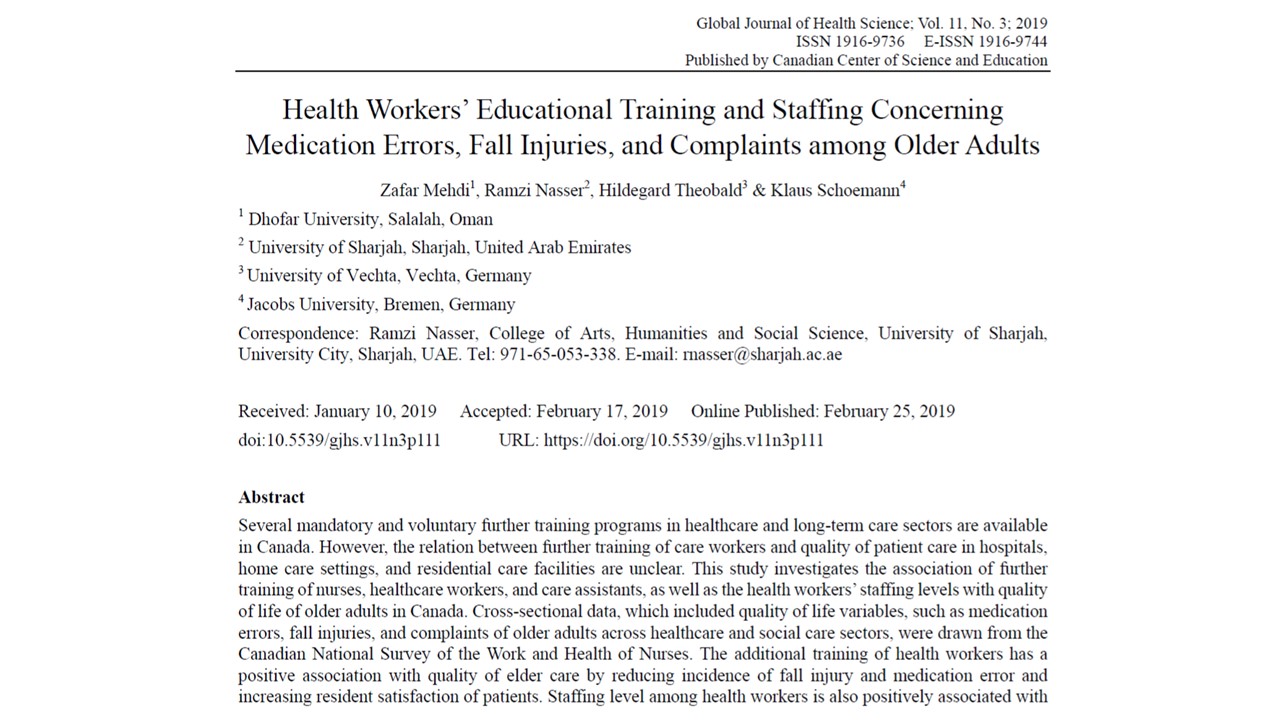
The Link to the paper in the Global Journal of Health Sciences and the download is free of charge here. For science policy it is interesting to notice that the paper was part of a self-financed Ph.D. of Zafar Mehdi, accepted at the University of Vechta recently.
Anti-Mémoires Van Rompuy
When a conservative fellow writes his autobiography without depending on written notes or other documents as support, this exercise can be risky. Herman van Rompuy now also wants to turn anti-establishment? Following André Malraux he choses as title “Anti-mémoires”. Contrary to the image I have taken on 14.2.2019 on the book fair in Brussels, in the book Van Rompuy is opening up a bit, but just a bit.
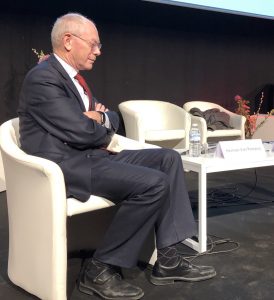
The editorial support by Astrid Simonis seemingly was important in the easy read of these “end of life thoughts” of a heavily involved political figure in Belgium and Europe. If you count the pages without the 20 subtitle pages and transcripts of 2 speeches, it is less than 100 pages short. Full of well-known statements, but it is more the particular choice of those that makes the political man. Most surprising was the statement on page 118 “The principle quality in politics is trust”. On the same page he writes and cites Harry Truman “If you want a friend in politics, get a dog!” Now the puzzle is that the peace-building function of the European Union is building trust among nations. It seems to have failed in his experience in Belgium and apparently also in Europe according to him.
In the talk at the Book Fair in Brussels he agreed with the moderator that they did not want to sound too pessimistic this time. Many challenges ahead for Europe. Time for the next generation to get ready and find new solutions to old problems. However, attendance at the talk was spectacularly low.
My conclusion: Learning from experience is probably underrated in Europe.
Autorenlesung
In Verbindung mit den vorab bekannten Ergebnissen des 3. Deutschen Weiterbildungsatlas hat sich der Weiterbildungsausschuss des Saarländischen Bildungsministeriums einen der Autoren der neuesten Version nach Saarbrücken eingeladen. So habe ich mich auf die Reise gemacht und einige der Auswertungen und zentralen Ergebnisse dort vorgestellt. Es ergaben sich rege Diskussionen zur Datenbasis der amtlichen Statistik. Die vorgestellten und besonders angefertigten Auswertungen für das Saarland auf Kreisebene zeigen die Unterschiede im Angebot an Weiterbildung von Betrieben im Norden und Süden des Saarlandes.
AKK wird also bereits vertraut sein mit unterschiedlichen wirtschaftlichen und sozialen Entwicklungen in Landesteilen. Überraschend für ein Bundesland mit einer Bevölkerungszahl von ca 1 Million.
Vorab nur mal ein Blick auf einen Indikator. 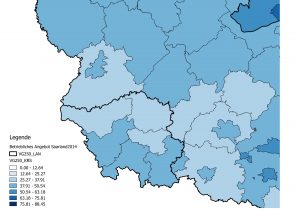 .
.
Weiterbildung in Kreisen
In Zusammenarbeit mit der Bertelsmann Stiftung hat das DIE die Datengrundlage für den 3. Deutschen Weiterbildungsatlas gelegt. Darauf aufbauend habe ich in den letzten Monaten eine neue ausführlichere Analyse der Daten auf Kreis- und Länderebene durchgeführt. Gleichzeitig wurden Karten erstellt, die eindrücklich die Unterschiede zwischen Bundesländern und Kreisen in den jeweiligen Bundesländern verdeutlichen.
Das Manuskript liegt bereist bei den Koautoren und wird in wenigen Wochen erscheinen. Die Schlussfolgerungen aus der ersten Version (siehe unten) werden einer erneuten empirischen Prüfung unterzogen. Einkleiner Vorgeschmack lässt sich in dem Bild erkennen. Aber die Webseite zum Weiterbildungsatlas hat ja schon viel mehr an Daten und Auswertungen im Angebot. Hier geht’s lang.
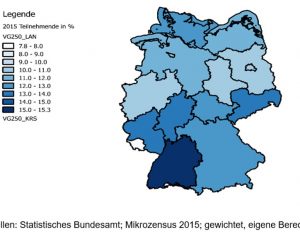
Martin, A., Schömann, K., Schrader, J. & Kuper, H. (2015). Ausgewählte Ergebnisse: Die Wiederentdeckung der Bedeutung der Region. In A. Martin, K. Schömann, J. Schrader & H. Kuper (Hrsg.), Deutscher Weiterbildungsatlas (S. 26-130). Bielefeld: W. Bertelsmann.
Experience of Diversity
Experience is key not only for labour market success or life satisfaction. It largely determines our values as well. The recent survey from the Pew Research Center (link) reflects the importance of the experience of diversity in, for example, religious or spiritual matters. More heterogenous experience of diversity across lots of dimensions will contribute to a better mutual understanding and respect. Meeting persons who are different and experiencing the many facets of the other person similar to oneself will enhance the common ground. Curiosity to meet the other person rather than “more of the same” in encouters and friendship, this is the way forward. The sociology of social networks, part of my teaching at Jacobs University Bremen is able to support this perspective for several decades now. Student accomodation with large diversity can be a fundamental experience which coins personalities. Tolerance is largely a product of experience rather than only teaching about stereotypes. 
Wetten auf Europa
Wer hätte schon auf die nur europäische Besetzung des Fußballweltmeisterschaftshalbfinales der Männer gewettet. Belgien, England, Frankreich und Kroatien als Halbfinalteilnehmende hat beim Wetten eine Traumquote gebracht. Studierenden in Ökonomie empfehle ich immer Erfahrungen im Wetten zu sammeln, damit können sie später besser Investieren von Wetten unterscheiden, oder eben bewusst Investieren als Abschätzen von Wahrscheinlichkeiten verstehen lernen.
Mein Anliegen ist aber heute ein steuerliches. Eigene Finanzmittel für die europäische Union zu generieren ist ein wichtiges Ziel im Rahmen einer “europäischen Bürgerlichkeit”. Der Markt für Wetten könnte ein solches Vorhaben ermöglichen. Der Wettentest von Anbietern zeigt das Potenzial aber auch die Umgehungsstrategien, aber gegen die Besteuerung von traumhaften Wettgewinnen in der EU hätten wohl wenige Bürgerinnen etwas. Das könnte die Akzeptanz von Steuern sowie der Finanzierung von EU-projekten helfen.
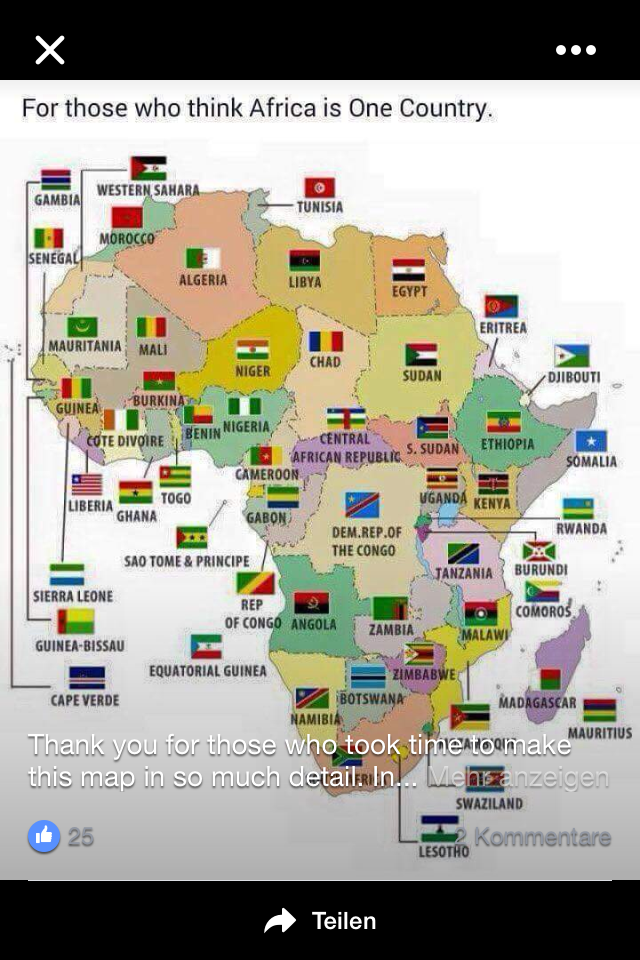
Erfolgsquoten bei Endspielteilnahmen sind für Frankreich 1 Sieg bei 2 Teilnahmen, für England 1 Sieg bei 1 Teilnahme. Für Kroatien als Ex-Yugoslawien liegen keine Teilnahmen bisher vor. Bei einer EU-Besteuerung von Sportwetten oder Wetten auf Brexit, oder “Exit vom Brexit” stünde ein Wettgewinner, das EU-Budget, schon vorher fest. Nächstes Mal setze ich dann eh schon auf Afrika. Die Wahl ist dabei nicht leichter.
Zugleich Frage und Antwort: Was etwas ist
Was können sich Menschen für Fragen stellen? In einer spannenden Lektüre und gleichzeitig einer digitalen Wiederentdeckung für mich, bin ich erneut auf “Was etwas ist” von Tilman Borsche gestoßen. Dank der digitalen Bibliothek der Bayerischen Staatsbibliothek ist das philosophische Grundlagenwerk von Tilman Borsche nun weltweit zugänglich. Auf die Frage hin, was etwas ist, werden die ideengeschichtlichen Pioniere, Platon, Augustin, Nikolaus Cusanus und Nietzsche, kurz auch Leibniz, Kant und Schopenhauer dazu abgefragt.
Der Untertitel des Werks beschreibt treffend den durchaus überraschenden roten Faden, der sich durch die Werke ziehen lässt. Fragen nach der Wahrheit der Bedeutung lässt uns immer wieder zurückkommen auf Worte, Zeichen und Sprache. Der Schlusssatz von Borsche “Zeichen können niemals zeigen, Worte niemals sagen, was etwas ist.” (S. 312) könnte frustrierend klingen, aber es lässt uns gerade weiter suchen.
Das allerletzte Wort überlässt Borsche dann Nietzsche, den er für die heutige Zeit der “fake news” so treffend zitiert: “wir haben eben gar kein Organ für das Erkennen, für die ‘Wahrheit'”. Auch wenn aktuelle neurowissenschaftliche Forschung bei dieser Frage nicht locker lässt (siehe hier), vergewissern wir uns bereits, was bleibt uns Menschen nun übrig. Begriffe schärfen, Urteilsbildung schärfen und diskursives Auflösen von Grauzonen.
Randbemerkung von Nikolaus Cusanus an der Schrift von Apuleius Lucius, De deo Sokratis. “Fundstück in der Bibliothèque royale de Belgique, document http://uurl.kbr.be/1495249
Datenschutz
Die Datenschutzgrundverordnung (DSGVO) oder eben GDPR auf English hat alle, die Webseiten betreiben etwas in Atem gehalten (Neuer Hinweis zum Datenschutz dieser Webseite hier). Natürlich waren die Regelungen längst bekannt, aber die gesamte Branche hat bis zum letzten Moment gewartet und fleißig weiter Daten gesammelt. Vielleicht waren doch viele das Internet nutzende Personen überrascht über das Ausmaß der Sammelei. Falls Sie lange nicht mehr Ihren Klout-Score geprüft haben, “Klout ist seit dem 25.5.18 kaputt”, nur in der EU. Wir werden also weiterhin ohne Zustimmung geratet und mit den Scores Geld gemacht.
Traurig über das Verschwinden sind wir wohl nicht, da wir von der zweifelhaften und jetzt wohl illegalen Praxis bisher eh nichts wussten. Für politisch und gesellschaftlich Aktive bleibt es wichtig zu wissen, wo und wie sie “gerated” werden. Professoren und Lehrende im allgemeinen kennen die Ratingpraxis und haben sich daran gewöhnt. Im Privatleben ist das Rating aber wohl unter Persönlichkeitsschutz ein anderes Thema. THANK YOU – EU.