70s revival

Brussels celebrates each year the “Car free Sunday” as final part of the mobility week. On 2026-9-20 this event coincides with the very high oil prices again. Just like in the oil crises of the 70s in 1973 and 1979 saving energy for mobility and transport is high on the political agenda in many countries. Just think of the benefits of such events. Less consumption will reduce “greed-flation” and upward pressure on prices. Pollution levels of fine particles and noise are drastically reduced. Children feel safe while riding their bicycles, scooters or skateboards. Parents are no longer on permanent alert due to the risk of accidents. For those who remember or lived during the 70s, they might have a “déjà vu” experience and enjoy a revival of the 70s. The roller skates are up for a revival as well. 
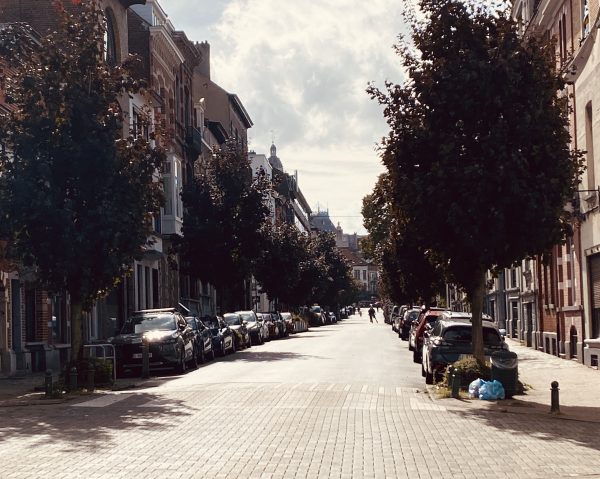
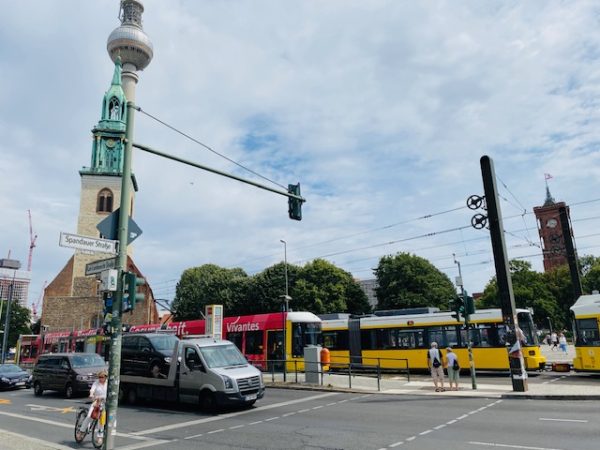
Brussels Car free day 2026-9-20

News impact democracy

The reporting on news in the media can be highly influential on election outcomes and therefore democracy. Bias in coverage of news arises from mainly 2 sources: (1) topics covered as opposed to the ones neglected, (2) the framing of the news which fit into a broader political narrative. A robust scientific analysis of the topic is difficult as the amount of data (articles, headlines, appearances) can be rather large. The paper by Haider et al. (2026) accomplished a major step forward through the systematic treatment of “selection bias” in news coverage. Related to news coverage, selection bias has both a statistical as well as a substantive meaning. The substantive finding of selection bias refers to the fact that the print media studied tend to prefer “horse race stories to policy issues” in upcoming elections, i. e. the focus on opposing candidates rather than the underlying policy choices. The negativity bias in reporting remains another constant in media research. 

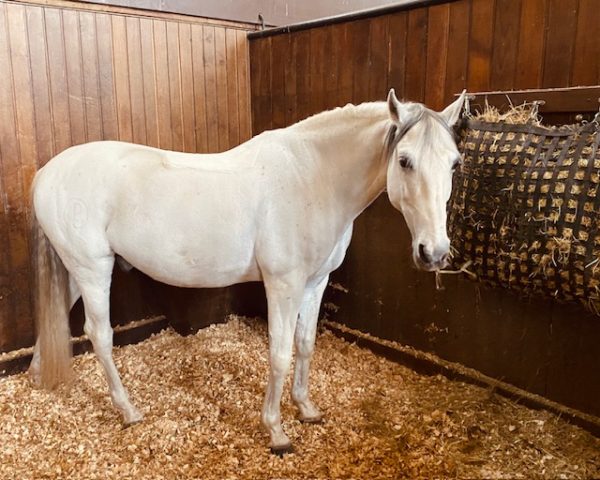
chewing horse in Chantilly box

Rural urban interrelationship

Cities are no isolated microcosms. They rely on being delivered a huge range of products. Cities have been markets, hubs or platforms for exchange with their surroundings, neighboring communities as well as distant ones. Historically, quite many cities have built walls to limit access and strictly regulated access. In the 21st century with low levels of fertility, the demographic pressure to leave the countryside for jobs is less pressing, but many regions face the shrinkage of the countryside’s population. The interrelationship between the urban centers and the rural surroundings has to be studied and addressed due to the far-reaching consequences for both. Transportation into cities needs public infrastructure which can handle the necessary flows and exchanges of people and products. For too many decades we have focused on an either/or cleavage of an apparent dichotomy of urban versus rural. It is about time to correct this bias and take the rural-urban interdependence more systematically into account. 

uri urban rural interrelationship in food and drink

Stress in the City

Before the stress in the city makes you sick, try new coping strategies. Of course, you cannot avoid the stress of hotspots like busy crossings or noisy construction sites. And these are only the visible stressors not to mention fine dust particles or mixtures of fragrances. Scientists have started to address these issues under the title of neuro-urbanism. This topic is part of a broader agenda on public mental health which addresses the rise in mental disorders globally. Expanding urbanization is considered a major driver of an often overwhelming cognitive load in cities. Growing into it helps, but many move to cities for professional reasons or simply a job being largely unprepared to the practice of daily commuting for years. Several potential stressors tend to cumulate: High Social density, broad diversity in aesthetics as well as social structure, relationships, social participation or public transport as part of mobility make cities interesting or hard to cope with.

Emotional paradox

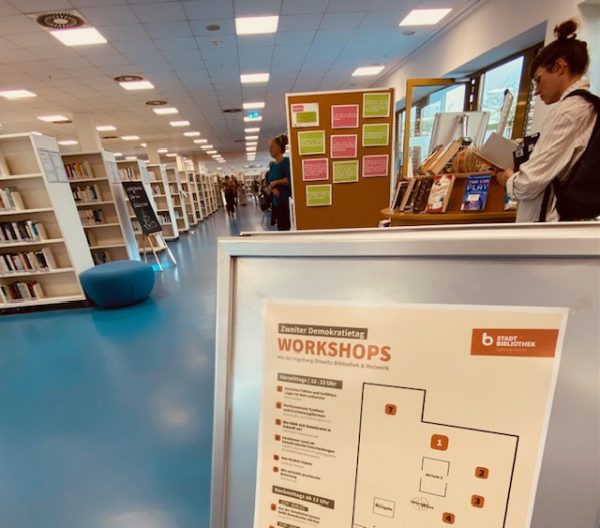
Democracies face an intrinsic paradox. High aspirations before inauguration, rising negative emotions during polarizing democratic periods and high positive emotions towards democracy after the loss of major components of it. However, This constitutes a working hypothesis in need of further research of its historical validity. Some active defendants of democracy have organized already sessions to speak about emotions in democracy. On the occasion of the International Day of Democracy a local initiative in Berlin (Mutwerk) took up this topic and brought together representatives of many local initiatives to foster the wealth of positive emotions due to democratic rule in southern Berlin. (Image: Public library Berlin Steglitz democracy day 2026-9-14)

Public library Berlin Steglitz democracy day 2026

Emotions in Politics

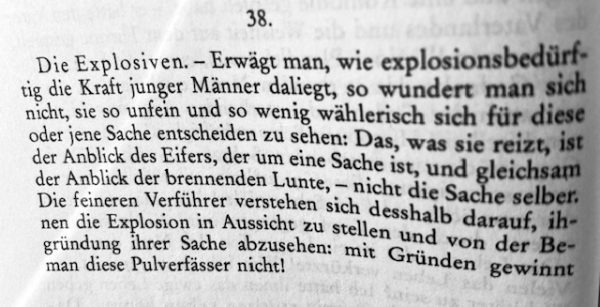
Rage or even hate count among the high emotional states in psychology. The presence in politics of these more extreme emotional states has been on the rise since the times of Covid-19 due to the necessary restrictions of the fundamental right of free mobility. A cost of living crisis might lead to similar emotional states as “Angst” about homes, commuting and heating put many people in existential crises. The rise of extreme right parties has gained on the basis of this basic social mechanism using hate speech and a continued rage as driving force. Established political parties across Europe and the Americas have been very slow to react to this. Just providing accurate information and correcting fake news is not enough. More emotions are called upon to counter such aggressive strategies used by political opponents, unfortunately. In the podcast “The 2nd thought” (Der zweite Gedanke in German!) Natscha Freundel together with Justus Bender and Heike Klüver we learn that an emotional response to rise of the extreme right is asked for. It is interesting to witness that 144 years after “Die fröhliche Wissenschaft” we still have not learned the lesson from Book 1 entry 38 by Friedrich Nietzsche: “with reason alone, thou shalt not convince those explosive minds” (own interpretative translation).

Quotation from Nietzsche Book1 Nr.38: Mit Gründen gewinnt man diese Pulverfässer nicht!

Taking positions

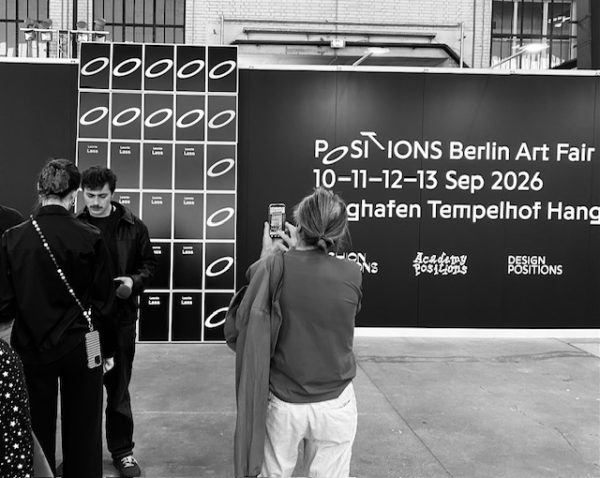
In the arts, positions are taken through the choice of topics, materials, an own perspective or approach. For the young artists, taking a position is quite a defining moment, usually after experimenting with several ones before. That point of view is probably a bit biased by a galerist’s perspective or when studying the market of art. Related to the Berlin Art Week, the Positions Berlin Art Fair offers an interesting overview of what is on the market. The section entitled Academy gives space and attention to young entrants into the art market.
The exchange of artists with the audience allows to understand in more detail what position is taken, how it is taken and worked out in detail. The  backgrounds of artists are quite broad compared to other metropolitan Art Fairs in this start-up atmosphere at the Hangar 5+6 of former Tempelhof Airport in Berlin. If we look at other perspectives, we shall not only get inspired, but we shall most likely question our own position(s) as well. Great learning experiences for all.

Culture goes Europe

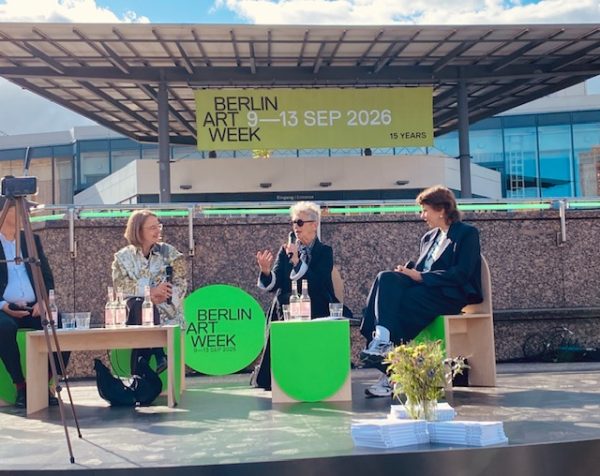
Culture has always travelled Europe. Not only the very famous artists have travelled themselves or their art has travelled, but students of art have joined masters in other countries to learn or become inspired. There are, of cause, some artists who paint themselves in their home and do not care much about the world around them. This is fine, too. The Berlin Art Week has taken a refreshing pro-European perspective in the talk entitled “Empowering Europe”. Culture can build many sustainable bridges across borders, which often start with language acquisition (Gitte Zschoch). Foundations assist with funding (Stephan Muschick). Curators initiate cooperations and lending across borders to challenge traditional cultures and practices (Anda Rottenberg). And the media ensure a wide distribution of cultural information and organise a society-wide discourse (Elke Buhr) about cultural diversity, heritage and innovation. All this is needed to avoid a self-referential cultural perspective of the MAGA-type in Europe. This is not a nice-to-have, but an essential part of the European power of resilience.

Monopol talk Berlin Art Week 2026-9

Human gravity

Long before the establishment of Newton’s theory of gravity, humans have been fascinated by gravity. Elevation from earth, after all, has figured prominently in religious imagery. Mankind’s dream to fly has become so popular that it contributes substantially to ruin the blue planet. Defying gravity as much as feeling the amplified force of it have become a continuous challenge. In sports we adore the bouncing on a trampoline and classical dance derives a lot of its charm from the suspended moments in air. Beware the landing and get accompanied in your first steps.
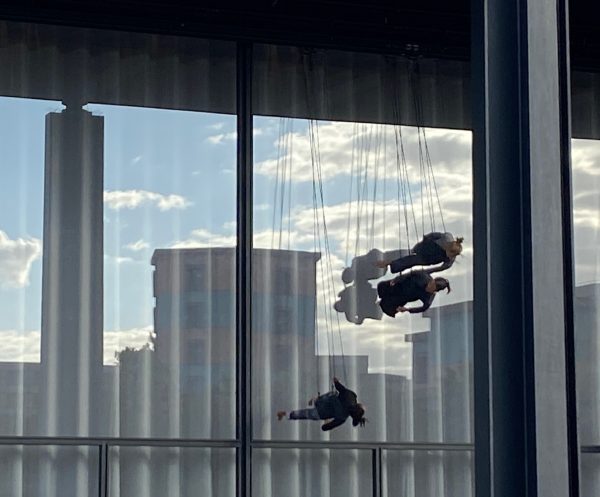
Modern Dance is equally creative in the challenge to defy human gravity. Trisha Brown (1971) suspended dancers horizontally so that they could walk in space at least along fixed lines and perpendicular to the surface. The physics of our body change in this bird-like position. Dancing in equilibrium on a horizontally suspended line leaves the audience amazed. The spectacular setting and performance at the “Neue Nationalgalerie” transforms the architecture again into a playing ground for choreographers. Suspension from human gravity is hard work, beyond “¾ Walzer” rhythm and, of course, it takes 2 to tango to feel the suspension.

Trisha Brown horizontal suspended Dance Berlin 2026-9

Glass wall

A glass wall remains a wall even if it is transparent. The glass and steel construction of the Neue Nationalgalerie by Mies van der Rohe has large windows which allow light to flow into the building and create an illusion of transparency as well as openness. However, for most exhibitions “paywalls” are erected to limit access. The Cattelan installation in the gallery erected another light barrier before the official opening in form of the ribbon barring entrance. For those who had experienced the real wall in front of or behind the Brandenburger Tor”, a certain allergy against walls is probably a leftover from those days or years. Hence, Klaus Biesenbach and Maurizio Cattelan tear that wall down!
Thanks go to the Volkswagen Group “Art-4-All” sponsorship which allows free entry on Thursday evenings already. Public-private partnerships are way forward and “Mäzene” can accompany such journeys in multiple ways. 

Cattelan Maurizio at Neue Nationalgalerie Berlin 2026-9