Saint-Simon Utopia

Towards the end of the 18th century and during the early 19th century, the early signs of what the industrial revolution would mean for the working people became visible. Saint-Simon had lived through the ups and downs of the French revolution himself and had been to the Americas with La Fayette before he developed his utopian socialist vision of a unified class of working people, which for him included blue as well as white collar workers. At the advent of the 2nd industrial revolution through general and agentic Artificial Intelligence (AI) in 2025, we shall most likely witness a renewed interest in utopian scenarios and grand ideas of what the future of technology, society and humanity might be like. In 2026 we shall re-read Saint-Simon quite a bit in order to learn about ways to make sense of arising trends and how to come up with a positive utopia that can motivate people to thrive again for more equality within and between societies. 
Positive negative Utopia

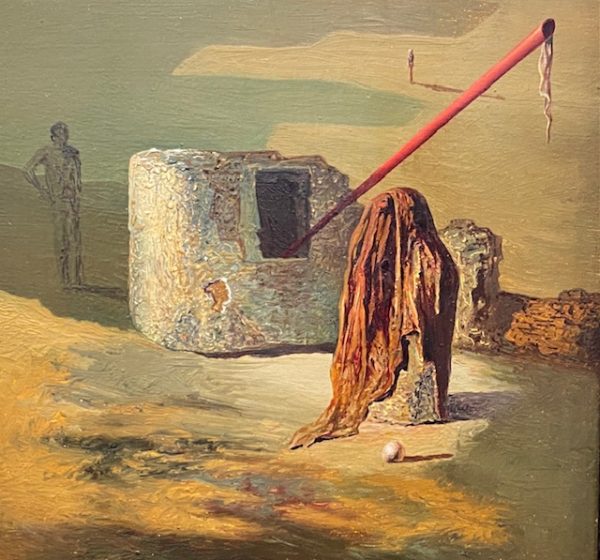
We have been used to distinguish between a positive or a negative utopia. The idea of a paradise is usually associated with a positive utopia, however, from the perspective of mankind being unable to live together without the idea of God being the ultimate arbitrator, this is more like a negative utopia. The industrial revolution and communism as the utopia to spread wealth equally across generations and all people, have been turned into negative utopia by dictatorships and authoritarian regimes. The fascist ideas of superiority of a race has also turned into negative horror and Nazi-terror. Hence, skepticism is in order, if either form of utopia is advocated. There are numerous examples of unintended or not explicitly stated consequences that have to be considered as well. (Image: Extract from Salvador Dali, Looming Danger Alarm, 1934, Neue Nationalgalerie, Stiftung Pietzsch)  

Make someone believe

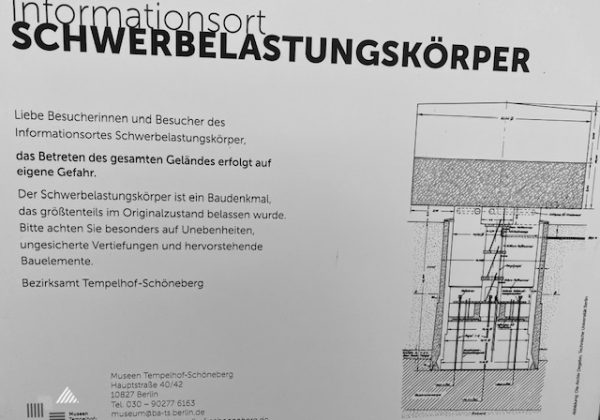
Some people are very successful in making others believe they are or can be part of something very big. Selling grand, utopian ideas to people is an old recipe to get people to support a person who might have great ideas and appears to be capable of obtaining this utopian goal. The Romans built their amphitheaters for the people to keep them interested in the Roman empire. Nazi-Germany made Germans believe in the grand idea to build the new city of Germania in place of the city of Berlin. To fool people further they needed to come up with ever greater plans and the test drills and small beginnings where realized irrespective of the war efforts and terrible losses of lives. Utopian plans, a bit like MAGA-mania, need ever greater utopian designs so that followers still adhere to the basic utopia. It is amazing to what extent people want to be fooled rather than proceed in small steps. It has been dangerous for humanity in many respects, but the utopian sagas keep popping up.  (Schwerbelastungskörper, Berlin) 

Perestroika – Glasnost

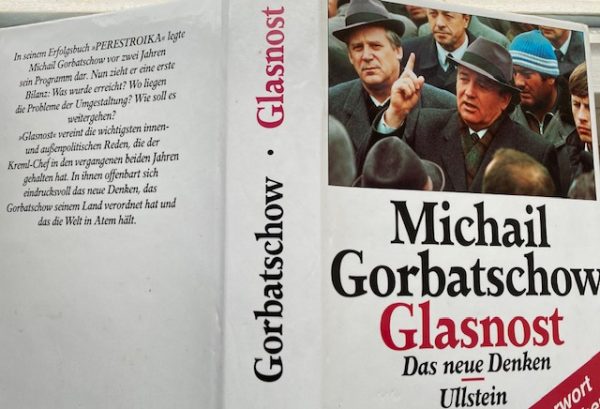
The extraordinary leadership of Michael Gorbatschow with his introduction and subsequent implementation of the principles of Perestroika and Glasnost has changed the lives of millions of people in Eastern Europe to the better. The independence of occupied countries became feasible. The aim to build a “socialist state based on law” (p. 86) and the belief in the power of the people without differentiation of what information is for all and what information is reserved to closed party circles and leadership were perceived as sweeping reforms. More than 25 years later there is little left over from these radical reforms. Putin and his narrow circles have locked in people and their freedom of expression again. The practice of Perestroika and Glasnost have been relegated to a distant dream again. (Image: book cover Gorbatschow).  


Good or bad

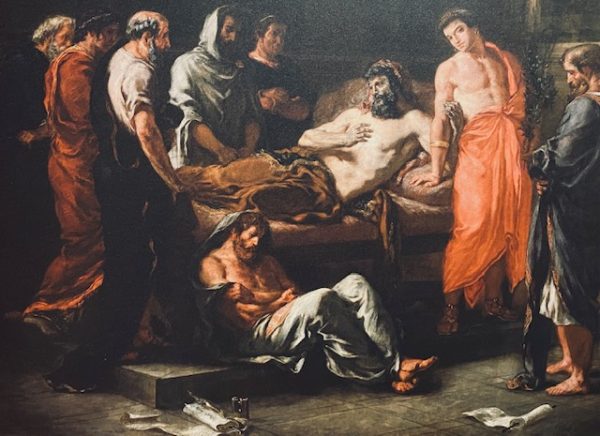
We have been taught by Shakespeare “to be or not to be, that is the question”. In political science we have pondered the question in a slightly augmented form. “to be good or bad, that is our question”. The basic image of women and men in society has been a subject throughout the history of ideas. For those who believe in the good nature of mankind, they tend to find reasons to believe that eventually mankind will find a way towards a peaceful cohabitation on our planet (there is no planet B yet for humans). On the other hand, each outbreak of violence and war are considered as a confirmation that mankind will always recur to some form of violence, even after extensive periods of peaceful cohabitation. According to the evidence presented by Meller, Michel, van Schaik, referring back to Kant, trade between people and nations is likely to prevent more violent relationships (p. 330). One of the major conclusions over the long term view of mankind is, that the periods of war have been far shorter and more rare than a focus on the last 3000 years seems to suggest. Maybe, “to be good or bad” is just a question of demographics of being too many at the same time in the same place.  Population growth and population density might be a powerful driver of “being good or bad”.  (Image: Delacroix, Last words of Marc Aurel)

How could this have happened

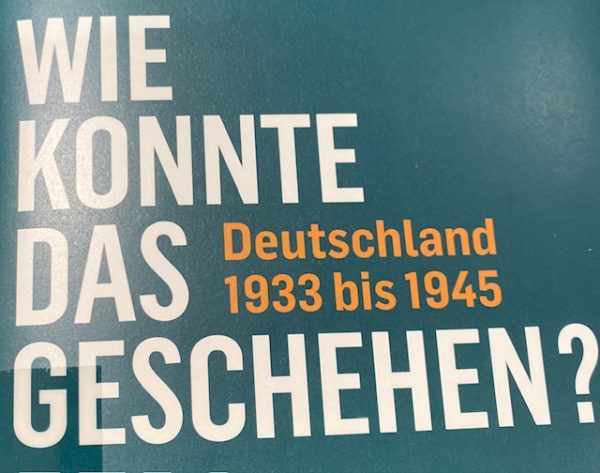
The latest thorough reflection on how the Nazi-terror could have stopped or being prevented remains an important question in our time. The more we see countries descend into the authoritarian regime types, the more we have to know our lessons from previous historical experiences. Götz Aly made a great contribution to this literature. He points our attention to the collective euphoria the Nazis (NSDAP) managed to make people believe, by at the same time blaming others for the past crises. People just wanted to believe the fake narrative of a promising future (p. 175) for a society based on social exclusion. The pattern, unfortunately, seems to find its replication in other parts of the world nowadays. This is a very slippery road which often leads to disaster rather than relief. Easy or catchy answers are preferred by many people rather than the nuances of well-informed differentiated options. Patience in social development is a collective virtue, but often misunderstood as a form of conservatism, which is is something very different.

State capitalism

It is the 2025-12-17 edition of the Wall Street Journal (WSJ) that touts President Trump’s governance as “state capitalism”. Through a listing of recent state interference into the functioning of the economy, the branding of this as state capitalism by the capitalist-owned press is without precedent. The President’s office has obliged NVIDIA to pay 25% of revenue from its China business on advanced semi-conductors to the Trump-run government. We might call this a kind of kick-back or blackmailing, if you want to expand or keep your business with a specific client. Major institutions like the Central Bank (Federal Reserve in the USA) are tackled to follow state orders rather than keep an eye on their independent assessment of facts about the economy. Nomination of governor positions have been subject to persistent interference from the president’s office rather than the government taking a moderating role of divergent interests, competences and lobbying.
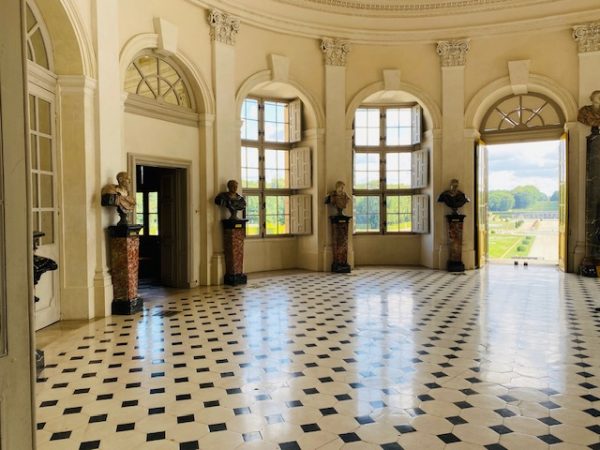
The medium and long-term inefficiencies of an “at-will economy” have several examples, many in South American economies. The US economy is moving South in several respects, with the loss of the value of the $ compared to the €, maybe even devaluation is used as a strategic economic weapon. (Image: Ballroom in Chateau Vaux-le-Vicompte, France)

Generation Hope

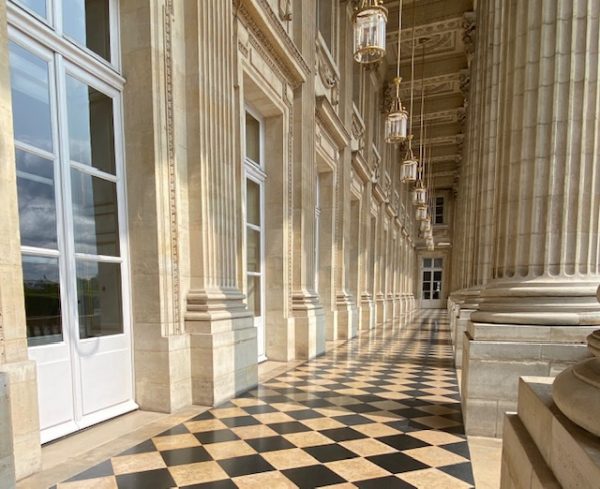
The whole of Europe has good reasons to take a careful look at the stunning protests organized by the young generation in Bulgaria (Le Monde, 2025-12-13). With spectacular repeated demonstrations in the center of Sophia, the young people attempted to stop a government that is likely to sink further into corruption. It is this generation of young people that have experienced and/or lived in other European countries or in other Western-style democracies around the globe that have enough of corruption in politics and social systems more generally. The well-educated Bulgarian youth has managed to overthrow a government that had been subject to pressure from corrupt forced. It is not easy to get rid of corrupt politicians and powerful business interests as a system based on merits rather than ability to pay remain fragile in the first few years of such a transition. It needs a sizable “Generation Hope” as I would like to call these young enthusiasts of democracies. The message reaches well beyond Bulgaria and gives hope to all those whose political systems deteriorate into authoritarianism across the globe. It took 20 years to build this “Generation Hope” and mobile youth that takes home the messages and learnings from other democracies. Based on statistics from Eurostat we know about the strong in-migration from Turkey and Russia into Bulgaria. Youth is particularly likely to leave authoritarian regimes to seek a better future in democracies, for example as part of the Generation Hope” in Bulgaria. (Image: Cour constitutionel Paris) 

БЪЛГАРИЯ Bulgaria

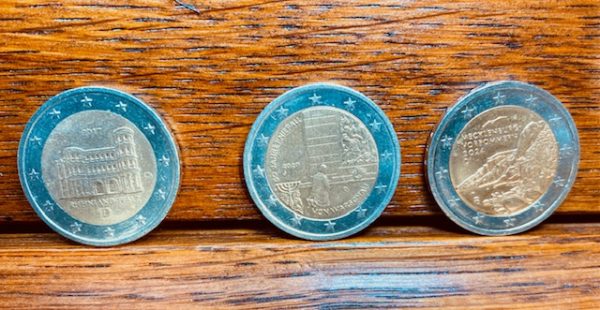
The expectations of the entry of Bulgaria into the EURO-Zone are high towards the end of 2025. On the 1st of January 2026 we have new coins circulating in the Euro-countries. The addition of a country to the European currency yields insights into this country’s own cultural heritage. Piece by piece we learn, if we want to, to take a closer look into the more and more obsolete practice to handle currency in form of coins.
I cherish some of the coins with specific meaning to me (see image below, city of Trier, Willy Brandt, Chalk coast on Baltic sea). My small collection of coins from Greece allow me to refresh my Greek alphabet, words and historical landmarks of democracy. The circulation of Euro-coins with Bulgarian inscriptions in the Cyrillic alphabet will broaden our horizon again. Beyond the national features, we cherish the regional or federal organization in some countries, that feature their regional hotspots within this European cultural heritage. With a highly mobile Bulgarian population, not only within the EU, we shall soon see more Eastern Euro-coins with Cyrillic letters in our pockets and collections. … can’t wait for it … Ukraine in 202x, maybe 203x. 

Europe x.0

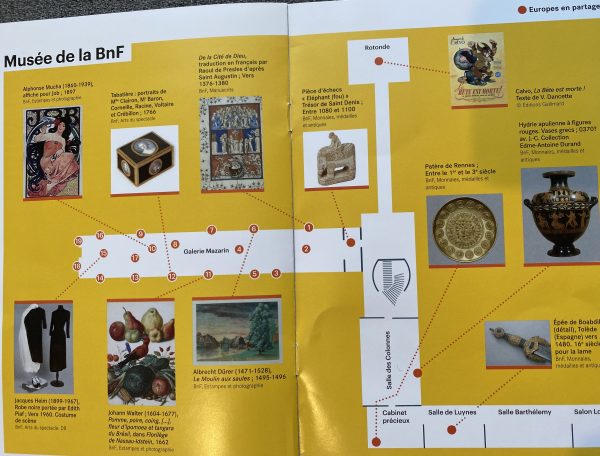
There are many places to ponder, think or dream about Europe. The centre of Paris is certainly a great place for this. More precisely, the “Galerie Mazarin” invites us to pass the centuries looking and reading about artefacts that made Europe or all different versions of it across history and geographic spaces. The short extracts of chansons that we share and shared across Europe are presented in their original language, which highlights the multilingual heritage of the different versions of Europe. There are parts of the heritage, which have fallen into oblivion like the customary use of tobacco exposed with a “tabatière” and a poster advertising paper for your cigarettes. Of course, the “Robe noire portée par Edith Piaf” on a stage is another highlight of the visual and audio joint European heritage.
Where do we go from here? Image Europe with an emphasis on its shared culture. There is so much diversity to be found in each country and regions within countries, but a shared appreciation of the valuable contributions to the whole. This builds a shared European strength, which has proven to overcome several fierce wars. This is the future-oriented version of Europe xx.0. (Image: BNF Musée Europe en partage, 2025)