Climate Anxiety

The events of several wildfires and a too hot summer in 2026 have raised the level of anxiety related to climate change for many people. From the field of economics we know that the fear of an economic recession can be as bad for the economy as a statistical economic downturn. The anxiety about climate related bad events can trigger or worsen symptoms of depression. The research by Zacher and Kühner (2026) shows that psychological evidence supports this hypothesis. The 1 year follow-up clarified, that the opposite direction of causality is not supported by the data analysis. A pre-existing depression is not worsening due to climate change. The consequence of these results is that the total number of persons with depression is likely to increase with an additional source of depression, for example after experiencing a wildfire. Oceans are warming and the number of injuries on beaches due to poisoning from algae or medusaes (jellyfish) become more frequent as well. Lots of sources for increasing climate related anxieties. In the economic costs of global warming and climate change we frame this as second round effects of climate change.

young curious boy touching jellyfish on beach

Forest sponge

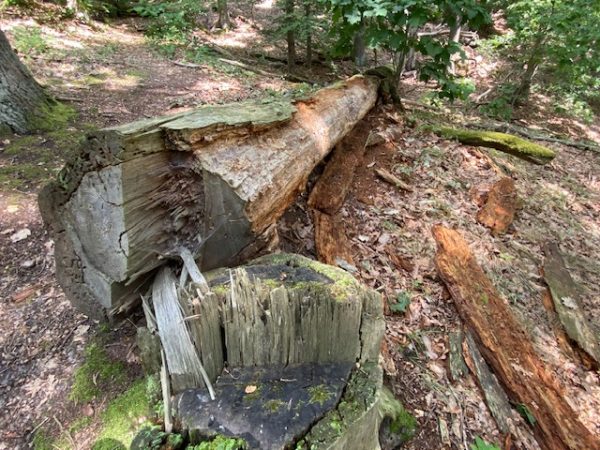
Forests work like sponges. They can stock enormous amounts of water. Trees, even when cut years ago, keep a lot of their humidity, especially if they are underneath other trees. A rich nourishing soil allows biodiversity to thrive. It takes years and sometimes decades for these ecosystems to grow, but they are destroyed within a few months or just days in case of wildfires. We have to put higher monetary values on these ecosystems and their contributions to biodiversity in order to make the preservation economically feasible as well. The sole ecological value does not seem to stop us humans to exploit this resources beyond sustainability. The succession of seasons should be a reminder of the essential role of circularity in nature and a principal of conservation of biodiversity.

Cool Cooling

The human body has a pretty cool cooling mechanism to protect our functions. This ranges from the brain to our toes. Even we are usually not to keen on sweat, it still is our best way to achieve cooling for our bodies. Physical, for some also mental exercise can heat us up quite a bit. Water on our skin allows to extract most of the heat from our bodies due to the evaporation effect. This is our natural survival mechanism during heat waves or exhaustive exercise. Not all people sweat easily nor similarly in all areas of their bodies, but externally applied water for evaporation reasons does the same trick. Fever reduction through a humid cloth is another well known example of a proven “medical” cooling device. In architecture or home cooling we might exploit the evaporation cooling mechanism to create ambient temperatures in our home, office or home office. Multiple layers of humid structures or a special dice shape can create vast cooling surfaces even in tiny spaces (Stavric 2026). Cool cooling solutions can assist us in many ways without negative impact on global warming.

Stinging issues

Sometimes a topic can make it into the headlines only if it is a stinging issue. The fact that certain mosquitoes travel and survive further north due to global warming is indeed such a stinging issue. As the living conditions for mosquitoes depend on warm weather conditions particularly during (tropical) nights as well as water availability for breeding purposes, the spread of mosquitoes can already be observed studying the spread of dengue fever, malaria and chikungunya in some southern European and American countries. Climate change, especially the warming parts of it,  shall bring home a number of stinging issues and consequences to people who didn’t seem to know or care about the spread of spread of infectious diseases.  

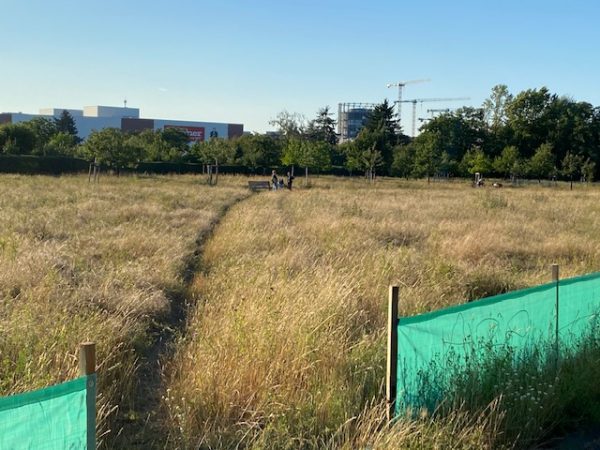
Green land in summer between Priesterweg and Südkreuz Berlin 2026

Fire engines

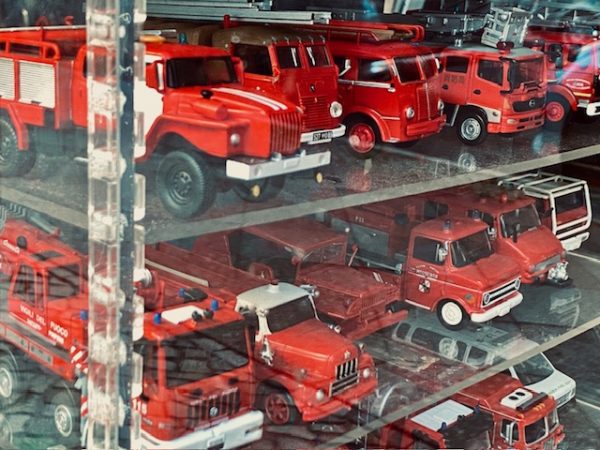
The collection of fire engines model cars on display in a Berlin antique shop reveal the whole dilemma of fire fighters across Europe. Lots of different models and technical specifications mean lower potentials for synergies. European cooperation is such a strong statement of hope and solidarity during emergencies. Better coordination in joint acquisitions would allow fire fighters from each Member State to be operational in other units. The power of the many could be a significant advantage to fight the fast progression of fire we have witnessed in 2026-7.

Fire engine models in window of antique shop in Berlin

Gone birding

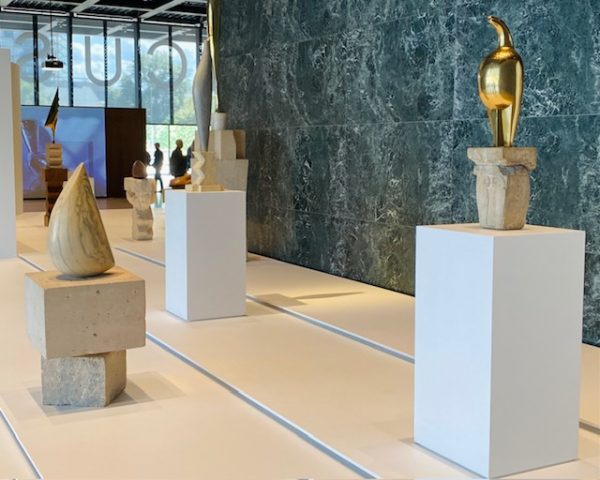
Birding is fascinating science and hobby. The recent advances in bird song recognition allow to compare the sometimes complex melodies across species. The support by many citizen scientists who collect data on sound, images and environment, made it possible to identify 8 major types of sound snippets. These constitute the basis from which to study or imitate the major bird songs, if you like. The scientific paper by Bacquele et al. (2026) shows that in dense forests the songs are more complex, whereas in open space simple tunes allow to travel far across space. Mating potentials seem to play an interesting role as well. But birding does not stop there. The Brancusi exhibits in the „Neue Nationalgalerie“ in Berlin deal also with the fascination about birds by the artist (image below). We also find depictions of the „bird-man“ in mythology more than 3000 years before our time and ever since. Flying probably brings together our science and dreams about birds and mankind. Science fiction is full of examples of that kind.

Waste reduction

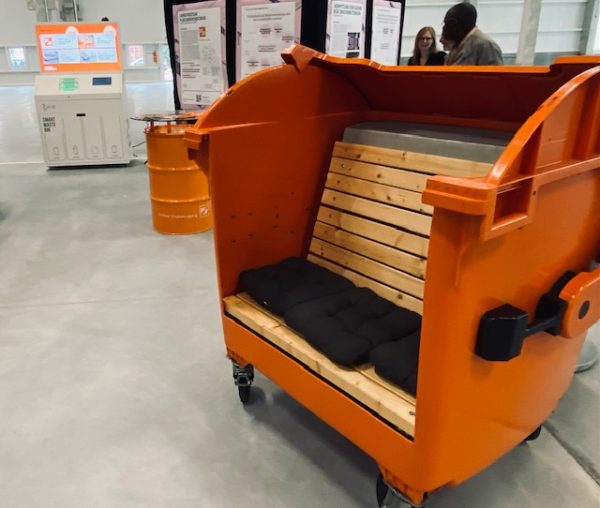
The challenge has been to reduce waste and emissions for decades without really reaching more advanced targets. In Berlin the local waste collection and treatment has presented new ideas how to proceed in future. Digital technology allows to identify the kind of waste (containing metals) and can separate waste accordingly. The digital waste container is, however, still a bit expensive and would have to undergo additional AI training in my opinion. The nice waste container transformed into a backyard bench might encourage people to think about an alternative use of the space reserved for waste containers and waste reduction, recycling and reuse in general. Taking a break is no wasted time.

Water pleasures

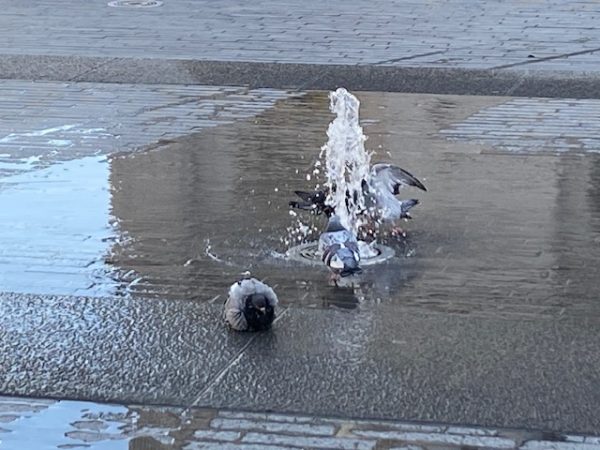
Maybe some of us associate water pleasures with the splendid fountains in the castle of Versailles (France). Our daily concerns, however, are much more about making cities more resilient and able to cope with water scarcity. According to a study by Krueger et al. (2025) the user perspective and behavioral challenges that go along with saving water by end users has been neglected for years. Water management in cities is part of the infrastructure package that has to be managed efficiently. Aging water distribution infrastructure is just as much a problem on the supply side of water as consumption has its (increasing) price on the users side. Rainwater capture, re-use and recycling are promising alternatives to simply providing more water. Pollution is, of course, another hazard that needs our attention. In the meantime we may think of water pleasures for all including the animal world.

Water in Parks

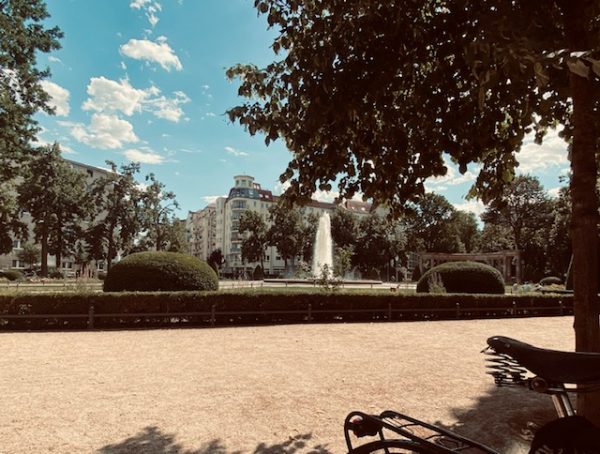
In 2026-7 and a 3rd hear wave approaching, the real luxury consists in water in inner cities. As a source of refreshment and cooling when temperatures rise, water provides a natural source to cool down nearby people, buildings as well as any trees. The wisdom of a hundred years ago appears again as a major solution as global warming progresses. Evaporation of water is cooling. Some simple facts deserve to be repeated over and over again as urban planning seems to have forgotten such simple physics. We have think about a lot of green and blue spots again in our cities to achieve the much needed cooling effects. (Image: Viktoria-Luise Platz, Berlin 2026-7)

Cool shelters

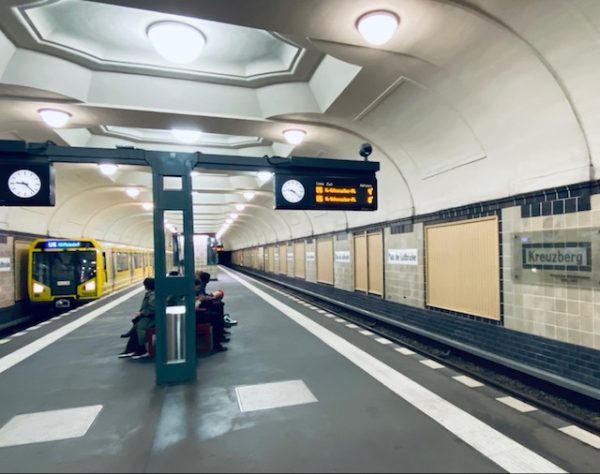
In many big cities the metro lines and particularly some of the stations can provide cool shelters during hot days. Reducing the speed of traffic reduces the airflow and heat of acceleration and braking. More home office work if employees have adequate cooling at home reduces emissions additionally. The historic Kreuzberg-Metro-Station, nowadays called “Platz der Luftbrücke” is big enough to accommodate many people who are in need of shelter for whatever purpose. Underground you do not even hear much from the busy traffic above. More efforts to brighten up the station could create an urban space which invites to rest in hot days rather than rush around the city. Climate change will ask us to come up with many innovative and unorthodox solutions as part of public health initiatives.