The Musée d’Orsay has prepared a wonderful walk through its permanent exhibition of late 19th and early 20th century installations to reflect upon climate and climate change. Raising awareness about the treasures lost and those we are about to lose in the next few years. Impressionist painters have depicted landscapes, cities and monuments covered in snow, which the next generations will no longer be able to enjoy the same way. The roofs of Paris covered with snow has become a feature of a distant past. Additionally, the impression of the massive steam trains crossing metal bridges appear as the daunting future of technical progress. Mixed feelings of fascination and risk associated with those machines were captured by those painters’ eyes. Nowadays we are aware of the consequences of this technical progress for our planet. The walk through museum with a focus on climate related paintings is eye opening indeed. (Image: Extract of Éduard Veuillard, Le jardin des Tuileries, Musée d’Orsay, Paris)


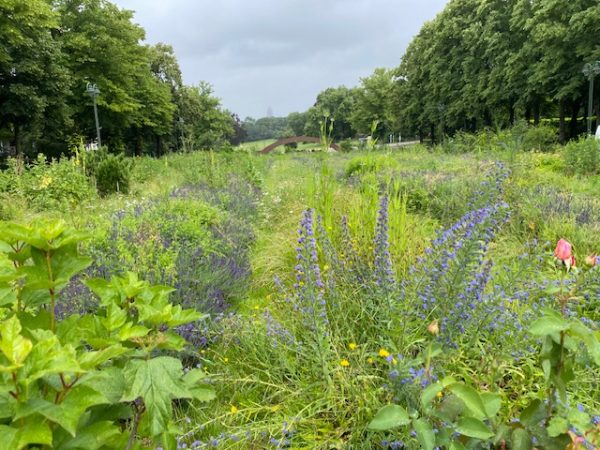
The flowering season starts earlier in Europe and bees start earlier ro their collection of nectar and their service of pollination to other flowers. In early April 2025 in France near Paris we observe wild bees already in their daily routine. However, the risk of cold nights is still there, albeit those building their homes below the surface are a bit less at risk during a frosty night. Seeking a clever shelter is a good strategy for survival particularly at times of global warming. Some kinds of wild bees seem to sense this already changing homes from one season to next one. Humans remain their toughest enemies as they restrict their choices quite severely. Man-made pollution and herbicides are beyond bees’ control and cause havoc in the ecosystem of bees. Apiculture is an interesting science also for social scientists as this forerunner species of the matriarchy has evolved into a well-organized productive society. They are a bit harsh to each other and communication is rather unidirectional, but an interesting social cosmos of its own kind.