Nature as a concept

We all hold implicit or explicit concepts of nature in our minds. There are few countries that have “battled” over the course of history with changing and often “politicised” concepts of nature. The exhibition in the DHM “Deutsches Historisches Museum” on “Nature and German History, Faith – Biology – Power” is convincing with this cross-disciplinary approach to the subject. The chronological structure of the exhibition starts with Hildegard von Bingen’s vision of nature embedded into the huge diversity of plants with almost spiritual power. Admiration of plants and the animal world, however, became an economic resource just like gold and slavery during colonization, being followed by industrialization as the epitome of man’s power over nature. Counter movements have been on the rise in the 2nd half of the 20th century. Another power struggle over how and who defines the dominant concept of nature in the 21st century. As nuclear energy, bombs and waste redefined the long-term consequences of “treating” nature, the battles about the prevailing concept of nature intensify. The exhibition in Berlin 2026 is a fine example of a historical perspective on the relationship between society, nature and technology, where the concept of nature becomes a malleable concept between the other two players or systems. (Image: Metamorphosis of the silk moth, DHM 2026-5)


Gone fishing

There are still many persons who on a weekend put up a sign on the door: “Gone fishing”. We are of course curious what these people are really up to. The reduction of fish in the sea and rivers has become a real problem across the planet. Overfishing is a policy issue and fishing quotas have taken hold of most fishing waters. The past time or hobby of fishing is very different from the industrial form of fishing. The preservation of the environment has a high priority in the very own interest of being able to fish in future. Simply watching a person fishing in the sea gives the impression that time is passing at a different pace.

Gardening Evolution

Researchers continue to study the impact of gardening on biodiversity and survival of insects. The study published by Tscharntke, Batáry and Vidal (2026) points our attention to the importance of areas in our gardens that are allowed to grow without mowing for several years. In many traditional gardening projects even in the 21st century, we observe a cut of grass-shoots in fairly regular time intervals, once a months for example. An English style lawn will be cut very short even more often than this. If we want to allow for an evolution of gardening and regaining biodiversity, we shall have to reserve substantial areas of a garden to allow grass-shoots to grow over several years (!). Such an evolution might be perceived in 2026 a bit like a revolution in gardening. Untidy spots are a response to “the need for unmown long-term refuges, protecting intact grass shoots for persistent insect populations” (Tscharntke et al. , 2026). The tree “Cercis siliquastrum” (Judas-tree) in the “Jardin des Plantes” in Paris dates back to 1785 and shows the impressive strength of nature to outlast changing gardening fashions even in a hotspot of gardening culture, history and evolution. Grass-shoots below might be allowed to last a couple of years as well.

Switch off

We have many associations with the imperative “switch off”. Depending on your background or state of mind, you might associate “to switch off” with a mental state, i.e. to calm down. Instead of buzzing about, juggling with multiple projects or deadlines at the same time, the reduction on a few major preoccupations can be achieved through a switch-off. In electrical engineering the switch, as switch-off or switch-on, is a key component of electrical circuits. In programming languages a key element is the switch implemented as an “if-condition” in form of “do if X=True”, in its easiest form.
Let us develop a social science corollary of a theoretical concept of “switch-off”. At times of energy shortages the switch-off option becomes an often overlooked or discarded option. Switch-off an engine to lower overall consumption of energy is a very powerful mechanisms. We do this manually by switching off lights, or as programmed or AI-assisted versions in modern homes. States might impose the switch-off of street lights or loud music after certain hours. In an energy crisis the switch-off option needs to be moved to center stage again as any MegaWattHour not consumed does not have to be (1) produced, (2) moved to local provision and (3) distributed. Additionally there is (4) less waste that has to be taken care of. Hence, the switch-off option is a fourfold win-win-win-win-situation. Who cares about this option as all 4 kinds of savings do not increase a standard measure of GDP in an economy? Broader social science perspectives may offer precious indications that “less can be more“.

Interests in failures

Decades or centuries after a successful or unsuccessful innovation, an evaluation of the reasons and circumstances of a temporary or permanent failure is informative. In the energy sector we observe another round of a power play in 2026. The more decentralized energy production and energy consumption models have been quickly put aside shortly after the oil crises of 1973 and 1979. The innovations using wind energy or solar energy of the 1980s have been discarded and were commonly considered as failures to provide cheap and reliable energy. An open international economy with expanding global markets for energy were perceived as a superior conventional solution. A country’s balance sheet of imports of energy and exports of higher value goods and services was the predominant economic rational and standard knowledge of the mainstream theory of trade. Other solutions, like a distributed “prosumer” model of energy might have ecological benefits, but would not show up in national GDP-statistics as a large part is home-produced energy and not accounted for in statistical measures of GDP, just like the home produced meals, health and care provided by mostly women. Societies, however, have a choice and an obligation to evaluate the interests in failures as economic and social development hinges on it in the medium to long run.

Time dependent failure

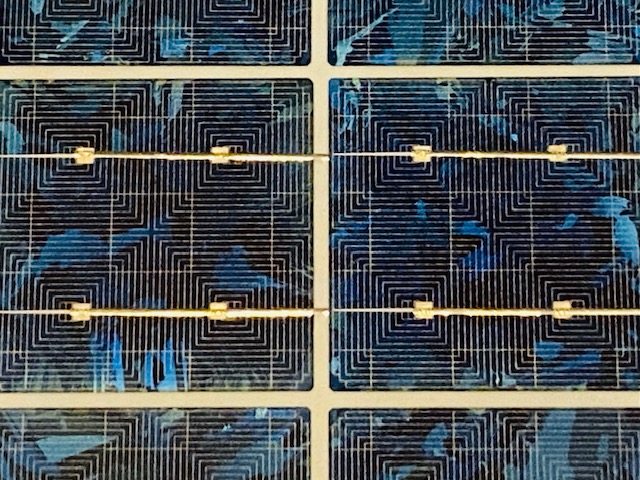
The collection of failures has an ambiguous relationship with time. Some innovations that are celebrated at a specific point in time shall be considered failures at some later point in time. The Musée des Arts et Metiers has an early version of a solar panel on display dating back to 1996 (see image below, Photowatt 1996). This example reflects the cycles of public as well as expert opinions about technical innovations that either are en vogue or at disgrace. Ecological, design and economic considerations enter into the consideration of what constitutes a failure. Claims of European energy sovereignty may additionally enter into the failure equation. The time horizon over which energy savings are generated is yet another element in the judgement. The more general perspective should take sustainability and depreciation of quality of an object into consideration. The Flops exhibition just scratches a bit on the surface of an important and rather complex issue of the relationship of society, technology and innovation.  Surely, there is more to come in terms of flops and failures, and this is okay in most cases. 

Electricity generation

On a global scale, electricity generation based on wind and solar has been growing quite fast since the year 2010-2024. Wind and solar have outpaced nuclear energy production as well as the stagnant sector of water based energy production. The Global Electricity Review by EMBER provides the statistical evidence for this evolution in 2025.
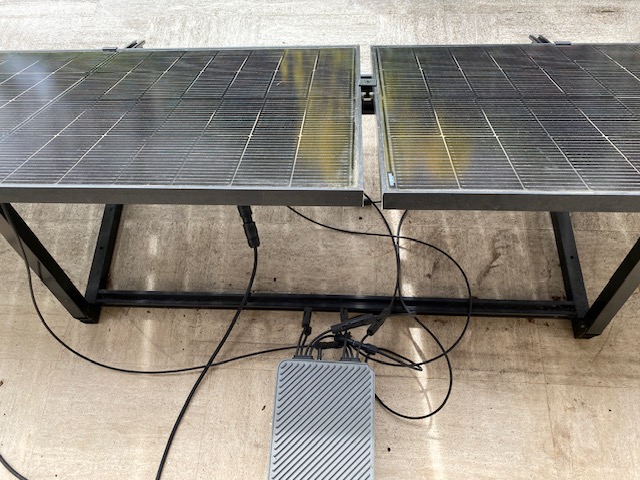
The interesting evolution arises mainly because countries with a lower level of GDP have invested heavily in solar and wind energy as this form of decentralized energy production does not need heavy investments in network infrastructure. Countries with larger population growth can keep up with electricity generation according to local needs. Local production and consumption become a key in strategies of local development. The finding that households in low-income countries use on average only 1 kWh per day is an amount that 2 small solar panels can already cater for (example image below).
Countries next to the equator have relatively constant days of 12 hours daylight across a whole year. The feasibility of no-carbon sustainable energy production is driving global growth in this sector.

Quantum battery

The first prototype of a Quantum battery has been successfully tested. The Commonwealth Scientific and Industrial Research Organisation CSIRO with corresponding author James Q. Quach published the paper on the “quantum battery tuned for strong light–matter coupling” (Kieran Hymas et al. 2026) open access. Although there have been close to 20 papers on the theory behind quantum charging already, the demonstration as a proof of concept (in business terminology) has been missing so far. The superextensive charging with photons builds upon “a laser pump pulse with bandwidth ~31 nm and resonant with the LP branch induces excitations in the quantum battery” (Kieran Hymas et al. 2026 p.3). Since batteries need not only be charged, but also discharged in a safe and fast way, the prototype demonstrated also this additional functionality.
This is a huge step towards the feasibility of the “All electric society” as the efficient storage which includes fast charging and discharging beyond storage have been a bottleneck in the wider adoption of the “All electric society”.
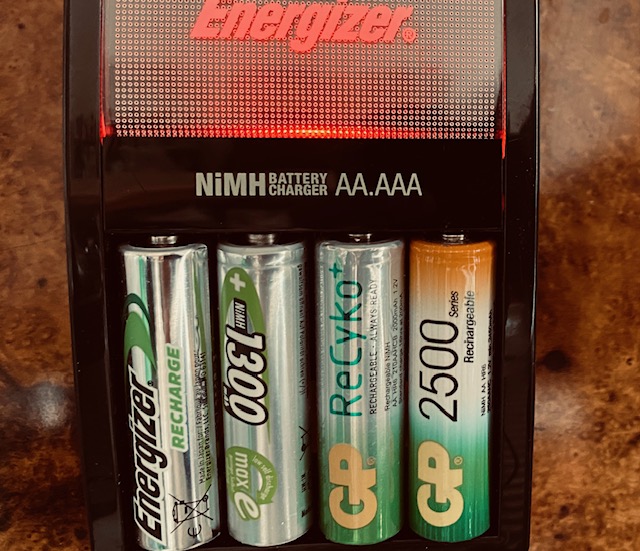
(Image: old fashioned NiMH battery charging at home)

Fukushima Commemoration

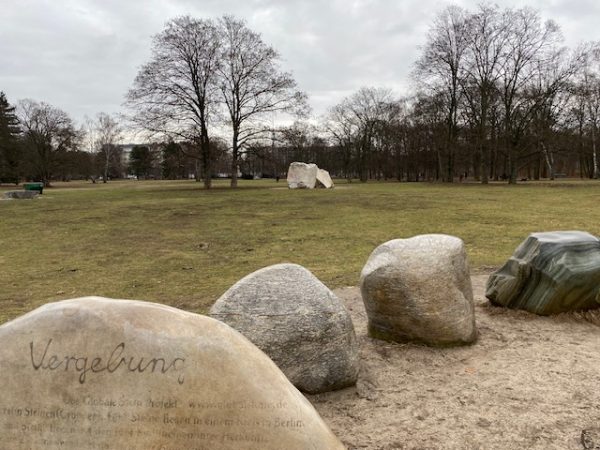
The date of 2021-3-11 is marked by an event that according to science should not have been realistically expected by anybody. The probability of a meltdown of a nuclear reactor due to an earthquake and tsunami in Fukushima were simply beyond a “normal” statistical probability. And yet, it did happen. The consequences are still visible and the nuclear waste has to be dumped somewhere and lots of contaminated water has to be dealt with as well. 90.000 persons had to evacuate the area. Many of them have no interest in returning to the devastated area. Moreover, the psychological damage to the perceived security causes continuous trauma. The psychiatrist Ryoji Arizuka, interviewed for the French newspaper Liberation, reports that victims find it easier to cope with the “natural disasters” of the exceptional earthquake (9.0 on Richter scale) and the tsunami than with the man-made disaster of the meltdown of the nuclear reactor. Whereas the former disasters can be attributed to external forces, the latter example of a the explosion of the reactor is due to a failure to estimate the risk (technical, human and political) of an explosion properly by engineers and subsequently by politicians.
The commemoration of Fukushima by its governor Masao Uchibori in 2026 is a reminder that more risky technological progress comes potentially with higher costs to society as well. These “risks for societies” will have to carried by some selected regions. Solidarity with people who carry disproportionate amounts of risk should be “addressed” right from the beginning of the decision to use a risky technology, as an attempt to “internalise” the likely costs to society, eventually. Perceived cheap technology turns out to be very costly using different probabilities of associated even unlikely risks. (Image: Global stone project). 

Fossil costs

On 2026-3-5 it has become sufficiently clear that the USA and Israel attacks to topple the terror regime in Iran have repercussions across the world markets of fossil fuels. 1973 and 1979 had told us already the lesson that a reliance on fossil fuels like oil and gas, which is produced in only a small number of countries, can disrupt energy supplies drastically. 50 years later we are much less vulnerable to supply shocks due to the stronger reliance on renewable energy sources. The supply shortages are only likely to happen, but energy suppliers are fast to cash in on these expected shortages. Prove of evidence that energy markets are driven more by expectations than actual availability of fuel stocks.
The advertisement of a Belgian recycling company “Powered by sunshine, driven by electricity” is a perfect summary of how to deal with shortages of fossil fuels (MCA recycling in Brussels, Image: former Brussels stock exchange).