National interest

Especially in times of international conflicts, it is customary that politicians refer to “the national interest” as a justification for their actions beyond the state borders, commonly named foreign policy. There is a huge literature on the subject, in which the concept of the national interest is useful, (1) because it suggests some higher ranking political goal, (2) because it clarifies and prioritizes a country’s goals, particularly at times of military interventions and (3) because it “arouses the support necessary to move towards a realization of the goals” (Rosenau 1968, Int. Encycl. p.34).
A critical assessment of this concept in international relations should start with the democratic perspective that a country’s government is subject to regular elections, whereby the goals a previous majority had put forward, might substantially change as a new majority takes the lead. Continuation of the same foreign policies is not excluded, but at least subject to revision. In authoritarian regimes the definition of the national interest is probably more stable, because authoritarian leadership does not hesitate to define the national interest in “splendid isolation” from its people.
Overall, the concept appears to serve mainly communication purposes, both internally as well as towards the outside as in communicable foreign policy goals. Conflicts between countries can thus be named and become subject to diplomacy and international treaties. But we have to fill this with substance over and over again as new topics arise like climate change and global warming.
Holistic public health

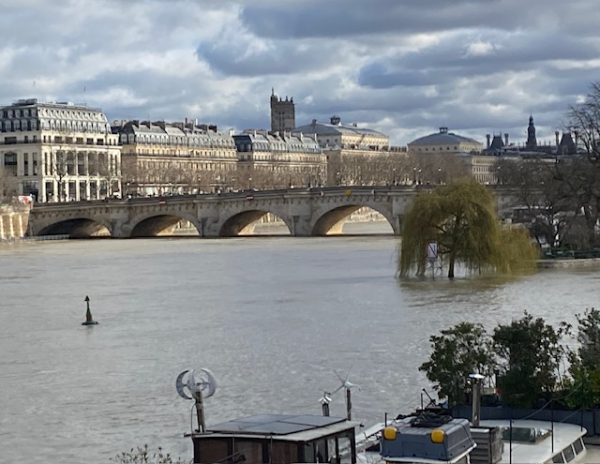
Based on case study in Queensland Australia, Boocock et al. (2026) propose the wider application of holistic public health laws. Due to effects of global warming the local burden of disease may rise due to larger scale floods and subsequent growth of for example mosquito populations that transmit infectious diseases. It will be necessary for societies to understand the processes behind the growth of mosquito populations and what can be done to prevent and protect oneself from the consequences. This is not only an environmental issue, but also an issue of continuous learning across all strata of society. Neighborhoods tend to suffer the same impact of chemicals used or the spreading of diseases like Dengue or malaria. The case study makes a convincing argument about the intrinsic relationship between the social and environmental processes at work. 

Democracy in Energy

Can there be democracy in energy? Power supply and power distribution are core topics in the theory of democracy as well. One of the foundations of democracy is the separation of power into a legislative, executive and a judicial power. A resilient democracy can assure a sufficient functioning of this fragile “balance of power”. In an energy market or a nation’s energy distribution a comparable balance of (electric or gas) power provision might be envisaged. The costs of parallel infrastructures of power distribution are high, but the resilience of overall power distribution will benefit. Also from a redundancy perspective, more than one distribution system may step in if there are failures or delivery problems with one of the distribution networks. The democracy in energy perspective goes beyond this simple analogy. Power supply as well as power distribution have been concentrated in large public or private enterprises, which might care little in terms of security or reliability of the overall system, not only during armed conflicts. Independent energy production and use, for example through wind and solar energy including batteries have pushed the feasibility of more democracy in energy to new boundaries. These technologies have enabled a new bifurcation and make room for more democracy in energy. It is a rather realistic version of a previously rather utopian vision.

Democracy in architecture

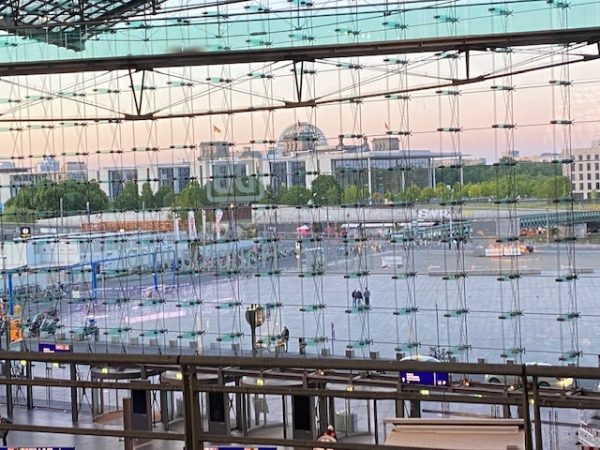
Over centuries we have pondered how to bring more democracy into architecture. This very idea is different from designing parliaments or other democratic institutions like courts or the representation of executive power in a democracy. Bottom-up or direct participation, beyond the pseudo open participation in a competition for the chosen best design, could take the form of voting by and/or listening to the people before any realization. Rather than relying on the choice of elected representatives, we may envisage the observation of people’s choices. Such a kind of bottom-up approach has been chosen by Anna Jung and Lea Krueger who let persons chose, where they wanted to take a rest at the Kulturforum in Berlin by moving chairs to a  specific place or a nearby location. Rather than yet another grand design people could freely choose their favorite niche for 1 or 2 chairs. Sometimes just looking for shadow next to a wall or under a tree, sometimes desperate for a little green spot. Democracy in architecture can simply mean to think architecture from the people’s perspective or an observed user’s experience. Democracy in architecture could resemble a bit more the internet revolution and think in terms of user interface, UX-design. With the construction of the “Berlin Modern” well under way, such green niches shall be appreciated by many people passing by and those who would like to rest for a while.  

Futures for Amazonia

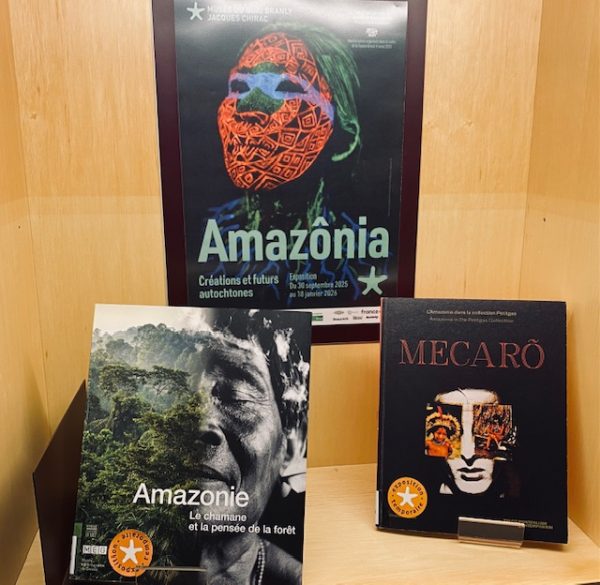
Diversity is the treasure of humanity. This was and remains a permanent challenge as thinking in multiple perspectives is taxing our minds. Simplicity can be a value in science or mathematical proofs, but cybernetics teach is also about the usefulness of a “requisite variety”. The exhibition Amazonia at the Quai Branly in Paris takes us on a journey through richness of the Amazonas, its people, biodiversity and landscapes. First of all the curators Varison and Baniwa manage to accompany us in opening up our minds to non-western concepts, which have for centuries been considered as less developed, but only from a western point of view or imagined sort of cultural superiority. Even nowadays the West seems to be convinced that for the liberation of, for example Venezuela, only a western power can achieve this. The 300 different indigenous peoples of Amazonia have lived through hundreds of years of threats to preserve their cultures. They have managed and they have inherited and still develop multiple ideas about “futures” of the Amazonas region. In just 100 days this exhibition has reached more than 100.000 visitors. Most of them will be convinced of a future and, yes, futures for Amazonia. 

Premium for silence

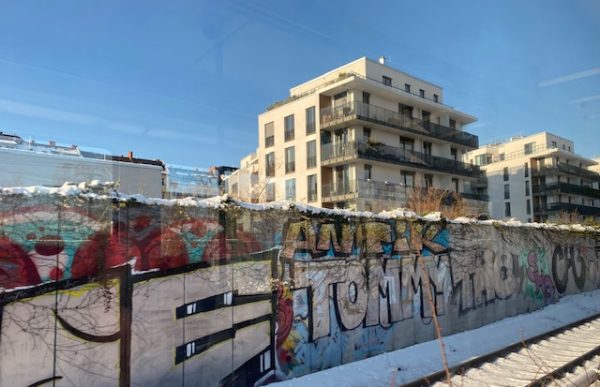
People are willing to pay a premium on housing prices for a more silent environment. In the study Enrico Moretti & Harrison Wheeler (2025) estimate that the construction of a silencing wall near a noisy traffic junction or road will increase prices for every decibel of noise reduction by about 3%. Distances closer to the noise shields get higher increases and this mechanism works even up to 400 meters away from the isolation. The investment in decibel noise reductions (not statistical noise) meets a willingness to pay a premium on housing prices. Investment in positive environmental effects (silence) have an obvious marketable premium value. This is most likely just the obverse effect that noise nearby housing is penalized and part of the social mechanism of gentrification. Housing prices and rental costs are known to be powerful drivers of gentrification as well.

Utopian Mobility

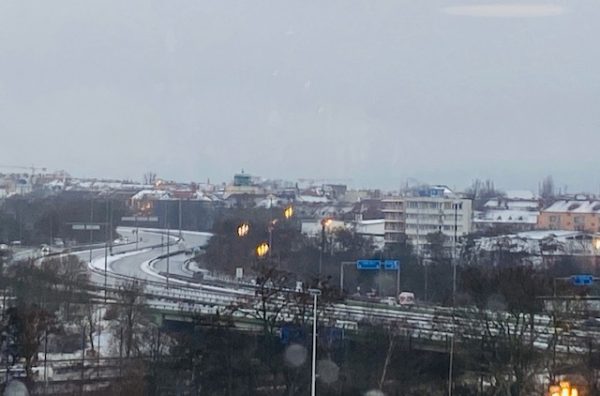
From time to time we have to reconsider our investments in mobility infrastructure. What seemed to make sense in the 50s,60s or 70s often makes no sense 60 years later. Highways, which separate city districts like walls belong to rather utopian visions about City life and mobility, progress and living conditions. These utopian individualized mobility solutions don’t seem to serve us as well as we believed, or were made to believe, more than half a century ago. Empty highways midday at the turn of 2025/26 tell their own story about liabilities from the past and outdated ideas of technical and social progress. Sharing solutions have become very popular and the younger generations adopt already different mobility patterns than older generations. Each generation adheres to its own more or less utopian mobility model, adjustments are likely to be made accordingly. 

Dystopian Utopia

Anybody who had warned about the disastrous effects of global warming 10 years before 2025 would have been branded as telling a dystopian tale. However, according to the report by the climate scientist and the “World Weather Attribution Network”, the year 2025 has been among the 3 worst years for humanity with thousands killed and millions displaced due to extreme weather events on our planet. It is all to easy to turn the page and focus on a New Year for those unaffected, but the costs of these man-made disasters have reached dystopian levels already, much faster than projected 10 years ago. 10 years after the Paris Agreement the efforts to cut emissions haven proven to be insufficient. The consequences of this failure hit the poorest people and regions the hardest. Beyond the importance to monitor and to keep track of the events the compensation for people who suffer the “externalities” of unrestrained emissions has to be addressed with international solidarity as a basic human principle.

Birds nutrition

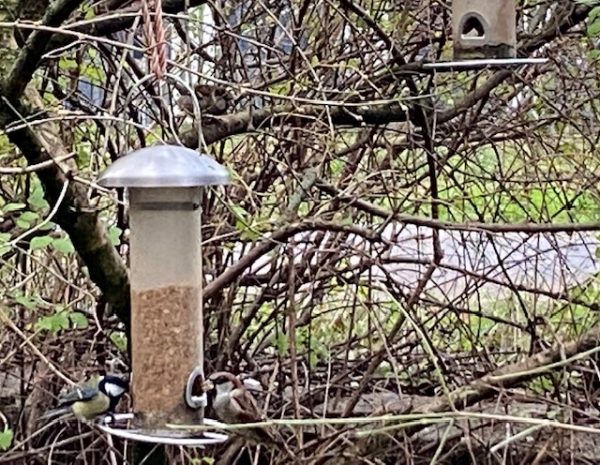
The winter diet for birds is less varied than during the other seasons. Human assistance seems to be appreciated as well even if food supply in inner cities appears to be abundant with huge amounts of wasted food in streets ans backyards. The different diets of different species are not easy to cater for. It is a two way learning and adaptation process. With a narrower range of birds feeding in cities, the task is easier than it used to be. Bringing back more diversity of birds in general starts with offering different nutrients as well. A long way to go.

Projection Painting

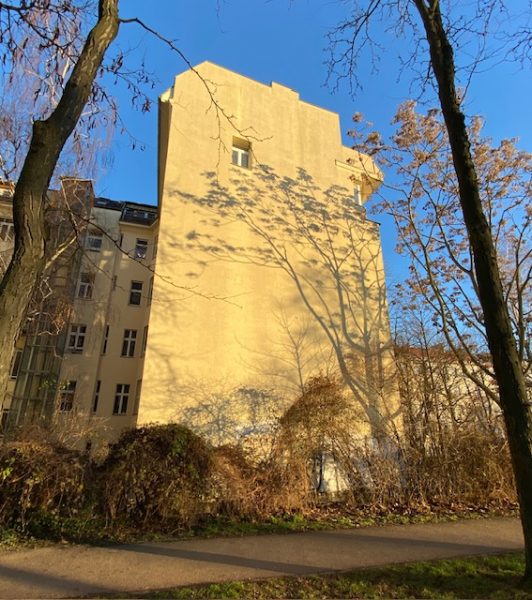
Nature teaches us lots of tricks. Bionics are all around us in the 21st century, but the marvelous projection of a winter tree on a huge screen comes close to a naturalistic painting. The projection of the branches and leaves of a tree originates from the early sunset in December 2025 in Berlin. Nature teaches beauty and the techniques to imitate or reproduce the effects. Its up to us to keep our eyes, senses and minds open to enjoy the beauty in our surroundings.