Multiple clocks

There is nothing more confusing that multiple clocks that are ticking away without being synchronized, which means, they ought to show the same time. A medical and social science perspective on multiple clocks, however, builds on the fact the different social processes run with different speed, i.e. multiple clocks are ticking in parallel but one may be more advanced than the other. The study of longevity has recently acknowledged that each human organ is aging at its own speed and if the time to failure is close for the liver, the time until problems of your heart might still be far off. Overall longevity is determined by the time to failure of a major organ, despite the fact that multiple clocks of organs are running in parallel.
The can be observed for social processes where, for example, the timing of unemployment or retirement might be dependent on a parallel process of a household dissolution causing a peak in stress. Overall life satisfaction, therefore, depends largely on multiple clocks that might be running in a synchronized or not-synchronized manner. Hence, we all live with multiple clocks ticking inside us and around us. The illusion is, to believe that time is just a single, unique measure.

Social time

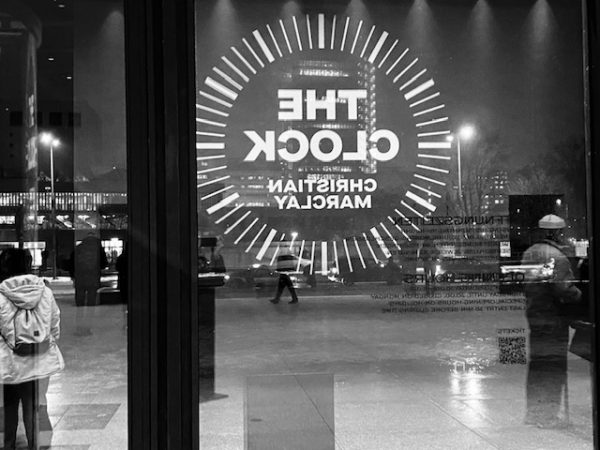
What does the „social“ have to do with time. Well, time is a perfect case of a social construction or a fundamentally social construct. The definition of time as „Greenwich mean time“ is nothing but a useful socio-political statement to synchronize time across the world, or previously an imperium. Points in time, as shown on a clock(s), can be helpful to synchronize human behavior. We might want to show up on the same point in time to start or end work. Of course there are thousands of ways in which such synchronization might go awfully wrong. This makes for splendid drama and movies have a long history to capture our attention on this matter. Social expectations, a social, psychological, and even a biological concept in extreme cases (Pavlov effect) make many of us to get a bit itchy, if time is getting short to meet other persons or an expected event is going to happen. A lot of social pressure is transmitted through the ticking away of time. The mechanism to internalize social patterns (for example prayer), via time and the clock, is quite powerful and has been used in movies throughout the history of the cinema. Even the individual endpoint in time is in almost all cases a shared social experience and turns into a kind of socially relevant time. (Take your time to watch The Clock by Christian Marclay).

Utopian Mobility

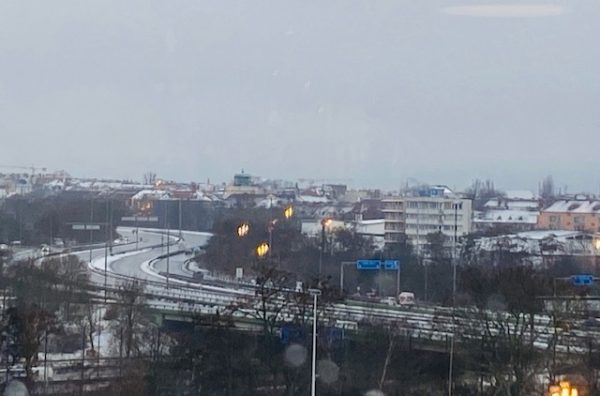
From time to time we have to reconsider our investments in mobility infrastructure. What seemed to make sense in the 50s,60s or 70s often makes no sense 60 years later. Highways, which separate city districts like walls belong to rather utopian visions about City life and mobility, progress and living conditions. These utopian individualized mobility solutions don’t seem to serve us as well as we believed, or were made to believe, more than half a century ago. Empty highways midday at the turn of 2025/26 tell their own story about liabilities from the past and outdated ideas of technical and social progress. Sharing solutions have become very popular and the younger generations adopt already different mobility patterns than older generations. Each generation adheres to its own more or less utopian mobility model, adjustments are likely to be made accordingly. 

Saint-Simon Utopia

Towards the end of the 18th century and during the early 19th century, the early signs of what the industrial revolution would mean for the working people became visible. Saint-Simon had lived through the ups and downs of the French revolution himself and had been to the Americas with La Fayette before he developed his utopian socialist vision of a unified class of working people, which for him included blue as well as white collar workers. At the advent of the 2nd industrial revolution through general and agentic Artificial Intelligence (AI) in 2025, we shall most likely witness a renewed interest in utopian scenarios and grand ideas of what the future of technology, society and humanity might be like. In 2026 we shall re-read Saint-Simon quite a bit in order to learn about ways to make sense of arising trends and how to come up with a positive utopia that can motivate people to thrive again for more equality within and between societies. 

Digital Environment

We get accustomed to our digital environment through the routine use of applications without even thinking about it. Over years of just using only one browser or office package, we forgot to make conscious choices in companies and our private computers. However, digital sovereignty asks us to take back our control of these computer systems before they take control of us. The AI-boom will make a lot of things easier for us, without knowing much about the technology behind them. Just talking to your smartphone you will be able to achieve many tasks or searches without many of the other steps that were necessary before. The knowledge to command a typewriter or keyboard will be more and more obsolete unless you really need to change something profound on your computer, like the operating system or an expensive office program. Keep exercising yourself with alternative and new software and you’ll stay the master of your digital environment. 

Typewriter history

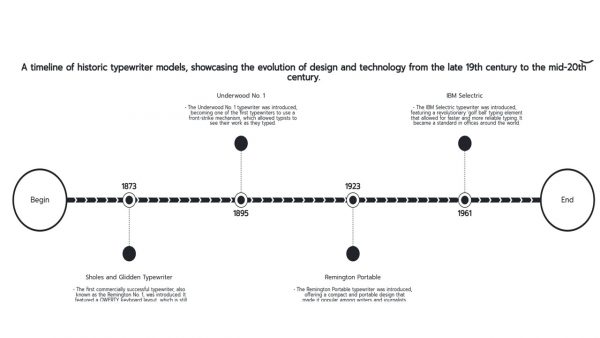
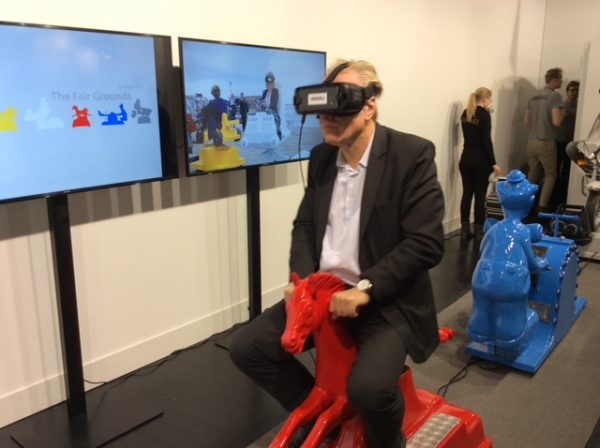
The history of the typewriter and typewriter is comparatively short compared to the history of literature or other technologies as partners in the creative process. With the advent of AI (here as part of infografix, see image below) the skills of using and mastering a typewriter have become almost obsolete. The original design by Remington (timeline below) has dominated for almost 100 years the technology of typewriters. Then came the electronic IBM technique with an automated correction type, which was not only faster, but also more forgiving of “typos”, short for typing errors.
The craft of handwriting had suffered a tough blow, despite its almost intimate touch to it. Knowing the typewriter outline by heart allowed typing with closed eyes or a focus on another text or image as well as a parallel thought process. Scientists and writers (Claude Levi-Strauss) reported on their creative process as intrinsically being linked to their typewriter.
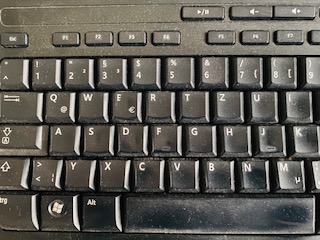
QWERTY outlines for English language typewriters still dominate the keyboard typing today. With the AI interaction on the rise, we might move away from typing as a “Kulturtechnik” a technology of our cultural era and focus more on human-machine interactions via our voice and microphones. The underlying question, however, remains the same: What is the best technology to enhance our thought process? This, in fact, tends to be a very personal human choice, where technology plays only a subsidiary role.

Animals’ dialogue

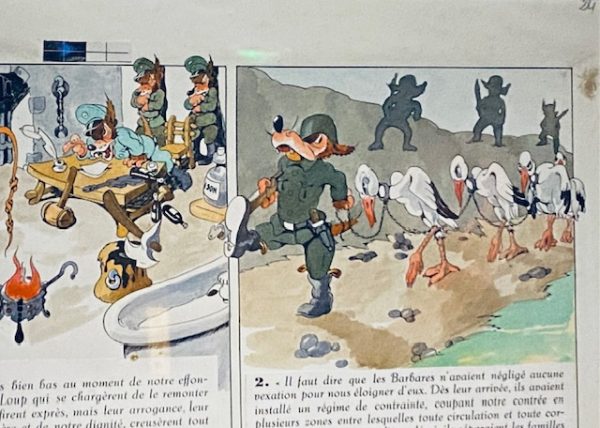
The writing of Colette became prominent in France already after the publication of the “La chatte”, the Animals’ dialogues and the “Peace amongst the animals”. Cats and dogs were popular in literature long before “La bête est morte” and Orwell’s Animal farm appeared and became famous. “Toby-chien” and “Kiki-la-doucette” became forgotten, before they reappeared to get people to read more again rather than just watch “fail-collections” or cats and dog shorts on video platforms. Funny as well as sad or even terrible stories can be told through the metaphorical use of animals to represent humans. Maybe this old tradition,  dating back to La Fontaine and his fables, is only the precursor of the AI creations of “animal-like” chatbots or companionship. The sociology of the virtual or sociology of the animal-human relationship will bear fruit in analyzing the identification and differentiation between them and us. Tell me what kind of animals you like and a social or psychological profile is likely to be influenced by this (or vice versa). Social media platforms have tons of data already on this for better or worse.  

Telework Challenge

There is a seminal trend that many employees prefer to have a choice to work on the premises of the employer or remote from home. This flexibility has become a major element of collective bargaining on work and time in larger companies in order to clarify rights and obligations.
In France it is about 1 in 5 of employees who do telework one day per month (1 in 6 in Nouvelle Aquitaine). The higher up in the hierarchy a person is, the more likely s/he is to do telework. Higher levels of educational attainment and seniority in a company also improve the access to and use of telework. There are still many employees who would like to do telework in their jobs, which technically could be done remotely, but who cannot do it (1 in 3). Most of those are denied the possibility by their employers.
Data from a survey in Germany from 2014 showed that before Covid-19 men were worked more often remotely than did women (Lott & Abendroth, 2019). The latest figures from France 2024 show that women have overtaken men as remote workers (Askenazy et al. 2025). As working from home has become more a part of the “standard employment relationship” today, the fears of loosing out on career opportunities due working from home seems to play less of a role nowadays, probably for both gender. Compared to 2014 the costs of equipment and availability and ease of installation of fast internet have become more affordable and might push the spread of telework even further.
The data from France show a strong positive correlation of remote work and commuting distance to work. Hence, long commuting distances “drive” more people into telework, which makes a lot of ecological sense, too.

Cut it short

The “Revue des sciences humaines” (Demanze and Gleizes, Nr. 355, 2024 pp. 7-16) provides an interesting reflection on the widespread practice to find (new) ways to cut long stories or insights short. Short by itself, this introduction to a longer special issue on the topic “Faire court” stresses 4 elements of the contemporary impetus to cut it short:
(1) The creative process may be subject to condensation of content, similar to the process of a “reduction” in the culinary vocabulary. The speed of creativity, inspiration, freedom of expression are exemplified by the twitterization of and aphorisms in literature. Roland Barthes, in his analysis of the “haiku”, raises awareness to the different associations of the short text forms in different societies.
(2) The observed shortening of time spans of attention and the competition and economy of attention have raised the stakes for longer formats and explain to a large extent the success of shorts in the digital age.
(3) The short format works to increase the intensity of the literary experience.
(4) In deconstructing the associations of long formats as “monumental” versus short formats as ephemeral, the “cut it short“ tendency serves to “demonumentalize” the big shots of literature, science and the humanities. Well, about time to cut it short, “hic et nunc”, here and now!

Classic Farces

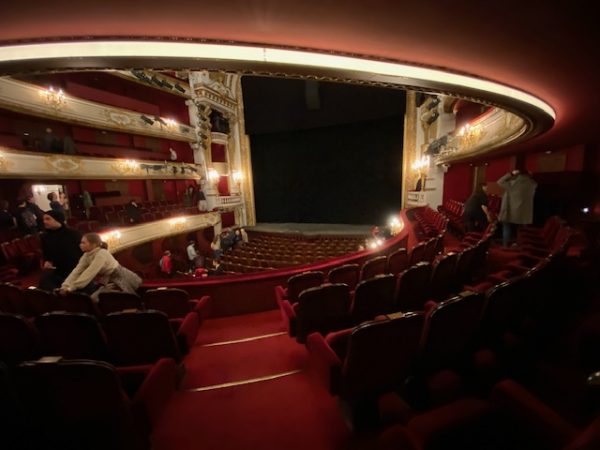
Molière’s theatre pieces were popular pieces. Born with the name Jean-Baptiste Poquelin and son of a rich “tapissier” of the rue Saint-Honoré in Paris, he made a tough choice to devote his life to touring as a ”farceur” and comedian, having studied also law in Orléans before. Only after his first successful performances, farces and theatre plays, he could afford to buy the theâtre du Palais Royal, despite a bankruptcy about 20 years earlier with his own theatre. The much later title “Troupe du Roi” (of Louis XIV) and a pension by the King assured a financial and political independence rarely found in this period of classic theatre.
Molière’s “Les fourberies de Scapin” was written towards the end of his life and as a classic farce in the 17th century. The story is full of funny scenes and witty dialogues, which make it a great “intergenerational” theatre play even today. The plot about the institution of marriage addresses a cleaving social and legal construct “marriage”, which continues to excite all generations and across centuries.
(Source: Histoire de la littérature française XVII siècle. Robert Horville  in (Georges Décote series editor)