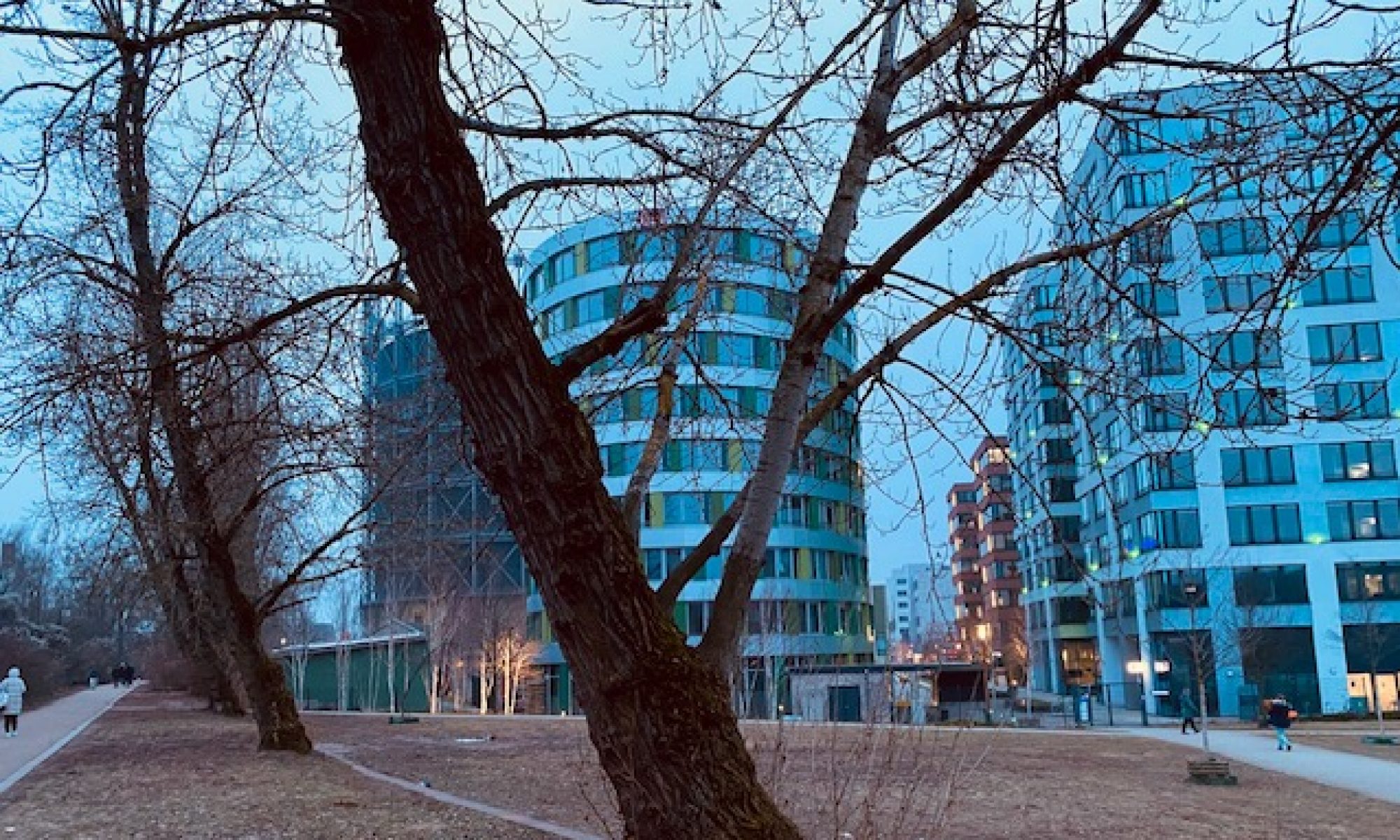

Local history

In Berlin and many other big cities in Germany like Munich and Hamburg there are local history projects which tell the stories of specific places or a house linked to liberation day or deportation or courageous acts during the Nazi  grip on Germany and terror across Europe. The initiative « Denkmal am Ort » has become a kind of citizen science project which brings people together to raise awareness again for the cruelties committed under the dictatorship of Hitler and the fascist political movements. Remembrance is not a passive form it can take many active forms as well by simply trying to find an answer to the question what happened during the 30s, 40 and 1950s in the house you are currently living in? Access to archives of cities and small towns can tell very surprising stories about local history. It is a great inter generational experience as well and sometimes the unspoken history turns into a great conversation about history and responsibilities. History is everywhere you just need to keep your eyes and mind open.

Technology maturation

Technology has its own time of maturation. The time for wind power generation was quite lengthy compared to some innovation cycles in information technologies. Maybe, due to the fact that large wind turbines had only big enterprises or public monopolies as potential clients who were already heavily invested in even bigger nuclear energy projects caused the slow pace of development of this technology. In Germany just like in Denmark, Sweden and the USA the first larger research projects took off in the mid or late 1970s. The technology is explained by Erich Hau in a comprehensive way including the early days like the « Growian » test wind turbine in Germany (extract of image below). Despite the fact that major engineering difficulties were overcome already in the early 80s, the economic and legal challenges took much longer to resolve. Nowadays, we have an additional case of energy sovereignty to add to the cost-effectiveness of power generation from winds offshore and onshore. In the coming years we are likely to see more and more decentral power generation from wind on roof tops or small poles to complement solar energy during cloudy but windy weather or at night. Just like the sunshine we shall praise the windy days for their power generation potential.

Constitutional Responsibility

The memory of horrors caused by Nazi-led Germany before and during the 2nd World War is our constitutional obligation in the Federal Republic of Germany since its beginnings in 1948. 80 years after the unconditional surrender this has become a state responsibility. Since the shift of tone introduced by Richard von Weizäcker on 8th of May 1985 framing the end of the 2nd WW as liberation day in Europe and Germany. On the same day, 40 years later, the top 5 political instances of democracy in Germany, president, chancellor, presidents of the parliament (1st chanber), the council of the regions (2nd chamber) as well as the constitutional court. The constitutional and moral responsibility of the crimes is not reserved to a presidential address, but all pilars of democracy in Germany committed to the narrative of a liberation of Germans and Europeans at the end of the 2WW. It is a truly European topic to celebrate the end of war jointly in all countries. This is even more the case as the memories of the last survivors of the Shoa in Europe is less transmitted by the rare survivors until today due to very old age. The impressive unity of the top constitutional powers sets a the path for a far reaching renewal of the acknowledgement of a specific constitutional responsibility to counter extremist tendencies. The speeches by Frank-Walter Steinmeier and Julia Klöckner in the Bundestag (Link in German) were remarkable in explaining in plain language, why we are happy about this liberation also in Germany. The emphasis of the end of pervasive and endless oppression and suffering caused by the Nazi-regime are an essential part of this feeling of liberation. With this commemoration Germany today has become even more a European nation which takes its historical responsibility seriously.

Persistent beauty

The fashion industry is known for its fast turnover of beautiful designs from season to season. Some designs and often just single pieces survive the fast turnaround of the fashion industry. In many cities we find shops that sell so-called vintage cloths and objects. For men and women it is feasible to rediscover pieces of longer lasting beauty or even persistent beauty. The persistence of an image of beauty may follow the classics of designers and specific brands, but it may also have a very personal touch referring more to a person’s own life course (when we were young) or associated with freeing yourself from your family or societal context. The 60s and  70s were such time periods with radically changing images and ideas about beauty. Since then more individualised clothing seems to take hold, although there is an equally strong tendency of social or age groups to identify themselves through specific clothing, showing that you belong to the “in-group”.

Beethoven Home

The home of Beethoven in Bonn is nicely preserved and full of objects related to his life and his creative work. For the musician and composer musical instruments have accompanied him throughout his life. The visit of his home of birth offers a chance to dive into the extraordinary accomplishments of this great figure of the late 18th and early 19th century. His 9th symphony is strong as ever and the European anthem has just more than 200 years since the first performance now. The visit of the museum is still the highlight of Bonn and the App of the Beethoven House offers unique insights into and listening of his manifold compositions. Handwritten notes and a pocketbook of preparations for the symphony demonstrate the all encompassing nature of music for Beethoven. From romantic letters to the romantic music pieces, the museum has it all. Even it is a rather tiny house from the outside the inner life is as huge as it can be. It is advisable to take at least half a day for the visit much more than you would usually take for visit of a museum. The link between the biographical information and listening to linked musical pieces with a chronological context are a unique experience. This spurs the interest to listen or listen again to some of the romantic masterpieces. The App is great also to listen directly to some of the music.

Housing renovation

The huge amount of buildings that need renovation is a task for each generation. New constructions are relatively easy to realize even to the best available standards. Particularly energy standards asking nowadays for serious isolation of buildings are easy starting from scratch. Energetic renovations of existing buildings are much more challenging and have to take into account the various stages or predilections of previous generations. Repurposing of buildings raise additional questions like transforming a family home into a representative office building. New technologies like fiberglass instead of copper cables or copper or plastic tubes instead of other hazardous materials cause additional costs and worries. The use of asbestos for interiors of previous generations has created the greatest liability for existing buildings. Technological choices of the past and also of the present (heat pump or not) have lasting consequences and sometimes even health effects. To cherish old buildings and styles is a mixed blessing as the renovation of housing confronts home renovators with more tricky challenges than building a new home. Incremental repairs might do the trick rather than all in one go renovation, however, you might enter into a situation when renovations are always on your mind. Not only the times are a changing, but homes are a changing, too.

Time Horizon

For ages human time horizons have worked as a succession of generations. With substantial population aging we have many more families where we find 4 generations alive at the same time. In nature and with respect to biodiversity the sequences of renewable have not changed much. Old trees that have been cut will take another 100 years to grow old again. Wild fires or human negligence risk big in this respect. Forests take several human generations to grow and thrive. Diversity is key there as well as many fast growing monocultures have increased risks in case of fires caused by global warming. Annual inspection of a forest that suffered a severe drought and fires is still looking dismal compared to before. (Foret de Senart, France 2025).

Intimate change

Society changes and with it so does intimacy. The major changes pass through the behavioral changes of persons and sooner or later the whole society adopts such changes as the new normal. Trends of individualization have moved over centuries as the exhibition in the Museum of decorative art (MAD) in Paris demonstrates. At the same time the changed individual approaches to intimacy have become more widely spread quickly over time. Social media have accelerated such new trends again. Social class is yet another intervening variable in this context which created different speeds of adjustment as well as sustaining differences in kind. 

Religious beliefs and practices have made claims about how individuals should handle intimate relationships and affairs. Legal issues are defined by each society to guide moral practices as well. Hence, the sociology of intimacy is a huge topic and comparing societies an interesting topic. The development of intimacy over a person’s life course, however, is given little attention due to a lack of adequate longitudinal data. From the exhibition we are encouraged to think about the relationship of hygiene and intimacy. Bathrooms accompany us throughout our lives and privacy was originally a bourgeois concept. Over the life course we move from dependency to independence and maybe dependency again in very old age. The images (below) from the MAD exhibition range from basics of bath tubs to a painting of Edgar Degas in the background. Instagramer or YouTuber share lots of images and stylized arrangements of bathrooms on social media. It seems that intimacy is moving further into the public domain. 

Apocalypse Depicted

At the beginning of the 21st century we have a renewed interest in depictions of the Apocalypse. “L’Apocalisse di Giovanni” has been illustrated in various Christian monasteries and some traveled quite a bit. The version of the Apocalypse (Link) which was attributed to Cambrai is a copy of the older original version found in the City library of Trèves, which dates back to the year of about 825. A flemish version of the 16th century is to be found at the BNF in Paris. Throughout the centuries the “Apocalypsis”has been reworked. The version of Trèves has the “carolingish” depiction characteristized by a presentation of image on one page and text on another page. Nowadays we are used to futuristic images and have known even worse experiences of apocalyptic events (Nazi terror). Earth quakes or man-made climate change with heating of the planet, storms, draughts and floods testify for the renewed interest in the Apocalypse. Other man-made technological innovations like rockets. atomic bombs, chemical and biological weapons overshadow even the “natural” ones. The potential of AI to cause destruction is not fully assessed until today. Swarms of drones guided by AI might reach apocalyptic levels as well. We just remind ourselves of the bombing of walls of a water reservoir by Russia in Ukraine. The Apocalypse will remain the original example of a horror story and our strange fascination for such texts, images or movies is likely to stay. (Image: extract of anonymous 1st quarter of 9th century. Trier Stadtbibliothek, Schatzkammer. Wikipedia public domain).

Apocalypse
Screenshot

Art from India

Indian music, art and performances have had a difficult time in traditional western cultures. Based on the historical collections and donations in the BNF, this WEIRD bias is challenged a bit. The focus on performances and art from India of centuries old traditions of high standards could have been a major source of inspiration to wider audiences already. The narrative language of for example dance as Bharatanatyam is a sophisticated ritual of expression. It appears to us like a spiritual performance which reaches our emotions much like our modern ways of expressing and performing. It seems amazing how the western world has omitted looking and listening to other continents. 

Of course, archers have played an important role in Indian culture as well. Such depictions have been common across cultures in previous times. These images can reflect the shared human heritage and this with a global perspective on art history. Flora Willson (2024 in Die Musikforschung) refers to this Indian cultural heritage in her book review and why Italian Opera never really became popular in India. 

(Image BNF, Paris Richelieu in Rotonde 2025).