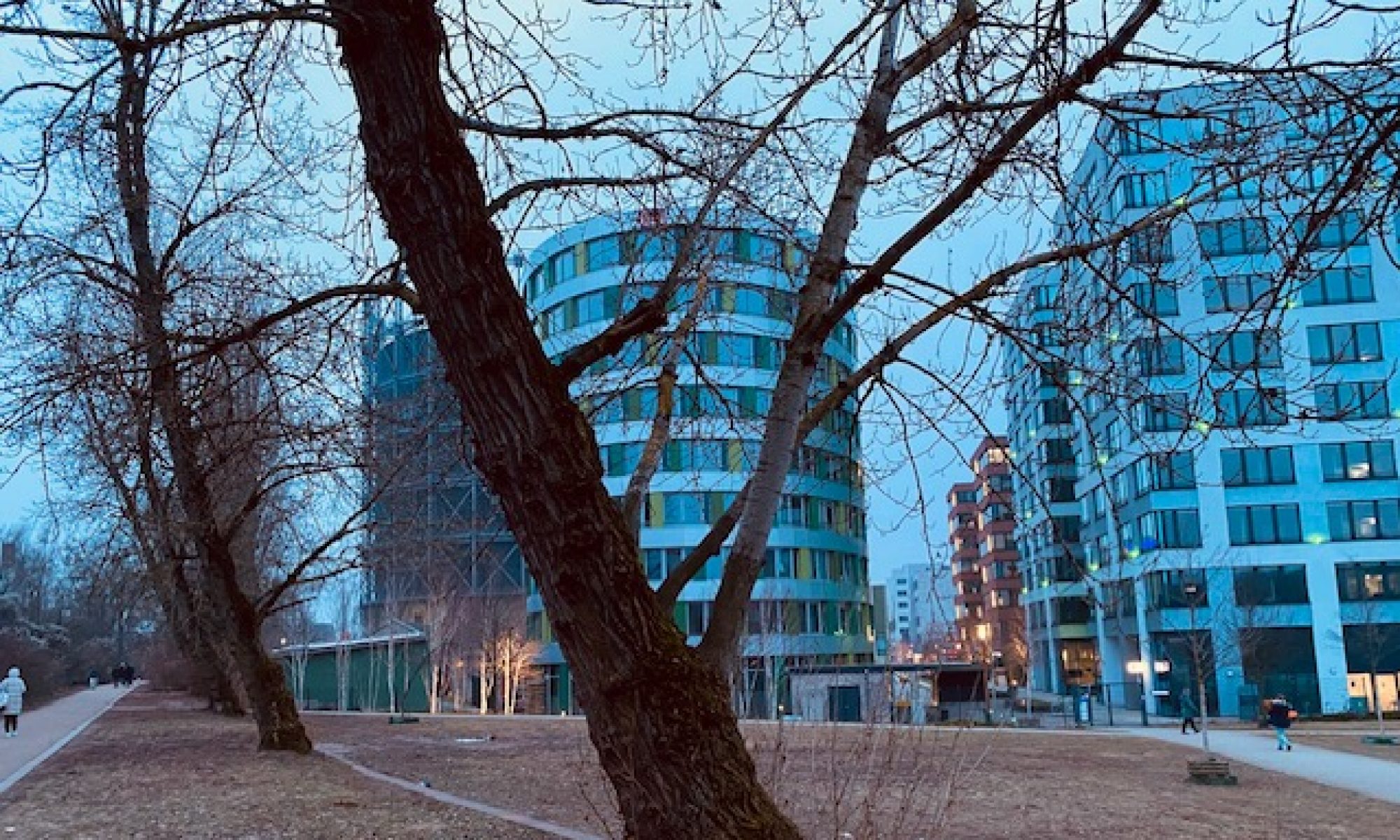

The careers of conductors during the 1930s and 1940s have been propelled by joining the NSDAP on Germany. Even if not too outspoken as conductors on Nazi discriminatory policies many openings arose only due to banning Jewish conductors and musicians from performing in public. The acceptance of vacancies due to such restrictions advanced the careers of Karl Böhm as well as Herbert von Karajan. A theatre play Böhm at the Deutsches Theater in Berlin takes up this topic and puts the professional career in perspective of an anti-humanist leadership style. Karajan has also come into critic, because of his role in selecting musicians who were conform to the prevailing Nazi-antisemitism. It is important to work on these biographies and their implications for hundreds of lives of other musicians. Many careers have been destroyed due to these two prominent conductors ready to do almost anything to advance their careers. It puts their interpretation of music in a different light knowing about their instrumentalist approach to music, their own careers and the disrespectful Nazi doctrines. Image New Berlin Philharmonic, View from Kunstgewerbemuseum 2020. 
Nazi Doctors
The role of medical doctors during the Nazi domination in Germany has been revisited by the professional organization of statutory medical doctors (Kassenärztliche Bundesvereinigung KBV) in collaboration with the Center for Research on Antisemitism (ZfA TU Berlin). The exhibition entitled „Systemic Disorder“ first shown in the main entrance hall in front of a conference room offers a thorough review of the role of medical doctors throughout the Nazi period. Politically undesirable physicians were rapidly banned from the profession and promotions given to NSDAP party members. The totalitarian approach transformed the whole apparatus of the medical profession into a politically streamlined organization ready to commit crimes like forced euthanasia or selecting „insane“ persons for special medical treatments in other institutions. Selection of forced laborers for firms or declaring them unfit for work, which in many cases sent those persons to concentration camps, was part of the streamlined medical doctors. It took decades after the „Wehrmachtsausstellung“ in Hamburg that another profession has done its homework. Great to know that this important exhibition, documentation and catalog is traveling now across Germany for at least a year. It is another milestone in coming to understand how presumably intelligent people were part of a highly efficient selection and killing machine during the Nazi domination in Germany. (Image, Berlin KBV 2004, catalog p73, SystemerkrankungSystemerkrankung) 
Reconciliation
European history is a long history of atrocities committed against humanity. The Documentation Centre for Displacement, Expulsion, Reconciliation in Berlin (Image below) captures this history in a comprehensive manner. We are quickly overwhelmed by this weight of history and the implications this has for the understanding of the people on the globe. This relatively new learning centre has, beyond the memorable permanent and temporary exhibitions, a room of silence to recover from the hard work of remembrance, always in view of reconciliation.
The library allows personal search and research of migration documents and biographies. All centuries have their history of displacements, but the Nazi terror surpassed all prior records and forced millions into displacement or death. We are still working on this heritage and the enlightenment of how these atrocities could take place. Full consciousness of the terror and horror of the 30s and 40s is necessary to guard against the many attempts to falsify historical events or discard the sorrow of millions of people and their families.
Reconciliation remains a continuous challenge. A large part of diplomacy has to deal with reconciliation beyond concerns of daily affairs. It is not just a matter for head of states and days-off during a year. Stillness helps to deal with the challenge, especially if it is very difficult to find adequate words. 
Korea relieved
On Saturday 14th of December 2024 the Parliament of Korea voted with 204 out of 300 votes, the required 2/3 majority of the parliament to dismiss the president. The declaration of martial law has been the most serious attack on democracy in Korea since its founding in 1987. It is the 3rd impeachment of a Korean president in this short time of democratic life cycle. After impeachment the constitutional court has to confirm the impeachment also with 6 out of 9 judges in favor of impeachment. In 2017 the judges confirmed the impeachment of a president due to corruption charges, but in 2004 another president was reinstated after illegal campaigning charges were retracted. Democratic procedures hinge on checks and balances in the constitutional set up of a state. Nominations, votes of confirmation of judges are important safeguards against illegal martial laws to restrict or even abandon democracy. Pressure from the street, the people at large, is another safety net of democracy. It should not be the last resort for democracy’s survival as it is likely to come at high costs of human lives. 
Health Tech
Health technology assessment (HTA) is an interesting scientific field. The new digital opportunities allow people to participate in medical and medication trials in their homes or even in bed. Their health data and the administration of medication is also encouraged and sometimes supported through digital devices. The pharma and health industries have many devices ready to go. The differences to the traditional forms of medical trials, however, is an issue as we want to compare the results from both kinds of trials. Participants of trials, might prefer or struggle with these novel kinds of study designs. In any case the results will be impacted in several forms (Study Link). In the best of all worlds for the researcher the effects will cancel out each other, but is rather unlikely. Some participants will reach more positive effects with the use of digital tools, whereas others are challenged and might even abandon during the trial. Monitoring during the study (for example through digital inhalors) is another advantage of such distributed trials. Rather than taking adherence to a trial medication for granted, digital tools allow a more precise monitoring of subgroups as well. Data and effort invested in the trial is preserved through the easier access to person’s information, assuming continuous readiness to stay on in the trial.
Our own smartphones are still underexploited in terms of health monitoring and use in research designs. The possibilities to link data to other external data sources shall further advance the research potentials in many interesting ways. Data protection and data security become even more important with the ever smarter phones and connected devices.

Health data
2025 will be a crucial year for health data across the EU. Germany introduced the electronic patient card, which can store basic information to then access data in the health insurance cloud for medical doctors, hospitals and other related health services. Potentially this is a great step ahead as some tests do not have to be repeated if they had been completed recently before already.
In pseudomised form, research may draw samples from such databases to enhance our science based understanding of disease. The evaluation of public health interventions becomes easier and medium and long term efficiency of measures can be assessed in many instances.
The Belgian research using health data has met to discuss the potential and limitations to link health data to other data sources to allow more complete and more complex analyses of health and disease processes. Another extensive data source sits on our smartphone. Collection of steps walked, sleep patterns or heart beats give valuable insights into a person’s own contribution and care about personal health. Although data are frequently incomplete, researchers are used to estimate missing data on the basis of existing or comparable person’s data. The basis for improving health for all are quite promising, data handling and linking them will be a challenge to the competence of all stakeholders and everyone involved in better health. It will be stressful before it becomes a routine. 
Sociolegal Circularity
At times legal systems feel like going round in circles. Legal procedures move from one stage to the next and they may get referred back to the previous instance to resolve a particular issue or restart the procedure. This has good reasons with the aim of “doing justice”. Sociolegal circularity, however, begins before the, right at the beginning and negotiation of legislation on which all legal systems are based in democracies, that is. Hence, the legal definition of waste, recycling as part of the circular economy and society is rather crucial.
Circularity is a complex sociolegal issue as the example of PFAS in plastics demonstrate. In economic theory the existence of externalities invites profit seeking of the kind like: “the sea in large part is owned by us all and there is no price attached to the (ab)use of it. Dumb PFAS into the sea, because the costs of cleaning up will be shared by all of us”. In order to limit the extent of this economic logic, we have to rely on sociolegal processes. The precise definition of property rights and liabilities beyond the PFAS issue have to be well-defined. It is an intergenerational topic as well, not only in view of deferred payments.
Parliaments have to be rather competent to look through all the complex issues of producing and recycling of materials to make sound provisions in law including future generations. Going round in circles in parliament is yet another element of necessary condition of circularity in a rather broad sense.
The air we breathe and the water we drink have become part of this “economic externality”, which is a very internal, inside of our body kind of sociolegal affair. Who is responsible for the bad air we breathe and the contaminated water we drink? Air and water have for a long time become marketable products. The more your local water is polluted, the more we are forced to buy water. The more the air in inner cities is filled with fine dust particles, the more medical doctors, hospitals and rehabilitation facilities we need to construct.
For GDP calculations these are win-win-win situations, although they make us all worse off. Society and politics are in charge to define and redefine (yes, circles again) the legal basis with a lot of precision and scientific detail. Sociolegal circularity is key. You just have to turn it in the right direction.
(Image, Palais de Justice, Brussels view from Forest district).

Socioeconomic Circularity
Some sectors of the economy receive a lot of attention, for example sectors selling fancy cars. Other sectors, like the ones regrouped under the name of circular economy, receive much less attention and show up little in headlines. In fact, the circular economy is a great example of this. There are thousands of waste and rubbish collection, sorting and recycling centers, several hundreds of waste-to-energy plants, composting sites across the European Union. Of course, there is also a European Federation of the sector (FEAD). On the last FEAD conference in Brussels 2024 it became clear that Europe is finally waking up to the challenge of recycling costly raw materials.
The narrative concerning the sector needs to change further: what used to be subsumed as costly nuisance is in fact a potential profit center for companies and society at large. We do no longer want to import lots of raw materials from countries with dubious social and environmental records as part of our supply chains for raw materials. Time to act. This, however, is a rather complex socioeconomic challenge of circularity. The price mechanisms are not fully functional in most Member States, let alone across the EU. Additionally, the social practice to recycle varies greatly between countries. Distributional issues matter as well. It is rather obvious that dumping waste from one region/country in another one has huge implications (nuclear waste), but if one country values waste more than another one, due to innovative recycling techniques, the matter takes a marketable turn. Regulation should carefully distinguish categories of materials as we do for hazardous materials in production, consumption and for health and safety purposes of employees.
Metal, battery, cement, plastic and wood recycling pose challenges, but also opportunities to improve the European material import/export balance sheets. However, first in the circle of circularity is the use of materials. There we are clear that “less is better”. Less input of raw materials, most of which we import in the EU, reduces our dependence on other countries. This is the tricky social question of circularity. Mainstreaming of more conscious use and reuse of resources is a huge social issue, which we tend to relegate to a task for the education system. The awareness that supposed waste is also a valuable resource is spreading and the growth of the sector a business and employment opportunity for many. Circularity is the new sexy sector of the 21st century.
What have you recycled today? and myself? Well, scientific online publications. Now think of ChatGPT and the AI gold mines of 2024. There is lots of value in recycling.
(Image FEAD conference Brussels, 2024) 
Book Annotation
For most people book annotations are considered a nuisance. However, most pupils or students mark their so-called textbooks, which contain many images nowadays anyway. A good mindmap, summary of text, highlighting or critical comments may be part of their day-to-day working with a book. Some editors facilitate this using broad margins and more space between lines. Working through a text can take multiple forms and books have allowed over centuries different kinds of their usage.
There is yet another underexplored usage of books. On printed volumes annotations of previous readers may serve as a guide to a script of places, thoughts or material of particular importance. I have always found annotated copies of other readers interesting in their own right. Reading an annotated copy felt like reading another person’s mind, thought or learning process.
A modern view of books as a tool of communication might extend this perspective to study annotations of several readers on the same copy. Just like we comment today in word processing on texts from collaborators or students. Books are a means of communicating with other people or machines (AI) usually with the aim of spreading ideas, content, horror or pleasure.
Therefore, I am always happy to find annotated versions of a book, especially of prominent authors. It sometimes feels like reading a “partition”, a transcript of music which contains the comments or fingering of the reader or the performing musician. The BNF has a lot of such special copies in its archives, usually found in the donations of persons or prominent authors and their families to the archives. This can be put together to make an interesting exhibition of the process of thinking and writing and of special treasures – annotated books.
Image Bibliothèque nationale de France BNF, collection, “Annotations by Jean Racine on Homer “Ilias“.

Democracy in Korea
For all scholars of the theory of democracy the writings of Alexis de Tocqueville (1835) “De la démocratie en Amérique” are a major point of reference. The comparison of the democracy in America with the French king and both constitutions reveals comparative strengths and weaknesses of political systems. Korea after the 4th of December 2024 is yet another warning of what are the dangers to democratic systems. The attempted “coup d’état” by the president of Korea together with a former defense minister and several hundred soldiers has failed due to the speedy reaction of the elected members of parliament and an attentive and reactive public (Korea Times reports).
Tocqueville (p.130-131, French edition online) states, beyond the separation of powers (John Locke), the importance of the right to nominate key positions in a society also public opinion for the survival of democracy. Modern social media have increased the “reaction time” of public opinion and the “time to action” if need be. The combination of both elements of public opinion ensured that parliamentarians in Korea rushed to parliament and used their potentially last chance to vote against the imposed martial law, which started to seal off parliament already.
Several lessons for democratic systems derive from this. Separation of power remains key for democracy. The distribution of state functions on many shoulders under the control of parliament are essential. Legal mechanisms, in case of a spontaneous attack on the system, have to be able to react fast in order to avoid spreading fake news about legality/illegality of interventions. Public opinion, the people at large, should have their opinions distributed rapidly as well. This is necessary even beyond the traditional media of TV, radio and print. In Korea 2024 the attempted “coup d’état” tried also to block traditional media and prominent figures of the opposition with high power of influencing and reach on social media.
Tocqueville stated already that kings are threatened by revolution. Elected presidents have to fear public opinion. A lesson still valid beyond the US., France and Korea in the 21st century.
(Image: joint exhibition at “Traditional Korean Painting”, Korean Cultural Centre Brussels, 2024) 