Book as Entry

Libraries are full of books. But there is much more to a library than just books. However, many users of libraries focus on the “classic” origin of libraries as large and more or less exquisite collections of books. Therefore, it is a decent tradition to think of libraries and most of all books as a kind of “memory of the world”. Judith Schalansky writes texts and conceives books. Authors are used to choose typescripts from a huge potential choice. Going through the history of book production, can inform about the diversity of appearances of texts in book form. The panel discussion at the Stabi West in the presence of Schalansky and about Schalansky raised awareness to the point that there can be many more than just one entry into a book. However, we are so used to read front to back, that it is even hard to think about more entries. Images, typescripts and typesetting or the kind of binding, all may serve as facilitators for more ways of handling a book. 

Time reference

Times serves as a point of reference. We often refer to precise points in time, like dates 1st of May Labour Day, or a specific hour as a reference point. If we talk about 5 minutes before 12 o’clock, we convey a kind of urgency – before it is, presumably – too late. In the arts, particularly poetry, prose or drama, and even beyond the romantic period, the reference to seasons as “emotionally loaded” terms is widely used. Subsequently, there are many compositions in music, which make use of such references as programmatic titles. Through the reference to a specific duration, the scene appears to be set and the reader or listener prepared for a less surprising experience. You might even go full circle like in Vivaldi’s composition of “The 4 seasons”.
The writer, poet and Shakespeare translator Thomas Brasch (Link to publications) has written the poem “Der schöne 27. September” (1980) with an exact reference to a point in time, but reporting in 10 lines, what he didn’t do on that date (own translation).
“I didn’t read a newspaper.
…
I didn’t write a single line of text.
I didn’t set something in motion.”
(Extract from Thomas Brasch poem see above;
image below, Global stones project)

Time Concatenated

As a measure of the psychological and social pressure time may convey on people, it is useful to look into how time is concatenated. In a calendar we often make appointments in a form where time is concatenated in ever smaller time slots and condensed time sequences. The organisation of appointments into slots of 15 minutes, with or without a break in between, might be a dense schedule, but we have come to think in time as linked to dates, space and precise timing. We shall experience time as rushed or forcing us into concatenated sequences in our professional life more than in our private life. In IT we even integrate these separate columns into just a single column for computing efficiency. Our calendars allow to structure time in ever smaller sequences. We tend to organise our lives more and more according to these shorter concatenated time.

Multiple clocks

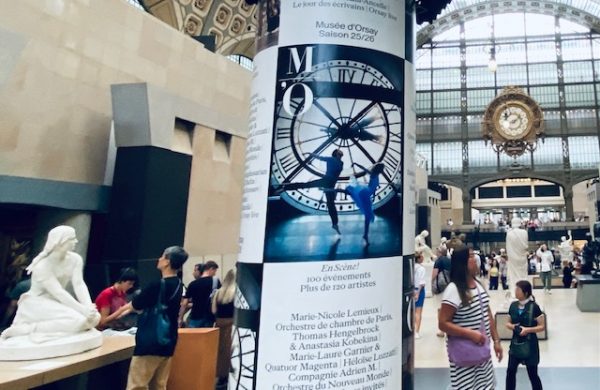
There is nothing more confusing that multiple clocks that are ticking away without being synchronized, which means, they ought to show the same time. A medical and social science perspective on multiple clocks, however, builds on the fact the different social processes run with different speed, i.e. multiple clocks are ticking in parallel but one may be more advanced than the other. The study of longevity has recently acknowledged that each human organ is aging at its own speed and if the time to failure is close for the liver, the time until problems of your heart might still be far off. Overall longevity is determined by the time to failure of a major organ, despite the fact that multiple clocks of organs are running in parallel.
The can be observed for social processes where, for example, the timing of unemployment or retirement might be dependent on a parallel process of a household dissolution causing a peak in stress. Overall life satisfaction, therefore, depends largely on multiple clocks that might be running in a synchronized or not-synchronized manner. Hence, we all live with multiple clocks ticking inside us and around us. The illusion is, to believe that time is just a single, unique measure.

Time as surprise

Sometimes, time comes as surprise. Time seems to run faster as we perceive it, or time might pass more slowly in actual terms than we perceive or think it does. What makes the difference? There is the objective measure of time with various types of clocks and watches versus the subjective or perceived lapse of time. The discrepancy between the two constitutes an interesting case for further study. Marketing strategies will try to make us believe that a specific kind of product will shorten or lengthen the difference between objective and subjective time. The entertainment industry works very hard on our perception of time relative to one or the other form of entertainment. The best result seems to be that objective time has been much longer than perceived time so that we “lost” our reference to time while being entertained. The so-called social media interaction is rather successful in this form of entertainment, infotainment or edutainment. The moments in life when time comes as a surprise might be great ones in our lives. Particular deviations between objective and subjective time make strong impressions on our memories, too. 

Time and Emotions

In psychology, time and emotions are a matter of milli- or even nanoseconds. Showing emotions, intrinsic ones or controlled ones is passing rapidly through our brain and, for example, facial muscles. Hence, time plays a role in how we react emotionally to an image or any event. The author Rüdiger Safranski starts his history of the concept of time with the emotional experience that time appears lengthy or tedious. In his view the emotional understanding of the concept of time is key to a better grasp of the philosophical roots of the concept of time. Starting with Greek philosophers, the Stoic tradition, Augustinus, the history of ideas is full of reflections on time, what it does to us, and how we best deal with the effects time has on us. In famous literature from Marcel Proust or Samuel Becket, we were reminded of the creative power of lengthy periods of time and the importance or futility to ask fundamental questions about time and our destiny. Beyond the rational thinking about time, the emotional experience of time makes up much of the spice of life. 

Time and money

In the English-speaking world, most people will be familiar with the expression “time is money”. In times of working for money as pay, rather than growing your own crops, we calculate hourly, monthly or yearly salaries. Time is a habitual point of reference in production systems and calculations of economic growth. Inflation and depreciation speak to value over time, just as investment and returns accrue over time. For comparisons of different investments the chosen horizon becomes a decisive factor. Of course, in the long run we are all dead, but in the meantime time matters a lot, doesn’t it? Take out a loan and you realize how much time will matter, suddenly. Now, let’s turn around the causality, Money is time or can be buy time with money? For many processes this seems to be the case. With money you can buy time off working, or pay somebody to do work instead of doing the work yourself. You can “win time” or gain more free time this way. However, towards the end of your life, money might no longer suffice to buy you time before death even with lots of disposable income or cash. From a philosophy of science perspective, we might even question the concept of time-linked causality altogether. The relationship between time and money gets even more interesting if. we take intergenerational considerations into account like inheritance and environmental heritage. … and “the times are a changing”.  

Time measures

We are so used to measure time in discrete ways such as hours, minutes and seconds that we hardly think of time as an uninterrupted continuous process. We say, time is ticking away and use the metronome way of signaling a rhythm as a felt discrete approximation of the continuous progression of time. The count of days, weeks, months, decades and years heightens our presumable, countable grip of time. We measure our heart in terms of beats per minute and evaluate the heart rhythm according to time stamps. We measure waves of the oceans in terms of how many seconds elapse between each wave. Of course speed is measured against discrete time, if we drive at 100 miles per hour or kilometers per seconds for rockets. However, time is continuous. 

Social time

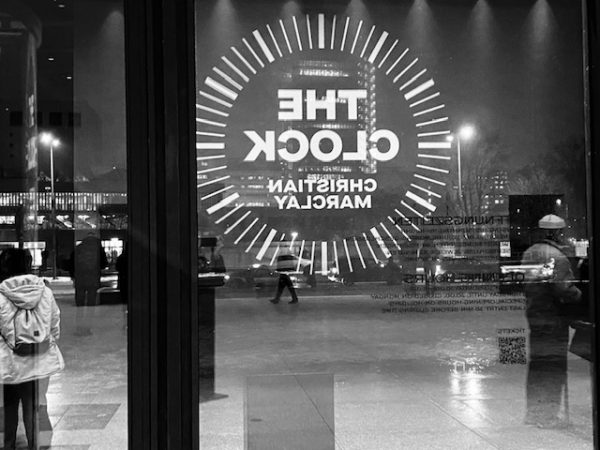
What does the „social“ have to do with time. Well, time is a perfect case of a social construction or a fundamentally social construct. The definition of time as „Greenwich mean time“ is nothing but a useful socio-political statement to synchronize time across the world, or previously an imperium. Points in time, as shown on a clock(s), can be helpful to synchronize human behavior. We might want to show up on the same point in time to start or end work. Of course there are thousands of ways in which such synchronization might go awfully wrong. This makes for splendid drama and movies have a long history to capture our attention on this matter. Social expectations, a social, psychological, and even a biological concept in extreme cases (Pavlov effect) make many of us to get a bit itchy, if time is getting short to meet other persons or an expected event is going to happen. A lot of social pressure is transmitted through the ticking away of time. The mechanism to internalize social patterns (for example prayer), via time and the clock, is quite powerful and has been used in movies throughout the history of the cinema. Even the individual endpoint in time is in almost all cases a shared social experience and turns into a kind of socially relevant time. (Take your time to watch The Clock by Christian Marclay).

Art Utopia

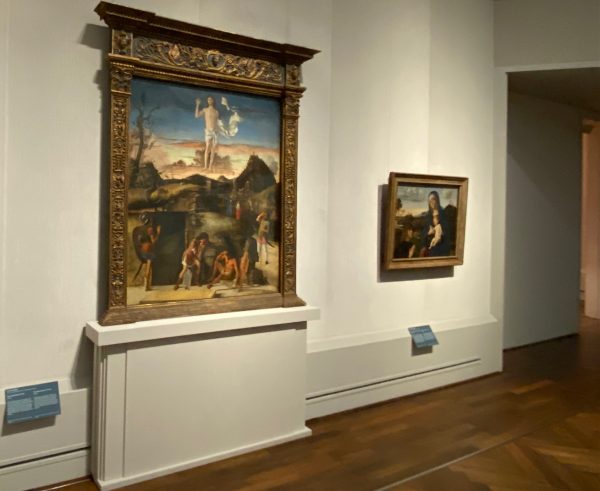
Not all art is utopia, but a lot of it. A series of talks on the issue of utopia in art  (BNF) reminds us on the utopian projects many artists have pursued in the history of art. From a non-believer’s point of view, religious depictions belong to some form of utopian art. Much later art movements proposed to bring art closer to people’s lives by spreading decorative art to objects of the daily lives, like furniture, dresses, jewelry. Different forms of experimentation with materials or art styles reveal a taste for freedom of expression, sometimes of a utopian kind, at least at the time of experimenting. Abstract art opens up thought spaces which may appear like verylong shots into a very distant future. Science-fiction is of course a well known form of dealing with and representing utopian ideas to larger audiences. Maybe it is this curated space of utopia which many people seek when going to exhibitions and galleries. (Image: Giovanni Bellini, Resurrection of Christ, Gemäldegalerie Berlin).