Cultural Identities

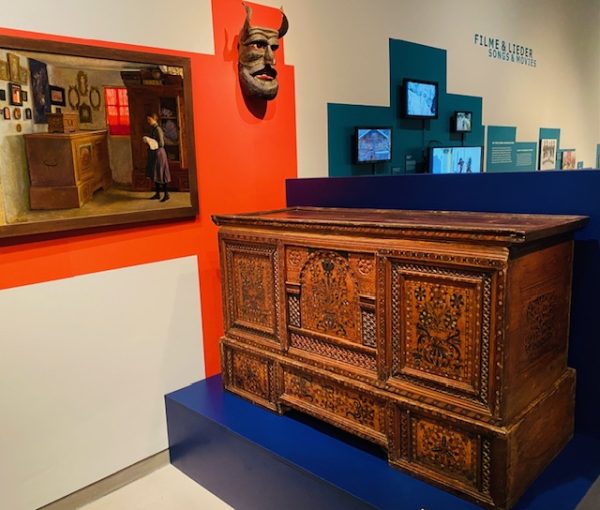
The cultural identity of a cross-border region, like Tyrol, is subject to influences from several nation states. Historical developments have led to creation and reshaping of (internal) borders repeatedly. The exhibition in the “Museum of European Cultures” traces the many links the region and culture of Tyrol has to Austria, Italy and Bavaria, Germany. Specific crafts and designs of furniture (see below) or folk fashion have played a considerable role in the making and survival of Tyrol and its cultural identity despite globalization. Tourism has become the major source of revenue. The challenges of climate change, increase in transport across the Alps and over-tourism are hard to reconcile in this hot spot of the confrontation of traditional and modern values. The idyllic panorama of “Der Wilde Kaiser” appears frequently in cinema and photographs about the region. For some, such images may become a kind of second home or escape route. Literature on the region or dealing with the region complements the reflections about cultural identity or identities.
Gone Home

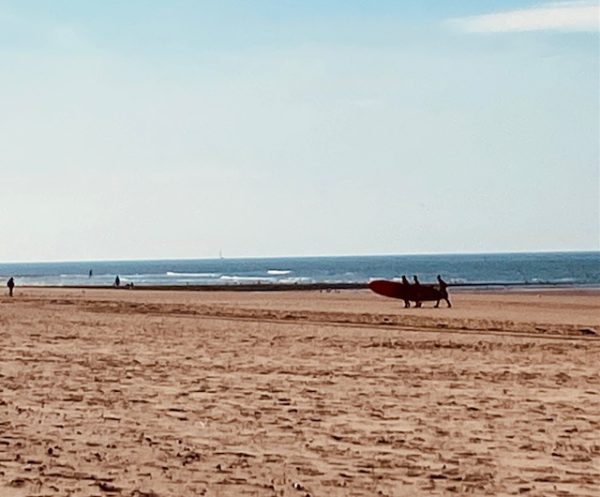
There are at least 2 perspectives on going home. For the person away from home, it could be understood in the sense of returning home. For the community still living at a place associated or idealised as home, it is often interpreted as a home coming. In view of the powerful global social trend of urbanization, many people associate with “going home” as if migrated persons from rural areas would return home to the countryside, maybe just for a short visit. However, a home is to be interpreted much larger than just being a place, a location or a regional idiosyncratic feature, like the sea, the river, the banks or mountains. You might go home to a familiar sounding dialect or language. For some it is the idea of freedom or liberal values which they have moved to, that became their home. For others it might just be the possibility to practice a rather unique sport, which determines where they would feel at home. Home could just be a “state of mind” rather than a location.

Ostend-SUP-paddle-board-on-beach-2026-9 e persons walking with board after practice

Gone gliding

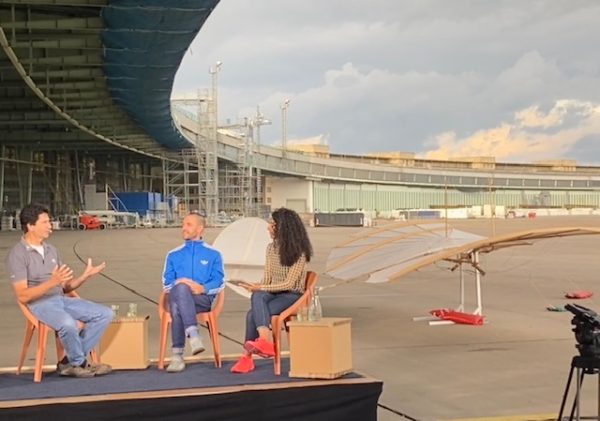
Nowadays gliding in form of hang gliding is a leisurely experience within the reach of almost everyone. The human dream of flying, however, has been shattered by the Icarus narrative, humans aiming too high and too close to the sun. More realistic first experiments were undertaken by Otto Lilienthal, who pioneered the first human built and steered glider based on an innovative concept of the wing at its basis. Aerodynamic construction of the wing with a rounded shape allows air to flow faster on top than below the wing, which lifts the wing and glider upwards. His tragic fatal accident on one of his gliding experiments has been wrongly attributed to a construction default, but recent research has shown that it was most likely due to  bad weather conditions on that particular day (Link Radio3). According to Markus Raffel, Otto Lilienthal was a broadly educated and practicing polymath in addition to his gliding innovations

Science and art Radio3 talk at airport Tempelhof Berlin 2026-9

Presentation of thought

The introduction of the Venice exhibition catalog summarizes the artistic approach by Joseph Kosuth as a form of presentation of thought. The title of the exhibition “The-exchange-value-of-language-has-fallen-to-zero” is a provocative critic of the use of language. The experience of AI’s use of language as data points and machine-human interface in form of chatbots makes any topic related to language even more interesting. The embeddedness of language and the context of content become intelligible through visualization(s). We owe to Kosuth the view that the modus operandi of art is to raise questions and enter into meaningful debates with people. Site-specific installations and the uniqueness of the conceptual idea distinguish his works of art. Language and image enter into a kind of symbiosis embedded into a local context. This is taking Wittgenstein’s philosophy seriously. 

Kosuth inspired Where do you stand? (2026-9)

Images about facts

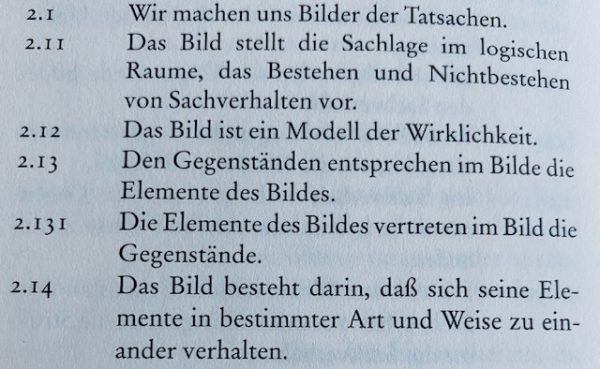
The philosophical writings of Ludwig Wittgenstein are a bit sturdy and and rather complex. 100 years after the first publication we realize that the meticulous order of the “Tractatus logico-philosophicus” follows a logical order of top-down and horizontal lines, which almost resemble algorithmic thinking. In section (1) he defines the smallest unit of analysis, a case, and (2) the existence of settings, which constitute such cases with almost mathematical precision. Already in 2.1 he states “we construct images out of facts” (own translations). In a kind of inductive approach we tend to generalize based on (single) cases or realizations in form of an image of facts. At the same time we have to be aware that an image makes a statement about the relationship of objects contained in the image. But it is just one possible option out of a whole group of potential relationships. Based on this reasoning a true as well as false realization of facts are possible.
In the 21st century the technological possibilities have grown rather exponentially (use of AI) allowing to give false testimony of facts and relationships of objects to each other. Wittgenstein challenges my own versions and daily combinations of text and images as approaches towards reality. (Image: excerpt from Ludwig Wittgenstein Tractatus logico-philosophicus, p. 14 edition suhrkamp)

70s revival

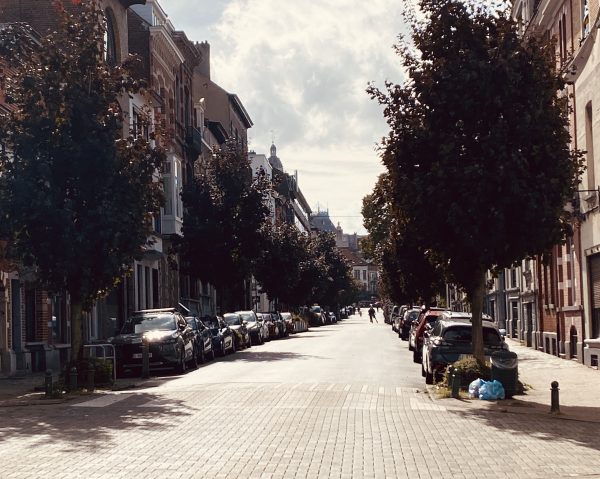
Brussels celebrates each year the “Car free Sunday” as final part of the mobility week. On 2026-9-20 this event coincides with the very high oil prices again. Just like in the oil crises of the 70s in 1973 and 1979 saving energy for mobility and transport is high on the political agenda in many countries. Just think of the benefits of such events. Less consumption will reduce “greed-flation” and upward pressure on prices. Pollution levels of fine particles and noise are drastically reduced. Children feel safe while riding their bicycles, scooters or skateboards. Parents are no longer on permanent alert due to the risk of accidents. For those who remember or lived during the 70s, they might have a “déjà vu” experience and enjoy a revival of the 70s. The roller skates are up for a revival as well. 

Brussels Car free day 2026-9-20

News impact democracy

The reporting on news in the media can be highly influential on election outcomes and therefore democracy. Bias in coverage of news arises from mainly 2 sources: (1) topics covered as opposed to the ones neglected, (2) the framing of the news which fit into a broader political narrative. A robust scientific analysis of the topic is difficult as the amount of data (articles, headlines, appearances) can be rather large. The paper by Haider et al. (2026) accomplished a major step forward through the systematic treatment of “selection bias” in news coverage. Related to news coverage, selection bias has both a statistical as well as a substantive meaning. The substantive finding of selection bias refers to the fact that the print media studied tend to prefer “horse race stories to policy issues” in upcoming elections, i. e. the focus on opposing candidates rather than the underlying policy choices. The negativity bias in reporting remains another constant in media research. 

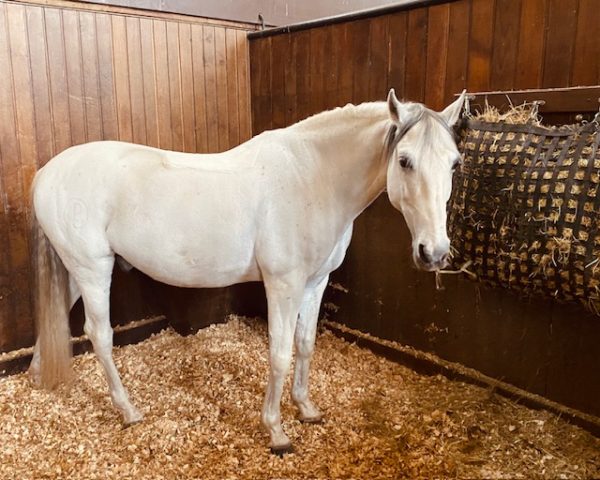
chewing horse in Chantilly box

Rural urban interrelationship

Cities are no isolated microcosms. They rely on being delivered a huge range of products. Cities have been markets, hubs or platforms for exchange with their surroundings, neighboring communities as well as distant ones. Historically, quite many cities have built walls to limit access and strictly regulated access. In the 21st century with low levels of fertility, the demographic pressure to leave the countryside for jobs is less pressing, but many regions face the shrinkage of the countryside’s population. The interrelationship between the urban centers and the rural surroundings has to be studied and addressed due to the far-reaching consequences for both. Transportation into cities needs public infrastructure which can handle the necessary flows and exchanges of people and products. For too many decades we have focused on an either/or cleavage of an apparent dichotomy of urban versus rural. It is about time to correct this bias and take the rural-urban interdependence more systematically into account. 

uri urban rural interrelationship in food and drink

Stress in the City

Before the stress in the city makes you sick, try new coping strategies. Of course, you cannot avoid the stress of hotspots like busy crossings or noisy construction sites. And these are only the visible stressors not to mention fine dust particles or mixtures of fragrances. Scientists have started to address these issues under the title of neuro-urbanism. This topic is part of a broader agenda on public mental health which addresses the rise in mental disorders globally. Expanding urbanization is considered a major driver of an often overwhelming cognitive load in cities. Growing into it helps, but many move to cities for professional reasons or simply a job being largely unprepared to the practice of daily commuting for years. Several potential stressors tend to cumulate: High Social density, broad diversity in aesthetics as well as social structure, relationships, social participation or public transport as part of mobility make cities interesting or hard to cope with.

Emotional paradox

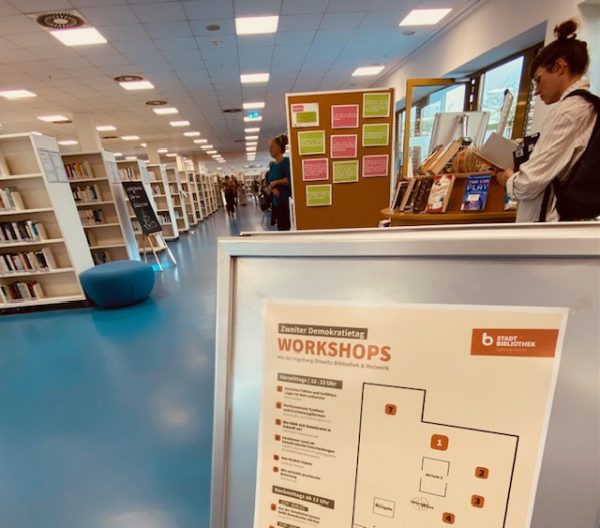
Democracies face an intrinsic paradox. High aspirations before inauguration, rising negative emotions during polarizing democratic periods and high positive emotions towards democracy after the loss of major components of it. However, This constitutes a working hypothesis in need of further research of its historical validity. Some active defendants of democracy have organized already sessions to speak about emotions in democracy. On the occasion of the International Day of Democracy a local initiative in Berlin (Mutwerk) took up this topic and brought together representatives of many local initiatives to foster the wealth of positive emotions due to democratic rule in southern Berlin. (Image: Public library Berlin Steglitz democracy day 2026-9-14)

Public library Berlin Steglitz democracy day 2026