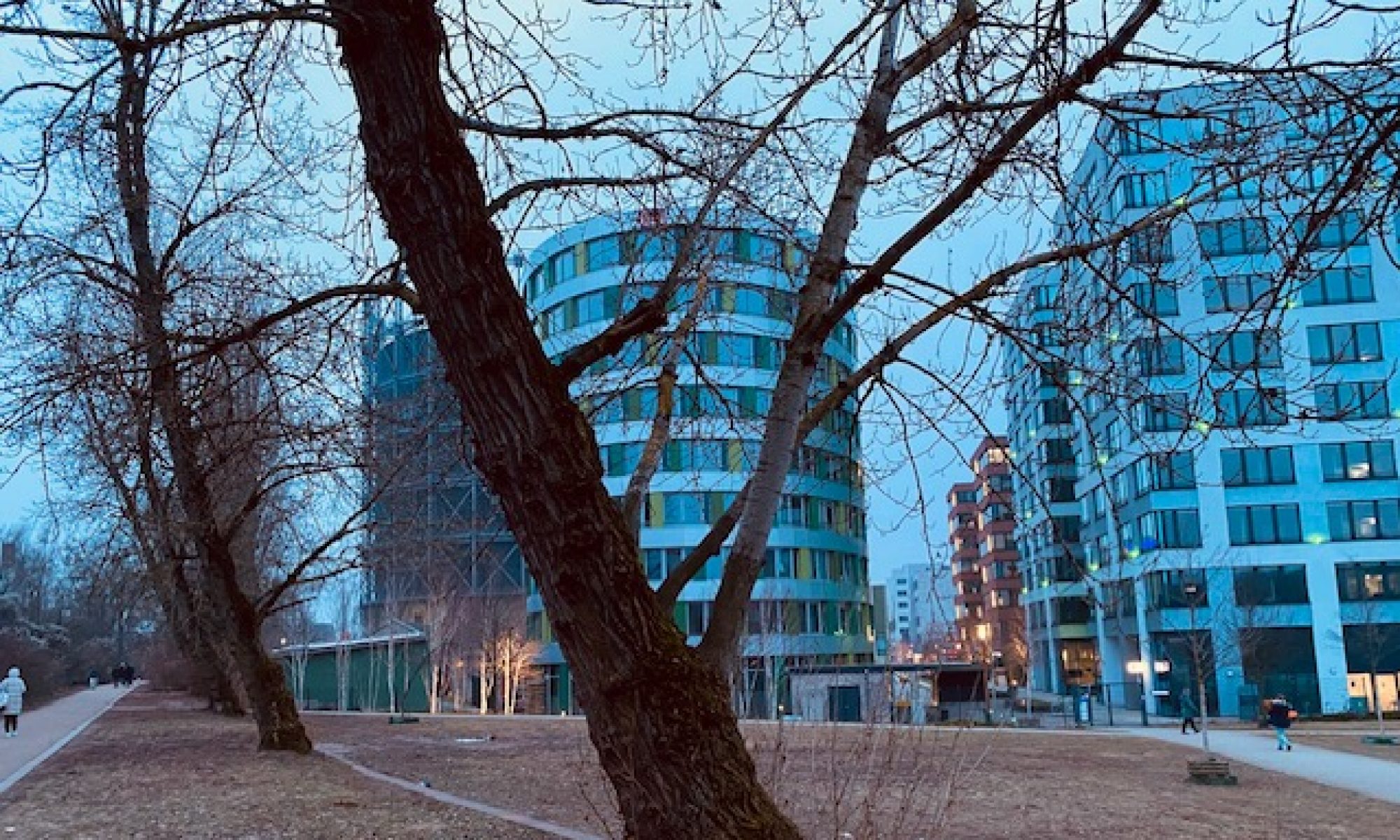
Most people are familiar with plurality under the term pluralism with respect to political parties or political systems. We have gotten used to have more than one political party tp represent the right or left in party politics. This is a challenge to people and parties as coalition formation can be a tough challenge to negotiate with a spectrum of parties rather than single representations of opinions and values. Plurality is, however, a more far reaching concept, which is applicable to many other fields of interest. Plurality of living styles are common fields of applications as well. Gender issues beyond binary gender identities qualify as yet another example for the pertinence of the concept. Nature has foreseen a wide variety of species even within subcategories of whatever classification system you apply, just think of trees. A broader variety of individuals is likely to increase the « requisite variety « of evolutionary processes as well. Plurality of modes of transport are another recent example of a widening of technological options available to reaching the same destination. A lot of progress and social progress is relying on allowing plurality to thrive before eventually narrowing down the spectrum. (Image: Sophie Taeuber-Arp, Composition with circles and rectangles, 1932, p. 256 from exhibition catalog 2024) 
On Uncertainty
Uncertainty is a catchword for all sorts of undetermined occurrences, which we might have to confront. We associate economic uncertainty with the difficulty to forecast or predict the economic evolution of key indicators like inflation, GDP, CO2-emissions, energy and raw materials’ prices and availability. Even factors like increases in greed of CEOs, psychological factors like insecurity about external or internal conflicts drive these macroeconomic indicators. Micro-level features of your own stage or evolution of the life course have an impact on and will be affected by uncertainty. Employment, housing, family, or household composition are subject to high levels of uncertainty. These micro- and macro- level factors are, of course, not limited to the domain of economic phenomena. Most recently, political uncertainty has reentered the international and national sphere with the re-election of Donald Trump as president of the United States. This election outcome of the U.S. is perceived by many as increasing the overall uncertainty due to the unpredictability of political decisions and even previous treaties with the U.S. or where the U.S. is a major partner in the agreement. These economic and political uncertainties are accompanied with a perception of growing legal uncertainty even in very personal spheres of life. Last, but not least uncertainty about climate changes like heating up of the planet and more devastating flooding and droughts contribute to increased uncertainty about future developments and the need to initiate adjustment processes and the financing of those.
The individual and societal ways to cope with increased uncertainty are one of the major economic, political, legal and social issues for the coming years. The answers are likely to be found in mutual, cooperative and risk sharing arrangements. The social in society will be a major part of dealing with increased uncertainty.  (Image: Extrait of Paul Klee, Seiltänzer 1923)
On Complexity
The famous quote from Marc Bloch on complexity with reference to history states that history is always more complex than a single perspective or interpretation suggests. Therefore, it is advisable to consider several perspectives on the same subject and, maybe, add another one. In maths the term complexity is probably primarily understood in the sense of complex numbers that go well beyond the arithmetic of counting. Many dimensions of a complex problem might, first of all, necessitate a thick description of the problem to then identify (scientific) disciplines that might contribute to disentangle the intermingled lot. Most of the time it is assumed that a single discipline could resolve the issue, but as in the example from Marc Bloch on complexity in historical research, different perspectives like the cubist art movement practiced a complex approach to painting and depicting a figure. Accept complexity as the rule rather than the exception and here we are in the middle of today. Unfortunately, too many people want to escape from the complexity around us by pretending to have easy answers to complex issues. (Image: Le Penseur by Rodin, background paintings by Monet, Berlin Alte Nationalgalerie, 2024)

Commemoration
In The month of November we commemorate those who died and particularly all those who died in the combat for freedom and democracy. The Russian aggression does not show many signs of ending the killing of soldiers and civilians on both sides. Ukrainian forces struggle to resist the Russian occupation of its territory as Russia is sacrificing thousands of lives for small gains of territory it is unlikely to defend in the coming months if Ukraine possesses longer reach weapons. A new spiral of an apocalypse is most probably the result of the Russian insistence on external aggression to cover up more internal problems. A lost generation of young soldiers who died in combat or suffered mutilation will be the outcome of these atrocities. The inflationary effects of wheat and energy prices globally have caused additional casualties in countries that had absolutely no stakes in this war. Russia is to blame for those additional casualties as well as the adverse effects on the world‘s climate due to the fighting and destroyed materials that need replacing later on. The young Russian generation will have to stand up against Putin‘s call to war and put down their weapons. This is one way to end the spiral toward yet another apocalyptic experience in Europe and the silent killing through hunger beyond Europe. (Image: BNF Paris, Apocalypses 2024)

Comprehensive Conflict
In a recent paper Mara Karlin (2024 Foreign Affairs LINK) has stated the need for the Western World to understand and even prepare for comprehensive conflict. Particularly in response to Putin‘s war on Ukraine’s territory and the threats and potential use of the full range of weapons including cyber warfare, destruction of energy resources and military production sites the current war comes close to total war. Several European countries have made significant steps to increase budgets for the new forms of comprehensive conflict management. This starts with adequate discussion in public on the dramatically changed security situation after the „Zeitenwende“ caused by Putin. The forceful Ukrainian response with much financial assistance from the West has pioneered drone counter strikes and by this put an end to the Russian progression into its territory. In order to match the total war ideology Putin is implementing in Russian society the Western world will have to rethink production models and strategic defense capabilities in all areas to match the rather real threats by Russia. The prevention of the spreading of comprehensive conflict is of utmost importance since the risk of an expansion of Russian influence and suppression of any internal resistance in Russia has devastating consequences. The 2024 book by Tatjana Tönsmeyer „Under German Occupation, Europe 1939-1945“ (own translation of German title) demonstrates what it meant to live under the domination of an inhuman dictatorship which is ready to use all out war and violence at any occasion. We have to confront this, even if we don’t want to face it. Nevertheless, the Russian aggression is also strongly targeted on its own people not to take risks of separation from Russia as this would mean devastating destruction to those regions and people who dare to do so. External explosions are therefore for Putin a prevention of implosion of the Russian Federation similar to the Soviet Union previously. Comprehensive Conflict extinguishes any remaining internal opposition as intended collateral damage. In Western countries, however, we shall have to argue with opponents and build majorities through understanding the issues at stake not through silencing opponents and opposition. The debate about comprehensive conflict is only about to start, but it is likely to last for several election cycles. (own image, Contemplation on infinite landscapes, Berlin 2024)

Bi-directional Sleep
For most of us bi-directional sleep is a question of sleeping on the left or right side, or on our back or front, head left or right. In immunology bi-directionality of sleep has another meaning. The immune system is linked to sleep in a bi-directional manner. Good sleep enhances the immune response of cells (direction 1) and infected blood cells for example send a signal to the brain to extend sleep. The study by Huynh et al. (2024) in Nature has demonstrated this bi-directional mechanism. It allowed mice who slept well after an imposed heart attack to recover in a better way than those whose sleep got interrupted during the experiment. The most natural response to a heart attack or acute coronary syndrome is more sleep. This is induced by an inflammatory reaction in the brain, which « orders » your body to increase deep sleep. 😴 Sleep is more than just rest, it may be part of healing. ❤️🩹 (people looking at Caspar David Friedrich „Infinite Landscapes“, exhibition Alte Nationalgalerie Berlin 2024)

History’s Weight
The artist Damien Deroubaix is currently exposed at the BNF.fr in its historic site Richelieu. Together with and next to some of the historic treasures of the BNF collections the unique exhibition allows to experience history’s weight on our current existence. The work of Deroubaix is following and pursuing historic art trajectories with a special historical and ethical consciousness. Techniques of art are insensitive to the moral compass of the painter in history. The collections of the BNF like all major European collections have to handle their colonial past and immoral depictions throughout history. Deroubaix accomplished to liberate techniques of art of their colonial linkages and imagination of emperors focusing on humanitarian values. War is horror, in the past and in the present. Genocide in Rwanda is war crime and dealing with the memories of people an honorable way to look forward conscious of the past. Hybrid forms of art allow multiple contextualizations of his work. In the Galerie Mansart and Pigott of the BNF the historical embedding enriches the art and vice versa. Art allows us to rise beyond the ashes mankind has and continues to inflict on us. (Images: extracts of Damien Deroubaix at BNF, Paris 2024)


Build Tec
Home construction has turned into the art of isolation. Saving energy is easiest in a well isolated home. Besides the roof the walls, doors and windows are next issue. Isolation inside and/or isolation outside are good points of departure. Heat pumps are the next step that needs attention. This is already a sequence of works that have to be planned well in advance. Electric current or LAN wiring or even fibre are additional features a modern home should be equipped with. Lots of different skills involved that we are unlikely to find in traditional occupations. Networks of enterprises are involved in building technologies. Startups in this area could offer better integrated services to clients to advance energy savings rather than the traditional skill sets spread over multiple trades and occupations. Learning tasks and skill needs are abundant.

Theatre Artists
Performances in the theatre are called pieces. The artists performing are actors of a play. The « Théâtre de la Madelaine », which celebrates its 100th anniversary in 2024 puts on a new production in celebration of the biography of the famous painter Claude Monet.
«Dans les Yeux de Monet » is the inspirational title of the play written by Cyril Gely and scenario by Tristan Petitgirard. Looking through the eyes of Monet puts you into the sometimes tormented head of the great artist. The challenge Monet faces is his very own perspective on a new vision for painting. In order to capture the impression of the cathedral of Rouen on him, he experiments with colours and lighting to capture just the right moment in time. Interesting to remember, there is not just one single moment he paints, but many versions of it with each realization offering a special insight or impression. Just on the sideline we learn about the importance of plurality rather than the one and only unique moment in time.
His own personal difficulties of sufficient funding for his art work and the depression he struggled with are well represented in the script and by the actors.
Galerists as well as donors (Mäzene) encourage artists, but somehow may also contribute to the pressure on artists to produce more creative work. Precariousness of living and living conditions are often a corollary of creativity or the creative process. This is a usually forgotten part of the biography of many past and present artists. Artists have and still contribute so much to humanity, but in most countries the public or private support for artists is sketchy. This remains a societal challenge particularly during times of employment and skill shortages in OECD countries.

All Electric Society
Moving away from fossil fuels will shift power generation to electricity. Wind, water and solar energy will eventually generate enough power for home appliances and even electricity-based mobility. Lighting and computing or smart phones use direct current (DC) as power supply. This form of electricity is usually transformed from an alternating current (AC). Producing DC with a solar panel or a battery supply is transformed into AC for our home power lines and locally transformed back again into DC to change our smartphone or LED lighting. There is energy lost in the 2-fold transformation. Hence, it is possible to use a simple DC wire network to bring your self-generated power directly to the appliances that function with DC anyway. Whole factories are making this shift already, some as prototypes. The all electric society is in the making. There still huge potentials to reduce electricity consumption and improve security through low voltage electricity circuits and networks. Almost 200 years after the publication of Ohm’s law it will become the foundation of the all electric society. 