For many years we have believed that technology is something for experts and a special sector of the economy. Private sector companies have taken the lead and innovative applications of e-solutions or web-based applications have moved online to attract huge crowds. Some 20 years later, the scope to move public services online are on top of the agenda as well. Not only in security, defence, infrastructure management and health e-solutions are drivers of innovation and improve the reach out to persons in remote places, where it is hard to keep up equal provision of services otherwise. This is where “Gov Tech” comes into play. Government Technologies I would define as all technolgies that are needed to service your current citizens, past and future citizens as well as “want to be citizens”. This needs a whole of government approach, since there are many cross-cutting issues involved like cyber security and data protection. “Gov Tech” is no longer just nice to have. It has become a “sine qua non” condition of government. The expectations of people have been shaped by private use and habituation to online access and amenities that government and public services have to follow suit in order to be perceived as similarly close and accessible for people. Besides the technological aspects of hardware and software solutions for gov tech there is the huge issue of taking people with you on that e-journey. Even social policies and social inequality are subject to the e-volution of gov tech. There is a potential to reach more people with the same number of administrators by use of new gov tech solutions. At the same time, the risks to loose people who choose to remain off-line or have no access to online services increases as well. Gov Tech poses multiple challenges as well as interesting solutions. Great to see many regions and states taking these issues very seriously.
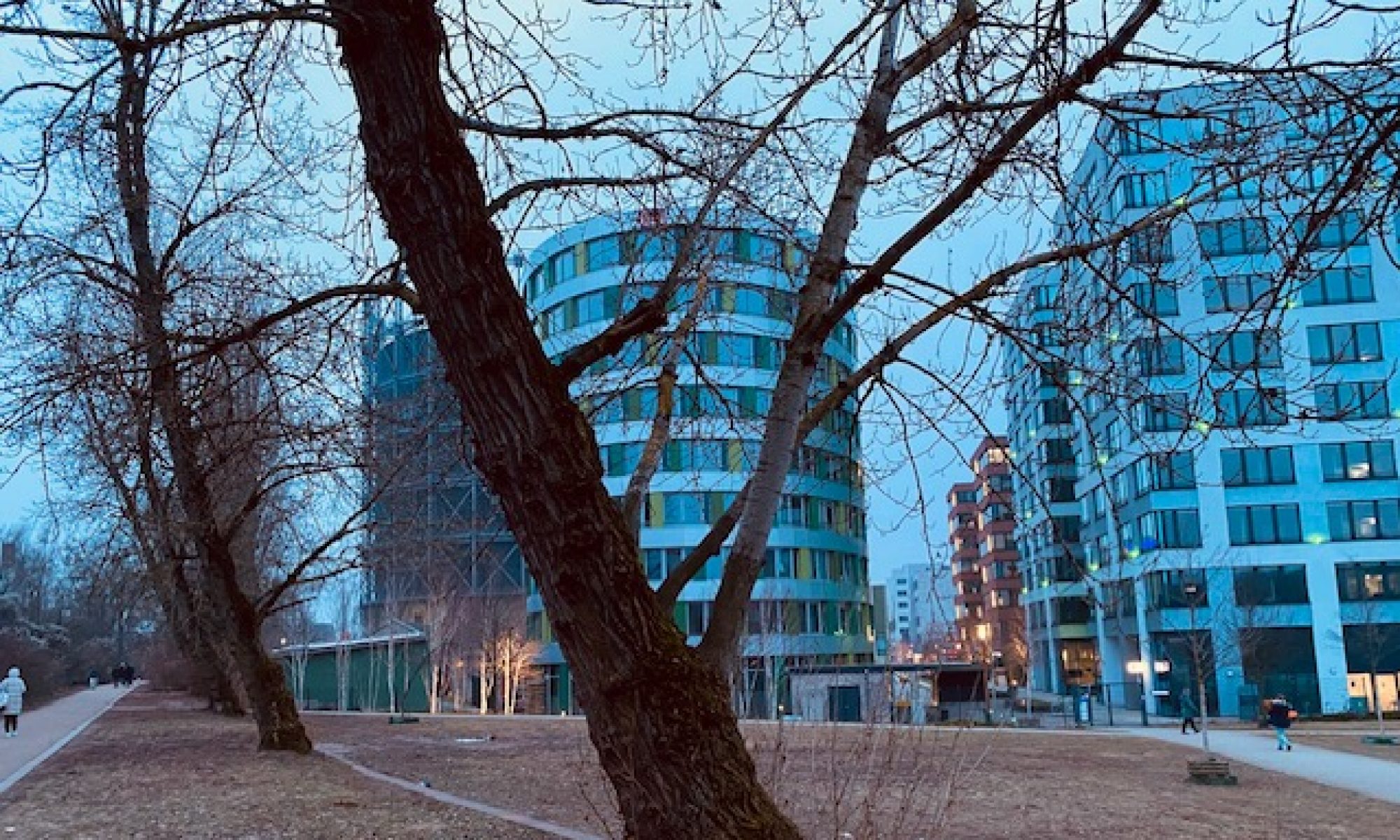
(Image: SCCON, Berlin 2024-10). 
Water Quality
Obviously, water is not just an issue of quantity, but also quality. The availability of sufficient quantities of water in a region depends on rain, its storage, and the use of these water resources. The quality of water is a subsidiary issue, as lack of inflow causes concentrations of nuisance in water to rise. Global warming will most likely intensity the concern for not only the quantity, but also the quality of water.
Public services are in charge to sample and monitor levels of water quality for consumers. Independent of public, private or public private partnerships in this field there is a need to check from time to time the quality of water. Public institutions do a great job in monitoring water quality, but as science progresses there are new sources of pollution that enter the already complex analysis of water quality. New chemicals and remains of medical or pharmaceutical analyses have been retrieved from water and, sometimes, they have reached critical or unhealthy levels.
More detailed monitoring is necessary and new digital tools allow to improve just this type of monitoring to inform policy makers on shifting patterns.
A project of that type “Urban Green Eye”, for example, allows to monitor the artificialization of previous vegetation to show up on satellite images of Germany. Independent groups, citizens or communities might find it useful to use their own sampling and testing to guard against abuses or dysfunctional public monitoring systems. Start-ups like “Hydroguard” offer services to support activists, communities or public services in their own efforts to ensure water quality. 
Water as a Service
Most of us are happy to turn on the water tap and enjoy the bubbles of fresh water. In other parts of the world this is considered a luxury and precious good. Public infrastructure takes care of water supply and treats waste water. We hardly even notice. This is changing in many regions of Europe now and Berlin and its surroundings are a good example of the challenges of water as a service. We need to sharpen our awareness that, yes, climate change again, has changed the priorities of water supply. Some East German regions face already a water supply shortage due to lack of rain water and adequate measures to store rather than evacuate rain fall. The German weather service (DWD) offers not only the info on rain fall, but also several indicators on soil humidity from 10cm to 200cm under the surface. These measures are important for crops and agriculture, but also for trees and vegetation in general. The droughts of the last years show a lack of humidity in large parts of East Germany.
This is the starting point for the “citizen science” project in the region of Brandenburg. The “Wassermeisterei” brings together people interested in water management to monitor soil humidity with a shared infrastructure and citizen enthusiasts to raise awareness and draw conclusions on the local preconditions for agriculture and forestry. Knowing about the evolution of water availability over time allows to make more informed judgements about the need and potential of a continuous and improved “water as a service”. The presentation of the project on the e-government fair was a reminder to take water more seriously and to value this crucial resource with more respect. 
Digital Zebra
It is a difficult task in all countries to bridge the digital divide in a society. On the one hand, there are so-called digital natives, those who have grown up with smartphones and notebooks all around them all the time. On the other hand, there are many persons who have not kept track of the digital turn and feel rather lost or are afraid of making mistakes using digital tools. As public services are also moving online, the need for a society-wide comprehensive mastering of digital information and tools have become a sheer necessity. It is much more than just nice to have.
As public services move online like registrations, payments or tax declarations, the need for training and/or assistance of millions of people in a country become a real challenge. This is where the innovative project “digital zebra” in Berlin comes into play. Through the network of public libraries you can get support in person to master your digital challenges.
The name of the project refers to the “zebra crossing” of a road, which assists persons to move from one side to the other side, just like crossing the digital divide. We shall need a lot of those guides and other multiplyers who can assist people to move safely online. Only through this form of taking people with you on the move towards online public services we shall close the gap of the digital divide. It is probably going to widen before we can narrow it again, unless we breeding digital zebras in a rapid way.
(Image: SCCON 2024-10, Berlin) 
Public health info
Public services have a premordial role to play in providing reliable and up-to-date information on health issues. It is no longer only in charge of collecting this information, for example on infectious diseases, but public services are in charge of timely disemination of that info as well. This is, of course, were online services and AI come into play. Getting out this info is crucial, but in the age of fake news and the wide disemination of news on social media, public services need to check also what becomes of the news they have published. The Covid-19 pandemic has been a worthwhile experience in this respect. It is important that reliable information is transmitted via trustworthy channels, which have already been established prior to the “next” health crisis. Many innovative tools were presented at the SCCON 2024 and maybe trustworthy video calls with a medical doctor or your pharmacist may constitute a solution to many infectious pandemics. However, trust in the technology is important as well as equipment and identification systems to be sure that your medical doctor you meet online is actually a medical doctor or only a savy pretender. The issue is as old as medical assistance. The RKI in Germany is the reference information for coordinated information on many public health issues like infectious diseases.
(Image: Extract of David Ryckart d.J. 1612-61, Der Dorfchirurg, SPK Gemäldegalerie Berlin) 
Start-up Winner
The SCCON 2024 has awarded one of its prizes for start-ups to „neuraflow“, which proposes the programming of chatbots for small communities or cities among other AI-applications. The test in multiple languages for the city of Bremerhaven is fun to test and shows that online public services can be witty and fun to use. The incorporation of local dialects gives the impression of a very personalized service. Moving the administration closer to the heart and the location of its citizens is achievable through shifting communication online. Prior information before a first contact speeds up information and administrative processes for everyone involved. Congratulations to the team involved and we look forward to many nice applications of the same technology in other cities. Admin can be fun, even in Germany 😉😂

Administration Online
The public administration is more and more moving online. The electronic identity is becoming a reality for all those with a recent personal identity card and who remember where they stored their pin code which came with the card. Moving houses or apartments or car registrations among other official registrations can be carried out online rather than by joining the lengthy queues at your public administration. The “buergerservice.org e.V.” presented the easy steps at the SCCON 2024 in Berlin again to the audiences. The support by the “mobile citizen’s office”, allowed to do the PIN retrieval or change on site and during 2 minutes. This is going to be a game changer for many people who shun away from lengthy admin procedures and push off such registrations due to the time-consuming queueing systems currently in place. Labour shortages are circumvented by e-administration and citizen’s satisfaction with public services increases. More publicity for such e-services and rapid implementation across countries and the EU should bring a about a new e-dynamic drive to old Europe. Employees or civil servants will be pleased to deal with exceptional cases only rather than the bulk of repetitive registrar work. More time will be available to real case management instead of suffering from impatient citizen clients. “Administration as a service” sounds like the new device of digital public management. 
Digital public management
Countries with large public sectors also have specialized research called administrative science. More than 25 years ago the whole discipline has been hooked on the idea of so-called “new public management”, which introduced “management by objectives” and “benchmarking” as new tools into the field of public sector management. In Germany Naschold and Bogumil (2000) have been publishing extensively on the topic. In 2024 the new public management is well established and the now new challenge is “digital public management”. Berlin just hosted a fair on this topic (SCCON 2024). This allows to speed up administrative procedures, increase the reach of public administration into remote areas and creates new challenges to counter the digital divide of society. The modern public sector may shift from being pushed by private sector companies in terms of digitalization to being a forerunner of digital provision of services. Tax declarations in Germany are a good example, where for many years it is a widespread practice to rely on digital forms of declaration and communication between the tax office and its clients.
Other countries, like Estonia, have taken already many more far reaching forms of digital public management and digital provision of services. The scope of such reforms is huge and the administration of persons in remote areas and aging societies give additional reasons to push ahead with digital public management.
At the time when even emails become outdated among youth, some administrations are proud to feature their latest innovation in digitalization. A machine is opening physical letters and scans the documents automatically and stores them in a secured cloud for example. It is indeed an important “bridging technology” for administrations dealing with a generation of older persons who are used to this form of communicationd by (snail)mail.
Many interesting new digital solutions (hard and software) were on display at the SCCON 2024 and many more are in the pipeline or pilots have been implemented already, well worth studying in more detail. 
Forced Living Space
The „Topography of Terror“ hosted the book launch of the research project on „Zwangsräume“ (forced living space or forced homes). The cooperation of an impressive network of organizations (Aktives Museum Faschismus und Widerstand in Berlin e.V., Koordinierungsstelle Stolpersteine Berlin, Alfred Landecker Foundation, Metropol Verlag) has achieved to uncover the forced relocations of thousands of German jewish people from rented place to another one, thereby regrouping and cramping Jews into ever smaller living spaces in predetermined houses within Berlin. Through this horrible step by step expropriation and extermination terror was present and visible all over Berlin. The online documentation and data access allowed citizen science projects to accompany the research and actively contribute to enlarge the data investigated, analysis and dissemination of the findings. The continuation and extension of the project is already in preparation and seeks additional funding and volunteers. The traditional book publication helps to provide an insight into the thorough historical research which started with a more adequate definition „Zwangsräume“ than the previously used term of so-called „Judenhäuser“, since the houses had and kept a mixed population sharing the living spaces until deportations of the jewish persons forced into ever smaller living spaces before. The property of the deported persons was recovered by officials from sealed apartments and sold mostly as bargains on auctions or just redistributed among officials in need or with special merit for the Nazi-movement. This adds an intergenerational dimension to the project that is also worth looking into in the next phase of this extremely valuable project based on large online archives from original register information and other documents. (Image: The map shown below in the presentation has blue signs that have already been traced and hundreds of red signs where the histories are not yet retrieved).

Nazi Reinterpretations
Even almost 80 years after the end of Nazi terror and the 2nd World War started by Germany, we witness attempts to reinterpret the lives and careers of many Nazi officials. In the same realm, the crimes committed to pull out „Stolpersteine“ try to negate the horrible crimes committed by the Nazi leadership and their followers. The special exhibition at „Topography of Terror“ on „Reinhard Heydrich. Career and Violence” allows to study the biography of this high ranking and convinced Nazi official. After the usual career trajectory of a marine soldier he entered the Nazi secret police and made his career moving up the ranks showing readiness to use above average violence. This seems to have been a precondition to qualify for fast career trajectories. These personality traits have been demonstrated for thousands of Nazi officials in their professional life. This exhibition has additional merits to provide shocking evidence that the wife of Heydrich even many years after the end of the Nazi terror and 2nd WW does not show any signs of regret for what were her husband’s crimes against humanity. They had a splendid life and lived in a palace near Prag before her husband died after an attack by partisans. This is a great lesson to sharpen our awareness of those trying to reinterpret the lives of Nazi leaders and many of their followers. It is a timely reminder to not focus on rosy pictures of the Nazi time without the acknowledgment of the responsibility for millions of people who died. (Image: Extract of exhibition on Heydrich, Topography of Terror, Berlin 2024, book publication).
