Animal Victims

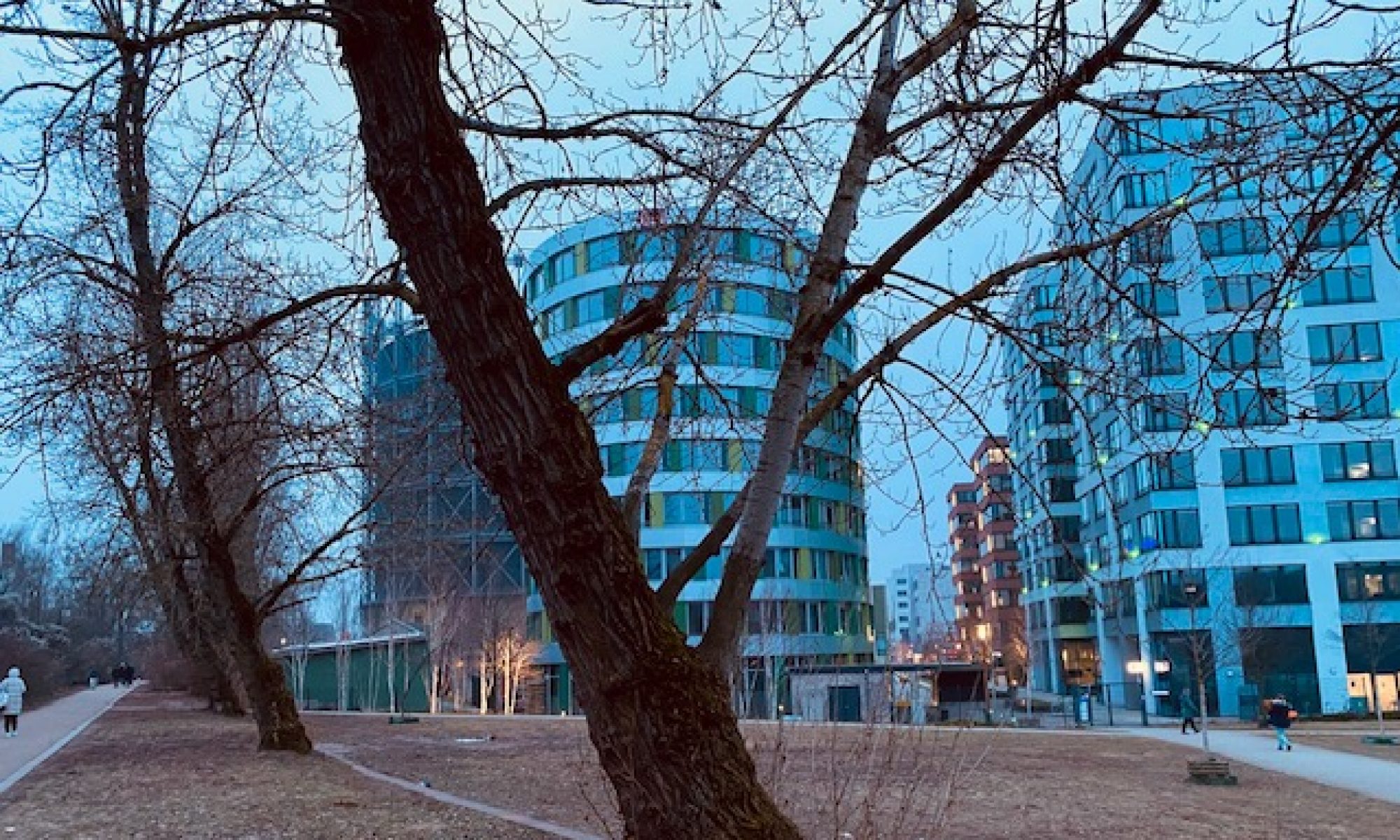
Animals, like birds, dogs and horses are more than just good pets for people. In previous wars like WW1 and WW2 they have served the armies as messengers, logistical support and detectives. This is yet another tragedy of war times that is rarely told. Dictators, just like Hitler, like to show off in the company of animals, although the record to be responsible for millions of killed persons and animals is rather striking. The disrespect of life, be they humans or animals, is an underlying theme. Beware of persons in power who try to soften their public image with the presence of animals at political events. A faked show of care for subordinates and a romantic relationship with animals can be used as an “image-washing” of a cruel personality. A pet-loving image attracts views and attention, sometimes for the wrong purposes. The commemoration of animals that served the French army and people is an important lesson about the extended horrors of war of the past and present. (Image Parc Caillebotte, Yerres France)

Planned Inspiration

There many ways to search for inspiration. “Moi aussi, comme les peintres, j’ai mes modèles” wrote Jacques Prévert a famous French poet years ago. Scientists find inspiration in data or theories, or in the combination of both. The planning of inspiration is, however, an other issue. You plan for something you don’t know what it is going to be. This makes the endeavor more risky and at the same time me exciting. As a social scientist going out into the “real” life is a sort of inspiration as multiple challenges await an explanation or deconstruction. The overview of current exhibitions through the scanning of catalogues from ongoing exhibitions is a welcome source to organize inspiration for the months to come. A glance through the catalogues gives a fairly good impression of what will be on display. The ideas can fly to distant locations and bring back more food for thought. It is a great service from the Munt library in Brussels. The combination of work and travel for inspiration is an interesting field of study in itself.

Plastic wasted

The amount of plastic that is wasted exceeds our imagination. Even in the most distant islands we find remaining pieces of plastic from our careless consumption. The European Directive 2019/904 has set the limit on detached bottle tops to July 2024. The industry waited until the last few months to implement the old directive. Great that there is hope to find less detached plastic in oceans across the world in some years at least. The behavioral change to move beyond plastics everywhere in our nutrition delivery system is long overdue. We shall get used to bring our own bottles for a refill or other devices to reduce plastic waste further. The change begins with thinking about the topic and finding suitable reusable packaging solutions for yourself. Children learn in art projects about the importance and creativity potential to reuse otherwise wasted materials. Reduce and re-use can be turned into an own competence. Competence in sustainability has been neglected for decades in school curricula, despite its importance for our own health and survival. (Image James Ensor exhibition and competition KBR, Brussels 2024-7)

Credit donations

“credit” stems from the original latin word “cedere”. In the 1st person you write “credo”, which means I believe. If said in a religious building or church you show with this pronunciation that you believe tbe narrative of the religious community. In the 3rd person “credit” stand for s/he/it believes. In the financial sense it is the receiver of money from your credit card who believes or trusts you that you made an honest payment. Now, banks take commissions from each of these exchanges of trust. You are credit worthy or not. In some churches you now make donations using your credit card to facilitate business. Credit card companies also charge you on your donation. Win win situation we call this. I keep asking myself, whether I still “believe in angles” or only business angles. (Image Église Notre Dame des Victoires Brussels 2024-7)

Narrative Object

Objects tell stories. Stories get condensed into narratives. Narratives become objects. Yes, we are going round in circles here. Artists have transformed an old splendid atelier and factory building into a new gallery space for “Objects with narratives” in Brussels. We construct, reconstruct and deconstruct narratives almost continuously. However, if narratives are transformed into an object or objects they will become something tangible or a fixed expression of the moment or process. The concept of art objects with narratives invites us to look for the narrative linked to the object. Just like in other disciplines like economics we have ample dominant and heterodox narratives. It is important to reflect on narratives and empirical evidence in their support. When we look at the mountains of plastics and garbage on our planet we see how an economic narrative has been turned into nasty objects. Objects with narratives is also how future generations will confront us with the pollution and waste objects we left and still leave behind us. (Image Bussels Gallery Objects with narratives 2024-7-13 Exhibition Marius Ritiu.)

Sport Fashion

Sport is fashion and fashion is sport. Not only in the Euro 2024 the teams make a big fuzz about the design of their sportswear, but certainly the Olympic games in Paris 2024 will demonstrate the close links between the 2 worlds. We might say playing football is a bit like a fashion catwalk. Keep going right on target, despite obstacles, when thousands of people are watching your performance and potential failures very closely. Making a “bella figura” is a must in both spheres. There is also a strong tendency for “the winner takes all”, that s/he takes the trophy and the jackpot.
Both worlds are also big business in their own right. It is at least 100 years old that sport and fashion got married. The “Musée des arts décoratifs” in Paris had an excellent exhibition on the combination of sport and fashion (booklet link). According to the curators both spheres have always been interlaced. High-level performance and specialized fashion just made for a splendid combination. As the rich and wealthy had more than a penny or two to spend on their leisure activities the combination of sport and fashion soon became itself a big business, beside the visible beauty of the bodies, movements and dresses. Just watch the breakdance fashion as the latest addition to the repertoire of olympic disciplines. In a recent article in “Le Monde” (2024-7-11) the value of the market of sports including its fashionable merchandising is estimated to reach a turnover of € 500 billion in 2022.
The competition of sports has been turned into a competition of the best images and videos. Fashionable as well as functional clothing can assist in climbing the podium. In the Euro 2024 Football Final the teams equipped with Adidas (Spain) and with Nike (England) compete for the trophy. Changing equipment sponsorship from one to the other can raise substantial amounts for a team (€ 100 million/year for the German national team). Big business seems to take over sports and fashion after the century-old marriage of sport and fashion. Since then, they have jointly been on an extended honeymoon. (Image from www.emptyspacetm.com 2024-7)

Olympic Games 1924

100 years after the Olympic games were held in Paris, they will take place there again. Each time for the Olympic games new locations (Colombe) were built. For the 1924 games for example the first 50m swimming pool was built (Stade nautique des Tourelles, Porte des Lilas, Paris 20th), but a new one will host the 2024 competitions. However, the old pool will still serve in 2024 for the preparation of the competitions. The successors of Johnny Weissmuller (5 gold medals in swimming 1924) and star in many Hollywood films, the access to the stadium has become much more secured these days. In fact, security has turned into a crucial issue to host the “peaceful games”. In 1924 Germany was still not allowed to participate in the Olympic Games in Paris as the security of participants could not be guaranteed. Some competitions at the time turned rather violent as the example of the rugby competition, in which the converted American football team as rugby players had beaten the Fench rugby team.
The idea of alternative games has also been around for decades. There were already in the 1920s international competitions of worker associations (for example Frankfurt 1925) and the Olympic idea had to defend itself against the accusation of a Western countries’ domination. The set of disciplines in the competitions is always up for discussion and negotiations. We shall see interesting new additions in 2024, like break dance, to broaden the understanding of Olympic disciplines.
Even 100 years after Pierre de Coubertin steered the modern Olympic games, the idea is to bring more to the games than “Faster, higher, stronger”, notably to be together. To be together in a peaceful way remains the biggest challenge for humanity. The inclusive turn is, however, a challenge to host the games, particularly to host paralympic games in inner cities that have abundant barriers of access for impaired persons. Inclusiveness for many countries is another challenge that goes beyond the simple participation in the games, but consists in training facilities and equipment for many disciplines.
(Image: BNF Gallica)

Couch Cottage

As vacation time is approaching, we ask ourselves, whether to choose the comfortable couch or the remote cottage. This is the proposition of Roger-Pol Droit in “Le Monde Livres” (“Sagesse 2024: cabane ou canapé“, 28.6.2024 p.36) based on the reading of “Ma cabane sans peine” by Alain Guyard and “Philosophie du Canapé” by Stefano Scrima.
The couch stands for the lazy life or “vita contemplativa“, thinking about philosophical topics that need a certain form of laid back behaviour to allow your brain to sort out tricky questions or to ask yourself, what is, was or will be important questions. Many academics shut themselves away from the busy life outside to reserve more time for couch thinking. The usual products of this activity practised on chairs and couches is more or less digestable books. Some make a comfortable living out of this active inactivity.
The cottage approach follows another longstanding philosophical tradition associated with Dionysos. Living a simple life in a remote place, but full of life’s enjoyment allows to exalt in the dithyrambic atmosphere of the countryside.
Rather than the either, or issue: couch or cottage, I go along with the dialectics of Hegel, who forms out of thesis and antithesis the synthesis. In our example this is obviously equal to “take the couch to the cottage“, problem solved. Additionally Nietzsches version of “Die fröhliche Wissenschaft” seems to prolong the dialectic experience of going beyond the “neither, nor” dichotomy to combine both couch and cottage.
You sensed it. It will be a rather exciting summer break to pursue on the many roads to “Sagesse 2024” (Wisdom 2024).

Schooling Ukraine

It is hard to imagine what it will mean to go to school, if your father has to defend your country, Ukraine, and freedom of education instead of Russian indoctrination. This is tough for all children in countries that have to defend themselves today or in the past. For Ukrainian children and families who had to flee their country this means that they have to go through another education system, not out of choice, but instead of their normal way through their education system. This means a lot of additional challenges for them. In Germany alone the educational authorities have counted more than 200.000 children in schools at the beginning of 2024. Additional efforts are undertaken to allow mothers as well to learn a foreign language to facilitate communication with the receiving countries. We have to make huge efforts that these children are not a scared generation of pupils but rather a strengthened generation of young persons with solid learning experiences in another country. Some will stay in the receiving countries, many will return and rebuild their homes and communities. Our support and assistance needs to be a long term commitment beyond the end of the war after an eventual Russian retreat from Ukraine territory. Solidarity is not a fixed-term commitment. We shall be put to the test and should not hesitate about our continued support.

Art or Profession

In political science it is a long tradition to discuss, whether politics is an art or a profession. The idealist tradition, going back as far as Plato in ancient Greek history of ideas, puts the exercise of politics near the exercise of a divine art to do justice. Much later in the history of ideas Max Weber rather bluntly defined politics as a profession (original in German) that requires to master a set of competences.
Recent elections in Europe (EU, France, UK, Belgium) and around the globe (India, USA) in 2024 add interesting case studies to the old question. Is politics an art or a profession?
In modern politics the life course or life cycle of a politician consists of at least 2 phases: (1) the electoral campaign before and (2) the potential of governing or opposition. Each phase requires a different set of competences. In phase 1 it is important to propose a new or different ideal from the previous government. Charismatic presentation of an ideal set of policies is asked for.  In phase 2 it is required of the politician to forge compromises, either within the own political party or beyond boundaries of political parties. Certainly, in multi-level governance systems like the European Union additional forms of coalition building across countries is required, intercultural competence or language skills are an advantage here.
The 2 phases of the life cycle of a politician require different sets of skills. Charisma as mentioned by Plato and Weber can get a politician into power and charismatic leadership can get you through a lot of coalition building. On the other hand, modern campaigning in repeated elections is a specialized competence that resembles marketing expertise as well as “reading of statistics” and in-depth analyses of shifting or stable preferences of electorates and to succinct conclusions on this basis. Running a political party or a parliamentary group is yet another leadership skill just like communication skills that, beyond many prejudices, can be learned.
In a nutshell. Politics is an art and a profession. The art consists in the variable combination of different sets of competences. Art requires competences just as professions can be turned into art.  Welcome to the hybrid world of modern politics. (Image extract from MAD Paris, Picasso, Schiaparelli)