VCs shun SA

Venture Capitalists have an eye on long-term safety of investments. Political upheavals, unrest or instability can deter investments as much as risks to the safety of the workforce. The abbreviation “SA” in Germany has at least 2 meanings. (1) Historically, it refers to the “Sturmabteilung”, which was important in the rise of the Fascist movement and Nazi-terror in the 1920s, 1930s. Foreign investors were right to shun away from investments during the rise of the Fascists in Germany as a total loss of the investment was to be expected. (2) In 2026-8 the abbreviation “SA” in Germany stands also for “Saxony-Anhalt”, one of the Federal States of Eastern Germany, formerly the GDR between 1949-1990.
The “Wallstreet Journal”, which is read by many international investors showed on its title page of WSJ 2026-9-7 a report by Bertrand Benoit on the disastrous election in Saxony-Anhalt giving the extreme right-wing party AfD close to an absolute majority of votes. The abandoned investment by Intel into a chip-production near the capital of SA, Magdeburg, has been in retrospect a rather wise investment decision. The internationality of the employees, who build and operate such plants, might have contributed to them feeling rather unsafe in a hostile environment towards foreign workers.

intel processor logo

Swimming Paris

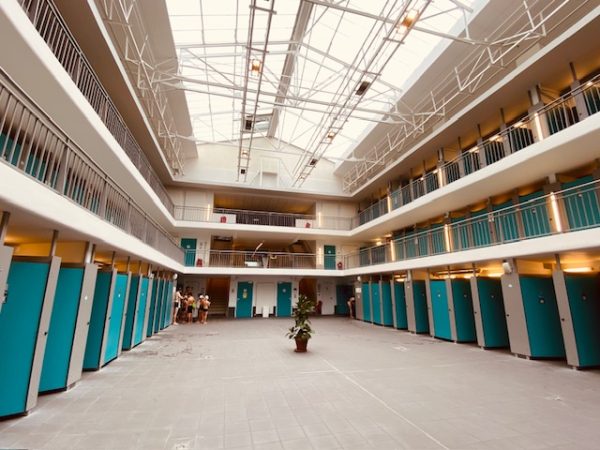
Swimmingpools are rarely on the to-do-list of tourists in Paris. This is good news for all those who go to a Swimmingpool for real exercise. In Paris you can enjoy the almost a century old public pool for swimming exercises with 50m lengths. In the entry hall you have literally a hundred doors where you change and, previously, you kept your clothes while swimming. Light by design welcomes you to do something good for you, physically and mentally. The “Piscine Blomet” (Paris 15th arrondisement) preserves a bit of the charm of the early 1930s Art-deco style in Paris. Sports deserved to be performed and exercised in fine architecture not just functional concrete. It is quite a challenge to preserve such architectural treasures including their original function. It is not all just business and tourism in Paris.

Blomet piscine Paris 2026-8

German Cinémathèque

The “Deutsche Kinemathek” in Berlin has moved to its new location in the old E-Werk. There is room for temporary exhibitions and screening on all walls. Small boxes (3 seats) give a brief overview of the history of television. The library is accessible again to the public. In order to research what went wrong in the history of mass media and cinema in Germany during the 1930s and 1940s can get access to the archives as well. In the age of new digital media technology the study of historical approaches helps to be aware of the power of persuasion of this form of mass communication. A critical thinking perspective on the material presented and the long history of cinema can bring generations together through the exchange of experiences with different media. 

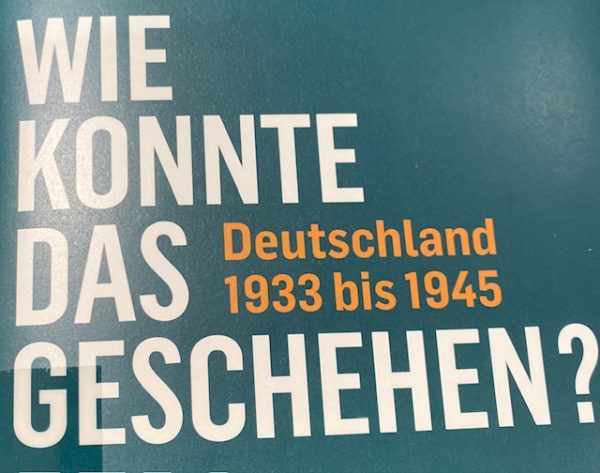
How could this have happened

The latest thorough reflection on how the Nazi-terror could have stopped or being prevented remains an important question in our time. The more we see countries descend into the authoritarian regime types, the more we have to know our lessons from previous historical experiences. Götz Aly made a great contribution to this literature. He points our attention to the collective euphoria the Nazis (NSDAP) managed to make people believe, by at the same time blaming others for the past crises. People just wanted to believe the fake narrative of a promising future (p. 175) for a society based on social exclusion. The pattern, unfortunately, seems to find its replication in other parts of the world nowadays. This is a very slippery road which often leads to disaster rather than relief. Easy or catchy answers are preferred by many people rather than the nuances of well-informed differentiated options. Patience in social development is a collective virtue, but often misunderstood as a form of conservatism, which is is something very different.

Codes of Emperors

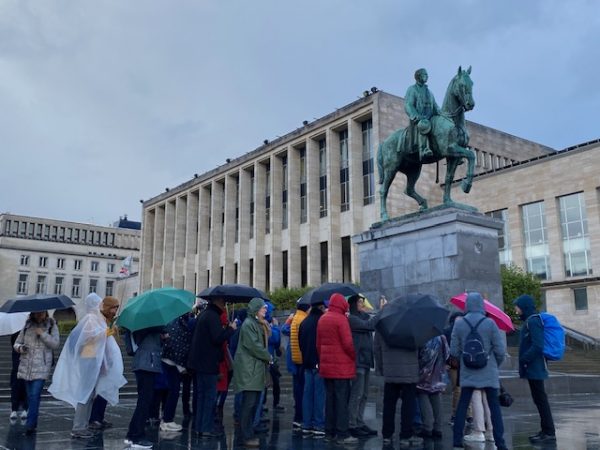
Even in the 21st century we spot the ancient codes of emperors. In Brussels the statue of King Albert, who ruled until 1933 and celebrated the first centenary of the Kingdom of Belgium in 1930, shows the Emperor riding a horse without saddle. This iconic position was started as a symbol of a powerful leadership by Marc Aurel and continued by Napoleon’s reign as well as several other ones.
The position on the elevated podium of the emperor on the horse, which further raises him beyond the level of the people, all contribute to the idealized perception of the king above the people. Such a vertical or hierarchical perspective on society or even mankind, including the colonial approaches of the emperors, are the lasting attributes of those times.  According to Els Witte et al. who wrote on the political history of Belgium, King Albert I was also named King Knight by some.
The portrayal and self-portrayal played an important role already centuries ago. No surprise that democracy has brought about an avalanche of idealized self-portraits or “selfies”.

Polyartist Colette

It is a complex task to do justice to a polyartist like Colette. The curators of the exhibition “Les mondes de Colette” (BNF 2025) Bouvard, Dimerman, Le Bras do a great job to present the biography of Colette, the writer, journalist, dancer in music halls, model (for Matisse) and entrepreneur in all facets of her activities. The role model of an emancipated women as early as the 1910s, 1920s and 1930s. The struggle of women artists in the early years of the 20th century to make a living from art is well documented already. To make a living of writing has always been a challenge if you do cherish your independence and liberty of expression. Versatility in artistic production is one escape route. Colette made a strength of this in diving into different forms of art and professional activities close to the artistic and creative world. In a quite unique way, she became her own muse for her own artistic work; and a character and inspiration exploring many facets of live. The economic misfortune experienced her parents became a source and force of inspiration.
Contrary to the expectations of the market of arts and literature, she did not feel like sticking to just one activity. Her most lasting achievements, probably, were her literary accomplishments for most people, although Matisse immortalized her in his specific style of abstraction.
Polyartists just like Polymaths, make more comprehensive contributions to our experiences.
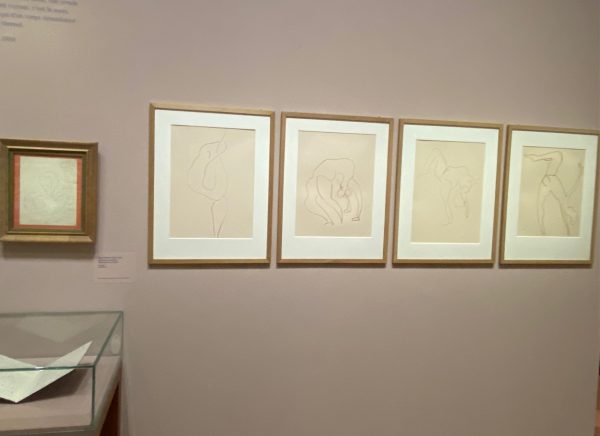
(Image:Lithographie by Henri Matisse of Colette, exhibition Colette at BNF 2025).

Holocaust Remembrance

The 80th anniversary of the liberation of the concentration camp Auschwitz-Birkenau marks a very special kind of remembrance. As the number of survivors of Nazi-terror and genocide is shrinking the testimony of survivors is becoming more rare and more precious. According to the “Jerusalem Post” on 2025-1-28 (p. 9) the number of survivors that came back to the site of horrific crime has shrunk from 300 ten years ago to 50 in 2025. The strength and courage to continue to testify amidst having reached 90+ or even 100+ years of age is a “living memorial” of its own kind.
Many television stations across Europe have followed the example set by this special Holocaust remembrance day and focused equally on recorded testimonies or additional live interviews of survivors. Please keep repeating these testimonies to confront people with the outcome of Nazi-terror in Europe. The choice this year was a courageous one. Instead of speeches of sorrow and lip service to fight antisemitism by acting politicians, the focus on the testimony of survivors in public, on TV and to large audiences will encourage others to continue to give testimonial of these horrors.
(Image: extract of Pressreader newspaper titles 2025-1-27)

Screenshot

Conducter Careers

The careers of conductors during the 1930s and 1940s have been propelled by joining the NSDAP on Germany. Even if not too outspoken as conductors on Nazi discriminatory policies many openings arose only due to banning Jewish conductors and musicians from performing in public. The acceptance of vacancies due to such restrictions advanced the careers of Karl Böhm as well as Herbert von Karajan. A theatre play Böhm at the Deutsches Theater in Berlin takes up this topic and puts the professional career in perspective of an anti-humanist leadership style. Karajan has also come into critic, because of his role in selecting musicians who were conform to the prevailing Nazi-antisemitism. It is important to work on these biographies and their implications for hundreds of lives of other musicians. Many careers have been destroyed due to these two prominent conductors ready to do almost anything to advance their careers. It puts their interpretation of music in a different light knowing about their instrumentalist approach to music, their own careers and the disrespectful Nazi doctrines. Image New Berlin Philharmonic, View from Kunstgewerbemuseum 2020.

Nazi SS Terror

The permanent exhibition „Topography of Terror“ in the middle of Berlin is always a place that receives a lot of attention from tourists. This is great news. The central location is certainly part of the success story. The Brandenburg Gate and the boulevard„Unter den Linden“ nearby allow to combine historic interests and site seeing. Many groups from schools gain a visual impression of the terrorism the Nazi dictatorship and its para-military organizations have exercised during the years 1933-1945. The years after the 1st World war until the full dictatorship were crucial to attempt to stem the Nazi tide rolling across Germany from the original Munich-based headquarters. The information on the „Establishment of the Führer‘s Dictatorship“ (image below) is a warning to all of is today to guard against the beginnings of similarly extreme movements and parties today. We shall always remember and we shall never surrender.

Dietrich Gabin

In French cinema Jean Gabin is a much adored person. Equally, Marlene Dietrich had, probably an even more far reaching international career. Both were accomplished and successful actors long before the 2nd world war broke out. In the U.S both fell in love and had a long lasting romance together. Their war time activities and “engagement” in fighting Nazi-Germany were extraordinary. It meant that both took active roles to use their charisma to mobilize people and soldiers to fight for freedom.
Shortly after the war then, both made a last attempt to work together in a movie production, but it could not unite the couple again. The “Deutsche Kinemathek” displays currently a page from the Diary of the “Diva” to underscore to what extent “Dietrich” was depressed about the break-up of their longer lasting love affair. Some say Gabin was the only person who quit her, all (most?) other relationships were terminated by the Diva. The junctions of biographies are hard to predict. The circumstances of the 2nd world war and internalized civic obligations to fight for freedom and democracy were wholeheartedly shared by both, but eventually they grew apart nevertheless. Tough experiences even for the much adored persons on the forefront of the stages worldwide. There seem to be many instances of repetition of the same story not only in movies, but also in real life.
Image: Deutsche Kinemathek Museum 2024-5