Legal illegal business

The world of business has to be quite well defined in order to make the borders between legal and illegal practices clear, transparent and enforceable. You name the business or trade and then check the rules governing it. For pharmaceutical products we have rather strict regulations, but smuggling across borders can be a challenge to national customs if online commerce can easily circumvent national controls. Trading on ebay in small amounts is not defined as a tax registered trade, if it is below certain amounts. However, this might be difficult to control and legal rules are at times tough to enforce. The construction sector has been closely scrutinized for illegal practices and sketchy applications of regulations with regard to health and safety of employees. Regulations can be a pain, but they have contributed to safe lives in many instances. (Image: construction of “Scheune” (barn) in Berlin 2026-9, future center of Kulturforum). 
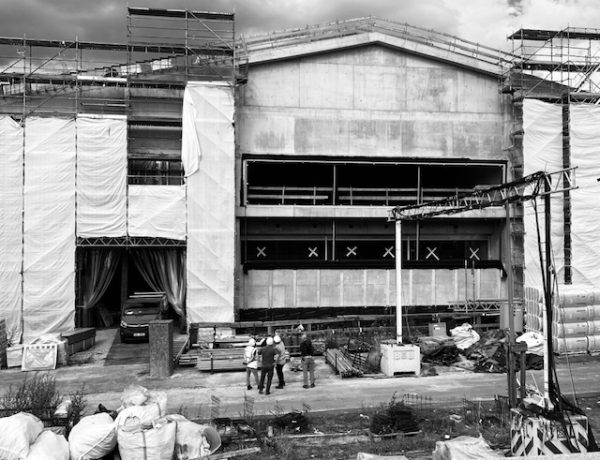
Kulturforum construction 2026-9

Climateflation

Central banks have started to deal with the impact of climate change or inflation, short “climateflation”. New and additional inflationary pressures originate in climate change and global warming and they necessitate a closer scrutiny. Heat waves, like 2026-6 in Europe, or earlier ones have created an upward pressure on prices. Loss of agricultural production can be severe due to weather extremes which occur more often and with greater intensity. Such extended hot and dry climates reduce the production of crops and spikes in prices that only reluctantly return to average levels shall cause price inflation (climateflation). These are the short term impacts.
The medium run impacts alter price relations and valuations of in sectors like housing and infrastructure. Badly isolated stocks of housing, schools or hospitals depreciate valuations and the heavy investments needed for isolation of roofs, walls and widows as well as heat pumps to produce cooling shall be in very high demand, which makes price increases more likely across the construction sector. As we expect new devices to be “AI-intelligent”, “mem-flation” will be pushed up as well. These factors can give a push to some economies which are producers of the products in high demand and able to expand production rapidly as well. Just importing higher numbers of air-conditioning systems from other countries shall worsen trade balances.
The major challenge, however, remains our inaction to stop global warming to avoid additional economic and human losses related to climateflation.

Paris 2024+1

Urban Planning has to deal with the medium and long term time horizon. This is a challenge in a world of short term preferences of financial markets and creditors. The Paris Olympic Games of 2024 demonstrate in an impressive fashion that a balance between these different time horizons can be achieved. The whole of France debates 1 year after the opening of the olympic games what has remained of the investment and the exceptional achievements for the country and its population. The newspaper “Le Figaro” of 2025-7-26 p.12 has published an interview with Tony Estanguet, one of the main organizers concerning the subject. The best of the Paris games 2024 for him was “to see the whole country work together”. The united spirit to make these Paris games a success remains a special experience in an often very divided society. In 2025-7 the “vasque” has survived in “Les Tuilleries” after some debate once the games were over. Therefore, a bit of the Olympic spirit can still be experienced in the center of Paris where the games have become a part of French history. 

Home cooling

In the summer months, in Europe, the concern shifts from heating your home to cooling your home. For generations this has been possible without use of air conditioning. A natural way of cooling has been for centuries to dig into earth to take advantage of the rather stable and cool temperatures underground. In home building this has also been a tradition for centuries to build cellars underneath a home.
Wine growing regions have used the cellar as a natural cooling facility for long and short term storage of wine. Digging into a mountain of a valley offered a natural cool storage solution for years without additional energy consumption. Modern buildings should return to this practice and gain cold from below the surface to cool buildings in the warm or hot seasons. Good isolation combined with the cool temperatures from below the surface in summer months will substantially save energy and thereby CO2 emissions. Circulation of the cool air from below to the upper floors is the issue as well as dealing with differential humidity levels. The wisdom of previous generations in home building with no access to air conditioning (avoiding the air conditioning paradox) is likely to experience a revival in the coming years.
Coolness is the new and old wisdom.

Berlin building

Yes, 35 years after re-unification Berlin is still building at lots of places. The boom years of building hotels for tourists, offices for ministries, which were moving from Bonn to Berlin, is now followed by a „surprising“ need to have sufficient vacancies in private housing. Berlin is still growing in terms of population and, of course, this creates additional upward pressure on the housing market with particularly high increases on the rental market. In order to achieve a narrowing of the gap between demand and supply, Berlin is building higher as well as digging deeper into its sandy ground. In such huge open spaces near Südkreuz it is then feasible to explore and later exploit geothermal energy for years to come. Maybe it is not a surprise that apparently a Texas (USA) based investor has bought the ground and builds in Berlin. Drilling in Berlin for energy from underneath is a worthwhile business. Hence, drill baby drill has a new Berlin meaning to it. 

Archi Octagon

The architecture we see around us has lots of interesting mathematical features. Some are the basis for more complicated calculations. The octagon shape is not that common, but with some formulas the calculations become easier and construction in the real world is more feasible. Well worth to dig a bit deeper into this shape. The geometry of angles and circumference follows rules that have been laid out a long time ago. The webpages explaining this are manifold and it is a project of its own kind to compare them and recommend the best ones. My current favorite is: mathmonks. A reasonable choice is in most cases also wikipedia, the long running amazing knowledge project also for the octagon.

Image: Berlin Europa Center 2025.

Rich richer

The US economy under Biden had continued to make Americans richer. In an article by Talmon Joseph Smith in the New York Times from 2025-4-3 p. 7 the puzzle that Americans have grown richer, but don’t feel it, has been well explained. The large share of households owning their homes albeit with mortgages from low interest periods have witnessed their increased wealth. However, inflation is eating into their cash available for daily purchases. With another round of tariffs and additional inflationary pressure caused by those, the average person or household doesn’t fell much better off than some years ago. Economic anxiety and our preference for loss aversion or loss avoidance make us react with consumption restrictions to prepare for increased risks as well increased uncertainty about the directions of the whole economy and our very private wealth and consumption patterns. How and when the US economy will get back on track remains to be seen. Higher uncertainty usually reduces investments and with increasing interest rates again the economic recovery might be protracted. The NYT p.7 cites business owners with statements like “we’re not putting our foot on the brake, but we’re taking our foot off the gas.” Betrayel of working class people due to rising unemployment after 3 years of very low unemployment is likely to widen wealth gaps in the US population even further. The rich will get richer, but at high costs to the population as a whole. (Image: ceiling painting in Petit Palais, Paris).

Design skills

The is a huge B2C or C2B market in connection with home design and adaptations. Nowadays people are inspired by instagram, pinterest, YouTube and TikTok. Additionally, many play around with Apps to create their own images of how they would like to arrange or rearrange their home. Some have taken first steps to include measurements of their home in the design. The compatibility with professional software of the construction sector, however, is a drawback that delays or leads people to go to enterprises that take into account the prior efforts of young lay designers. It is a little bit like an own contribution in home building quite popular among new home builders to alleviate the upfront cash needed for first home acquisition. The younger generation could offer some of their “digital native” skills to bridge the gap in construction and home design. Of course, reworking and precise measurements on the location will still be required as construction has a lot of legal liability issues involved. Cooperation is a form of burden sharing to advance faster and/or with lower costs.

Bricks and algorithms

Construction as an economic sector has suffered for decades from skill shortages. The PWC study on skill needs in construction and management of digitalization in this sector shows various deficiencies. Labor demand in excess of own training efforts in the related professions is further increasing in coming years. Migrants from across the world have come to Europe to fill the skill shortages and willingness to work in the sector. Population aging increases demand for adaptions of housing and tertiarization of the economy asked for new office space and adaptation of existing ones. 

The skills involved in construction have also evolved. Digitalization and understanding of new technology needs of modern housing increased the level of cognitive skills in the sector enormously. “just let the liquid concrete flow” will no longer suffice. Environmental obligations, renewable energy and design issues had an impact on the sector. 

Many enterprises in this sector have trailed other sectors to adopt strategies like digital pairs of a building or connected manufacturing of facilities with data sharing and compatible software. All this led to the fact that younger employees or university graduates (m/f/d) have preferred other sectors. IT development and applications are interesting and challenging in this sector as well. Logistic arrangements a formidable task as well. 

The claim of too much bureaucracy is just an excuse for lacking digitalization of the sector. Years ago we stated that every task you carry out more than once can be automized. With AI in construction digitalization starts with each singular case as a learning occasion for humans and algorithms supporting us.

Build Tec

Home construction has turned into the art of isolation. Saving energy is easiest in a well isolated home. Besides the roof the walls, doors and windows are next issue. Isolation inside and/or isolation outside are good points of departure. Heat pumps are the next step that needs attention. This is already a sequence of works that have to be planned well in advance. Electric current or LAN wiring or even fibre are additional features a modern home should be equipped with. Lots of different skills involved that we are unlikely to find in traditional occupations. Networks of enterprises are involved in building technologies. Startups in this area could offer better integrated services to clients to advance energy savings rather than the traditional skill sets spread over multiple trades and occupations. Learning tasks and skill needs are abundant.