Impressionism 150

How many impressions made impressionism? Too many to be expressed in a single number. 150 years after the movement started with a spectacular exhibition in Paris the admiration of the paintings still attracts huge crowds. As a kind of revolutionary movement the artists mounted their own exhibition as they were not allowed to expose their paintings in the official exhibition of the Academy of arts in 1874. They accumulated a sufficiently large group of artists to form their own distinctive style of paintings. Painting outside in the countryside was a joint predilection. The regions, nowadays in the suburbs of Paris where many people daily commute to Paris has discovered the attraction to review the original scenario of the paintings as well as their living environments. Yerres, for example, hosts in 2024 an exhibition to show paintings from Claude Monet and Gustave Caillebotte which highlights the inspiration both painters took from the surroundings. Nowadays it is also interesting to see that the agglomeration makes efforts to make more people aware of the treasures to see in their own surroundings. Even if conservation of nature is hard to achieve the parks of yesterday have remained visible today. For us to transmit the cultural heritage and landscape to future generations as well. An affordable booklet that documents the cultural heritage allows people to dig deeper into the subject also for those who live in the region only because of a job nearby in Paris or Orly airport.

Park surrounding Maison Caillebotte, Yerres

Schostakowitsch Revival

Je mehr Putin sich unablässig in seinem Angriffskrieg gegen die Ukraine und gegen seine eigenen Leute versteift, umso mehr werden die musikalischen Werke von Dmitri Schostakowitsch aktuell. Schostakowitsch hatte viel unter Stalin zu leiden. Sein Werk konnte kaum Gefallen bei der stalinistischen Führung finden, aber dennoch haben voele der Russen seine Werke geliebt. Insbesondere die sogenannte „Leningrader“ Symphonie, die das Volk einte vor den Radioempfängern, selbst mitten im Krieg gegen Nazi-Deutschland. Die Berliner Symphoniker haben diesem Werk eine neuere Ehre erwiesen mit einer Aufführung in Berlin 2024-5. Das Interview dazu mit dem Dirigenten Yannick Nézet-Séguin wurde geführt von Matthew Hunter, Bratschist der Berliner Philharmoniker. Es beschreibt diese eindrückliche Auswahl hervorragend. Die Berliner Philharmoniker haben eine lange Tradition, Werke von Schostakowitsch aufzuführen und einzuspielen. Die Digital Concerthall hat eine umfangreiche Sammlung mit Werken von Schostakowitsch. Oftmals etwas schwere Kost, aber durch das Ausspielen des ganzen dynamischen Spektrums von pp bis ff nie langweilig. Eine kleine Filmmusik „Volksfest“ (Sylvesterkonzert 2022) ist leicht beschwingt oder gar etwas beschwipst. Der musikalische Nachwuchs hat die Tiefe der Werke erkannt und gewinnt international anerkannte Preise mit Vorträgen von Werken Schostakowitschs. So geschehen zum Beispiel beim „Concours de la Reine Elisabeth in Brüssel 2024-5. Der Ukrainer Dmytro Udovychenko würdigte Schostakowitschs Leben und Werk inklusive des Existenzkampfes und gleichzeitig seine Heimat die Ukraine mit dem Belgischen Nationalorchester mitten in Europa. 

Example Audio Playlist on Spotify or Videos on DCH

Jury Competition

We can enjoy a lot of competitions in the field of the arts. In each of these competitions there is a different kind of rationale about how to judge the performances of candidates. The composition and competence of the members of the jury are of particular importance. We all tend to agree on this. However, the basic aim or direction of the competition needs to be defined or even redefined from time to time. Some perceive a competition useless if for example nobody takes notice of the results or the event. A good fight or drama within the jury helps to attract attention to it even if candidates suffer at times. The Belgian Music competition „Concour de la Reine Elisabeth“ has an annual major competition of young musicians competing for the beginning of a career as soloist. All phases of the competition are up for streaming so we all can watch and form our own opinions on the many candidates. It is not just the solo performance which counts but also the team performance with orchestra and the openness to new compositions in the realm of classical music. There is no vote of the public (yet?) like in the widely followed „European song contest“ but public acclaim does not leave a jury unmoved I believe. Tough work for jurors to single out small differences of fairly high standards to even enter the competition. The success of a jury has probably another evaluation criteria which consists in the follow up of candidates 5 or 10 years after the event or the awards. The making or destroying of careers as solo performers might hinge on very small differences on a single day. One competition with several prizes awarded is an encouraging way to promote musicians or other artists.

Concours de la Reine Elisabeth 2024 RTBF

Puccini Media

In honor of Giacomo Puccini the Media enterprise Bertelsmann features one of its treasures. In cooperation with the “Archivio Storico Ricordi” of Milano, Italy, 100 years of Puccini’s oeuvre is celebrated with this exhibition. Fans of Puccini’s operas will have to visit the archives but the interest of this small exhibition lies in the impressive success story of Puccini and his publisher (part of Bertelsmann). Continuous innovation and adaptation to new media, like disks, accompanied an extraordinary marketing campaign throughout the 100 years. Even today there are cycling tours around Puccini’s hometown for the modern eco friendly tourists. We learn a lot about how the media industry functioned in the 20th century. It was absolutely vital to fighting for the rights of authors, composers and rights to receive royalties for performances as well as for the publishing on media. The exhibition in “Unter den Linden 1” is just next door to the Staatsoper which also gave honor to Puccini’s “Madame Butterfly” in 2024. His uncompleted Opera Turandot closes the exhibition with his rough sketches of the final scene. Merchandising is not an invention of the 21st century, but almost a century old tradition. This exhibition is a great testimony for this. It remains an important effort to allow authors and composers to gain a comfortable living during their lifetime. The gains for humanity as a whole are enormous.

Bertelsmann, Berlin 2024 Puccini.

AI Travel

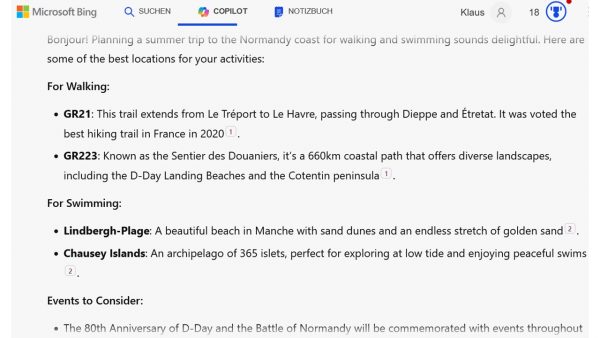
Playing around with AI it is nice to test take fun examples. Image you want to plan a vacation, then the use of AI is ready to suggest to you a couple of things to do. Of course, AI is eager to propose travelling services like transport or accommodation to you where it is likely to earn some commissions. So far, the use of the “Vacation Planer of Microsoft’s BING Copilot” is free of charge. In entering the time period and a region as well as some basic activities you’ll receive suggestions with quotes on the sources (webpages of public services from tourist offices mostly). It seems like trustworthy sources and the suggestions of D-Day activities in Normandy is a positive surprise to me. These are popular activities which attract huge international crowds every year.
Thinking further on the potentials it becomes evident that travel suggestions will be biased to those paying for ranking higher on the algorithms selection criteria, which are not disclosed. Entering into the chat with the AI you and AI can target more precisely locations and also hotels etc. You are disclosing more of your own preferences in the easy-going chat and probably next time you will be surprised to be recommended the same activities at another location again.
So far, I have bought travel guides or literature about locations to prepare vacations. This is likely to change. I complement my traditional search or planning with the “surprises” from AI for travelling. I rediscovered, for example, the public service of tourist offices and their publications ahead of the travel rather than the leaflets at the local tourist office. In order to plan ahead there is value in the augmented search and compilation capacities of AI. Drafting a letter in foreign languages is also no problem for AI. The evaluation of the usefulness of AI, however, can only be answered after the vacation. Outdated info or databases have a huge potential to spoil the fun parts as well.

Citizens Gardens

There are multiple ways to link citizens to gardens. Most people would link citizens to the property of their own garden. This is more the perspective of people from the countryside. The aim of citizens who can afford it have a garden, many others wish to have one and all of them enjoy public garden spaces. An intermediate version of the public versus private property of citizens’ garden is the joint ownership of groups of like-minded people to work together in the shared property or rented garden space. The recreational and health effects are well documented, if care is exercised with utensils etc. Spring is the ideal time to join projects again as the results of a little bit of gardening will be visible and enjoyable for several months afterwards. Gardens are also meeting points for people of all walks of life as in the vicinity of the European Parliament in Brussels. The Citizens’ Garden has a different function to people gardening there. When you puzzled about Europe after a visit to the Parliament or the Museum of the History of Europe, then it is time for a stroll and relax in the garden nearby.
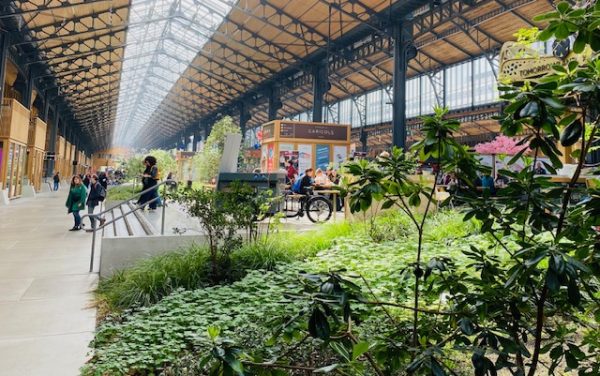
Alternatively, the Exhibition Centre of Tour & Taxis in Brussels not too far away from the North train station has an impressive indoor garden for the times of rough weather conditions. At the time of the book fair culture in the indoor garden made a splendid combination. There is a green version of Europe. It is like a small plant. It needs a lot of time and care to grow.

Symbol

What is it that makes an object a symbol? Probably, it is the widely shared perception of the meaning of a symbol that turns an object into a symbol. The etymology of the word symbol refers back to the Greek word σύμβολον. The earliest philosophical refer back to the Greek philosopher Aristoteles who deals with symbols when he writes about interpretations. Written words have become powerful symbols in the ancient world. We still have them all around us today. The interpretations of the words as symbols, however, may change considerably over time. Some symbols keep their designation and significance over centuries. Maps are well known to contain lots of symbols for roads, railways, tunnels or height. We learn about these symbols and interpret them in a specific societal context. Science is making ample use of symbols, e.g. chemistry. Different cultures define and apply their own symbols. Colonialism has been a form to impose symbols upon other societies. Throughout history symbols of power have changed as well. Each of those topics is an interesting field of application in itself. Young generations create their own symbols to establish a specific cultural identity or subculture. Urban spaces have been invaded by graffiti that tend to spread symbols as messages or symbols for their own sake.
Sociology has taken up the challenge to identify “status symbols” of groups of society. Possession of gold and silver have long ago been symbols of being rich. Maybe, even today such easily visible symbols play a role in how a person’s role is perceived in societies. Not only for priests etc. dresses have been applied as a symbol. Modern fashion is full of symbols as well. Interpretation of the meaning or even no meaning is an act of becoming conscious of the world around you. From the seriousness of symbols, we have come to the playing around with symbols as expressions of ourselves.
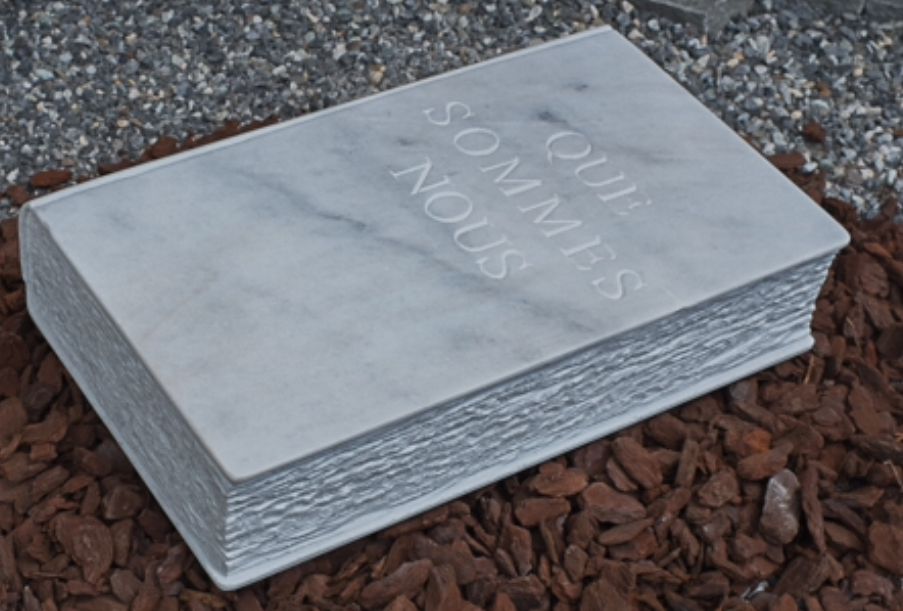
No matter whether we use the word, like water, we all know the chemical symbol H20. An image or art work using the symbol in whatever form will be decoded by us accordingly. However, the meaning we attach to water depends on the environment as well as specific context we (or the artists) are using it in. Cross-cultural competences consist in the awareness that symbols grow out of contexts and need to be interpreted accordingly. It needs a lot of openness, willingness to learn about differences and careful consideration in our everyday world to handle symbols. Doing culture is doing symbols.(Image of art work by Anderegg, Andi taken in 2016)

Nocturnes

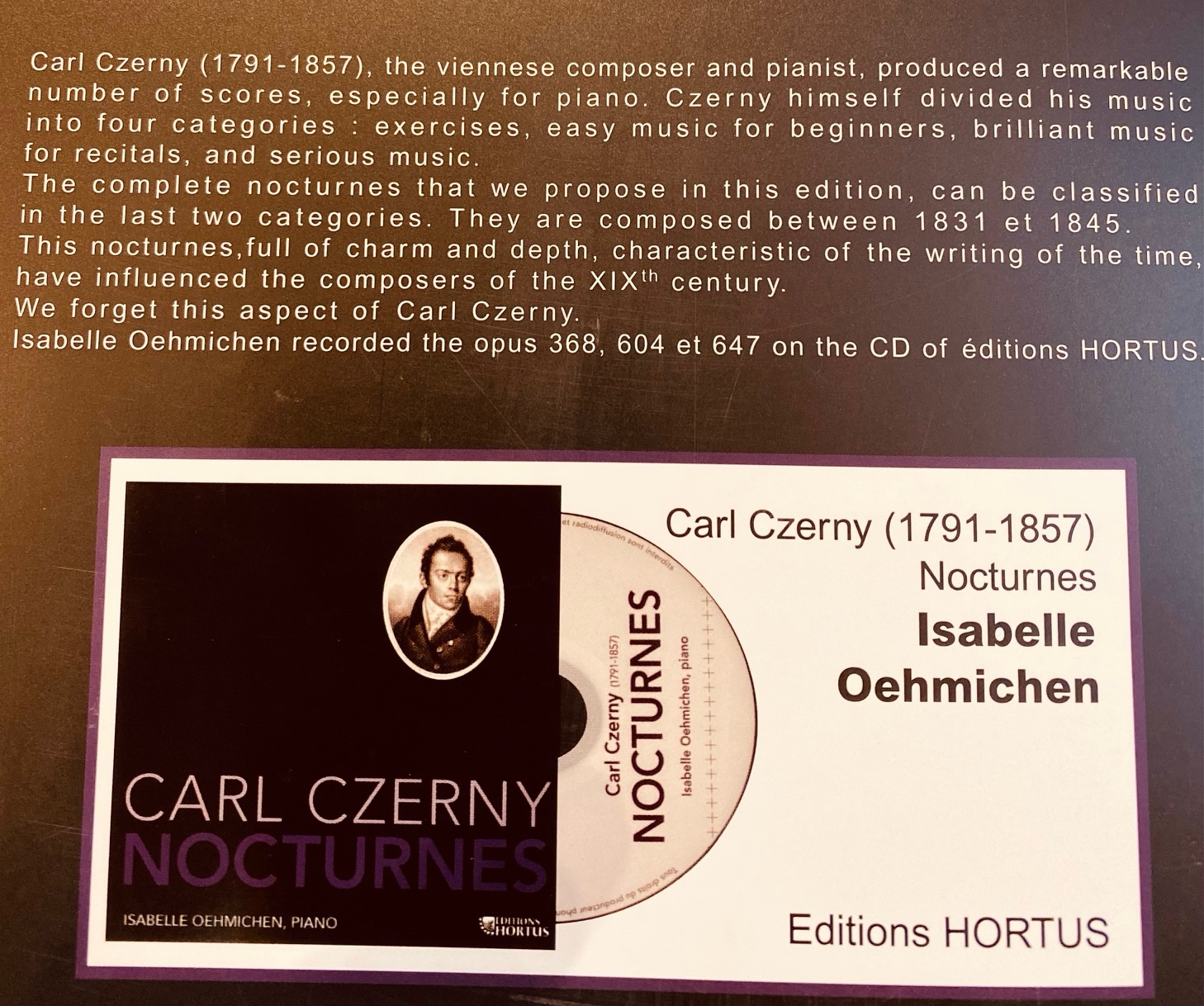
Contrary to some people’s belief “Nocturnes” is not only the denomination of the late opening of splendid shopping centres selling French fashion, but the name of music pieces. The origin of the Nocturnes as innovative form of composing is attributed to Irish born and bred John Field. The Polish born Frédérik Chopin developed the art form to perfection and he is the person who is also remembered for master pieces of this type of short romantic music pieces.
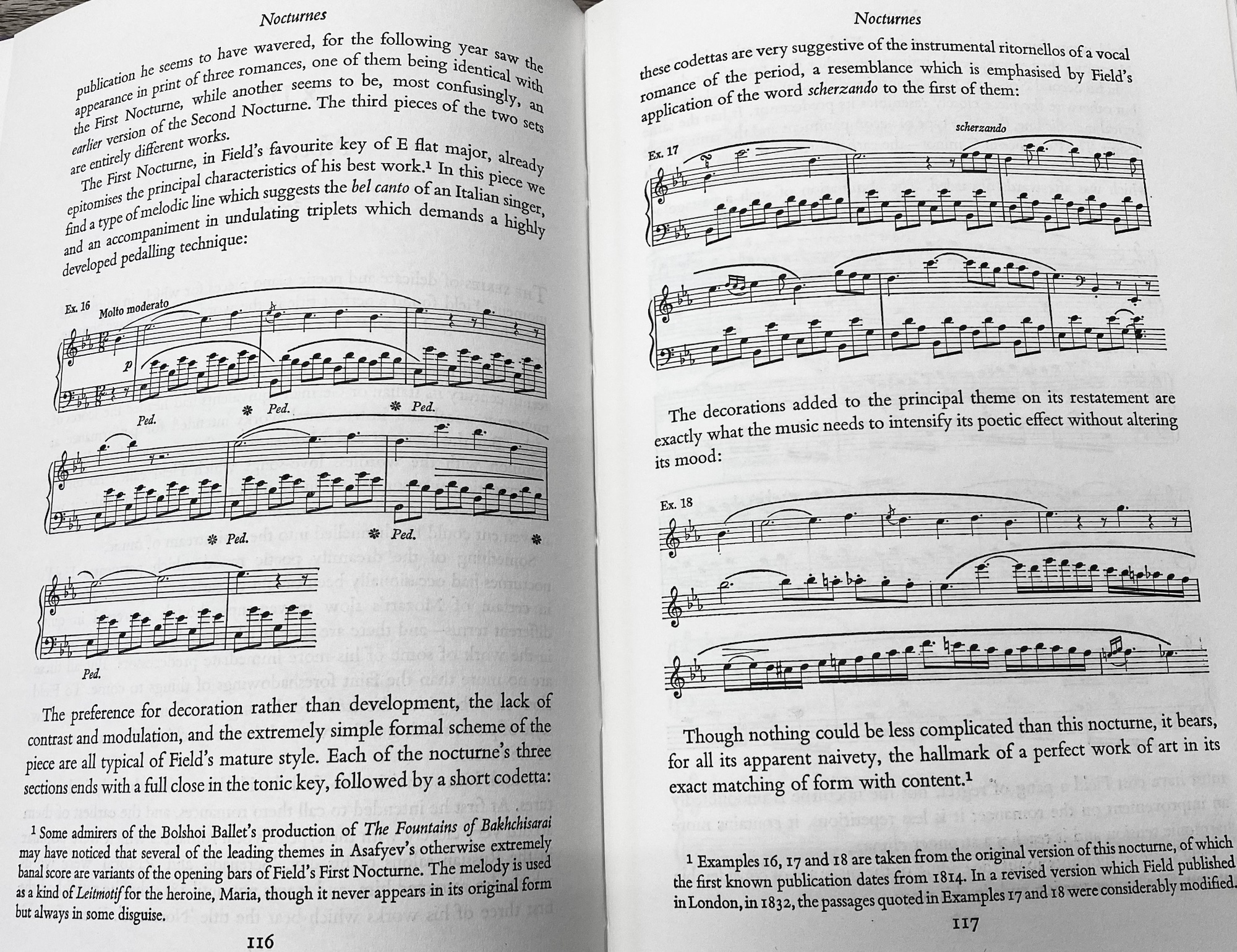
Mozart has left a famous piece entitled “Eine kleine Nachtmusik” and previous lesser known attempts of this kind were named Notturni, popular “Serenade” or “Pastoral”. All these Nocturnes shared the basic emotion, which we might call nowadays some kind of love-songs (Piggott, 1973, p.115). “Bel canto”, the tradition of emotional recitation of songs or arias, Paganini’s virtuous violine play were predecessors of the Nocturnes.
John Field published the first 3 pieces named “Nocturne” in 1814 and continued to produce new Nocturnes and revising former ones. These somehow more easy-going melodies or phrases often written in E or A flat major are technically less demanding for piano players than the later ones composed by Chopin, but their “charme” lies especially in their simplicity. Reducing complexity of sound rather than the virtuous effect seeking of a tune could attract large audiences. After the rebellion in France in 1830 and the foundation of independence of Belgium in the same year, so-called high culture had to address a lot widely differing emotions.
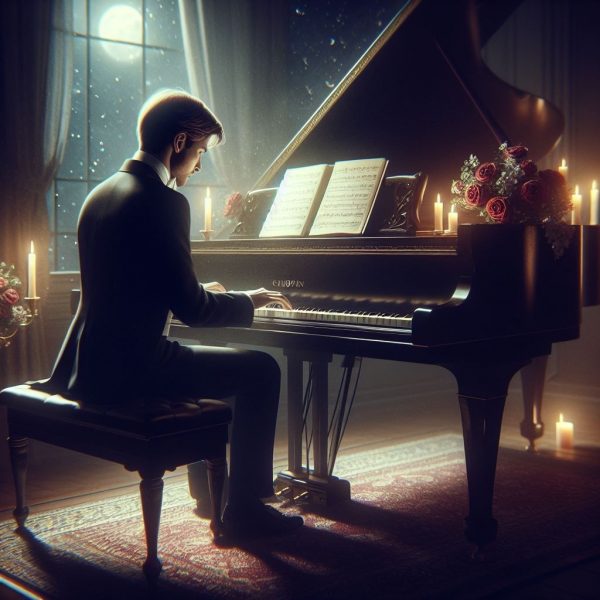
Maybe, in 2024 we are less surprised to rediscover the value of straightforward emotional tunes when even so-called high fashion shows in Paris return to more simplicity.(Image: KI Dall-E, Composer plays on grand piano Nocturnes by Chopin with romantic flair, photorealistic style on 2024-3-5).

Paris 1830s

The music life in Paris in the early 19th century, almost 200 years before now, was incredibly rich. In 1828 the young Flotow arrived in Paris to receive lessons. The pianists Liszt, Chopin, Fields and Czerny passed or lived for longer times in Paris. The innovation in this period of romantic music and operas saw also a fierce competition among those talents. It was no easy task to find your niche to thrive in composition or in both performing and composing.
The 1830s had a rich urban bourgeoisie, which animated and indulged in festive events of live music and social life. Friendships of Chopin and Sand are a testimony for this. Similarly, the young Flotow and Offenbach paired to find their place in the Paris music salons and society of that time. The biography of John Field, written by Patrick Piggott (1973, p.73-81) supports this density of musical experience. The period is also characterized by the fast industrialization and the rise of the global trade. The musical life found refuge in the romantic period and more and more artistic performances by musicians. Theatres, opera houses, concert halls and private salons were meeting points of the upper social class which practices networking in rather closed circles with rather rigid routines and admission at the time.
In architecture the Operas became meeting points and a matter of national pride with National Operas contributing even to national identities. The opulent “Palais Garnier” in Paris was started in 1861 to become an iconic place in the new Paris with the huge boulevards à la Haussmann. The wealthy citizens cultivated a new lifestyle of a networked upper class that had the leisure to participate in the masses of modernity. Cultural events of all kinds filled newspapers and specialized editions. There were inner and outer circles of influence in the economic, military, political and cultural spheres.
Recommendation letters were a real currency for entry in each of these circles. Some of these social practices, have still a lot of currency even in 2024. In short, in the 1830s Paris was the place to be. Compositions of that time still fill concert halls today and their music is abundant on the new music platforms and streaming as well.

Flotow Paris1

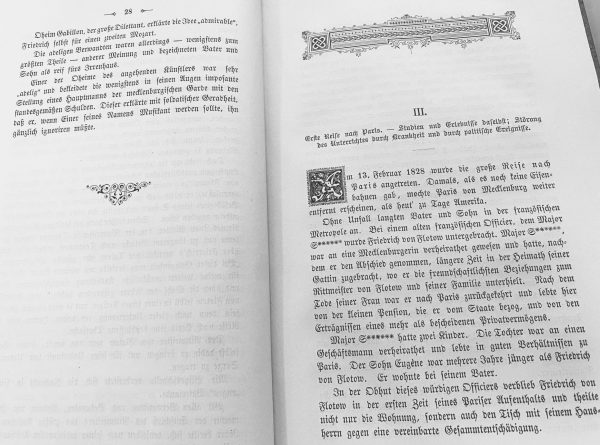
Die Biografie von Friedrich von Flotow, verfasst von seiner letzten Ehefrau, beschreibt die erste Parisreise und den prägenden Aufenthalt für die Ausbildung des noch sehr jungen Komponisten (S.29 ff). Bereits im Februar 1828, mit erst 15 Jahren, begann der erste Studienaufenthalt in Paris. In einer den Eltern bekannten Familie wurde der junge Friedrich aufgenommen und begann sein Musikstudium am Konservatorium. Prof. Friedrich Reicha war dort sein Lehrer, der 1825 seinen “Traité de la haute composition” veröffentlicht hatte. Schon Adam und Berlioz hatten bei Reicha Kompositionsunterricht einige Jahre vorher. Die Juli-Revolution 1830 in Paris führte jedoch zu solchen Unruhen, dass die Familie den Sohn rasch nach Mecklenburg zurückrief.
Die frühe Erfahrung in Paris, und wie wir heute sagen “total immersion” in die französische Sprachwelt und Musik, eröffnete dem jungen Komponisten einen Berufsweg, der sicherlich ohne den Aufenthalt völlig anders verlaufen wäre.
Seine letzte Komposition “Der blinde Musikant” ist als reale Erfahrung des jungen Flotow in der Biografie erwähnt. Zusammen mit seinem Freund Aubry hätte er für den stadtbekannten blinden Musikanten als Straßenmusikant Geld gesammelt. Mit seiner letzten Komposition hat er im Vorgriff auf seinen eigenen Tod, dem blinden Musikanten noch ein Denkmal gesetzt. Dieser war bald nach dieser Aktion dennoch verstorben.
Schüleraustausch und Studienaufenthalte zwischen D und F kann eine äußerst prägende Wirkung entfalten. Das trifft auch noch 200 Jahre später zu. (Image: Flotow Biografie 1892. A.28-29.