Time and money

In the English-speaking world, most people will be familiar with the expression “time is money”. In times of working for money as pay, rather than growing your own crops, we calculate hourly, monthly or yearly salaries. Time is a habitual point of reference in production systems and calculations of economic growth. Inflation and depreciation speak to value over time, just as investment and returns accrue over time. For comparisons of different investments the chosen horizon becomes a decisive factor. Of course, in the long run we are all dead, but in the meantime time matters a lot, doesn’t it? Take out a loan and you realize how much time will matter, suddenly. Now, let’s turn around the causality, Money is time or can be buy time with money? For many processes this seems to be the case. With money you can buy time off working, or pay somebody to do work instead of doing the work yourself. You can “win time” or gain more free time this way. However, towards the end of your life, money might no longer suffice to buy you time before death even with lots of disposable income or cash. From a philosophy of science perspective, we might even question the concept of time-linked causality altogether. The relationship between time and money gets even more interesting if. we take intergenerational considerations into account like inheritance and environmental heritage. … and “the times are a changing”.  

Future of work

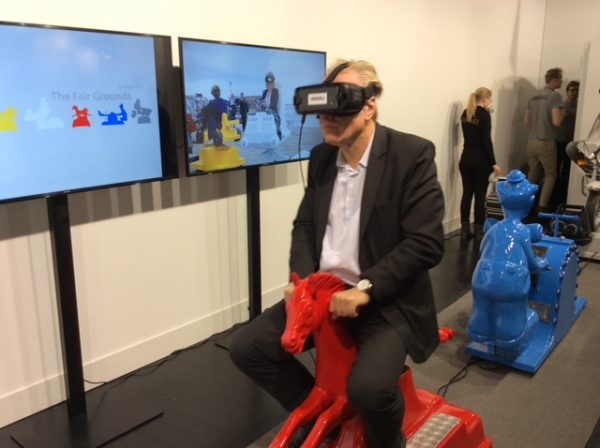
The beginning of the 3rd millennium has brought about several fundamental changes of work and employment. What had previously been thought of as utopian in the realm of work, has become a normal feature of work. Just like in the historically grounded, utopian perspective described by Bernard Gazier “Tous sublimes” (2003) we have a growing group of employees and self-employed persons who enjoy privileged positions on the labor market with sufficiently high salaries and access to mobility on the labor market at their own discretion. In addition to these examples described in Gazier’s utopian perspective, the 2020s added permission of remote work from anywhere and use of AI-assisted technology and robotics. A previously utopian view of the future of work has become a reality for many more people nowadays. The utopian element no longer is the how this world of work might look like, but how many people will enjoy the benefits of the technological progress. With a substantial increase of the efficiency and productivity of work, the distribution and sharing of the fruits shall become even more important. We have entered into a new phase of “the brave new world” of work as of 2025. (Image: Graffiti Berlin 2025-12).

Telework Challenge

There is a seminal trend that many employees prefer to have a choice to work on the premises of the employer or remote from home. This flexibility has become a major element of collective bargaining on work and time in larger companies in order to clarify rights and obligations.
In France it is about 1 in 5 of employees who do telework one day per month (1 in 6 in Nouvelle Aquitaine). The higher up in the hierarchy a person is, the more likely s/he is to do telework. Higher levels of educational attainment and seniority in a company also improve the access to and use of telework. There are still many employees who would like to do telework in their jobs, which technically could be done remotely, but who cannot do it (1 in 3). Most of those are denied the possibility by their employers.
Data from a survey in Germany from 2014 showed that before Covid-19 men were worked more often remotely than did women (Lott & Abendroth, 2019). The latest figures from France 2024 show that women have overtaken men as remote workers (Askenazy et al. 2025). As working from home has become more a part of the “standard employment relationship” today, the fears of loosing out on career opportunities due working from home seems to play less of a role nowadays, probably for both gender. Compared to 2014 the costs of equipment and availability and ease of installation of fast internet have become more affordable and might push the spread of telework even further.
The data from France show a strong positive correlation of remote work and commuting distance to work. Hence, long commuting distances “drive” more people into telework, which makes a lot of ecological sense, too.

AI earnings effects

In the first few years of wider adoption of AI in an economy, there is the expectation that this might lead to substantial productivity gains for enterprises which use it as well as for employees who are early adopters of the relatively new technology. The study by the Stanford Digital Economy Lab by  Chen, Chandar and Brynjolfsson (2025) showed that so far there are no significant earnings effects for employees. Based on millions of recent payroll data from US companies productivity gains have not trickled through to the paycheck in terms of monthly salaries. Participation of staff in a company’s overall turnover or profit might change this as time evolves. For civil servants the adoption of AI might mean increases in cases dealt with as some tasks can be executes faster than before with the use of AI.
The evidence points to employment effects of AI rather than earnings effects so far. A hypothesis is yet unresolved: senior employees using AI might employ fewer junior workers at entry positions, if these “hallucinating” young professionals can be replaced by hallucinating AI. In science the hallucination has sometimes lead to disruptive new approaches and findings. It is a tough choice to pick the young entrants with high productivity potential and eventually high remuneration for this in terms of labor earnings.

AI employment effects

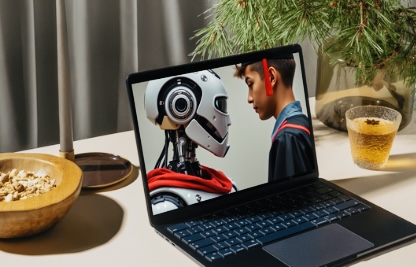
The first robust empirical evidence about employment effects of AI in the USA has been published by the Stanford Digital Economy Lab by  Chen, Chandar and Brynjolfsson (2025). A previous paper by Wang and Wang (2025) highlighted the comparative advantage of persons who use AI in their work compared to others and the authors coined the term “learning by using technology”.  The prediction of the model was that there might be job losses of more than 20% in the long run and half of this already in the first 5 years of the introduction of the technology. The Stanford economists have estimated with real world data these effects in the USA and find quite surprisingly that the negative employment effects of AI have the strongest impact on young labor market entrants with few years of labor market experience. Middle-aged and more senior employees seem to benefit from “tacit knowledge” about the work, which is more difficult to replace with AI, at least for the time being of the early days of AI. This evidence is based on recent payroll data from the largest payroll processing firm “ADP” in the USA which has firms overrepresented from the manufacturing and services industries as reported in another paper  (Firm size maybe another source of bias).  However, the effect that youth 22-25 years of age suffered the most calls into question the common belief that older workers are more likely to suffer the consequences as during in the rise of the digital economy around the year 2000. (AI Image created with Canva)

Vacation or Workation

Vacation or Workation, that is the question. Remote work and outsourcing of work have  created the opportunity for more people to work from distant places. Logging into the firm’s or the administration’s secured intranet enabled to work from where you prefer to work rather than on the premises of the firm. After the technological shift to enable secure remote work, the acceptability of remote work is a societal issue. Whereas bosses worked or had to work while on travel for many decades, the same has become feasible due to reduced costs for many other employees as well. The Covid-19 pandemic has forced another shift in the need to accept and advance remote work as well. Taken together the option of a “workation” instead of a vacation became equally more feasible. The borderline between remote work, “workation” and vacation has become more and more blurred. It remains to be seen, whether these options enhance an outsourcing trend by firms or whether  more “back-sourcing” or “in-sourcing” will be the consequence.
Employers with their associations and employees with their trade union representatives have a need to include such topics in their bargaining agenda in addition to pay, health and safety, as well as working time adaptations.
(Image created with Canva 2025-9)


Work time reduction

One of the major elements of social progress in the 20th century consisted in the reduction of work time. Reductions from 48 hours per week in the first half of the century were largely reduced to 40 hours per week or less in some industries with strong trade union representation. State regulations also pushed in this direction with positive implications for physical and mental health as well as wellbeing. Advances in longevity of employees may be attributable to this social progress agenda of the 20th century. In the 21st century we witness a new thrust of enterprises and employees striving to implement a 4 day work schedule by at the same time organizing a further reduction of work hours. The scientific evidence which is based on pre- and post trial assessments of workers satisfaction shows rather positive results (Fan, Schor, Kelly, Gu 2025). More studies are due to accompany this potential of further health and wellbeing effects of reduced work time and the reorganization of work time in enterprises. 

Electrifying Jobs

The transition to the “all electric society” necessitates to prepare the labor force for the upcoming challenge. The knowledge about electricity and electric appliances constitutes the basics of the knowledge base of the future. This goes far beyond the basics of physics and electrical engineering. There many processes like sharing of electric infrastructure in households, cities, in and beyond countries that have to be delt with. Investment calculations and legal issues to address the different risks involved are another area to cover in the process to prepare society for the “all electric society”.
However, the skills of professions with more direct links to the fossil fuel based technologies have a role in the phasing out of the heavy reliance on fossil fuels. Reverse engineering of such engines and heating will need people still knowledgeable of the past, when younger generations set their focus primarily on professions with links to electricity. Even using a solar powered heat pump in a home requires pipes to the existing network of radiators, for example. This will most likely be a gradual shift of the job structure and occupational requirements over at least a decade, but the shift has started already. Some might argue we need a well functioning “transitional labour market”, labour market policies and social security system for this to happen smoothly.


Work and Time

The link between work and time has been evolving as a major element of social progress over centuries. In what younger generations seem to take for granted, <40 hours week, paid time off-work. 4-5 days per week to name only the major ones, has been the result of huge struggles and hustles driven by employees and their trade unions to achieve such milestones. The current debate to get employees back into offices and/or to work longer hours again, is also in the end a debate about work and time. The advantage of working from home consists among other factors in saving a lot of valuable time and stress from commute to work. This unaccounted time to go to work has become a major health hazard even in an apparently comfortable company subsidized car or any other means of transportation. The traffic jams of so-called rush hours, when in fact everybody is slowed down, are a serious health hazard usually ignored by employers. However, these hours are a major part of the work-life-time balance of employees. In many negotiations and collective bargaining about working time this is the big elephant in the room rarely addressed.

AI 2nd round effects

The most popular topic currently is AI.
Most writers, assisted by some form of AI, will deal with the 1st round effects of AI. These consist in the immediate consequence of the use of AI in office work, medical and military applications, music and all producing or creative industries. As an economist you take the input – output matrix of the economy (OECD countries) and take AI as an additional dimension of this I/O matrix, for example. The result is an AI-augmented model of the economy. This 3-dimensional cubic view of the economy asks to reflect on the potential short-term and medium-term impact of AI.
Let’s take the example of translation and editing services. AI will in the short-term or the 1st round effects make it easier to offer mechanical translations with fast turnaround. Most likely, this will lead to less translators needed for routine translations of longer texts, which would otherwise be a very costly endeavour. The 2nd round effects, however, will make the expert knowledge of translators of texts, where every word counts, more necessary in order to provide the best version of a translation targeted on specific audiences.
In the legal domain, for example, the precision of words is primordial and errors can be very costly. Hence, the 2nd round effects of AI in this field will increase the demand for high quality translation services more than before the use of AI. The important shift consists in these 2nd round effects of AI, which give a push to multilingual societies as just one medium-term outcome.
Please use AI to read (listen) to this paragraph in your native language or even dialect using your favourite AI-tool.