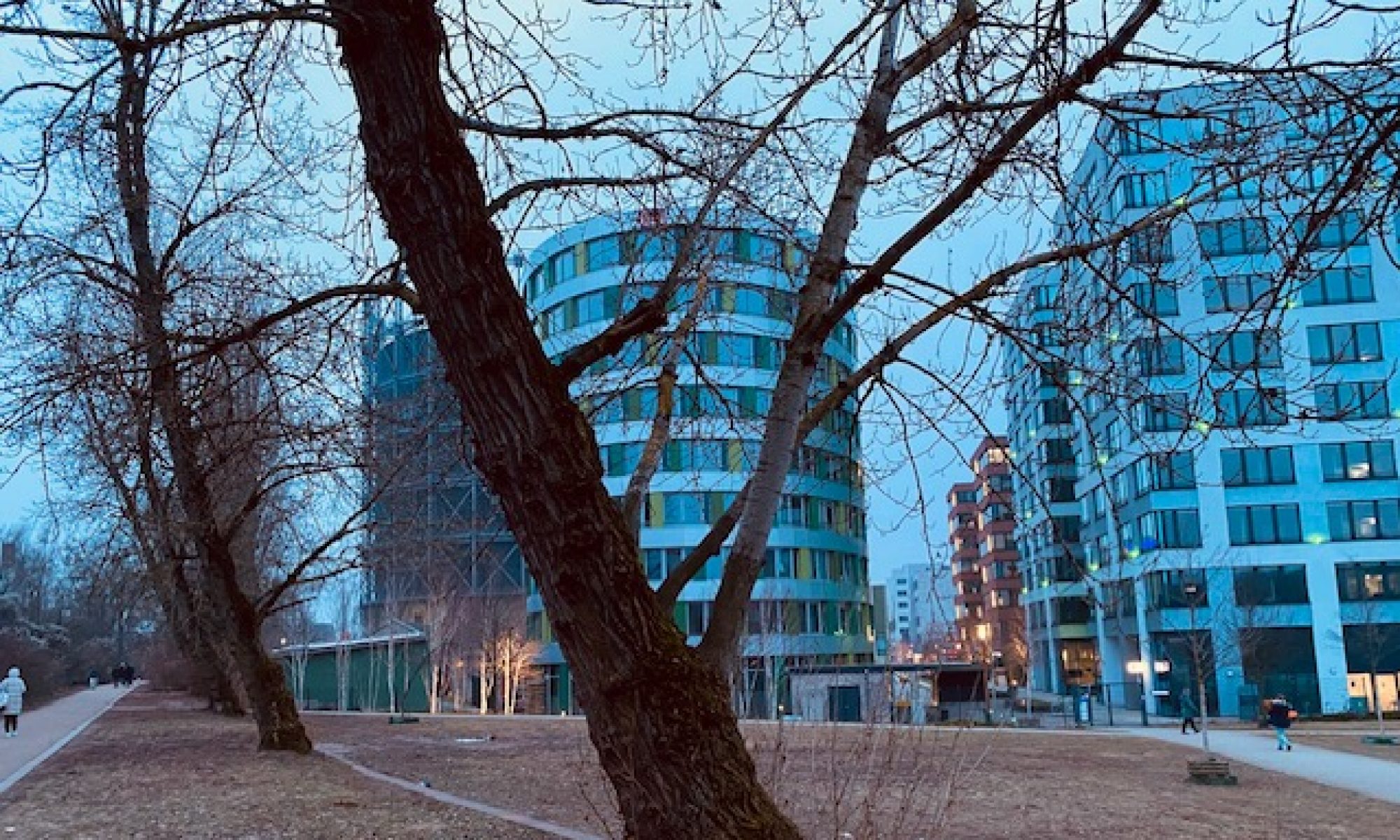

Democracy in architecture

Over centuries we have pondered how to bring more democracy into architecture. This very idea is different from designing parliaments or other democratic institutions like courts or the representation of executive power in a democracy. Bottom-up or direct participation, beyond the pseudo open participation in a competition for the chosen best design, could take the form of voting by and/or listening to the people before any realization. Rather than relying on the choice of elected representatives, we may envisage the observation of people’s choices. Such a kind of bottom-up approach has been chosen by Anna Jung and Lea Krueger who let persons chose, where they wanted to take a rest at the Kulturforum in Berlin by moving chairs to a  specific place or a nearby location. Rather than yet another grand design people could freely choose their favorite niche for 1 or 2 chairs. Sometimes just looking for shadow next to a wall or under a tree, sometimes desperate for a little green spot. Democracy in architecture can simply mean to think architecture from the people’s perspective or an observed user’s experience. Democracy in architecture could resemble a bit more the internet revolution and think in terms of user interface, UX-design. With the construction of the “Berlin Modern” well under way, such green niches shall be appreciated by many people passing by and those who would like to rest for a while.  

Rotational energy

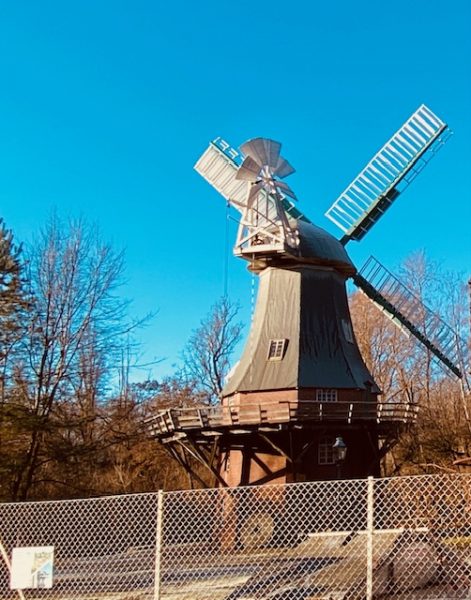
We all know rotational energy from our bicycles. lighting used to come from a small rotational energy source attached to a wheel (dynamo light) which produced sufficient electricity to lighten a front and back light. The use of rotational energy, however, is much older than the application on the bicycles, which have been largely replaced by batteries and LED-lights. The first so-called Post-mills stem from Normandy as well as the Rhine riversides around 1200. It took about 800 years to make a splendid comeback as energy source in the age of the „All electric society“ of the 21st century in the making. The „Deutsche Museum of Technology“ in Berlin has great examples of such rotational energy sources on display in the museum‘s park. You can walk a path through the past and future of rotational energy sources.

Birds nutrition

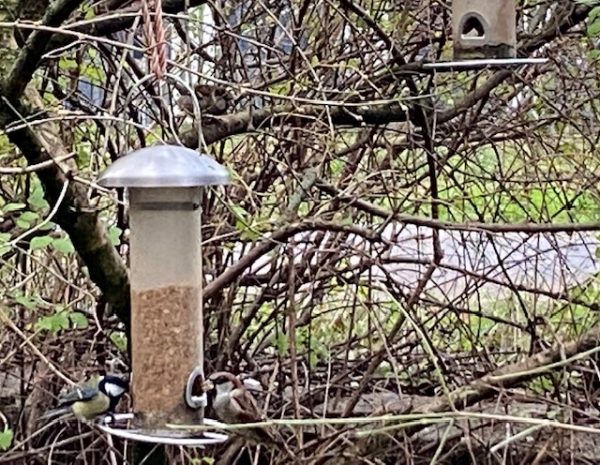
The winter diet for birds is less varied than during the other seasons. Human assistance seems to be appreciated as well even if food supply in inner cities appears to be abundant with huge amounts of wasted food in streets ans backyards. The different diets of different species are not easy to cater for. It is a two way learning and adaptation process. With a narrower range of birds feeding in cities, the task is easier than it used to be. Bringing back more diversity of birds in general starts with offering different nutrients as well. A long way to go.

Philosophy of Voyage

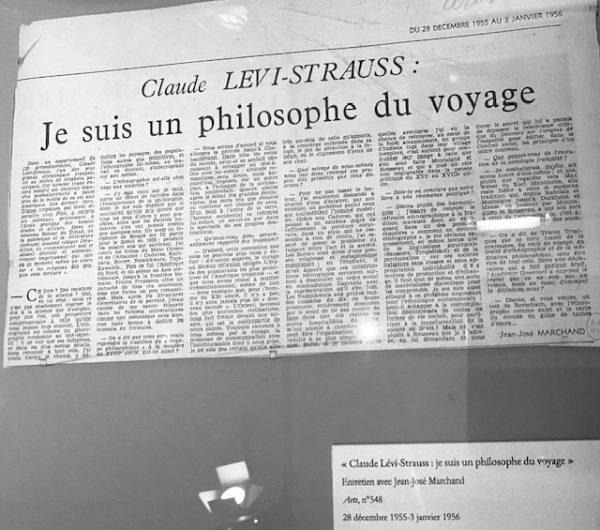
In an interview Claude Lévi-Strauss described himself as a philosopher of voyage. The excursions which lasted sometimes several months to live with indigenous people and study their languages, habits and culture became a scientific field of its own called social anthropology. He travelled with his wife and wrote down hundreds of notes and collected items. Only years later the concept of stuctural theory became evident to him. A voyage might go on after the end of traveling. It might start well before departure as well, not the least due to all the preparations. Colette, the French writer and polyartist, coined the phrase “ce qu’on sait faire, au fond, c’est de la route, ce  n‘est pas du voyage ” in the novel « La chatte ». In the pre- and immediate post 2WW years “taking to the roads” often had a gendered view of this with women being rare to hold a driver’s license. To “find meaning through voyages” or “the voyage is the meaning” fill whole libraries. For better or worse, travel books are still best selling books in a shrinking overall book market (less print books sold, but still higher value of sales).   

Home Wind energy noninvasive

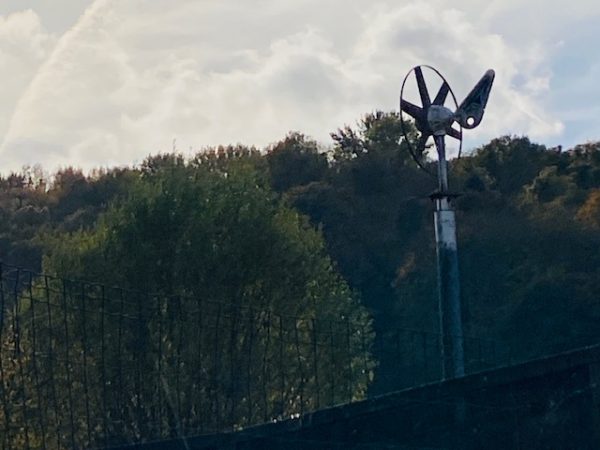
The abundance of wind energy in some regions has made the use of this source of energy more popular. During long winter nights the harvest of wind energy is a wonderful source of free energy. Regulations and oversize wind turbines have tarnished the image of wind energy in some regions. However, even in France and not only in this small village of Asterix and Obelix who resist the Roman empire, that we can find tiny wind turbines providing small amounts of energy. For all those households that have a battery they can use this power whenever they may need it. Suddenly, we are looking forward to the stormy autumn season.  

All electric again

The “all electric society” has been identified by Dan Wang and Arthur Kroeber (2025 p.48) as one of the underlying driving forces of “The real China Model”. Despite the heavy reliance and pollution caused by China’s use of coal, the large share of electricity  (30%) of energy use is unmatched by the rest of the world except Japan. Investment in electricity grids and innovative ways of mobility around electricity will allow China to buzz rather than steam ahead. Solar cells, batteries for electricity storage and innovative ways of distribution of electricity through AI enhanced “learning” devices will widen the gap between China and other countries that suffer from inefficient path dependency.
Taking the advent of the “All electric society” seriously will free resources through the focus on future-proof technologies. We should not be afraid of the sparks of a short-circuited “All electric society”, the environmental challenges ahead for all of us, particularly China, ask to shift to high voltage solutions urgently. 

Sponge Mofs

Many people might have come across “SpongeBob” as a TV-series. Well, in 2025 it is time for an update. The Nobel Committee has awarded the Chemistry prize not to SpongeBob, but the research linked to the sponge-like Mofs, i.e. metal-organic frameworks to Kitagawa, Robson, Yaghi. These Mofs have in fact properties  similar to a sponge or cages in some applications. They consist of porous materials, which have large surface areas in relation to their apparent volume. Due to the modelling of network structures the surface of a grid can be expanded drastically.
Due to the application of such modelling techniques, the combinations of materials/organics and, thereby, the applications to modern technological challenges have increased tremendously. The exponential growth of research papers based on these foundations largely justify this honourable award. Not only the potential of carbon capture, but also the storage capacity of batteries as well as medical applications might benefit from this basic research and findings, eventually.
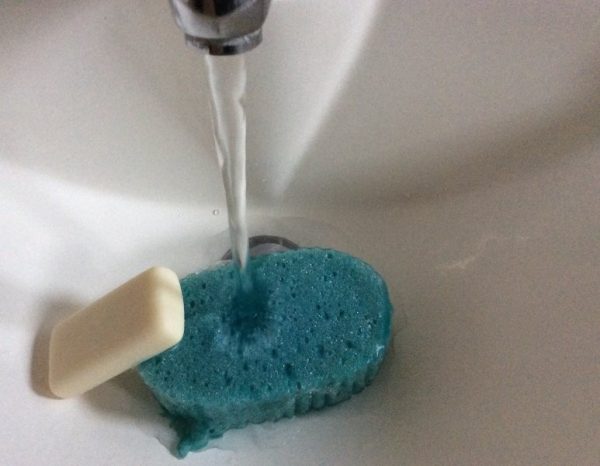
Playing around with a sponge, doing your dishes – also for men, or watching Spongebob might be considered differently from now on. Maybe, just start with a virtual visit of the Nobel museum for further inspiration.

Unity is key

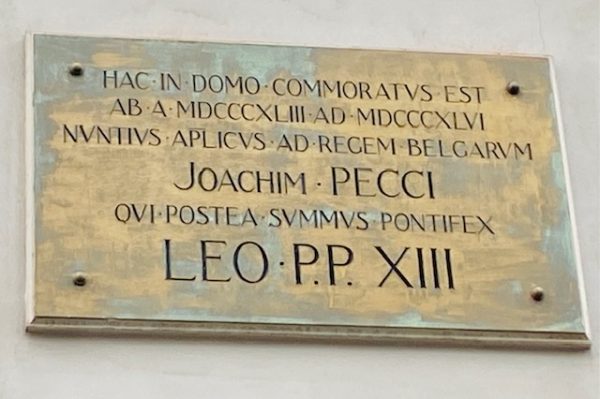
The choice of the motto “In illo uno unum” by the new Pope Leo XIV of the catholic church in 2025  highlights his choice to devote his efforts to the unity of all christian churches on earth. This is a centuries old dream of the diversified interpretations and practices within the christian beliefs and traditions. The inaugural sermon of a Pope therefore takes the form of a high stakes announcement for the coming years (Link). The next document from Leo XIV speaks to the importance to preserve the earth as the creation of God with all its diversity as a whole as well as in its parts. We might translate this back into “In illa uno unum”, where in illa stands for the earth, as a female and nature-turned version of the Pope’s chosen Motto. The choice of the tradition of Popes named Leo, like Leo XIII previously was another matter of signalling to his followers that he is firmly embedded into the Augustine tradition of Christian beliefs and traditions and practice. A concern for unity is necessarily bound to bring together peoples from all corners of the planet on the foundation of equality and a sharing and preservation of the riches of the world. (Image in Brussels, Joachim Pecci as ambassador of Vatican in Belgium before he became Pope Leo XIII). 

Sink / Rise

Nick Brandt presented his engaged photographic projects “The day may break” in Brussels at the Hangar Gallery space in Brussels (2025-9-21). The photographic work spans the globe to document and tell the story of a an endangered planet. The environmental and social fabric is at risk of an unprecented scale in the 21st century. Rather than producing hours of documentation, Nick Brandt focuses on images that stick. His “mise en scene” is meant to haunt us. And it succeeds in it. In the best sense of a tradition of a “photographe engagé” he intends to convey messages, even whole narratives to us about and from people in remote places, who are endangered through our inaction or paralysis in front of the challenges posed by global warming and climate change as well as the social and societal consequences.
We can save people from drowning in floods and rising sea levels. The chapter Sink / Rise of this project was produced with people from the Fiji islands who participated in the futuristic scenario of a sunk island. Without accusations, these people question us. Why? How? What for? Where to? – without speaking a word. They spend time in on a sunk island, surrounded, submerged by beautiful, but morbid, turquoise water and the graveyard-like remainders of a broken coral reef. These are photographs not of these people, but about them, about their likely fate, and (very important) produced with them as empowered actors. May they have a chance to rise like a phoenix from the ashes from these photos.
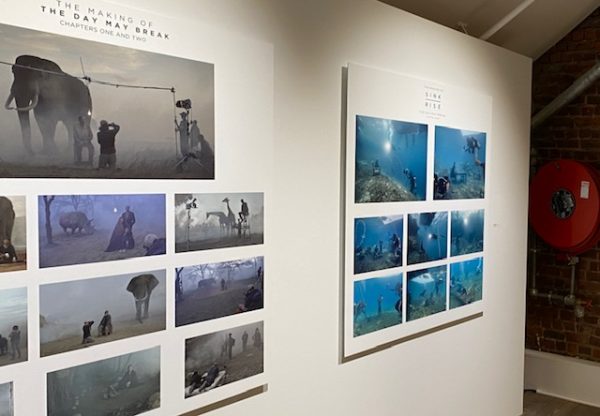
The documentation on the “Making of …” (image below) as part of the same exhibition allows transparency and additional insights into the artist’s work and proceedings.
(Image: Hangar Gallery, Brussels 2025-9-21, On the making of Sink / Rise by Nick Brandt)


Air pollution dementia

A comprehensive review and update of evidence that indicates a link between air pollution and dementia has been published in “The Lancet” open access on 2025-7-25. Besides a genetic predisposition the environmental impact of our worsening air quality caused by fine dust particles and PM 2,5 and nitrogen dioxide NO2 has been found in several studies. This updated meta study should be an additional warning to take efforts to clean up our air more seriously. The diesel engines amongst other sources of air pollution have contributed a great deal to this evolution. Inner city inhabitants are at greater risks to suffer the consequences as they are more exposed to these pollutants and for longer durations. Clean air is a matter of brain health in advanced age and biodiversity as well.