
UNESCO Art

The UNESCO building hosts fine examples of modern art. For example “L’homme qui marche” by Giacometti (Image 1 below, focus on shadow of the figure) is one of the treasures exposed next to the conference center. The statue is very fitting as introduction to the exhibition “Fit for Life” during the Olympics, although it has been there for many decades. Taken on a photograph from a specific angle, the marching man appears like a crucified person without the crucifix. Each athlete has a long march behind him or behind her to reach the landmark of participation in the Olympic games. The media attention puts the spotlight on the winning persons albeit the many splendid performances of all other athletes. The cultures of the games is to be found in the millions of people who are inspired by these outstanding performances to also try their best in whatever conditions are encountered locally.

The strive by each athlete to achieve the highest goals, possible or even impossible, is reflected in the big wall painting by Picasso, 1958,  which was especially commissioned by UNESCO as the new building was inaugurated in Paris. The title of Picasso’s painting is “The fall of Icarus”, an ancient narrative of mankind reaching for the sun, but ultimately failing. Let’s keep waling despite the risk of falling short of ideals. A reasonable vision for diplomacy as well.

Generational differences

The study of generational differences has a long tradition in sociology. A recent study by Wysmulek et al. (Acta Sociologica 2024, 131pp). highlights changes in how youth values education, abilities and hard work. The study carried out with Polish data shows that it is not the straightforward historical grouping of birth cohorts that matters most, but the experience of living through a period of crisis or stability during the formation of so-called meritocratic beliefs. Once formed, these beliefs tend to persist for prolonged periods of time well into middle and late adulthood.

Many judgements about young people might suffer a substantial generational bias when viewed from another generation’s vantage point. Cross-generational differences in beliefs and behavior are dependent on homogeneous or heterogeneous experiences of the respective generations. Disrespect of such generational differences is bound to yield severe misunderstandings. Who told you that social life was easy anyway? (Image decorated piano in shopping mall, Berlin 2024)

Zoo Visit

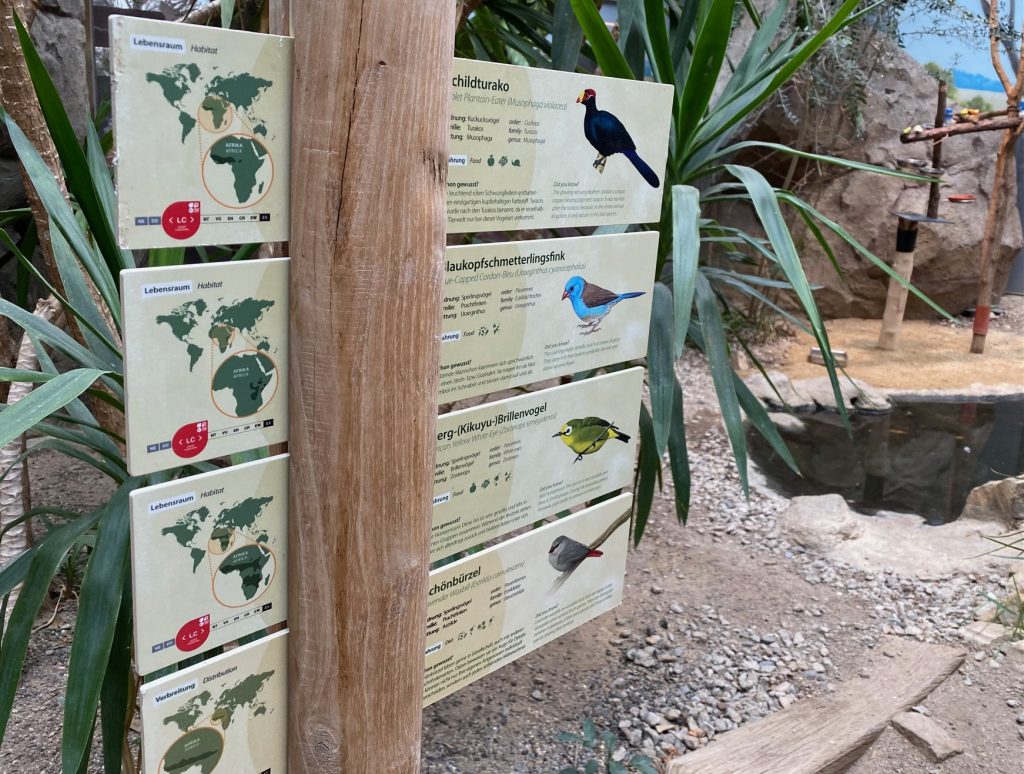
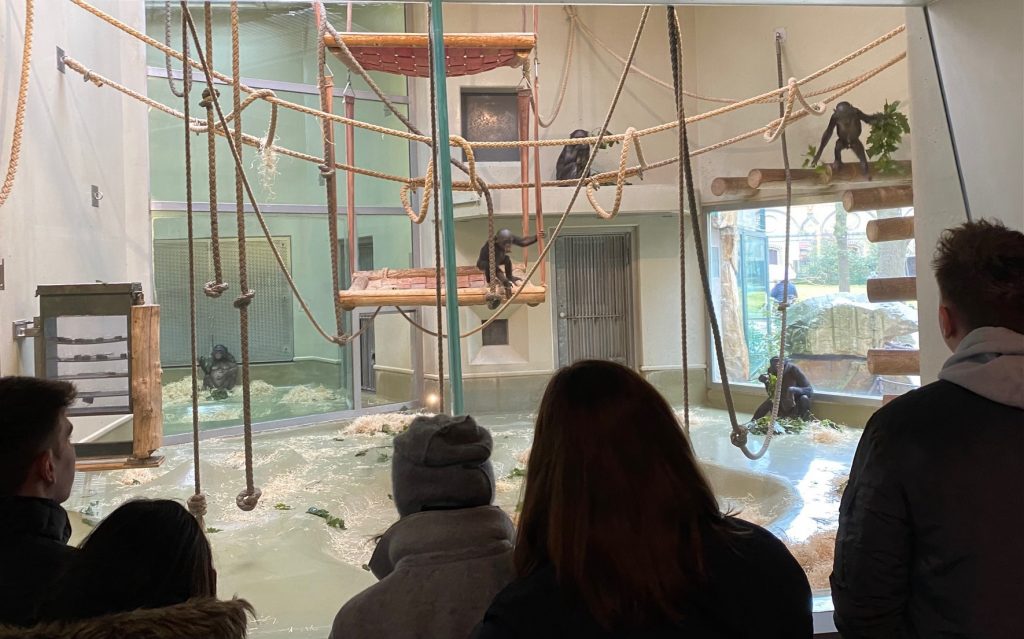
The visit of a zoo is always a great event. Accordingly the prices of a visit have reached levels that are beyond prices for a cinema entry. Usually a whole day is spent with high emotions watching animals sleeping, walking or eating. Sometimes we can watch a training session or a brief medical intervention. Learning about the beauty of biodiversity is important because we treasure more what we like. Looking into the eyes of an animal stimulates affection. Gathering support for the preservation of ecosystems was and still is a great effort. And yet, we have to move beyond preservation to the restoration of ecosystems like in the UNDP projects (Link). Animal parks can contribute to this if we encourage such cooperation and co-financing. The awareness, understanding and willingness to engage in restoration projects is largely increased after the visit of a zoo. A second round effect is the potential to reduce international travel to destinations with rich animal diversity. Restoration is a win-win situation for wildlife habitat and our planet as a whole.

Family Music Days

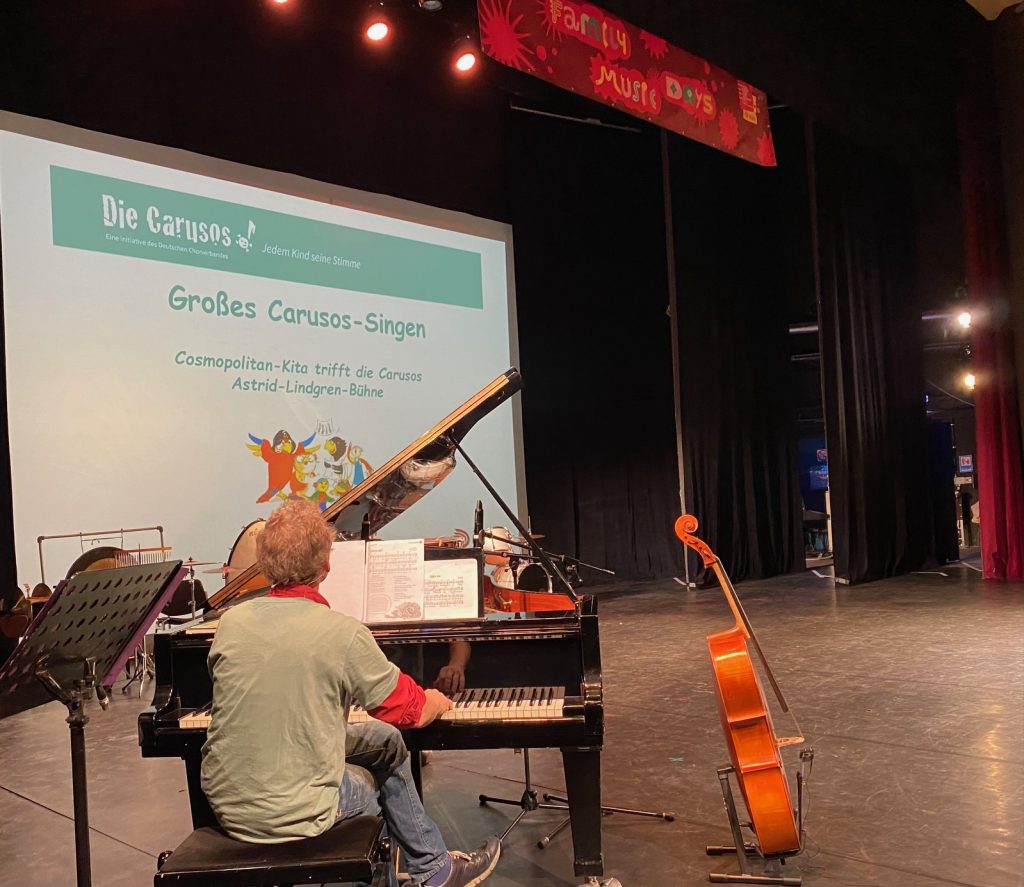
Kids are queens, kings and princesses as well as princes at the family music days in Berlin at the FEZ. Kids can enjoy the full spectrum of musical experiences from just listening to playing themselves, if they feel like it or dare to risk a sound. Just making noise is okay, too. Building your very own version of a musical instrument is a great learning experience for the young. To make music it doesn’t always have to be an expensive instrument. Your own imagination assisted by persons with patience and passion creates marvelous sound experiences. Initiating kids to the endless worlds of sound is having lasting effects on them. Great to see a concert hall full of young enthusiasts. Learning is so much fun, if taught in accessible and inclusive ways. Professional instructors joined by many volunteers make the world go round for kids. Wish you we here. Let’s spread the message.

Berlin FEZ 2024-3-16

Magritte Symbol

“People always search for symbols in my works. There are none.” For those familiar with the work of Magritte, they know that he means precisely the opposite of what he is stating there. He applies well-known symbols like the white pigeon representing peace in his paintings to represent and make us think about peace. The image becomes surreal in the sense that we go beyond the real world of violence and war to lift our attention to the other surreal version of the world as it currently appears to us.
In times of war, it is more difficult to image a peaceful world and yet, this is the time we need to believe in the possibility of peace beyond the reality of aggression. In 1966 Magritte has painted “L’oiseau de ciel”, the year the peace movements became more than a surreal dream across the world. It remains a challenge to think beyond the cold war at the time and the hot war initiated by Russia in Ukraine. Surrealism helps us to think beyond the real state of affairs.
In Magritte’s own biography the “dove of peace” occurs towards the end of his own life. Whereas at the onset of his career as painter he dealt with depression and suicide in his family, towards the end of his career he moves beyond the autobiographical topics. Globally valid symbols gain the upper hand. The life course seems to have come full circle.


Energy Storage

On a sunny and windy day, even in winter or spring, renewable energy is abundant. If demand is stable prices will drop. Prices will rise again as demand for energy picks up. Hence, this is an obvious case for trading opportunities. All you need is … energy storage. All so-called prosumers, short for producers and simultaneously consumers have a lot to gain if they are able to store energy when it’s abundant and cheap. Sell it when it is expensive or use it yourself if needed. Just keep an eye on the costs of energy storage. A stylish insulated carafe is a well known example of storing hot water for astonishingly long time. Insulation is key to store transformed electric energy here. Other options use kinetic energy like pumping water to a higher level and then generate electricity again when the water returns to the lower level. Of course, batteries are a simple way for energy storage as well. Costs seem to come down rapidly and less environmentally hazardous materials leave the laboratory almost every month. It is about time to consider this seriously. More and more cities have understood that energy storage can generate cash for them (Example Feuchtwangen) and appears to be a worthwhile investment for a local power generating community. For the time being my favorite energy storage is the insulated carafe. It is often the beginning of energizing conversations.

Old school energy storage

Digital organising

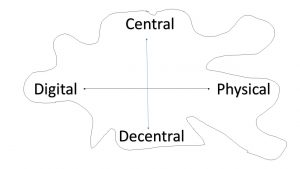
Since the digital innovations continue to broaden our scope of how to organise, we have to make conscious choices which way to choose. The traditional form of sending out newsletters and waiting for responses is still a feature that is prevalent across Europe. Most organisations have shifted to digital plus physical versions by now, just like newspapers. Young organisations by founding year have started or shifted to digital only for speed of delivery, CO2 and cost saving mainly. We may derive a first dimension of organising between the digital and physical.
A second dimension consists in the central versus decentral forms of organising. Similar to the franchise principle of organising companies, organisations have a choice to keep a central structure with varying degrees of freedom at the regional, sectoral or local level. Organisation theory is helpful in this respect. Various hybrid forms are equally possible. Centralised in financial aspects, but scope for local decisions on content.
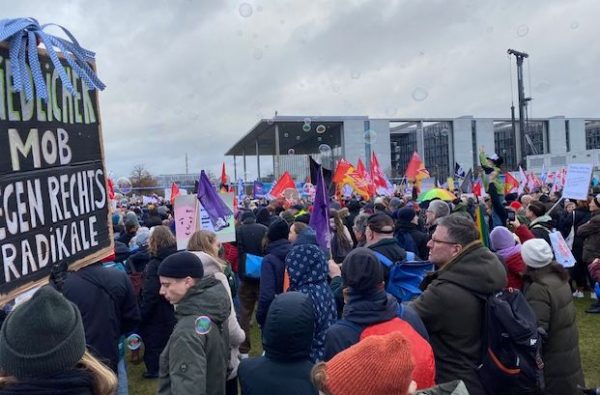
Bohn et al. (2023) define digital organising as “collective purposeful alignment and distributed action fostered through digital technologies”. Centralisation and/or Decentralization become a matter of conscious choice. The processes of datafication and connectification, whereby every bit of information becomes a data point and any electronically enabled device can be connected with each other. Organisations now have a choice of how to organize including digital organising. The opportunities are within the space opened up by the 2 dimensions (figure below). A specific subject matter may require more physical presence and maybe centralised structure, but digital only forms with highly decentralised forms are powerful tools in the 21st century. New as well as established social movements may well take advantage of these digital technologies as well. (Image: Digital Organising 2024 Protest Berlin).

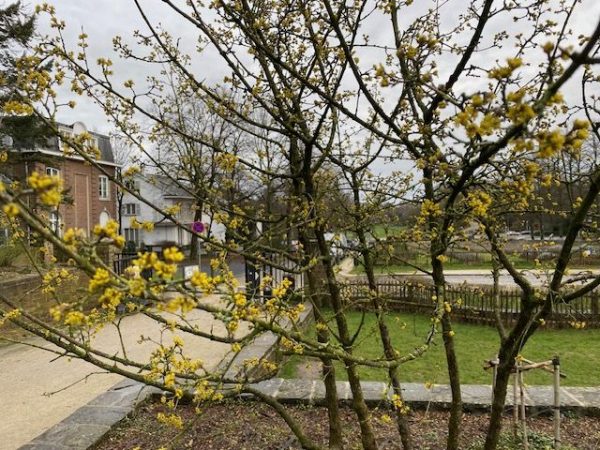
Spring has Sprung

In Europe it is expected that spring follows winter. The closer you move to the equator the more you find days equally long in winter and summer. In Northern Europe we have marked differences in terms of light between winter and summer. In January and February 2024 we had a very mild winter. As of 15th of February we had 15° C in Brussels and the first few blossoms showing up. Climate change is undeniable and the call for action to intervene urgently become louder and louder. Why is it so difficult to take action? Well, there are many vested interests and countries that hope to benefit from climate change. In simple economic theory this is not a problem as long as those who gain from climate change would compensate those who lose from it. However, if the total sum of losses is so much bigger than the sum a few will gain, the global balance sheet will deteriorate rapidly.
Monitoring climate change and the shifts in national and global wealth are part of the scientific endeavour. Rising inequalities on a national as well as global scale will create numerous new challenges which are difficult to forecast due to complex feedback and reinforcement loops. It would be wise to apply the precaution principle in this respect as well, but this seems to be hardly understood, let alone, to be followed.
Sometimes it needs a cold winter, unusual flooding or a bad harvest to acknowledge to value and apply the precautionary principle in the following years. Only, this time it might be fundamentally different, because climate change is irreversible for generations to come. Early blossoms in winter as precursor of spring are nice, but we have mixed feelings considering the impact on irreversible climate change. (Image Brussels 2024-2-15)

Timeless Values

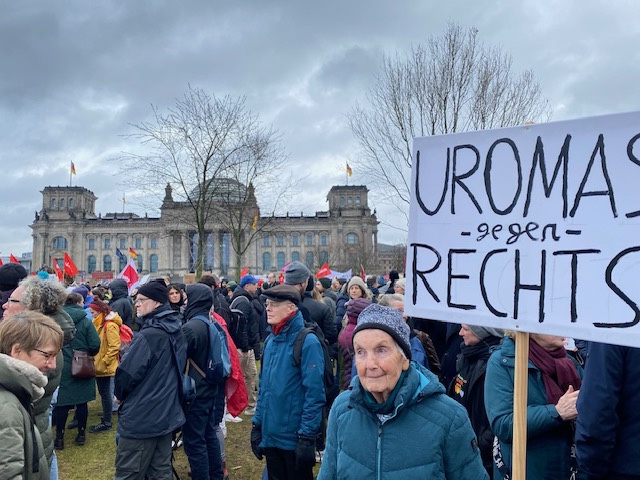
The declaration of human rights is more than 200 years old. However, the need to stand up for the defense of these rights needs many people to act accordingly. Political parties and courts are not strong enough to be the only defendants of democracy and human values. Solidarity across generations is another part of the struggle to defend democracy. In addition to the broad movement of “Omas gegen rechts”, the age distribution has been further enlarged with the “Uromas gegen rechts”. This most likely the generation with first hand life experiences from Nazi Germany and they should have reached an enlightened view of the horrors caused by the Nazi-regime. Unfortunately there are still some who continue to be prisoners in a fascist “brown” cage of mischievous memories. The great grandmother who was present at the demonstration was clear in her statement to stand up against right-wing extremism. (Image: With the permission of the lady I am happy to have evidence of the presence of super-agers at the demonstration in Berlin).

Berlin 2024-2-3. Demonstration

Ethics of posterity

We have not inherited the earth from our ancestors; we are borrowing it from our descendants. (native American saying). Adeline Johns-Putra (2019) states this early in her book on “Climate change and the novel.” Her concern is how to think and write about the ethics of posterity. Approaches of ethics in the sense of parental care (for the planet) or motherhood environmentalism do not suffice in view of overpopulation of our planet. Shifting our identity away from toxic production and consumption is advocated in many novels. Science and science fiction offer many dystopian examples.
De Shalit (1995) wrote early on why posterity matters. It is not the standard of living of contemporaries that matters but we should consider ourselves as a part of a transgenerational community. The time horizon of our decisions matters. In pursuing arguments by John Rawls who re-established a contractionalist perspective on justice, we have to include future generations into our contractual obligations. Following this approach we might arrive at Brundtland’s perspective on the ethics of posterity which is called sufficientarianism in opposition to simple utilitarianism. In sufficientarianism we owe future generations a just and decent living or at least the possibility to have similar starting conditions. Shifting beyond the apocalyptic view of environmental disasters Adeline Johns-Putra (2019) brings to the forefront that we have to substantially lengthen  our time horizon both for consequences of climate change and for dealing with it, albeit the fact that most destructive practices operate much faster than the re-establishing of greater biodiversity.
P.S.:Thanks to the curators of the Lese Lounge Staatsbibliothek Berlin for ease of access to the literature.
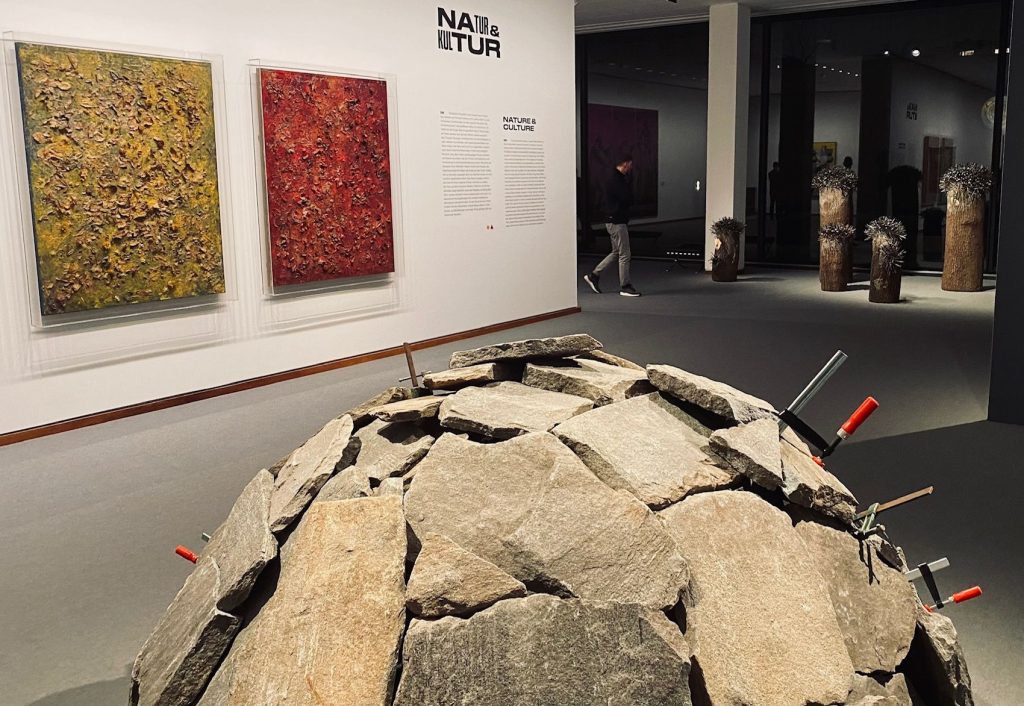
(Image: Natur & Kultur in “Extreme tension: Art between Politics and Society” Collection of the Nationalgalerie 1945-2000“. 2024-1)