Energy Storage

On a sunny and windy day, even in winter or spring, renewable energy is abundant. If demand is stable prices will drop. Prices will rise again as demand for energy picks up. Hence, this is an obvious case for trading opportunities. All you need is … energy storage. All so-called prosumers, short for producers and simultaneously consumers have a lot to gain if they are able to store energy when it’s abundant and cheap. Sell it when it is expensive or use it yourself if needed. Just keep an eye on the costs of energy storage. A stylish insulated carafe is a well known example of storing hot water for astonishingly long time. Insulation is key to store transformed electric energy here. Other options use kinetic energy like pumping water to a higher level and then generate electricity again when the water returns to the lower level. Of course, batteries are a simple way for energy storage as well. Costs seem to come down rapidly and less environmentally hazardous materials leave the laboratory almost every month. It is about time to consider this seriously. More and more cities have understood that energy storage can generate cash for them (Example Feuchtwangen) and appears to be a worthwhile investment for a local power generating community. For the time being my favorite energy storage is the insulated carafe. It is often the beginning of energizing conversations.

Old school energy storage

Digital organising

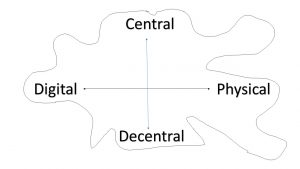
Since the digital innovations continue to broaden our scope of how to organise, we have to make conscious choices which way to choose. The traditional form of sending out newsletters and waiting for responses is still a feature that is prevalent across Europe. Most organisations have shifted to digital plus physical versions by now, just like newspapers. Young organisations by founding year have started or shifted to digital only for speed of delivery, CO2 and cost saving mainly. We may derive a first dimension of organising between the digital and physical.
A second dimension consists in the central versus decentral forms of organising. Similar to the franchise principle of organising companies, organisations have a choice to keep a central structure with varying degrees of freedom at the regional, sectoral or local level. Organisation theory is helpful in this respect. Various hybrid forms are equally possible. Centralised in financial aspects, but scope for local decisions on content.
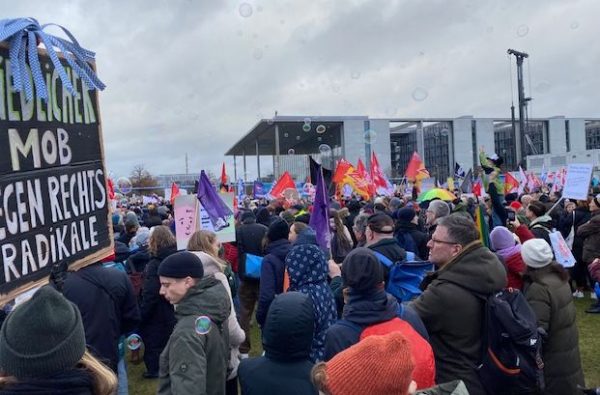
Bohn et al. (2023) define digital organising as “collective purposeful alignment and distributed action fostered through digital technologies”. Centralisation and/or Decentralization become a matter of conscious choice. The processes of datafication and connectification, whereby every bit of information becomes a data point and any electronically enabled device can be connected with each other. Organisations now have a choice of how to organize including digital organising. The opportunities are within the space opened up by the 2 dimensions (figure below). A specific subject matter may require more physical presence and maybe centralised structure, but digital only forms with highly decentralised forms are powerful tools in the 21st century. New as well as established social movements may well take advantage of these digital technologies as well. (Image: Digital Organising 2024 Protest Berlin).

Spring has Sprung

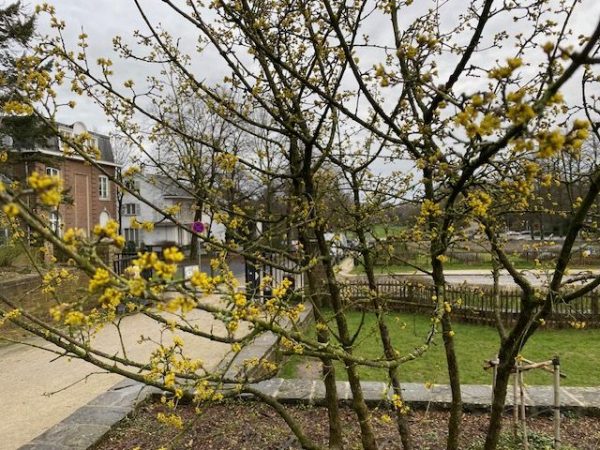
In Europe it is expected that spring follows winter. The closer you move to the equator the more you find days equally long in winter and summer. In Northern Europe we have marked differences in terms of light between winter and summer. In January and February 2024 we had a very mild winter. As of 15th of February we had 15° C in Brussels and the first few blossoms showing up. Climate change is undeniable and the call for action to intervene urgently become louder and louder. Why is it so difficult to take action? Well, there are many vested interests and countries that hope to benefit from climate change. In simple economic theory this is not a problem as long as those who gain from climate change would compensate those who lose from it. However, if the total sum of losses is so much bigger than the sum a few will gain, the global balance sheet will deteriorate rapidly.
Monitoring climate change and the shifts in national and global wealth are part of the scientific endeavour. Rising inequalities on a national as well as global scale will create numerous new challenges which are difficult to forecast due to complex feedback and reinforcement loops. It would be wise to apply the precaution principle in this respect as well, but this seems to be hardly understood, let alone, to be followed.
Sometimes it needs a cold winter, unusual flooding or a bad harvest to acknowledge to value and apply the precautionary principle in the following years. Only, this time it might be fundamentally different, because climate change is irreversible for generations to come. Early blossoms in winter as precursor of spring are nice, but we have mixed feelings considering the impact on irreversible climate change. (Image Brussels 2024-2-15)

Timeless Values

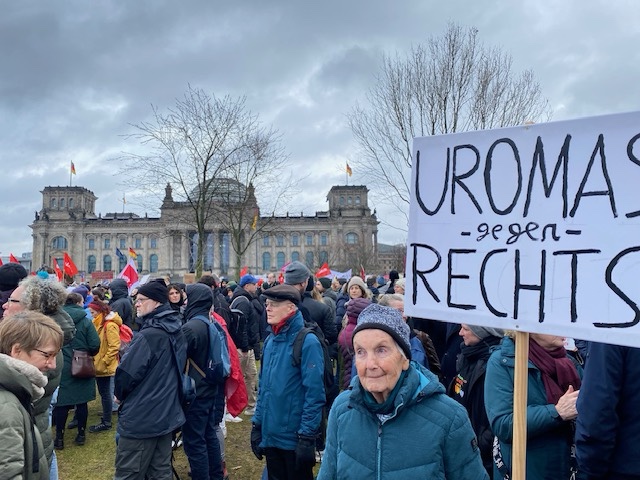
The declaration of human rights is more than 200 years old. However, the need to stand up for the defense of these rights needs many people to act accordingly. Political parties and courts are not strong enough to be the only defendants of democracy and human values. Solidarity across generations is another part of the struggle to defend democracy. In addition to the broad movement of “Omas gegen rechts”, the age distribution has been further enlarged with the “Uromas gegen rechts”. This most likely the generation with first hand life experiences from Nazi Germany and they should have reached an enlightened view of the horrors caused by the Nazi-regime. Unfortunately there are still some who continue to be prisoners in a fascist “brown” cage of mischievous memories. The great grandmother who was present at the demonstration was clear in her statement to stand up against right-wing extremism. (Image: With the permission of the lady I am happy to have evidence of the presence of super-agers at the demonstration in Berlin).

Berlin 2024-2-3. Demonstration

Ethics of posterity

We have not inherited the earth from our ancestors; we are borrowing it from our descendants. (native American saying). Adeline Johns-Putra (2019) states this early in her book on “Climate change and the novel.” Her concern is how to think and write about the ethics of posterity. Approaches of ethics in the sense of parental care (for the planet) or motherhood environmentalism do not suffice in view of overpopulation of our planet. Shifting our identity away from toxic production and consumption is advocated in many novels. Science and science fiction offer many dystopian examples.
De Shalit (1995) wrote early on why posterity matters. It is not the standard of living of contemporaries that matters but we should consider ourselves as a part of a transgenerational community. The time horizon of our decisions matters. In pursuing arguments by John Rawls who re-established a contractionalist perspective on justice, we have to include future generations into our contractual obligations. Following this approach we might arrive at Brundtland’s perspective on the ethics of posterity which is called sufficientarianism in opposition to simple utilitarianism. In sufficientarianism we owe future generations a just and decent living or at least the possibility to have similar starting conditions. Shifting beyond the apocalyptic view of environmental disasters Adeline Johns-Putra (2019) brings to the forefront that we have to substantially lengthen  our time horizon both for consequences of climate change and for dealing with it, albeit the fact that most destructive practices operate much faster than the re-establishing of greater biodiversity.
P.S.:Thanks to the curators of the Lese Lounge Staatsbibliothek Berlin for ease of access to the literature.
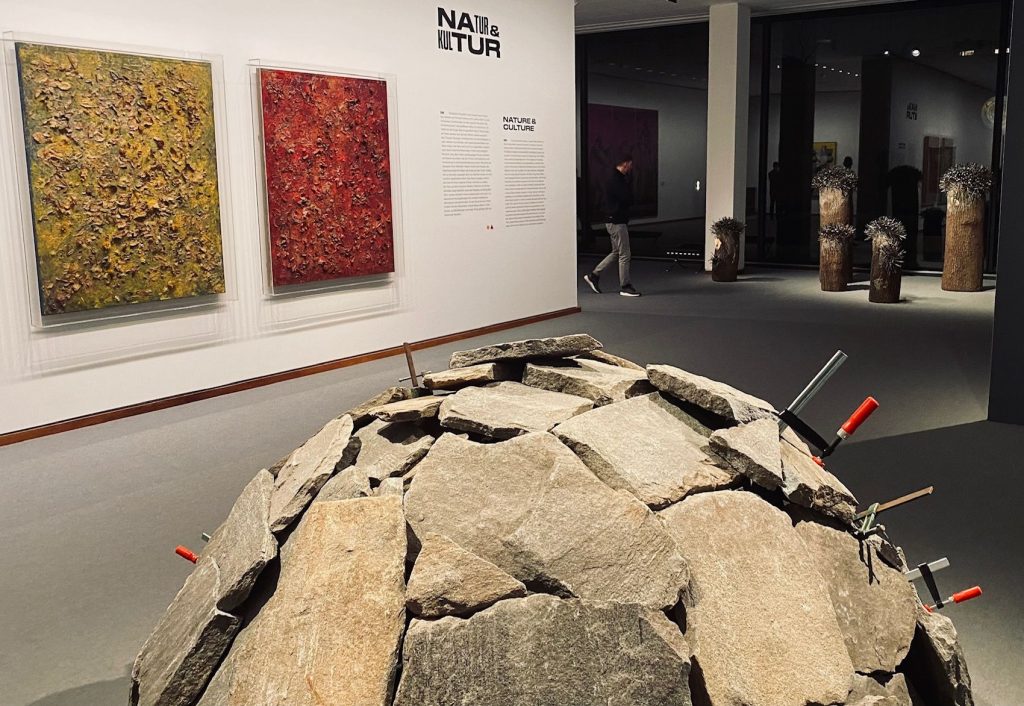
(Image: Natur & Kultur in “Extreme tension: Art between Politics and Society” Collection of the Nationalgalerie 1945-2000“. 2024-1)

Renewables

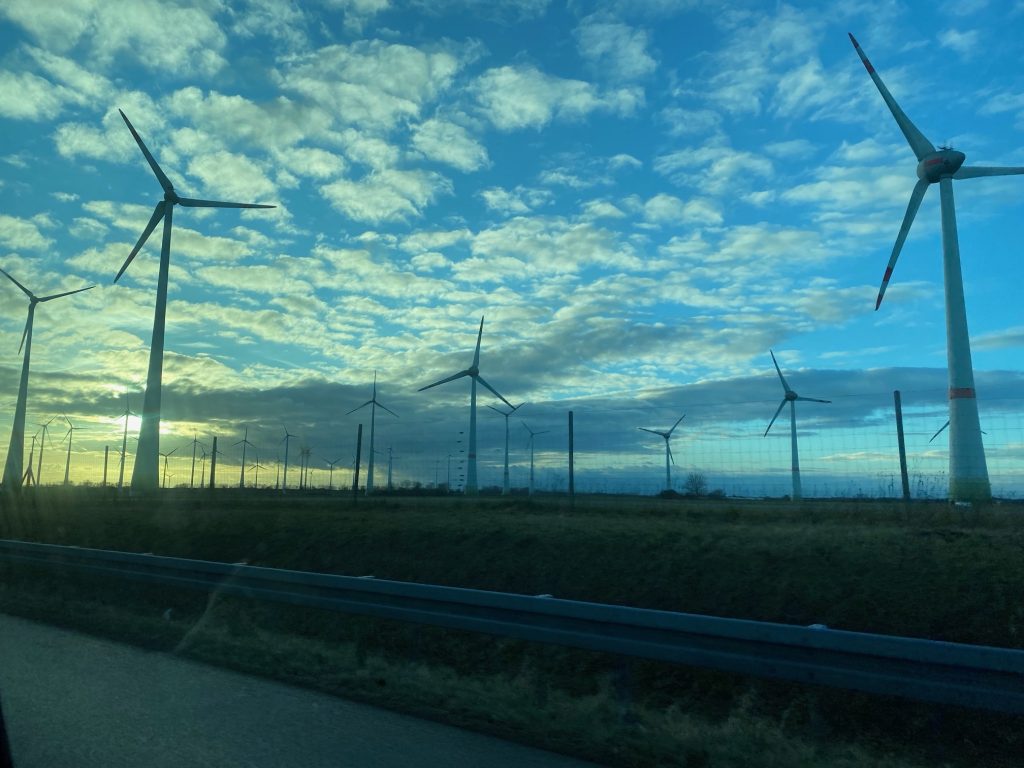
Renewable energy has reached for the 1sr time a share of more than 50% in Spain and Germany in 2023. This is an astonishing milestone in the energy transition of both countries. For Spain a report from Red Energy Espanola attributes the Spanish success story to the expansion of mainly wind energy (Link). The increase of renewable energy in Germany is due to a more rapid expansion of solar energy (Link). In any case a continued expansion of both forms of renewables allows to reduce the share of fossil fuel even more rapidly than previously estimated. Good news for the planet particularly to phase out energy from coal due to its highly polluting side effect. Countries with faster trajectories shall serve as examples that it is feasible to manage the energy transition also for large countries. Political instability might be a price worth paying considering the positive effects for future generations. Managing the transition in a just way which means to assist poorer households, ensures the respect of social policy targets at the same time. With this in mind the energy transition can be perceived by all as an opportunity rather than a threat to their welfare and wellbeing.

Nachhaltigkeitskonzept

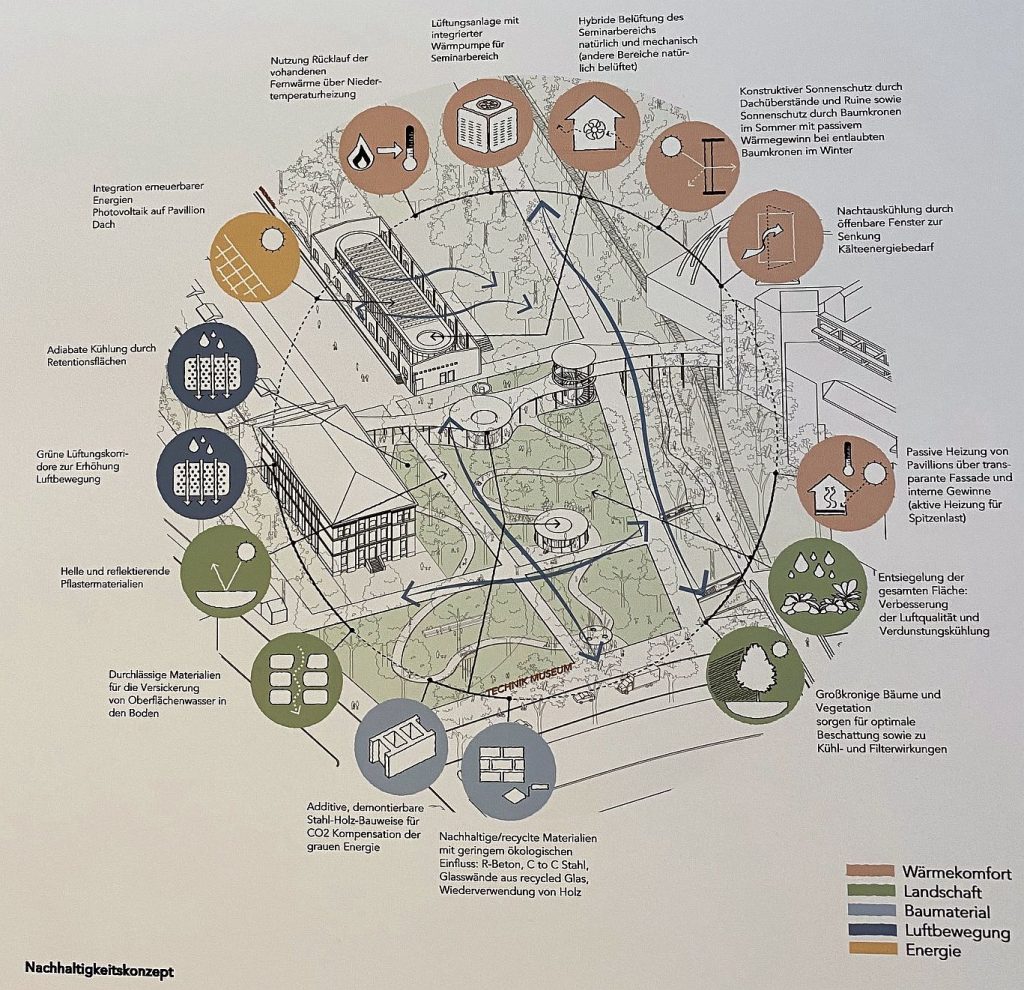
Ein Nachhaltigkeitskonzept gehört zum Bauen mittlerweile wie das Gelbe zum Ei. Die Einreichungen zum Realisierungswettbewerb eines Portals für das Deutsche Technik Museum Berlin hatten entsprechende Anforderungen zu erfüllen. Für ein Technik Museum können dazu die Anforderungen schon etwas höher sein und die oft geforderte „Technologieoffenheit“ oder die Diskussion darüber zumindest andeuten. Der Anerkennungspreis ging an ein Konsortium für die Einreichung 1110, die eine klare Übersicht ihres Nachhaltigkeitskonzepts vorstellten (siehe Auszug Image unten, Foto aus der Ausstellung 2023-12). Nachwachsende Baustoffe gehören zum Repertoire. Gleichzeitig sollte die Erhaltung oder gar Förderung der Biodiversität Teil der nachhaltigen Konzeption sein. Innerstädtisch ist die Rückumwandlung der Versiegelung der Böden eine wichtige gesundheitsfördernde Bauweise. Kühlung in den aufgeheizten Städten ist durch Grünflächen und Beschattung zu erreichen. Tolle Architekten sind das, die den Mut aufbringen den Stachel in die Wunde zu legen. Die Anwohnenden und Besuchenden würden es den Verantwortlichen jahrzehntelang danken.
Das sind längst keine abgefahrenen grünen Ideen oder Träumereien mehr. Paris hat es schon längst vor gemacht. Ganz nah beim Eiffelturm ist das „Musée du Quai Branly –  Jacques Chirac“ das als Neubau mit Garten vom konservativen Präsidenten Jacques Chirac eine grüne Naturoase mitten im Herzen Paris hat bauen lassen. Es ist immer noch eine Art Geheimtipp für Pariser in den zu warmen Sommermonaten. Berlin könnte wie mit der vom Pyramiden-Architekten Pei geplanten Eingangshalle vom Deutschen Historischen Museum mal wieder mit einem Nachhaltigkeitskonzept mit Paris gleichziehen. Gemeinsam können wir auch nachhaltig. Mit der vom Menschen und seiner Technik verursachten Erderwärmung haben die nachfolgenden Generationen noch lange genug zu kämpfen. Mehr Nachhaltigkeitskonzepte braucht die Technik. Das ist die wirkliche Herausforderung des 21. Jahrhunderts.

Winning Peace

Most analysts of international conflicts deal with winning or losing a war. At best they deal with short-term versus long-term versions of winning and losing. However, the question of how to win or achieve a lasting peace is rarely researched. Research on the 2nd World War reveal as soon as the turning point of the war was achieved the preparation of what will come after defeat. Organising humanitarian relief is part of warfare. The U.S. has set a good example of how to organise humanitarian aid as well as ensuring a lasting peace in Europe after the 2nd World War. Lots of books have been written on the Marshall Plan to get the economies in Europe (Western Europe) back to producing. Much less attention has been devoted to the important element of “de-nazification” of whole societies.
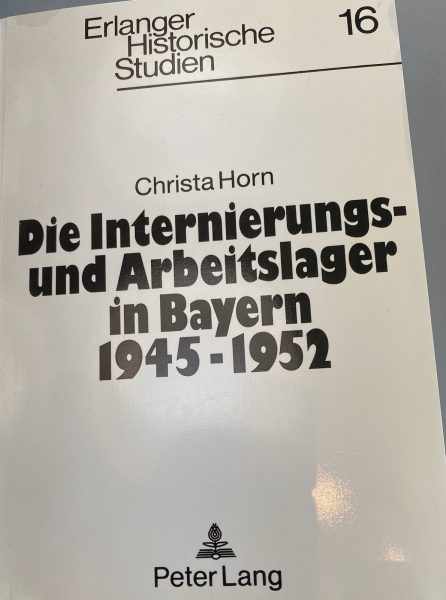
To win peace after the monstruous crimes of the Nazi-regime and the millions of followers and ruthless fighters was a challenge without precedents. The U.S. gave a good example of how to handle the process of winning peace in the regions under its military authority. In the following I shall refer to work published by Christa Horn (1992) “Die Internierungs- und Arbeitslager in Bayern 1945-1952”. The Allies had agreed upon to pursue war criminals. In April 1944 the Supreme Headquarters Allied Expeditionary Forces published the “Handbook for Military Government in Germany”. It was deemed important to detain “certain government and party officials and members of police and para-military formations” (p.17).
Common to demilitarisation efforts after a war, it is the primordial function to reduce the risks of a renewed uptake of guerilla-like attacks due to the amount of arms still widely available or hidden on the enemy’s territory. The document specified further that the continued presence of Nazis in government and other exposed positions “might be a threat to the security of the Allied Forces or an impediment  to the attainment of the objectives of Military Government in Germany” (Arrest Categories Handbook, P.2). Denazification was a means to an end. The size of the task was, however, underestimated at several instances. For example, the organisation of the arrest and detention of more than 100.000 persons was a difficult task. After the end of fighting the transition to peace is not instantaneous. Hierarchical military and party structures had to be dismantled. The so-called “automatic arrest” issued on 13.4.1945 included all grades from the NSDAP down to the “Kreisleiter” or even “Ortgruppenleiter” as well as SS members and their “Helferinnen” (Horn, 1992 p.21). These arrests without judicial procedures came under critic as not-American in the U.S., but it took until 10.10.1948 to abandon this procedure. The literature on the issue refers more to the lack of adequate judicial procedures to handle such so many legal procedures with qualified persons as well as the difficulty to organise detention camps for more than a hundred thousand persons that should deserve to be prosecuted. Handing over to the national or regional judicial instances was, therefore, an important step. The risk to abandon the process of “denazification” was evident, but it was equally important to counter the expansion of the Russian-domination in Eastern Europe with the help of a strengthened Western Europe. Winning peace is a delicate balance of prosecution through the winners of the war and the subsequent prosecution of criminal actions through the indigenous population and its new institutional and judicial setup.
Social Sciences have a lot of solid insights to offer to win peace. With careful consideration they are helpful to learn from even for current international affairs and raging wars. Demilitarisation is only a small part of winning peace. Changing mind sets to internalise humanitarian values remains the biggest challenge and involves more than one generation.

Kriegsenkel

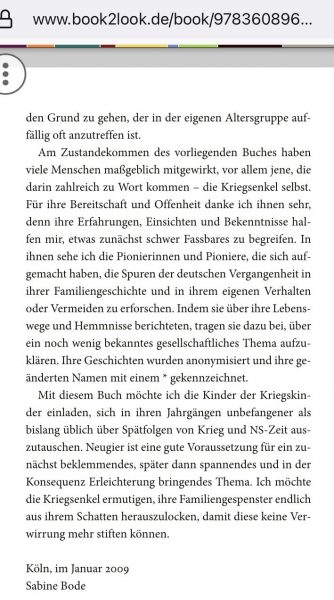
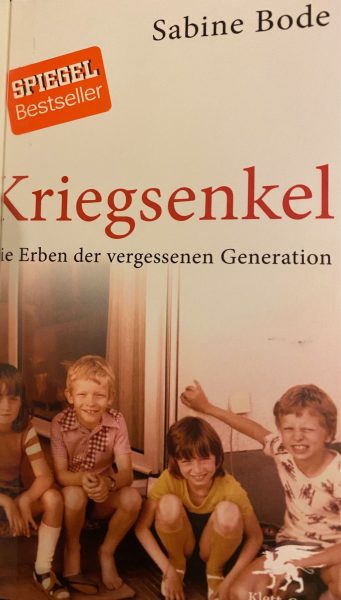
Bereits in 2009 folgte das Buch „Kriegsenkel – Die Erben der vergessenen Generation“ auf das Buch über die Kriegskinder 2004 von Sabine Bode. Im Vorwort zur 9. Auflage in 2014 wird deutlich wie sehr es weiterhin nötig ist, sich mit Familienlegenden und Familienbeziehungen zu befassen, wahrscheinlich auch wegen des lieben Familienfriedens willen. Selbst etwas überraschend berichtet Sabine Bode, dass so viele Kriegsenkel das Buch über die Kriegskinder gelesen und diskutiert haben. Es ginge dabei nicht um Schuldzuweisungen, sondern eher darum, sich über eigene Verunsicherungen, Unausgesprochenes und bisher Unbewusstes klar zu werden. Sabine Bode schreibt über die „Familiengespenster“ oder wie der Titel des ersten Kapitals heißt. „Gespenster aus der Vergangenheit“. Otfried Preussler mit seiner Mitläuferbiografie hat mit dem kleinen Gespenst versucht, eine positive Wendung für Familiengespenster, zumindest als Fiktion zu generieren. Der Versuch einer beispielhaften Immunisierung gegen NS-Versuchungen bringt dann sein etwas düsteres Buch Krabat.
Sabine Bode interviewte auch die Kriegsenkel und berichtet von einem bei vielen vorhandenen „verunsichertes Lebensgefühl“. (S.21). Sicherlich ist die sexuelle Revolution in den späten 60er und 70er Jahren viel daran beteiligt, dass die Kriegsenkel weniger und viele keine Kinder bekommen. Dennoch lässt sich nicht ausschließen, die Verunsicherung der Kriegsenkel hat ebenfalls zu dem Rückgang der Geburtenraten beigetragen. Das ist allerdings kein einfaches empirisches Unterfangen. Starke Rückgänge der Fertilität in Kriegsalliierten Nationen Japan und Italien weisen in eine vergleichbare Richtung, aber es lassen sich auch Gegenbeispiele aufführen. Verunsicherung der Identität der Eltern kann sich noch bei den Kindern als Orientierungslosigkeit äußern. Bode zitiert selbst (S.22) aus einem Theaterstück von Fehling über das Beziehungsgefälle zwischen Kriegskinder und Kriegsenkel. Die Enkelin gesteht darin etwas frustriert, Sorgen macht sich ihre Mutter gerne, „aber immer nur um sich selbst“. Anders als intrinsisches Mitgefühl eignet sich das Kriegskind lediglich die Missgeschicke der anderen an, sozusagen in der Relevanz für sie selbst. Weitere anekdotische Evidenz dazu weist auf einen hohen Wiedererkennungsgrad dieser Geschichte hin. „Risiken und Nebenwirkungen“ eben auch für die Kriegsenkel und Kriegsenkelinnen.


Kriegskinder

Sabine Bode hat bereits in 2004 eine ausführliche Beschreibung und Berichterstattung zu Interviews mit den Kriegskindern, den 1930-1945 geborenen, vorgelegt. Die meisten haben lange, lange geschwiegen doch es ist ihr damals gelungen, einige aufschlussreiche Gespräche zu führen. Diese lassen sich mit den sehr unterschiedlichen Schicksalen nachlesen. Die vergessene Generation als Titel könnte vielleicht sogar treffender heißen die vergessende Generation. Die Verdrängung von unangenehmen historischen Wahrheiten wurde zu einem Dogma erhoben. Sabine Bode schreibt bereits in der Einführung: „Nun ist ja bekannt, dass Kinder auch extreme Lebensumstände hinnehmen, wie sie sind. … bis es mit den Normen der Aussenwelt in Kontakt kommt.“ (S.17). Erstaunlich aus heutiger Sicht ist laut Bode auch das Festhalten an „eigentlich unpassenden Gefühlen“ auch viele Jahre sogar Jahrzehnten danach noch als normal fanden und einige noch finden.

Sehr treffend formuliert es Sabine Bode, dass es weiterhin eine äußerst beunruhigende Angelegenheit ist, über die Erfahrungen zu sprechen. „Die Antworten liegen unter der Last von Schuld und Scham begraben, als Folge der Naziverbrechen, des Holocaust.“ Oft wird eine quasi Normalität berichtet, die jedoch in keinster Weise als solche von späteren Generationen so gesehen wird. Dieser Diskrepanz sollte sich mehr Aufklärung und Literatur widmen. Philip Sand hat dazu eine gute Abhandlung verfasst, die auch die Erlebnisse der Kriegskinder einschließt. Das laute Schweigen von Millionen von Kriegskindern bis hin zum Verdrängen und Beschönigen des Verhaltens ihrer Eltern vor und während der Kriegsjahre befremdet nachwachsende Generationen. Gerade das häufigere Verbreiten von menschenverachtenden Naziparolen im 21. Jahrhundert verlangt eine entschiedenere Aufarbeitung der Verbrechen und wie es dazu kommen konnte. Schließlich wurden aus vielen dieser Kriegskinder dann die Nachkriegseltern wurden.